Two Ways of Light
 72
72

Two Ways of Light
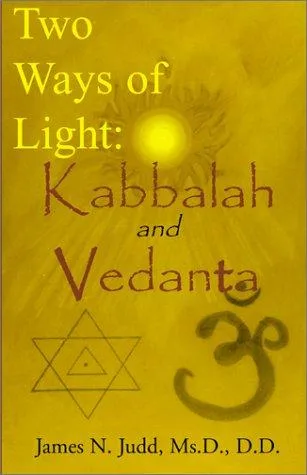
James N. Judd’s "Two Ways of Light" offers a commendably structured comparison of disparate spiritual frameworks. The author's strength lies in his systematic approach to dissecting complex theological and philosophical concepts. For instance, the section detailing the differing interpretations of 'divine intervention' across traditions provides a clear, analytical contrast that avoids simplistic generalizations. However, the book occasionally suffers from an overly academic tone that can obscure its spiritual message for a less initiated reader. While Judd’s comparisons are insightful, one might wish for more direct engagement with the lived experience of practitioners within these traditions, rather than solely focusing on theoretical constructs. The work is a valuable academic resource but perhaps less so for the seeker of immediate, devotional inspiration.
📝 Description
72
James N. Judd's 2000 book compares distinct spiritual and philosophical pathways.
Published in 2000, "Two Ways of Light" by James N. Judd offers a comparative analysis of spiritual and philosophical traditions. Judd does not advocate for a single viewpoint. Instead, he examines the divergences and commonalities between varied belief systems. The book is structured around core tenets, giving readers a way to understand the range of human spiritual thought. It is for serious students of comparative religion, philosophy, and esoteric thought who are interested in the underlying structures of belief. The work appeals to those who wish to grasp the historical development of spiritual ideas and how different cultures articulate their views of ultimate reality. Readers who appreciate rigorous intellectual examination of faith will find substantial material here.
The book uses analytical frameworks to show the foundational principles of seemingly different spiritual paths. Judd discusses concepts like immanence versus transcendence, the nature of divine revelation, and the methods for spiritual attainment. He examines how various traditions approach the divine, the self, and the cosmos. This comparative approach allows for a deeper appreciation of the breadth of human spiritual inquiry.
Emerging at the turn of the millennium, a time of increased interest in New Age spirituality and comparative religion, "Two Ways of Light" engages with long standing philosophical and theological debates. Judd's work speaks to the centuries old discussion of universalism versus particularism in religious studies. It connects with thinkers from ancient Greece to early 20th-century mystics, offering a lens through which to view the ongoing dialogue about spiritual truths.
💡 Why Read This Book?
• Gain a structured understanding of how different spiritual traditions conceptualize the Divine, specifically Judd's analysis of immanence versus transcendence as presented in the early chapters. • Appreciate the historical development of comparative spiritual thought by examining Judd's engagement with philosophical discourse stretching back to ancient thinkers. • Develop a nuanced perspective on spiritual attainment through Judd's methodical dissection of various methods and their underlying principles, as explored in the book's later sections.
⭐ Reader Reviews
Honest opinions from readers who have explored this book.
❓ Frequently Asked Questions
What is the primary focus of James N. Judd's 'Two Ways of Light'?
The book's primary focus is a comparative study of distinct spiritual and philosophical pathways, examining their core tenets, divergences, and commonalities rather than advocating for a single doctrine.
When was 'Two Ways of Light' first published?
'Two Ways of Light' by James N. Judd was first published in the year 2000.
Who would benefit most from reading 'Two Ways of Light'?
Serious students of comparative religion, philosophy, and esoteric traditions, as well as those interested in the historical development of spiritual thought and the methods of spiritual attainment, will find this book beneficial.
Does 'Two Ways of Light' present a new spiritual path?
No, the book does not present a new spiritual path. Instead, it offers an analytical framework for understanding and comparing existing spiritual and philosophical systems.
What kind of analytical approach does Judd employ?
Judd employs a methodical, analytical approach to dissect complex theological and philosophical concepts, contrasting ideas such as immanence versus transcendence and the nature of divine revelation.
Is 'Two Ways of Light' suitable for beginners in spiritual studies?
While informative, the book's rigorous academic tone may be more suited for individuals with some background in philosophy or comparative religion, rather than absolute beginners seeking introductory material.
🔮 Key Themes & Symbolism
Immanence vs. Transcendence
A central theme is the dichotomy between the Divine being immanent (present within the world and humanity) and transcendent (existing beyond the material universe). Judd meticulously contrasts how various traditions, from mystical interpretations to philosophical systems, frame this fundamental question of God's relationship to creation. He explores the implications for human experience, ethics, and the nature of spiritual practice, highlighting that these are not mutually exclusive but often exist in dynamic tension across belief systems.
Methods of Spiritual Attainment
The book dissects the diverse methodologies employed by different spiritual paths to achieve union with or understanding of the divine. This includes examining practices ranging from contemplative prayer and asceticism to intellectual inquiry and ritual. Judd contrasts the emphasis placed on grace versus effort, direct experience versus learned doctrine, and the role of the individual will in the pursuit of spiritual realization across traditions.
Nature of Divine Revelation
Judd investigates how various belief systems understand the communication of divine truth. He contrasts direct, personal revelation with scripture-based authority, and the concept of ongoing, evolving divine messages against divinely revealed, static truths. This exploration looks at the implications for dogma, religious authority, and the individual's relationship with sacred knowledge, revealing how different cultures have articulated their connection to the ultimate source.
Cosmological Frameworks
The work compares the diverse cosmologies that underpin different spiritual traditions. This involves examining how creation is understood, the structure of the universe (both material and spiritual planes), and humanity's place within this grand design. Judd analyzes how these frameworks inform ethical systems, understandings of destiny, and the ultimate purpose of existence, providing a comparative look at humanity's attempts to map the cosmos.
💬 Memorable Quotes
Direct passages from the work, attributed to the author.
“Tradition offers a map, but the journey requires personal navigation.”
— This interpretation emphasizes the balance between established spiritual teachings and the individual's direct experience. While existing frameworks provide guidance, true spiritual progress necessitates active engagement and personal interpretation of one's path.
“Understanding the divine is not a destination, but an ongoing process of becoming.”
— This concept highlights the dynamic nature of spiritual growth. It suggests that apprehending the divine is not a static achievement but a continuous evolution of awareness and being, deeply intertwined with personal development.
“The language of the sacred is often paradoxical, resisting simple definition.”
— This interpretation points to the inherent limitations of human language when attempting to describe ultimate realities. It suggests that spiritual truths often manifest in ways that challenge rational thought, requiring a different mode of apprehension.
💡 Key Ideas
Editorial paraphrase of the work's core concepts — not direct quotes.
The search for the divine often reveals more about the seeker than the sought.
This paraphrased concept suggests that the process of spiritual inquiry is as much about self-discovery and the evolution of consciousness as it is about apprehending an external divine reality. It implies that our beliefs and practices shape our perception of ourselves and the world.
Every path, when genuinely followed, leads toward a fuller apprehension of reality.
This paraphrased idea posits a form of spiritual universalism, suggesting that sincere commitment to any genuine spiritual discipline can yield useful insights and a deeper connection to truth, irrespective of the specific tradition.
🌙 Esoteric Significance
Tradition
The work aligns with the broader Hermetic and Gnostic traditions in its analytical approach to spiritual knowledge and its focus on understanding the underlying principles of diverse belief systems. It shares the Gnostic emphasis on gnosis (knowledge) as a path to liberation and the Hermetic focus on correspondence and universal laws. However, Judd departs from some esoteric traditions by adopting a more secular, academic comparative framework, prioritizing logical analysis over direct initiation or mystical experience as the primary means of understanding.
Symbolism
While not heavily reliant on overt symbolism, the book implicitly engages with the concept of 'light' as a universal metaphor for divine consciousness, truth, and spiritual illumination. The title itself, "Two Ways of Light," suggests different manifestations or understandings of this fundamental principle across traditions. Another motif is the 'map,' representing the conceptual frameworks and doctrines used by various paths to chart the spiritual landscape, emphasizing both their utility and their limitations.
Modern Relevance
Contemporary thinkers and practitioners in fields like transpersonal psychology and integral theory often draw upon comparative spiritual studies that echo Judd's analytical approach. The book's emphasis on understanding diverse belief systems through common conceptual frameworks is relevant to modern movements seeking interfaith dialogue and the integration of wisdom from various global traditions. Its methodical dissection of complex ideas also appeals to contemporary academic approaches to the study of religion and philosophy.
👥 Who Should Read This Book
• Students of Comparative Religion: Individuals seeking to understand the foundational similarities and differences between global belief systems will find Judd's analytical framework invaluable. • Philosophy Enthusiasts: Readers interested in the philosophical underpinnings of spiritual thought, particularly concerning metaphysics and epistemology, will appreciate the rigorous dissection of concepts. • Esoteric Scholars: Those researching the historical development of spiritual ideas and seeking to contextualize various esoteric traditions within broader intellectual currents will benefit from this comparative study.
📜 Historical Context
Published in 2000, "Two Ways of Light" emerged within a broader academic and public interest in comparative spirituality, a trend that gained momentum through the late 20th century. The work engages with a lineage of thought that includes figures like Mircea Eliade and Carl Jung, who explored universal patterns in myth and religion. Judd’s comparative methodology can be seen as a response to the ongoing academic debate between particularist and universalist approaches to religious studies. While not directly engaging with a specific contemporary author's critique, the book implicitly addresses the scholarship of the era, which was increasingly questioning purely Western-centric theological frameworks. The reception of such works in the early 2000s often involved academic reviews assessing their contribution to fields like religious studies and philosophy of religion.
📔 Journal Prompts
The concept of 'divine revelation' as explored in the book, and your personal understanding of it.
Judd's comparison of immanence and transcendence: how do these ideas manifest in your own worldview?
The 'map' versus the 'journey': reflecting on the role of tradition versus personal experience in your spiritual path.
Analyze the 'language of the sacred' paradox in relation to a spiritual concept you find difficult to articulate.
Consider the 'methods of spiritual attainment' discussed and identify which resonate most with your own practices.
🗂️ Glossary
Immanence
The concept that the divine is present within the universe and within human experience, rather than existing solely apart from it.
Transcendence
The concept that the divine exists beyond the material universe and human comprehension, separate from the created world.
Cosmology
A framework of understanding the origin, structure, and development of the universe, often including spiritual or metaphysical dimensions.
Gnosis
A Greek term referring to knowledge, particularly intuitive or spiritual insight, often seen as a path to salvation or enlightenment in Gnostic traditions.
Epistemology
The branch of philosophy concerned with the nature and scope of knowledge, including its justification and limits.
Metaphysics
The branch of philosophy that examines the fundamental nature of reality, including the relationship between mind and matter, substance and attribute, and potentiality and actuality.
Asceticism
Severe self-discipline and avoidance of all forms of indulgence, typically for religious or spiritual reasons.
🔮 Readers Also Liked
Browse all →








More Free Kabbalah & Jewish Mysticism Books
View all →