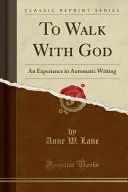
To Walk with God
 75
75

To Walk with God
Anne W. Lane's *To Walk with God* offers a direct, unvarnished glimpse into early 20th-century automatic writing, a practice that captivated many seeking spiritual connection. The strength of the book lies in its raw, unmediated presentation of channeled messages. Unlike later, more polished works, Lane's text retains a sense of immediacy, as if the ink is still drying on the page. The account of the communications originating in the winter of 1917-18, following *The Seven Purposes*, provides a clear historical anchor. However, the limitation is the inherent subjectivity of the material; without external verification, the reader is asked to accept the purported divine origin on faith. A particularly striking element is the detailed explanation of the automatic writing process itself, which offers insight into the author's state of mind and method. Ultimately, *To Walk with God* serves as a valuable historical document for those interested in the mechanics and content of spiritualist communication.
📝 Description
75
Anne W. Lane recorded spiritual messages via automatic writing starting in winter 1917-1918.
To Walk with God contains a series of messages Anne W. Lane claimed to receive through automatic writing. These communications, which began in the winter of 1917-1918, offer spiritual revelations and personal guidance. The book follows *The Seven Purposes*, another work attributed to similar automatic writing processes by Lane. Its content centers on direct spiritual instruction and experiential understanding. It provides insight into channeling and mediumship practices from the early 20th century. This work is for those interested in the history and practice of automatic writing, spiritualism, and esoteric movements of that period. Readers seeking direct spiritual communication or exploring the connection between the material and spiritual worlds will find it of interest. It also appeals to students of comparative religion and parapsychology examining historical accounts of mediumistic phenomena.
This book was published in 2017, reissuing earlier communications. Its origins are tied to *The Seven Purposes*, published during the same winter of 1917-18. This era saw a peak in the Spiritualist movement and significant interest in psychic phenomena. Figures like Arthur Conan Doyle actively supported Spiritualism then. Lane's work fits within a broader cultural examination of consciousness and the afterlife, which included widespread engagement with séances and theosophical ideas.
This book emerges from the Spiritualist movement and the broader interest in psychic phenomena prevalent in the early 20th century. It reflects a period where direct communication with the spiritual world was a significant cultural and religious concern. Automatic writing, as detailed here, was one method explored by individuals seeking spiritual knowledge outside traditional religious structures. Lane's work contributes to a historical record of such practices, alongside other manifestations like séances and theosophy, which sought to understand consciousness and the afterlife through direct experience.
💡 Why Read This Book?
• Understand the mechanics of automatic writing as practiced in the 1917-1918 period, offering a unique insight into channeling methods beyond modern interpretations. • Explore the concept of direct spiritual revelation as presented in the book, examining how Anne W. Lane describes receiving messages intended for personal growth and divine connection. • Gain historical perspective on esoteric movements by engaging with the content of *The Seven Purposes*, a foundational text linked to *To Walk with God*, published during a period of intense spiritualist interest.
⭐ Reader Reviews
Honest opinions from readers who have explored this book.
❓ Frequently Asked Questions
What is automatic writing as presented in *To Walk with God*?
Automatic writing in *To Walk with God* refers to a method where the author, Anne W. Lane, purportedly received spiritual messages through an involuntary writing process. This occurred during the winter of 1917-18.
What is the relationship between *To Walk with God* and *The Seven Purposes*?
*To Walk with God* is presented as a continuation or related work to *The Seven Purposes*, both stemming from automatic writing communications received by Anne W. Lane during the winter of 1917-18.
Who was Anne W. Lane?
Anne W. Lane is the author credited with receiving and transcribing the messages in *To Walk with God*. Her work is primarily known through this and the related text, *The Seven Purposes*, originating from early 20th-century automatic writing.
When were the original communications for *To Walk with God* received?
The original communications purportedly received by Anne W. Lane, which form the basis of *To Walk with God*, date back to the winter of 1917-1918.
What is the main theme of *To Walk with God*?
The main theme is direct spiritual guidance and revelation received through automatic writing, emphasizing a personal experience of 'walking with God' and spiritual growth.
Is *To Walk with God* a historical or contemporary work?
While the original communications date to the winter of 1917-1918, the book itself, as published by Forgotten Books, is a contemporary reissue making historical esoteric content accessible.
🔮 Key Themes & Symbolism
Automatic Writing as Divine Channel
The core of *To Walk with God* is the presentation of automatic writing as a direct conduit for divine communication. Lane's work details the process and content received during the winter of 1917-18, suggesting that spiritual truths and guidance can be accessed through this non-conscious method. The book posits that these messages are not mere psychological projections but genuine revelations, offering a spiritual path distinct from traditional religious structures and emphasizing a personal, experiential relationship with the divine.
Spiritual Purpose and Guidance
The book explores the concept of a divinely ordained purpose for individuals and humanity. The messages purportedly received by Lane offer guidance on navigating life's challenges and understanding one's spiritual path. This theme encourages readers to seek and align with a higher purpose, viewing life experiences as opportunities for spiritual evolution and a deeper connection with the divine presence.
The Nature of God and Spiritual Reality
*To Walk with God* examines the nature of the divine and the spiritual realm, moving beyond conventional theological descriptions. The automatic writing provides insights into a more immanent and accessible form of God, one that can be experienced directly in daily life. This perspective challenges readers to reconsider their understanding of God and the spiritual dimensions that permeate existence, promoting a lived spirituality.
Inner Transformation and Growth
A significant theme is the emphasis on inner transformation as a result of engaging with these spiritual messages. The book suggests that actively seeking and applying the guidance received leads to personal growth and a more profound spiritual understanding. This process of 'walking with God' is depicted as a journey of self-discovery and purification, leading to a more conscious and divinely aligned existence.
💬 Memorable Quotes
Direct passages from the work, attributed to the author.
“We have been asked to give a few words of explanation as to the origin of the following Lessons.”
— This opening immediately establishes the book's purpose: to provide context for the spiritual lessons that follow, emphasizing their origin in a specific, requested explanation.
“...and also of a series of what purported to be spiritual revelations.”
— This phrase highlights the book's claim to present genuine spiritual revelations, distinguishing its content from mere personal reflections or psychological phenomena.
“An Experience in Automatic Writing”
— This subtitle explicitly frames the book's content as a firsthand account and exploration of the author's personal experience with automatic writing.
“The work explores the concept of 'walking with God' as an ongoing, interactive relationship.”
— This interpretation of a core concept suggests a dynamic and participatory connection with the divine, moving beyond passive belief to active spiritual engagement.
💡 Key Ideas
Editorial paraphrase of the work's core concepts — not direct quotes.
In the winter of 1917 - 18 a book called The Seven Purposes was published, giving an account of certain messages of a personal nature received in automatic writing...
This quote situates *To Walk with God* historically and thematically, linking it to a prior work and the specific practice of automatic writing during a defined period.
🌙 Esoteric Significance
Tradition
While not strictly adhering to a single named tradition like Hermeticism or Kabbalah, *To Walk with God* aligns with the broader currents of modern Spiritualism and early 20th-century esoteric thought. It shares the Spiritualist emphasis on communication with the spirit world and the Theosophical interest in higher consciousness and revelation. Its distinctiveness lies in its focus on automatic writing as a primary vehicle for personal, direct divine contact, presented as a practical path to spiritual understanding.
Symbolism
The central 'symbol' is the act of automatic writing itself, representing the subconscious or superconscious mind receiving external guidance. The concept of 'walking with God' functions symbolically, denoting an integrated, conscious partnership with the divine presence in everyday life, moving beyond abstract theology to embodied spirituality.
Modern Relevance
Contemporary interest in channeled materials, consciousness studies, and alternative spiritual practices carries the themes in *To Walk with God*. Thinkers exploring the nature of intuition, mediumship, and the intersection of psychology and spirituality may find Lane's early 20th-century account a valuable historical precedent for understanding these enduring human inquiries.
👥 Who Should Read This Book
• Students of Spiritualism and early 20th-century psychic research seeking primary source material on automatic writing practices. • Individuals interested in comparative religion and esoteric traditions exploring historical accounts of direct divine revelation outside mainstream religious structures. • Seekers of personal spiritual guidance looking for historical examples of channeled messages aimed at fostering inner growth and a direct relationship with the divine.
📜 Historical Context
The messages within *To Walk with God* originated in the winter of 1917-18, a period deeply influenced by the Spiritualist movement and a widespread fascination with the afterlife following World War I. This era saw prominent figures like Sir Arthur Conan Doyle championing Spiritualism, and countless individuals turning to mediums and psychic phenomena for solace and answers. Anne W. Lane's work, particularly its link to the previously published *The Seven Purposes*, places it within this milieu of automatic writing and channeled material. While theosophical ideas, particularly those of Helena Blavatsky, were also influential, Lane's approach appears more focused on direct, personal revelation rather than complex philosophical systems. The reception of such works was often polarized, met with both fervent belief and skeptical dismissal, but their proliferation speaks to a cultural yearning for spiritual connection beyond established religious doctrines.
📔 Journal Prompts
The origin of the 'Lessons' as explained by Anne W. Lane.
The specific nature of the 'spiritual revelations' mentioned in relation to *The Seven Purposes*.
Lane's description of the automatic writing process and its purported divine source.
The concept of 'walking with God' as an 'experience'.
The distinction between personal messages and spiritual revelations in the context of automatic writing.
🗂️ Glossary
Automatic Writing
A psychical phenomenon where a person's hand moves involuntarily to produce written messages, often believed to be dictated by spirits or a higher consciousness. Anne W. Lane utilized this method in the winter of 1917-18.
The Seven Purposes
A book published in the winter of 1917-18, mentioned as a precursor or companion work to *To Walk with God*, also stemming from automatic writing received by Anne W. Lane.
Spiritual Revelations
Messages or insights purportedly received directly from a divine or spiritual source, believed to convey truths or guidance beyond ordinary human knowledge.
Lessons
The individual communications or teachings presented within *To Walk with God*, received through automatic writing and intended for the reader's spiritual edification.
Walking with God
A concept presented in the book signifying a close, interactive, and conscious relationship with the divine presence in daily life, implying ongoing guidance and companionship.
Channeled Messages
Communications believed to originate from a source other than the human channel, typically from spiritual entities or a divine intelligence, as received by Anne W. Lane.
Esoteric
Relating to or accessible only by a select group of people having special knowledge or interest; in this context, referring to spiritual or mystical teachings.