The visual I Ching
 61
61

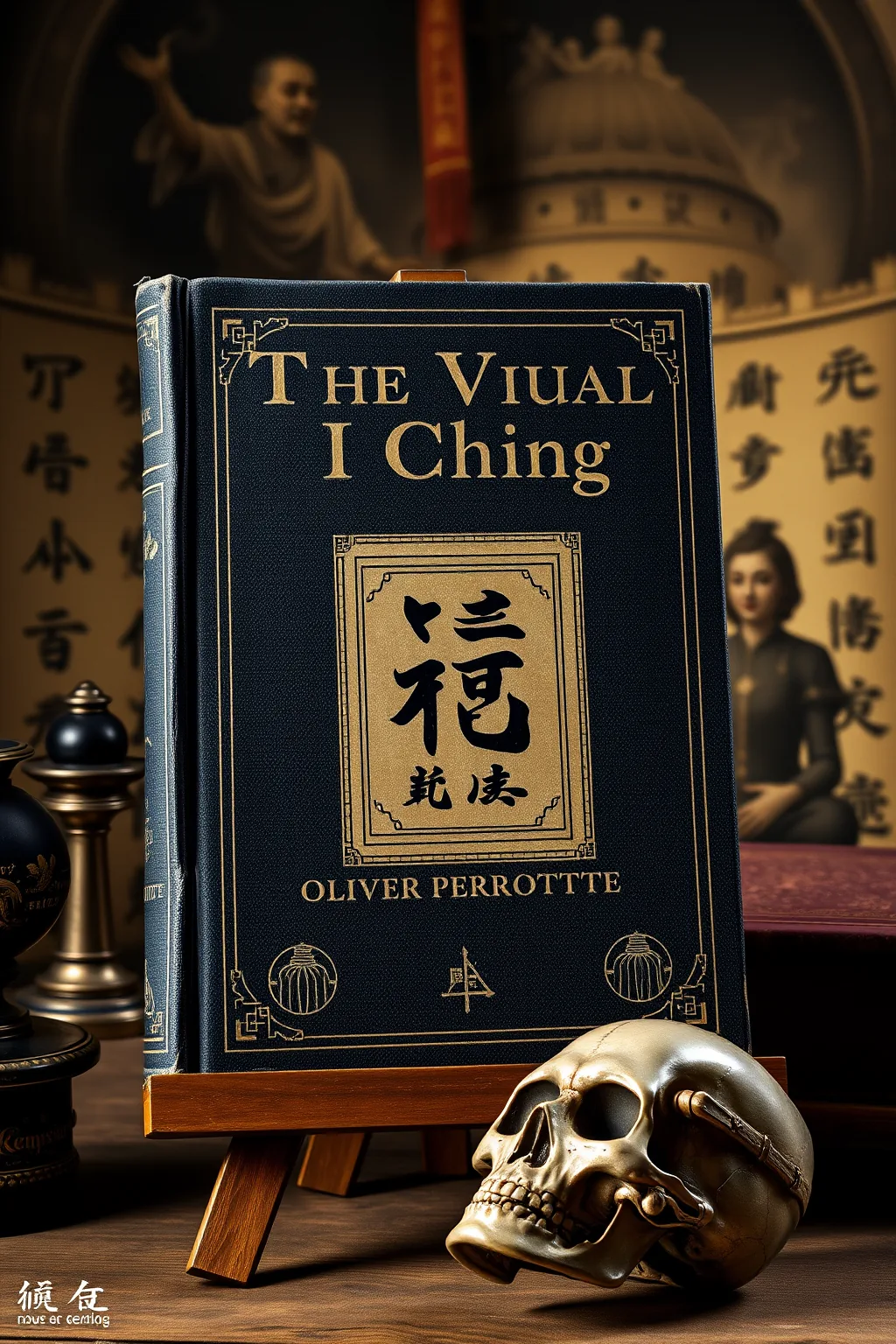
The visual I Ching



By Cassian Rothmann (Senior Critic, Ancient Wisdom) — Oliver Perrotte's 'The Visual I Ching' is a revelation for anyone seeking to delve deeper into the philosophical and symbolic depths of the Yijing. Perrotte doesn't just present the hexagrams; he resurrects them, imbuing each with a visual resonance that breathes new life into ancient wisdom. His interpretations are both scholarly and intuitively profound, offering a fresh perspective on the oracle's enduring power. This work is essential for practitioners wishing to move beyond rote memorization and embrace a more visual, symbolic understanding of the I Ching's counsel. It’s a testament to the enduring relevance of this ancient art for the modern mystic.
📝 Description
61
Oliver Perrotte's 'The Visual I Ching' decodes the hexagrams' inherent symbolism.
Oliver Perrotte's 'The Visual I Ching' approaches the ancient Chinese oracle by focusing on the visual nature of its hexagrams. Rather than treating them as abstract symbols, Perrotte suggests they are dynamic archetypes that mirror universal patterns and human experience. The book encourages readers to see the I Ching's lines and structures as a form of visual language that communicates secrets of change and connection.
This work aims to be more than a guide for divination; it functions as a tool for comprehending fundamental forces and hidden structures in existence. It is intended for those who seek deeper understanding, whether they are practitioners, students, or simply curious individuals. Perrotte's commentary and the book's imagery are designed to facilitate a more intuitive and personal engagement with the I Ching's wisdom. The goal is to foster self-reflection and a more integrated way of understanding life's cycles.
This book situates itself within the long tradition of interpreting the I Ching, a foundational text in Chinese philosophy and esoteric thought. While many commentaries focus on the philosophical or divinatory meanings of the text, Perrotte emphasizes the visual and symbolic dimensions. This approach aligns with esoteric traditions that seek deeper, often non-literal meanings embedded within sacred texts and systems, viewing them as keys to unlocking hidden realities or universal principles.
💡 Why Read This Book?
Unravel the profound visual language of the I Ching, transforming abstract concepts into vibrant archetypes. 'The Visual I Ching' offers a unique path to intuitive understanding, perfect for seekers, practitioners, and scholars yearning for a deeper, more resonant connection with ancient Chinese wisdom and its philosophical underpinnings.
⭐ Reader Reviews
Honest opinions from readers who have explored this book.
❓ Frequently Asked Questions
What is the primary focus of 'The Visual I Ching'?
The book's primary focus is on interpreting the I Ching through its inherent visual symbolism, presenting the hexagrams as dynamic archetypes that reflect universal patterns of change and transformation.
Is this book suitable for beginners to the I Ching?
Yes, while offering depth for advanced practitioners, 'The Visual I Ching' is accessible to beginners, guiding them to understand the oracle through its visual language rather than solely through textual interpretation.
What distinguishes this book from other I Ching translations?
This book uniquely emphasizes the visual and symbolic nature of the hexagrams, offering an interpretive framework that is more intuitive and experiential than purely linguistic approaches.
How does the 'visual' aspect enhance divination?
The visual approach allows for a more immediate, holistic understanding of the hexagram's message, tapping into subconscious associations and archetypal imagery for richer, more nuanced insights.
What kind of reader would most benefit from this book?
Seekers of profound wisdom, practitioners of divination, students of esoteric traditions, and anyone interested in visual symbolism and ancient philosophical systems will find immense value within its pages.
🔮 Key Themes & Symbolism
The Archetypal Language of the Hexagrams
Perrotte studies the profound visual language embedded within the I Ching's sixty-four hexagrams. He posits that each trigram and hexagram is not merely a collection of lines but a potent visual archetype, a cosmic icon that mirrors the fundamental forces of creation, change, and dissolution. This perspective invites readers to perceive the Yijing as a living map of the universe, where the interplay of yin and yang is expressed through dynamic, recognizable forms. By understanding these visual archetypes, practitioners can access a deeper, more intuitive layer of meaning, moving beyond intellectual comprehension to a soul-level resonance with the oracle's useful insights.
Cosmic Resonance and Human Destiny
At the core of 'The Visual I Ching' lies the principle of cosmic resonance – the idea that the patterns of the universe are mirrored within the human experience. Perrotte illustrates how the visual configurations of the hexagrams offer a profound commentary on the cycles of nature, the dynamics of relationships, and the unfolding of personal destiny. The book encourages a contemplative practice, urging readers to see their own lives reflected in the symbolic imagery of the Yijing. This alignment between the macrocosm and the microcosm fosters a sense of interconnectedness and empowers individuals to navigate life's challenges with greater wisdom and foresight, recognizing themselves as integral parts of a grander cosmic dance.
The Art of Intuitive Divination
Beyond a mere system of fortune-telling, 'The Visual I Ching' champions an approach to divination that is deeply intuitive and symbolic. Perrotte guides readers to cultivate a visual literacy, where the images conjured by the hexagrams become potent catalysts for introspection and guidance. This method encourages a departure from rigid, literal interpretations, instead fostering a space for personal revelation and the discovery of unique insights. The book aims to transform the act of consulting the I Ching from a mechanical process into a profound dialogue with the subconscious and the universal intelligence, unlocking a richer, more personalized form of spiritual guidance.
💬 Memorable Quotes
Direct passages from the work, attributed to the author.
“See the dance of creation in every stroke.”
— Highlights the dynamic and evolutionary nature of the I Ching's symbolism, encouraging a perception of constant flux and creative unfolding.
“The oracle speaks in a language of form.”
— Emphasizes the primacy of visual representation in understanding the I Ching's profound messages, suggesting that form itself carries inherent meaning.
“Within the lines lie the elements of eternity.”
— Speaks to the timeless and universal truths contained within the I Ching's structure, connecting the individual consultation to the grand cosmic order.
“To visualize is to understand.”
— A concise statement of the book's pedagogical approach, suggesting that visual comprehension is the most direct path to grasping the I Ching's wisdom.
💡 Key Ideas
Editorial paraphrase of the work's core concepts — not direct quotes.
The lines breathe, the images reveal.
This quote expresses the book's core philosophy: that the I Ching's power lies not just in its written text but in the living, symbolic energy of its visual representations.
🌙 Esoteric Significance
Tradition
The I Ching is a core part of East Asian esoteric thought, deeply interwoven with Taoist cosmology, Confucian ethics, and Chinese traditional medicine. Its symbolic language serves as a bridge between the phenomenal world and the underlying spiritual realities, offering insights into the Tao, the Yin-Yang duality, and the Five Elements. Esoterically, it is viewed as a manual for aligning oneself with the natural order of the universe, a tool for understanding the subtle energies that govern both macrocosmic and microcosmic existence, and a guide for working through the cyclical nature of transformation with wisdom and grace.
Symbolism
The primary symbolism revolves around the Yin (broken line) and Yang (solid line), the building blocks of the eight trigrams, and ultimately the sixty-four hexagrams. Each hexagram is a unique visual composition representing archetypal situations, natural phenomena, human relationships, and stages of change. Perrotte’s approach emphasizes the dynamic interplay and inherent meanings within these visual patterns, seeing them as symbolic representations of universal forces, cosmic principles, and the human condition. The symbolism transcends literal interpretation, inviting a deeper, intuitive grasp of the underlying cosmic order.
Modern Relevance
In an era often characterized by disconnection and rapid change, the I Ching, as presented visually, offers a profound anchor. Its principles of change, adaptability, and interconnectedness resonate powerfully with contemporary challenges. 'The Visual I Ching' provides a framework for understanding life's inherent flux, encouraging resilience and mindful engagement with circumstances. Its visual nature makes it an accessible entry point for those seeking spiritual guidance and a deeper understanding of themselves and their place in the universe, proving that ancient wisdom holds potent relevance for modern seekers.
👥 Who Should Read This Book
This book is a treasure for the dedicated student of esoteric traditions, offering a fresh, visual dimension to the study of the I Ching. Beginners will find it an accessible and engaging introduction, guiding them to understand the oracle through its potent imagery rather than solely through complex textual analysis. Experienced practitioners will discover new layers of meaning and a more intuitive way to engage with the hexagrams, enhancing their divinatory practice. Scholars interested in comparative mythology, symbolism, and ancient philosophy will appreciate the depth and unique perspective offered, while seekers of personal growth and spiritual insight will find a profound tool for self-discovery and alignment with universal principles.
📜 Historical Context
The I Ching, or 'Book of Changes,' boasts a lineage stretching back thousands of years, emerging from ancient Chinese shamanistic practices and cosmological understandings. Its early forms were likely tied to divination rites, using methods like bone casting and stick counting to interpret the will of spirits or the forces of nature. Over centuries, it evolved into a complex philosophical and ethical system, deeply influencing Confucianism and Taoism. During the Han Dynasty (206 BCE – 220 CE), it was codified and became one of the Five Classics. Subsequent commentaries by scholars like Wang Bi and the Neo-Confucianists further enriched its intellectual and spiritual dimensions. 'The Visual I Ching' emerges within a modern context, where there's a renewed global interest in ancient wisdom traditions, seeking to reinterpret and re-experience these texts not just as historical artifacts but as living guides for personal transformation and spiritual insight.
📔 Journal Prompts
Reflect on a recent challenge: which hexagram's visual composition best represents your current situation, and why?
Imagine the trigrams as fundamental forces. How do their visual interactions manifest in your daily life?
Consider the archetypal imagery of a chosen hexagram. What personal associations and insights does this imagery evoke?
How can understanding the 'visual language' of the I Ching shift your perception of your own life's journey?
Explore a moment of significant change in your life. Can you find a visual parallel within the hexagrams that speaks to this transformation?
🗂️ Glossary
Hexagram
A figure composed of six horizontal lines, either solid (Yang) or broken (Yin), forming 64 distinct combinations, each representing a specific situation or principle in the I Ching.
Trigram
A figure composed of three horizontal lines, either solid (Yang) or broken (Yin). There are eight basic trigrams, which are the building blocks of the hexagrams.
Yin
Represented by a broken line (-- --), symbolizing the passive, feminine, dark, receptive, and yielding aspects of existence.
Yang
Represented by a solid line (---), symbolizing the active, masculine, light, creative, and assertive aspects of existence.
Archetype
A universal, inherited pattern of thought or imagery derived from the experiences of the human race, expressed through symbols and myths, which are fundamental to the I Ching's visual language.
This book appears in 1 collection
🔮 Readers Also Liked
Browse all →








From the “Divination” Collection
View all →







More Free Divination & Tarot Books
View all →