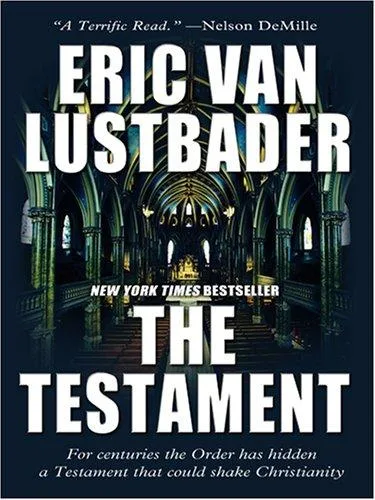
The Testament
 78
78

The Testament
Eric Van Lustbader's The Testament offers a familiar, yet compelling, fictional framework for exploring themes of ancient conspiracy and hidden legacies. The strength of the novel lies in its ability to construct an intricate plot that keeps the reader guessing, seamlessly blending elements of suspense with the suggestion of deeper, more arcane forces at play. A particular passage concerning the 'Codex of Whispers'—a fictional artifact hinting at a lineage of knowledge keepers—demonstrates the author's knack for imbuing mundane settings with a sense of ancient mystery. However, the narrative occasionally leans on convenient plot devices to advance its complex machinations, which might frustrate readers seeking more grounded exposition. Despite this, the book provides an engaging, if fictionalized, contemplation of how history might be shaped by unseen hands. The Testament ultimately serves as a satisfying thriller with a speculative edge.
📝 Description
78
Eric Van Lustbader's 2018 novel, The Testament, concerns ancient orders and hidden knowledge.
Published in 2018, The Testament by Eric Van Lustbader weaves a narrative around ancient organizations, concealed information, and the manipulation of world events. The story follows characters who uncover long-lost secrets or get drawn into conspiracies that mirror occult traditions' focus on secret societies and their supposed influence. The book is suitable for readers who enjoy thrillers with a philosophical depth. Those interested in fictional accounts of secret histories, the power dynamics of hidden groups, and how ancient wisdom might affect modern geopolitics will find engaging elements here. It appeals to readers who like complex plots that touch upon the arcane without demanding prior knowledge of esoteric doctrines.
The novel emerged during a time of heightened interest in conspiracy theories and hidden power structures within popular culture and online discussions. While fictional, its themes reflect a broader societal fascination with narratives that challenge established power and consider the possibility of unseen forces shaping reality. This interest was notably amplified by authors like Dan Brown, whose novels popularized similar fictional explorations of historical secrets and religious conspiracies. Van Lustbader's work taps into this cultural current by presenting a story where hidden truths and clandestine actions drive the plot.
The Testament engages with themes common in esoteric fiction, such as the existence of secret societies and their influence on global affairs. It touches upon the idea that hidden knowledge, passed down through generations or guarded by clandestine groups, holds significant power. The narrative explores how these concealed forces and ancient belief systems can impact present-day events, echoing a tradition within esoteric thought that posits unseen influences shaping the world. The book invites readers to consider the potential for ancient doctrines to underpin modern conflicts and power struggles.
💡 Why Read This Book?
• Gain an understanding of how fictional narratives can explore the concept of inherited power structures, as seen in The Testament's portrayal of clandestine organizations that influence global events. • Experience a plot that engages with the idea of ancient knowledge as a driving force, exemplified by the fictional 'Codex of Whispers' and its purported secrets. • Consider the thriller genre's capacity to touch upon themes of destiny versus choice through character arcs that react to uncovering hidden historical truths.
⭐ Reader Reviews
Honest opinions from readers who have explored this book.
❓ Frequently Asked Questions
What is the primary focus of Eric Van Lustbader's The Testament?
The Testament primarily focuses on a thriller narrative involving ancient conspiracies, hidden knowledge, and clandestine organizations. It explores how these elements might influence contemporary global events, weaving a complex plot around secrets from the past.
Does The Testament require prior knowledge of esoteric subjects?
No, prior knowledge of specific esoteric subjects is not required. The book uses esoteric themes as narrative devices within a fictional context, making it accessible to a general audience interested in thrillers and mysteries.
When was The Testament first published?
The Testament by Eric Van Lustbader was first published in 2018. This places it within a contemporary literary landscape where interest in conspiracy and hidden histories remains strong.
What kind of protagonist does one find in The Testament?
Protagonists in The Testament are typically drawn into complex webs of intrigue, often uncovering long-buried secrets or finding themselves at the center of global conspiracies. They are often ordinary individuals thrust into extraordinary circumstances.
Are there specific historical events referenced in The Testament?
While fictional, The Testament draws inspiration from historical patterns of secret societies and the idea of hidden influence. It does not directly reference specific historical events but rather plays with the *concept* of historical manipulation.
What makes The Testament unique compared to other thrillers?
Its uniqueness lies in its speculative engagement with esoteric undertones and ancient conspiracies, moving beyond standard thriller fare to hint at deeper, unseen forces shaping the world, a concept explored in various historical secret society narratives.
🔮 Key Themes & Symbolism
Legacy of Secret Orders
The novel engages with the enduring influence of ancient, clandestine organizations. These groups, often operating for centuries, are depicted as possessing knowledge or power that allows them to subtly manipulate world events. The narrative explores how the decisions and actions of these orders, established long before the present day, continue to shape contemporary society and the lives of individuals who stumble upon their existence.
Knowledge as Power
A central theme is the concept of knowledge, particularly hidden or suppressed information, as a potent form of power. Characters often discover that access to specific historical records or arcane lore grants them leverage or puts them in grave danger. The narrative illustrates how controlling the dissemination of knowledge can maintain societal structures or destabilize them entirely.
The Unseen Hand
The Testament frequently posits the existence of an 'unseen hand' guiding or interfering with the course of human history. This motif suggests that major events are not accidental but are orchestrated by hidden actors with long-term agendas. The book invites readers to consider the possibility of pervasive, subtle manipulation operating beneath the surface of public affairs.
Destiny and Choice
The protagonists often find themselves caught between a sense of predetermined fate, perhaps linked to ancient prophecies or the machinations of secret societies, and their own capacity for free will. The narrative explores the struggle of individuals to assert agency when confronted with forces that seem to dictate their path, questioning the extent to which one's life is truly their own.
💬 Memorable Quotes
Direct passages from the work, attributed to the author.
“Some secrets are buried for a reason; unearthing them is a dangerous proposition.”
— This highlights the narrative's premise that forbidden or ancient knowledge carries inherent risks. The act of discovery itself can provoke dangerous reactions from those who wish to keep the secrets hidden, placing the seeker in peril.
“History is written by the victors, but also by the keepers of the forgotten.”
— This suggests a dual narrative of history: the official account and the suppressed or alternative one. It implies that true understanding requires looking beyond accepted records to the less acknowledged sources of information.
“The greatest power lies not in what is known, but in what is kept from others.”
— This aphorism speaks to the strategic use of information control. It posits that withholding crucial knowledge can be a more effective tool for maintaining authority or achieving objectives than openly wielding power.
“Every generation believes it stands at the end of history, yet the ancient patterns repeat.”
— This reflects a cyclical view of human affairs, suggesting that despite technological or societal progress, fundamental human motivations and power struggles persist. It implies a continuity of certain dynamics across eras.
💡 Key Ideas
Editorial paraphrase of the work's core concepts — not direct quotes.
The threads of power are not always visible, but they are always there, pulling.
This quote expresses the novel's exploration of hidden influence. It suggests that behind seemingly natural events or political shifts, there are deliberate, often unseen forces orchestrating outcomes, much like puppeteers manipulating strings.
🌙 Esoteric Significance
Tradition
While The Testament is a work of fiction and not a direct treatise from an esoteric tradition, it borrows motifs common in Western esotericism, particularly those related to secret societies and Gnostic ideas of hidden knowledge. It engages with the concept of an 'inner circle' possessing esoteric truths, a theme found in Hermeticism and Rosicrucianism, suggesting a hidden order that influences the outer world.
Symbolism
The narrative often employs symbols of lineage and hidden texts, such as ancient manuscripts or artifacts like the 'Codex of Whispers.' These function as keys to unlocking secrets, representing the transmission of esoteric knowledge across generations. Shadows and concealed locations are also symbolic, representing the hidden nature of the forces and information at play within the story.
Modern Relevance
The novel's exploration of hidden power structures and the manipulation of information appeals to contemporary discussions surrounding disinformation, global governance, and the influence of non-state actors. Thinkers and practitioners interested in the intersection of geopolitics and speculative history find its narrative a compelling, albeit fictional, lens through which to consider such issues.
👥 Who Should Read This Book
• Readers of contemporary thrillers who enjoy plots infused with historical mystery and speculative elements, similar to those found in Dan Brown's novels. • Individuals interested in fictional portrayals of secret societies and the idea of hidden knowledge influencing world events, offering a speculative take on historical conspiracies. • Fans of Eric Van Lustbader's previous works who appreciate his intricate plotting and ability to tie suspenseful narratives with deeper thematic undercurrents.
📜 Historical Context
Published in 2018, Eric Van Lustbader's The Testament emerged in an era marked by a resurgence of interest in conspiracy narratives, amplified by digital media and a general distrust of established institutions. This followed trends popularized by authors like Dan Brown, who, beginning with 'The Da Vinci Code' in 2003, brought fictional explorations of historical secrets and religious conspiracies to mainstream attention. Van Lustbader's work taps into this vein, presenting a thriller that carries the allure of secret societies and hidden knowledge that characterized earlier esoteric movements. While not directly engaging with, say, the Theosophical Society's influential period in the late 19th and early 20th centuries, The Testament reflects a modern fascination with similar themes of hidden wisdom and ancient lineages, albeit filtered through a contemporary espionage and thriller lens.
📔 Journal Prompts
The persistence of ancient patterns across generations, as suggested by the repetition of historical dynamics.
The perceived power derived from controlling hidden knowledge or suppressed information.
The concept of an 'unseen hand' guiding or manipulating global events.
The personal struggle when confronted with revelations that challenge one's understanding of reality.
The nature of legacy, both familial and ideological, as a driving force in secret orders.
🗂️ Glossary
Clandestine Organizations
Groups that operate in secret, often with the aim of influencing political, economic, or social landscapes. The Testament frequently features such entities, positing their long-term, hidden agendas.
Esoteric Knowledge
Information or wisdom that is intended for, or understood by, only a small number of people with a specialized background or interest. In the book, this often takes the form of ancient texts or forgotten lore.
Legacy
In the context of the book, this refers not just to inherited wealth or status, but to the enduring influence of past actions, knowledge, or the continuation of ancient orders through generations.
Codex of Whispers
A fictional ancient manuscript mentioned within The Testament, serving as a plot device that holds significant, hidden historical or arcane information sought by various factions.
Unseen Hand
A metaphorical term used to describe the hidden forces or individuals believed to be secretly controlling or influencing events, particularly in politics and finance.
Geopolitical Influence
The exercise of power by states or non-state actors to shape international relations and global events. The book explores how clandestine groups might exert such influence.
Narrative Threads
Interconnected plotlines or thematic elements within a story. The Testament combines multiple narrative threads involving conspiracy, history, and personal stakes.
🔮 Readers Also Liked
Browse all →








More by Eric Van Lustbader
All books →
More Free Occult Philosophy Books
View all →