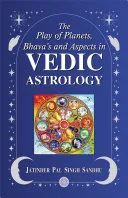
The Play of Planets, Bhava's and Aspects in Vedic Astrology
 82
82

The Play of Planets, Bhava's and Aspects in Vedic Astrology
Jatinder Pal Singh Sandhu’s compilation, The Play of Planets, Bhava's and Aspects in Vedic Astrology, offers a commendable effort to present primary source material for students of Jyotish. By extracting from Nar Singh Daivagya’s Jataka Saradeep and Balbhadra’s Hora Ratnam, Sandhu provides direct access to classical astrological reasoning, a welcome antidote to the flood of simplified modern guides. The strength lies in its adherence to original texts, allowing readers to see the foundational logic without contemporary gloss. However, the book’s primary limitation is its nature as an excerpt; readers might find themselves wishing for more complete treatises or extensive commentary to fully contextualize the translated passages. A particularly illuminating section details the various types of planetary aspects, moving beyond the basic Ptolemaic view to encompass the unique directional influences in Vedic astrology. This direct engagement with classical doctrine is the book's core offering. It serves as a valuable, if incomplete, window into the technical sophistication of ancient Indian astrology.
📝 Description
82
Published in 2023, The Play of Planets, Bhava's and Aspects in Vedic Astrology provides direct access to classical Indian astrological texts.
This book compiles selections from two key classical Sanskrit astrological treatises: Jataka Saradeep by Nar Singh Daivagya and Hora Ratnam by Balbhadra. Its purpose is to offer students and practitioners of Vedic astrology a direct engagement with primary source material, bypassing later interpretations. The compilation focuses on the foundational principles of Jyotish, specifically the interactions of planets, the significations of astrological houses (Bhavas), and the relationships between celestial bodies as described in these historical texts.
Jataka Saradeep, attributed to Nar Singh Daivagya, draws upon approximately 35 earlier sources, including references to figures like Varahamihira. Hora Ratnam, by Balbhadra, is a significant text from the medieval period of Indian astrology. Both works were instrumental in shaping and preserving astrological knowledge over centuries. This modern compilation makes these important historical documents accessible to a contemporary audience interested in the historical lineage and detailed frameworks of Vedic astrology.
This work sits within the Jyotish tradition, a system of Hindu astrology with roots stretching back thousands of years. Jyotish, or Vedic astrology, is concerned with understanding the cosmic influences on human life and events. The texts compiled here, Jataka Saradeep and Hora Ratnam, represent significant efforts to codify this knowledge during historical periods when astrological sciences were actively developing and being transmitted through written treatises. By presenting these original sources, the book connects modern practitioners to the intellectual heritage that shaped classical Indian cosmological and divinatory practices.
💡 Why Read This Book?
• Gain direct insight into classical Vedic astrological techniques by studying excerpts from Jataka Saradeep (Nar Singh Daivagya) and Hora Ratnam (Balbhadra), offering a foundational understanding absent in modern interpretations. • Understand the nuanced doctrine of planetary aspects (Drishti) as presented in these 13th-century and earlier texts, moving beyond superficial treatments to grasp their predictive implications. • Explore the detailed significations of Bhavas (houses) according to classical authorities like Varahamihira, enabling a more precise delineation of life areas and their astrological correlates.
⭐ Reader Reviews
Honest opinions from readers who have explored this book.
❓ Frequently Asked Questions
What are the primary classical texts featured in The Play of Planets, Bhava's and Aspects?
This book features key excerpts from Jataka Saradeep by Nar Singh Daivagya and Hora Ratnam by Balbhadra, both significant works in the classical Vedic astrology tradition.
Who is the author of Hora Ratnam?
The author of Hora Ratnam is Balbhadra, a classical Indian astrologer whose work is compiled and presented in this volume.
When was the original publication date of the compiled texts?
While the compilation was published in 2023, the original texts like Hora Ratnam likely date to the medieval period (around the 13th century), and Jataka Saradeep draws from even earlier sources.
What does 'Bhava' refer to in Vedic astrology?
In Vedic astrology, 'Bhava' refers to the houses of the astrological chart, which represent different areas of life and experience.
What is the significance of planetary aspects in this book?
The book details planetary aspects (Drishti), which are the angular relationships between planets, crucial for understanding their interactions and predictive outcomes in a horoscope.
Does this book cover modern astrological interpretations?
No, this book focuses specifically on classical Vedic astrological principles derived from ancient Sanskrit texts, offering a foundation rather than contemporary adaptations.
🔮 Key Themes & Symbolism
Planetary Interplay
The compilation meticulously details how planets (Grahas) exert influence not in isolation, but through complex interactions. It examines their inherent natures, dignities, and the specific energies they project onto different houses and other planets. Understanding these relationships is key to deciphering the astrological blueprint of an individual's life and potential future events, as laid out by classical authorities.
House Significations (Bhavas)
Central to the text is the profound significance of the twelve Bhavas, or houses, which map out the domains of human experience. The book explores the classical interpretations of each house, from self and finances to relationships and spirituality, and how planetary placements and aspects within these Bhavas color their manifestation. This provides a framework for detailed life-reading.
Astrological Aspects (Drishti)
The dynamic forces connecting celestial bodies are elucidated through the concept of Drishti, or aspects. The work presents the specific types of aspects unique to Vedic astrology, detailing how planets gaze upon and influence each other and the houses they occupy or aspect. This focus on directional influences is critical for understanding the interplay of energies and potential outcomes.
Classical Authority
By drawing directly from Jataka Saradeep and Hora Ratnam, the book emphasizes adherence to ancient sources and the wisdom of past masters like Varahamihira and Satyacharya. It serves as a bridge to the original understanding of Jyotish, preserving the technical language and interpretive methods developed over centuries of practice and scholarship.
💬 Memorable Quotes
Direct passages from the work, attributed to the author.
“The Jataka Saradeep quotes various authentic sources like Saravali, Brihat Jataka, Janam Pradip, Hora Pradip and about 35 sources in total.”
— This highlights the rigorous methodology of classical astrological compilation, demonstrating that Nar Singh Daivagya based his work on a broad consensus of earlier authoritative texts, underscoring the reliability of the tradition.
“Hora Ratnam by Balbhadra again quotes the various sources.”
— Similar to Jataka Saradeep, Balbhadra's Hora Ratnam also relies on a foundation of prior astrological literature, indicating a shared commitment within the tradition to building upon established knowledge and verifying principles.
“The original author has quoted various authentic sources like Saravali, Brihat Jataka, Janam Pradip, Hora Pradip...”
— This emphasizes the scholarly approach of ancient Indian astrologers, who meticulously referenced and synthesized existing astrological literature to create comprehensive guides.
“Other than that he has named authors like Hillaj, Prashar, Romank, Yavan, Varahmir, Satya Acharya, Kalyan Verma etc.”
— This citation of specific historical figures, including the renowned Varahamihira, places Nar Singh Daivagya's work within a specific intellectual lineage and demonstrates the breadth of astrological thought he drew upon.
“These two books are similar in genre and...”
— This suggests a thematic and methodological kinship between Jataka Saradeep and Hora Ratnam, reinforcing their collective value as sources for understanding classical Vedic astrological principles and predictive techniques.
🌙 Esoteric Significance
Tradition
This work is firmly rooted in the Jyotish tradition, a branch of Vedic knowledge concerned with celestial influences on earthly affairs. It aligns with the broader Vedic worldview, which sees the cosmos as imbued with divine order and interconnectedness. Unlike Hermetic or Kabbalistic traditions, Jyotish focuses on the direct predictive application of planetary movements and configurations for understanding karma and destiny, though it shares a common esoteric goal of spiritual insight through cosmic mapping.
Symbolism
Planets (Grahas) are primary symbols, each representing specific energies, archetypes, and karmic predispositions – for example, Mars (Mangala) symbolizing energy, conflict, and courage, while Jupiter (Guru) represents wisdom, expansion, and spiritual guidance. The Bhavas (houses) symbolize the stages and arenas of life's unfolding journey, from the self (1st Bhava) to spiritual liberation (12th Bhava). Aspects (Drishti) represent the dynamic flow of energy and communication between these celestial forces, shaping the narrative of an individual's chart.
Modern Relevance
Contemporary practitioners of Vedic astrology, particularly those seeking to move beyond simplified modern approaches, draw heavily on the principles outlined in texts like those compiled here. Thinkers and astrologers focused on karmic astrology and the deeper philosophical underpinnings of Jyotish find value in these classical expositions. The work also informs comparative studies of astrological systems, allowing modern researchers to trace the lineage and evolution of predictive techniques.
👥 Who Should Read This Book
• Advanced students of Vedic astrology seeking to deepen their technical understanding by engaging directly with classical source materials. • Practitioners of Jyotish who wish to refine their interpretive skills by studying the original frameworks for planetary, Bhava, and aspect analysis. • Researchers of comparative religion and history of science interested in the development and textual foundations of Indian astrological traditions.
📜 Historical Context
This compilation emerges from the rich tradition of classical Indian astrology, known as Jyotish. The foundational texts excerpted, Jataka Saradeep and Hora Ratnam, represent the codification and transmission of astrological knowledge during periods of significant intellectual development in India. Jataka Saradeep, by Nar Singh Daivagya, draws heavily on earlier works, citing authorities like Varahamihira (c. 505-587 CE), an important figure in Indian astronomy and astrology whose Brihat Jataka is a core part of the tradition. Hora Ratnam, by Balbhadra, likely composed around the 13th century, further solidifies the principles of natal and predictive astrology. These texts were crucial during a time when astrological practice was deeply integrated into societal and philosophical life, distinct from the more empirical focus emerging in European natural philosophy around the same medieval period. The continued study of these works today speaks to their enduring authority within the Jyotish lineage, offering a counterpoint to later developments and interpretations.
📔 Journal Prompts
Analyze the unique aspect Jupiter (Guru) casts onto the 7th house, considering its signification from Hora Ratnam.
Reflect on the description of the 10th Bhava's significations as presented in Jataka Saradeep.
Consider the foundational principles of planetary dignities mentioned by authors like Varahamihira.
How does the concept of 'Drishti' as explained in these texts differ from Western aspect theory?
Map the interplay between a malefic planet and a benefic planet as described in the source material.
🗂️ Glossary
Jyotish
The traditional Indian system of astrology, also known as Vedic astrology, concerned with celestial influences on earthly matters and human destiny.
Graha
Literally 'seizer' or 'planet' in Sanskrit; refers to the celestial bodies (Sun, Moon, Mars, Mercury, Jupiter, Venus, Saturn) and the lunar nodes (Rahu, Ketu) used in Vedic astrology.
Bhava
A house in the astrological chart, representing a specific area of life, experience, or circumstance. There are typically twelve Bhavas.
Drishti
Aspect; the angular relationship between planets, indicating how their energies interact and influence each other and the houses they occupy or aspect.
Jataka Saradeep
A classical Sanskrit text on natal astrology authored by Nar Singh Daivagya, known for compiling and referencing numerous earlier astrological sources.
Hora Ratnam
A significant medieval Sanskrit text on Vedic astrology by Balbhadra, providing detailed principles for chart interpretation and prediction.
Varahamihira
An influential Indian polymath and astrologer who lived in the 5th-6th century CE, author of important works like Brihat Jataka.