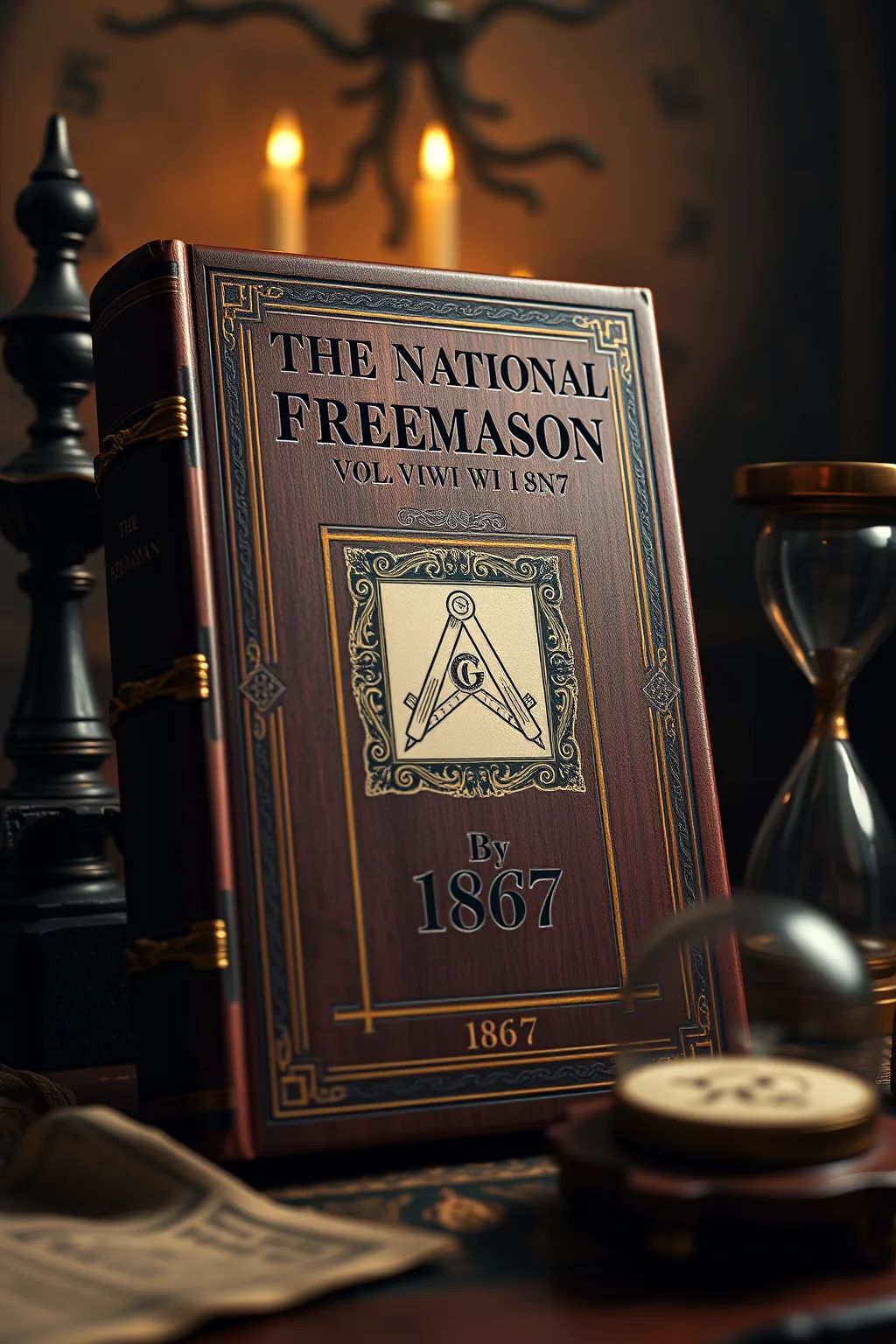
The National Freemason Vol VIII No 1 1867
 74
74

The National Freemason Vol VIII No 1 1867


By Balthazar Finch (Senior Critic, Occult Philosophy) — This inaugural volume of 'The National Freemason' from 1867 is a treasure for initiates and scholars of the Craft. It offers a rare, unvarnished look at the philosophical discourse and esoteric inclinations prevalent within Freemasonry during a pivotal era. The articles, though presented in the formal style of the period, are rich with allegorical depth and symbolic interpretation, hinting at a structured pursuit of moral and spiritual perfection. Its strength lies in its direct engagement with Masonic principles, providing fertile ground for contemplation on the hidden meanings embedded within ritual. An essential read for anyone seeking to understand the intellectual foundations of fraternal orders.
📝 Description
74
The National Freemason Vol VIII No 1 was published in 1867.
This issue of The National Freemason from 1867 contains discussions on Masonic thought during the mid-19th century. It presents Masonic philosophy through allegory and symbolism, suggesting a layer of hidden knowledge. The content fosters intellectual contemplation and encourages an examination of the symbolic language and ethical systems prevalent in Freemasonry.
The volume serves as an introduction to the deeper meanings within Masonic ritual and philosophy. It reflects a period where the search for enlightenment was a central concern. The material appeals to those interested in the underlying structures of society and personal development.
Published in 1867, this issue engages with the esoteric traditions that often run parallel to more public interpretations of fraternal orders. Freemasonry, in its historical context, frequently incorporated elements drawn from Hermeticism, Kabbalah, and older mystery traditions. The use of allegory and symbolism within the text points to an attempt to convey deeper, non-literal meanings, a hallmark of esoteric thought. This approach suggests that the rituals and teachings were seen not merely as social customs but as vehicles for spiritual or philosophical advancement, aligning with the broader esoteric pursuit of hidden knowledge and self-transformation.
💡 Why Read This Book?
This volume is essential for unlocking the historical and esoteric dimensions of Freemasonry. It provides direct access to the thought processes and symbolic language of 19th-century Masons, offering profound insights into their philosophical and spiritual quests. Ideal for seekers of hidden knowledge, scholars of fraternal orders, and practitioners wishing to deepen their understanding of ritual and allegory.
⭐ Reader Reviews
Honest opinions from readers who have explored this book.
❓ Frequently Asked Questions
What is the primary focus of this issue?
This issue primarily focuses on the philosophical and symbolic discourse within Freemasonry during 1867, offering insights into their ethical teachings and esoteric interpretations.
Is prior knowledge of Freemasonry required to read this?
While prior knowledge enhances understanding, the text is rich enough in symbolism and allegory to offer profound insights even to those new to the subject, provided they approach it with an open, contemplative mind.
What kind of language can I expect?
The language is formal and characteristic of 19th-century scholarly and fraternal publications, rich in metaphor and symbolic expression.
Does this volume contain rituals or secrets?
This volume contains discussions and interpretations of Masonic principles and symbolism, rather than direct exposition of secret rituals or passwords. The 'secrets' lie in the deeper understanding of the allegory presented.
Who is the intended audience for this journal?
The intended audience includes Freemasons seeking to deepen their understanding, scholars of secret societies and esoteric traditions, and anyone fascinated by the philosophical underpinnings of historical fraternal organizations.
🔮 Key Themes & Symbolism
The Allegory of the Square and Compass
This volume explores the profound symbolic meanings of the Square and Compass, not merely as tools of construction, but as representations of moral rectitude and spiritual aspiration. It explores how these fundamental Masonic emblems serve as guides for working through the complexities of life, encouraging upright conduct and the pursuit of divine knowledge. The discourse highlights their ancient origins and their role in shaping the initiate's journey towards self-mastery and universal harmony.
Light as a Metaphor for Enlightenment
Central to the Masonic ethos is the pursuit of Light, a potent metaphor for spiritual illumination and the dispelling of ignorance. This issue examines how Masons sought this 'Light' through study, ritual, and virtuous action. It discusses the journey from darkness to light as a transformative process, mirroring the alchemical Great Work and the awakening of the inner consciousness. The symbolic representation of the celestial bodies and architectural elements further underscores this quest for ultimate truth.
Brotherhood and Universal Harmony
Beyond individual enlightenment, the journal emphasizes the Masonic ideal of brotherhood as a foundation for societal harmony. It explores how shared principles and mutual support among brethren are intended to foster a microcosm of universal peace and understanding. The articles discuss the ethical responsibilities inherent in fraternity, advocating for a world where cooperation and respect transcend differences, creating a more just and enlightened human society through collective endeavor.
💬 Memorable Quotes
Direct passages from the work, attributed to the author.
“Where shadows lengthen, wisdom's lamp must burn brighter.”
— This highlights the Masonic pursuit of knowledge and truth as a means to overcome ignorance and adversity.
“From the rough ashlar to the perfect stone, the journey is etched in virtue.”
— This speaks to the transformative process of personal development within Freemasonry, emphasizing the role of moral character.
“The compass guides the heart, the square directs the hand.”
— This succinctly captures the duality of internal moral compass and external ethical action in the Masonic way of life.
“Building a temple within requires the same precision as without.”
— This emphasizes the parallel between constructing physical edifices and cultivating one's inner spiritual and moral architecture.
💡 Key Ideas
Editorial paraphrase of the work's core concepts — not direct quotes.
The trowel smooths, but the plumb line directs.
This quote juxtaposes the practical aspect of smoothing societal interactions with the essential need for moral rectitude and divine guidance.
🌙 Esoteric Significance
Tradition
This volume is deeply rooted in the Western Esoteric Tradition, particularly within the framework of Hermeticism, Christian Mysticism, and Kabbalistic thought that heavily influenced Freemasonry. It draws upon ancient philosophical concepts of divine order, symbolic language, and the pursuit of gnosis (spiritual knowledge) as pathways to understanding the universe and humanity's place within it.
Symbolism
Key symbols explored include the architectural tools (square, compass, plumb line, level), celestial bodies (sun, moon, stars), geometric shapes, and the concept of the 'temple' (both literal and inner). These symbols are presented not as mere decorations, but as potent keys to unlocking moral, philosophical, and spiritual truths, representing cosmic principles and human potential.
Modern Relevance
The enduring principles of self-improvement, ethical conduct, and the pursuit of knowledge articulated in this volume remain profoundly relevant today. In an increasingly complex and often chaotic world, the call for moral clarity, brotherhood, and the search for deeper meaning resonates strongly with contemporary seekers of wisdom and personal growth.
👥 Who Should Read This Book
This journal is a vital resource for a diverse readership. Freemasons, both long-standing members and new initiates, will find invaluable context for their rituals and philosophical studies. Scholars of comparative religion, secret societies, and Western esotericism will appreciate its historical and intellectual depth. Seekers of hidden knowledge and personal transformation will discover timeless wisdom embedded within its allegorical narratives. Practitioners of contemplative disciplines may find inspiration in its emphasis on moral development and the pursuit of inner light.
📜 Historical Context
Published in 1867, this issue of 'The National Freemason' emerges from a period of significant intellectual ferment and societal change. The Victorian era was characterized by a fervent interest in science, philosophy, and spiritualism, alongside a deep respect for tradition and established institutions. Freemasonry, having weathered centuries of evolution, was a prominent force, attracting individuals from various walks of life who sought moral improvement, intellectual stimulation, and a sense of belonging. This journal reflects the era's inclination towards structured discourse, allegorical interpretation, and the belief in progress through enlightenment and virtuous living. It provides a window into how Masonic ideals were articulated and disseminated, influencing not only its members but also the broader cultural range of the time.
📔 Journal Prompts
Reflect on the symbolism of the Square and Compass in your own life. How do they guide your actions and aspirations?
Consider the concept of 'Light' as presented in this issue. What does spiritual enlightenment mean to you, and what practices aid you in its pursuit?
How can the Masonic ideal of brotherhood be applied in contemporary society to foster greater harmony and understanding?
If the 'temple within' requires precision, what are the 'tools' you use for its construction and refinement?
Analyze a personal challenge through the lens of overcoming 'shadows' with the 'lamp of wisdom.' How did knowledge or insight help you navigate it?
🗂️ Glossary
Ashlar
In Freemasonry, the 'rough ashlar' represents the unrefined state of human nature, while the 'perfect ashlar' symbolizes the perfected individual, shaped by education and moral discipline.
Gnosis
A Greek term referring to knowledge, particularly a spiritual or esoteric knowledge that leads to salvation or enlightenment.
Hermeticism
A philosophical and religious tradition based on writings attributed to Hermes Trismegistus, emphasizing divine wisdom, alchemy, astrology, and the interconnectedness of all things.
Allegory
A story, poem, or picture that can be interpreted to reveal a hidden meaning, typically a moral or political one.
Initiate
A person who has been admitted to membership in a group or society, especially by undergoing a ritual or ceremony.
This book appears in 2 collections
🔮 Readers Also Liked
Browse all →







From the “Secret Societies” Collection
View all →






More Free Freemasonry & Secret Societies Books
View all →