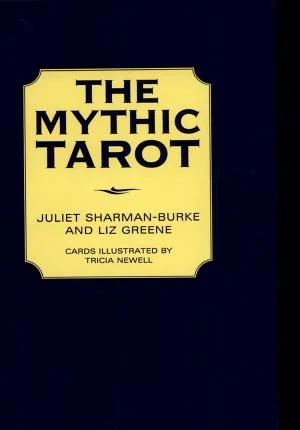
The Mythic Tarot
 73
73

The Mythic Tarot
The Mythic Tarot, by Juliet Sharman-Burke and Liz Greene, offers a robust, mythologically-grounded interpretation of the Tarot, a significant departure from more purely divinatory texts. Its strength lies in the meticulous mapping of Tarot archetypes onto figures and narratives from Greek mythology. For instance, the interpretation of The Fool as a representation of the youthful, untamed divine or the hero setting out on a quest, drawing parallels with figures like Persephone or Hermes, is particularly compelling. This approach lends considerable psychological weight to the cards. However, the sheer density of mythological references can sometimes overshadow the practical application for a beginner solely seeking divination. While the connection between The High Priestess and figures like Hecate or Demeter is illuminating, it requires a reader willing to engage deeply with classical lore. The work's most significant limitation is its academic tone, which, while informative, may alienate those looking for a more intuitive or streamlined system. Nevertheless, its contribution to understanding the Tarot as a symbolic system is undeniable, positioning it as a foundational text for serious students of esoteric symbolism. It firmly establishes the Tarot's archetypal roots in Western mythology.
📝 Description
73
Published in 1986, The Mythic Tarot connects Tarot imagery to Greek mythology and psychology.
The Mythic Tarot approaches the 78-card deck not just as a divinatory tool, but as a symbolic representation of the human psyche. It draws heavily on Greek mythology to reframe the cards' meanings. Each card's imagery and significance is detailed, with connections made to specific myths, heroes, and deities. This provides a framework for understanding personal development and shared human experiences through ancient stories.
The book is suited for those interested in a more academic and mythological interpretation of the Tarot. It will appeal to readers with a background in or interest in classical mythology, Jungian psychology, or comparative religion. While those seeking a simple predictive system may find its mythological depth requires careful study, individuals wanting to grasp the symbolic language of the Tarot as a reflection of the inner self will find ample material. It is for students of symbolism who view the Tarot as a codified system of wisdom.
Emerging in the mid-1980s, a time of growing interest in esoteric subjects and psychological theories, The Mythic Tarot offered a distinct perspective. Unlike many contemporary Tarot guides that focused on cartomancy or Qabalistic systems, this work grounded its interpretations in the narratives of Greek mythology. This choice provided a rich and accessible symbolic language that aligned with the growing influence of Carl Jung's ideas on archetypes and universal symbols in understanding the human condition.
💡 Why Read This Book?
• Understand the Tarot's archetypal language through the specific lens of Greek mythology, learning how figures like Zeus or Athena relate to the Major Arcana, providing a unique interpretive framework. • Gain insight into psychological archetypes by examining specific card correspondences, such as The Chariot's connection to Jason's quest, offering a deeper understanding of personal journeys. • Explore the 1986 publication context of esoteric studies, appreciating how this work engaged with Jungian psychology and comparative mythology to redefine Tarot interpretation beyond simple fortune-telling.
⭐ Reader Reviews
Honest opinions from readers who have explored this book.
❓ Frequently Asked Questions
What is the primary difference between The Mythic Tarot and other Tarot books?
The Mythic Tarot differentiates itself by grounding its interpretations in classical Greek mythology and Jungian psychology, rather than focusing solely on divination or Qabalistic associations. It explores each card's archetypal significance through specific myths and deities.
Who are the authors Juliet Sharman-Burke and Liz Greene?
Juliet Sharman-Burke is a British author and artist known for her work on Tarot and mythology. Liz Greene is a renowned Jungian psychotherapist and astrologer, co-authoring several influential esoteric texts.
How does The Mythic Tarot connect the Major Arcana to mythology?
The book interprets the Major Arcana as stages of a symbolic journey, mirroring the quests and transformations found in Greek myths. For example, The Emperor might be linked to a patriarchal deity like Zeus or Kronos.
Is this book suitable for beginners in Tarot?
It is suitable for beginners interested in a deeper, mythological understanding of the Tarot. However, its extensive mythological detail may require more focused study than simpler divination guides.
When was The Mythic Tarot first published?
The Mythic Tarot was first published in 1986, positioning it within a wave of renewed interest in esoteric and psychological interpretations of ancient systems.
Does The Mythic Tarot come with a specific deck?
While the book is often sold with a companion deck designed by the authors, the text itself focuses on the interpretation of the archetypes and myths, applicable to various Rider-Waite-Smith-based decks.
🔮 Key Themes & Symbolism
Archetypes and Greek Mythology
The central theme is the profound correspondence between Tarot archetypes and figures from Greek mythology. The Major Arcana are presented as symbolic representations of universal human experiences and stages of individuation, directly paralleled with myths of gods, goddesses, and heroes like Persephone, Apollo, or Odysseus. The book meticulously details how each card's imagery, color, and symbolism evoke specific mythological narratives, offering a framework for understanding the human psyche as a stage for these ancient dramas. This connection provides a rich, interpretive layer for both the cards and the myths themselves.
The Hero's Journey in Tarot
A significant thematic element is the interpretation of the Major Arcana as a symbolic representation of the 'Hero's Journey,' a concept popularized by Joseph Campbell. The sequence of the Major Arcana mirrors the archetypal path of the protagonist in countless myths, from the initial call to adventure (The Fool) through trials and tribulations (The Tower, The Devil) to eventual integration and enlightenment (The World). Each stage is linked to mythological precedents, providing a narrative structure that illuminates personal growth and the challenges inherent in spiritual development.
Psychological Depth of Tarot
The work explores the psychological dimensions of the Tarot, drawing heavily on Jungian concepts of archetypes and the collective unconscious. It posits that the Tarot is not merely a tool for prediction but a mirror reflecting the inner field of the individual. By examining the mythological figures associated with each card, readers are encouraged to explore their own inner dynamics, complexes, and potentials for transformation. The book frames Tarot reading as a process of self-discovery, where the symbolic language of the cards facilitates dialogue with the unconscious mind.
Symbolism and Interpretation
The book offers a detailed exploration of the symbolic language embedded within the Tarot. Each card's visual elements—figures, animals, colors, settings—are analyzed for their mythological and psychological significance. For example, the symbolism of the raven or serpent on certain cards is unpacked through their roles in ancient myths. This focus on specific symbols provides readers with a method for deeper interpretation, moving beyond surface-level meanings to understand the multi-layered messages conveyed by the Tarot's imagery.
💬 Memorable Quotes
Direct passages from the work, attributed to the author.
“The Fool represents the divine child, the innocent setting out on a quest with no preconceived notions.”
— This highlights the card's association with new beginnings, potential, and the unburdened spirit starting life's journey, often paralleled with mythological figures like Hermes or Persephone in her initial state.
“The High Priestess embodies the mysteries of the unconscious and the hidden knowledge accessible through intuition.”
— This interpretation links The High Priestess to the area of psychic awareness and inner wisdom, suggesting a connection to lunar symbolism and figures like Hecate or the Oracle of Delphi.
“The Lovers card signifies choice, union, and the integration of opposing forces, often reflected in mythological tales of divine pairings or difficult decisions.”
— This points to the card's role in exploring relationships, moral dilemmas, and the necessity of making conscious choices that lead to wholeness, akin to stories of divine unions or fateful choices in myth.
“The structure of the Major Arcana parallels the initiatory journey of the hero in classical mythology.”
— This statement underscores the book's core premise: the Tarot's archetypal sequence is a symbolic map of personal transformation, mirroring the universal narrative arc found in ancient hero myths.
“Each card is a gateway to understanding the archetypal patterns that shape our lives, drawing on ancient wisdom.”
— This emphasizes the Tarot's function as a symbolic system for self-reflection and understanding, connecting contemporary experience to the enduring patterns revealed through mythology and esoteric traditions.
🌙 Esoteric Significance
Tradition
The Mythic Tarot situates itself within the Western Esoteric Tradition, particularly drawing from Jungian psychology and comparative mythology. While not strictly Hermetic or Kabbalistic, it leverages the archetypal framework that underpins these traditions. Its departure lies in its primary reliance on Greek mythological narratives rather than Hebrew mysticism or alchemical symbolism. The work adapts the concept of symbolic correspondences, a hallmark of esoteric systems, to map Tarot imagery onto well-known deities and myths, making esoteric concepts accessible through a widely recognized cultural language.
Symbolism
Key symbols explored include the archetypal figures of the Major Arcana, such as The Emperor (linked to patriarchal deities like Zeus or Kronos, representing order and authority) and The High Priestess (associated with lunar mysteries and hidden knowledge, potentially linked to Hecate or Demeter). The journey motif, central to many Greek myths, serves as a symbolic structure for the sequence of the Major Arcana, representing stages of personal development and initiation. The book meticulously unpacks the visual symbolism of each card, connecting them to specific elements within Greek myths and their psychological implications.
Modern Relevance
Contemporary practitioners of Jungian psychology and mythology-based spiritual paths continue to draw upon The Mythic Tarot. Its approach has influenced modern Tarot interpretations that emphasize psychological depth and archetypal exploration. Thinkers and educators in fields like depth psychology, mythology studies, and contemporary paganism often cite its success in bridging ancient symbolic systems with psychological insight. The work's method of linking Tarot to narrative structures remains relevant for those seeking to understand symbolic language as a tool for personal growth and understanding the human condition.
👥 Who Should Read This Book
• Students of Jungian psychology seeking to understand archetypes through symbolic systems like the Tarot, gaining practical interpretive tools. • Enthusiasts of classical mythology interested in a new lens through which to explore Greek myths, connecting them to universal human experiences. • Tarot readers desiring a deeper, more psychological, and mythological interpretation beyond basic divination, enriching their practice with historical and symbolic context.
📜 Historical Context
Published in 1986, The Mythic Tarot emerged during a vibrant period of esoteric revival and psychological inquiry. The mid-1980s saw a surge in popular interest in Jungian psychology, comparative mythology, and alternative spiritual paths. This work distinguished itself by anchoring its interpretation of the 78-card Tarot firmly within the narratives of classical Greek mythology, offering a distinct alternative to Qabalistic or purely divinatory approaches prevalent at the time. It aligned with a broader intellectual current that sought to integrate ancient wisdom traditions with modern psychological understanding, influenced by figures like Carl Jung and Joseph Campbell. While the academic study of mythology was well-established, and Tarot had seen numerous interpretations since its resurgence in the late 18th century, The Mythic Tarot provided a specific, cohesive framework that resonated with a public eager to explore the symbolic depths of the Western esoteric tradition through a familiar mythological lens.
📔 Journal Prompts
The Fool's initiation into the unknown, as depicted in relation to Hermes.
The archetype of The Empress and her connection to the cycles of nature.
The confrontation with The Devil, mirrored in mythological tales of temptation.
The transformation symbolized by The Tower, drawing parallels with divine retribution myths.
The integration of opposites represented by The Lovers, exploring personal choice.
🗂️ Glossary
Archetype
In Jungian psychology, a universal, archaic pattern and image that derives from the collective unconscious and is the psychic counterpart of an inherited structure. The Mythic Tarot links these to mythological figures.
Collective Unconscious
A term coined by Carl Jung, referring to the deepest layer of the unconscious psyche, common to all humanity, containing the archetypes. The book suggests the Tarot draws from this universal reservoir.
Major Arcana
The 22 trump cards of the Tarot deck, representing significant life lessons, spiritual stages, and archetypal forces. In this work, they are mapped onto Greek mythological narratives.
Minor Arcana
The 56 cards of the Tarot deck, divided into four suits (Wands, Cups, Swords, Pentacles), which typically represent everyday events, challenges, and situations. The book connects these to mythological themes.
Individuation
A central concept in Jungian psychology, referring to the process of psychological differentiation, of becoming an 'individual'—that is, a separate, indivisible whole, or 'unique being.' The Tarot journey is seen as a path to this.
Cartomancy
The practice of divination using cards, typically a Tarot deck. While this book touches on it, its primary focus is on psychological and mythological interpretation.
Hero's Journey
A narrative pattern identified by Joseph Campbell, describing the typical stages of a hero's adventure in myths and stories. The Mythic Tarot uses this as a framework for the Major Arcana.
🔮 Readers Also Liked
Browse all →








More by Juliet Sharman-Burke, Liz Greene
All books →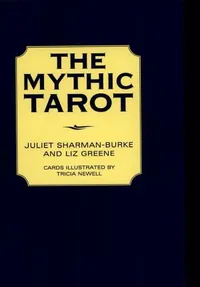

More Free Astrology & Cosmology Books
View all →