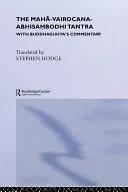
The Mahā-Vairocana-Abhisambodhi Tantra
 80
80

The Mahā-Vairocana-Abhisambodhi Tantra
The English translation of the Mahā-Vairocana-Abhisambodhi Tantra, bolstered by Buddhaguhya's 8th-century commentary, offers a much-needed scholarly entry point into a crucial text for Vajrayana Buddhism. The decision to present the first complete English version of this tantra is commendable, particularly given the scarcity of accessible resources on early Indian Buddhist Tantra. Buddhaguhya's commentary, historically significant, provides a vital lens through which to approach the text's dense teachings. One notable strength is the clear presentation of the lineage and the historical placement of the text within the development of Esoteric Buddhism. However, the work's primary limitation lies in its inherent academic nature; it is dense and assumes a foundational knowledge of Buddhist philosophy and terminology, which might prove challenging for those new to the subject. The section detailing the "Great Mandala" (Chapter 4) is particularly illuminating, offering a concrete example of the tantra's complex symbolic architecture. Ultimately, this is an indispensable resource for dedicated scholars and practitioners, rather than a general introduction.
📝 Description
80
The Mahā-Vairocana-Abhisambodhi Tantra is the first complete English translation of an 8th-century Indian Buddhist text.
This volume presents the first complete English translation of the Mahā-Vairocana-Abhisambodhi Tantra, a key scripture in Esoteric Buddhism. The Sanskrit text is accompanied by an 8th-century commentary from the Indian master Buddhaguhya, which offers historical and doctrinal context. Its publication in 2003 provided Western scholars and practitioners direct access to the teachings of this important tantra. The Mahā-Vairocana-Abhisambodhi Tantra emerged from late Indian Buddhism, likely between the 7th and 8th centuries CE, a time when Tantric practices were solidifying and integrating with Mahayana philosophy. It became a central text for Esoteric Buddhist traditions that later spread to East Asia and Tibet. Buddhaguhya's commentary is vital for understanding early interpretations and practices. This work is intended for serious students of Buddhist Tantra, scholars of religious studies, and practitioners seeking a deeper knowledge of Vajrayana Buddhism. It is particularly useful for those interested in the historical development of Buddhist esoteric traditions and their philosophical foundations. The book is not an introductory text but a scholarly resource for dedicated study.
The Mahā-Vairocana-Abhisambodhi Tantra is a foundational text within the Vairocanabhodhisattva school of Esoteric Buddhism. It emerged from the vibrant milieu of late Indian Buddhism, likely flourishing between the 7th and 8th centuries CE. This period saw the consolidation of Tantric practices and their integration into broader Mahayana philosophical frameworks. The text itself is considered a central scripture for the Esoteric Buddhist traditions that later spread to East Asia (as Chen-yen in China, Shingon in Japan) and Tibet. Buddhaguhya's commentary, also from the 8th century, is crucial as it clarifies early interpretations and practices.
💡 Why Read This Book?
• Learn about the cosmology of the Mahā-Vairocana-Abhisambodhi Tantra, specifically its depiction of Vairocana as the primordial Buddha, which offers a unique perspective on Buddhist ultimate reality. • Understand the historical development of Buddhist Tantra through Buddhaguhya's 8th-century commentary, providing concrete evidence of early tantric interpretations and practices. • Gain insight into the symbolic language of Vajrayana Buddhism by examining the tantra's detailed mandalas and ritualistic instructions, which are crucial for understanding the path to enlightenment within this tradition.
⭐ Reader Reviews
Honest opinions from readers who have explored this book.
❓ Frequently Asked Questions
What is the primary goal of the Mahā-Vairocana-Abhisambodhi Tantra?
The primary goal is to guide practitioners towards realizing their inherent Buddhahood by identifying with the cosmic Buddha Vairocana, understood as the embodiment of ultimate reality and wisdom.
Who was Buddhaguhya and why is his commentary important?
Buddhaguhya was an 8th-century Indian master whose commentary provides essential context and interpretation for the Mahā-Vairocana-Abhisambodhi Tantra, clarifying early doctrinal and ritualistic aspects.
Is this text suitable for beginners in Buddhism?
No, this text is a scholarly translation and commentary, best suited for advanced students of Buddhist Tantra, scholars, and practitioners with prior knowledge of Buddhist philosophy and terminology.
When was the Mahā-Vairocana-Abhisambodhi Tantra likely composed?
The text is believed to have emerged from late Indian Buddhism, likely between the 7th and 8th centuries CE, a period of significant development in Tantric Buddhist practices.
What role does Vairocana play in this tantra?
Vairocana is central, representing the primordial Buddha and the ultimate, all-pervading wisdom and reality from which all phenomena arise.
What makes this English translation significant?
It represents the first complete English translation of the Mahā-Vairocana-Abhisambodhi Tantra, making this seminal text accessible to a wider academic and practitioner audience.
🔮 Key Themes & Symbolism
Vairocana as Ultimate Reality
The tantra posits Vairocana not merely as a Buddha but as the embodiment of the Dharmakaya, the ultimate nature of reality itself. All existence is seen as the manifestation of Vairocana's enlightened mind. This perspective shifts the focus from a personal deity to the fundamental essence of consciousness. The text details practices aimed at realizing this non-dual nature, emphasizing that Buddhahood is not achieved but recognized as an inherent quality.
The Great Mandala and Ritual Practice
A significant focus is placed on the 'Great Mandala,' a complex symbolic representation of the cosmos and the enlightened mind. The text outlines specific rituals and visualizations for constructing and entering this mandala, facilitating the practitioner's identification with the divine. These practices involve mantra recitation, mudras (hand gestures), and contemplative techniques designed to purify the mind and transform ordinary perception into enlightened awareness.
Path to Buddhahood Through Identification
Unlike gradual paths, this tantra emphasizes a more direct approach to enlightenment by identifying with the enlightened principle. Through the prescribed practices, the practitioner aims to embody Vairocana's wisdom and compassion. This involves a profound transformation of the practitioner's understanding of self and reality, moving from a limited, ego-centric view to an expansive, universal consciousness.
Origins of Buddhist Tantra
This text is crucial for understanding the historical roots of Buddhist Tantra in India. Its compilation and the commentary by Buddhaguhya shed light on the period when esoteric practices began to be systematized and integrated into Mahayana Buddhism. The work challenges simplistic views of Tantra by demonstrating its philosophical depth and its development within established Buddhist frameworks.
💬 Memorable Quotes
Direct passages from the work, attributed to the author.
“The body is the mandala of the Buddha.”
— This statement highlights the tantric principle that the practitioner's own physical form can be transformed into a sacred space, a microcosm of the enlightened cosmos, through specific practices.
“All phenomena are the display of Vairocana's wisdom.”
— This emphasizes the non-dualistic view within the tantra, suggesting that the perceived world is not separate from enlightened consciousness but is, in fact, its expression.
“The mind of the practitioner becomes the mind of the Buddha.”
— This concisely captures the goal of tantric practice: the direct transformation and realization of the practitioner's mind as identical with the enlightened mind of Vairocana.
“Through visualization, one enters the great mandala.”
— This points to the importance of contemplative and imaginative practices in this tradition, where mental constructs serve as gateways to spiritual realization and understanding.
“The essence of the Tathagata is formless.”
— This paradoxical statement underscores the ultimate nature of Buddhahood, which transcends conceptualization and form, yet is accessible through embodied practices.
🌙 Esoteric Significance
Tradition
This tantra is a foundational text within the Vajrayana (Diamond Vehicle) tradition of Buddhism, specifically belonging to the Yoga Tantra classification. It represents a significant departure from earlier Buddhist schools by emphasizing direct realization of Buddhahood through complex rituals, visualizations, and mantra. It fits within the broader Mahayana framework but introduces an esoteric methodology focused on the identification of the practitioner with the cosmic Buddha Vairocana.
Symbolism
Central symbols include the mandala, particularly the 'Great Mandala,' which represents the universe as the manifestation of Vairocana's enlightened mind. Vairocana himself, often depicted as a radiant, white Buddha, symbolizes purity, wisdom, and the ultimate ground of being. The lotus flower is another recurring motif, signifying purity, spiritual unfolding, and the blossoming of enlightenment from the muddy waters of Samsara.
Modern Relevance
Contemporary practitioners of Shingon Buddhism in Japan and Tibetan Buddhist traditions continue to draw directly from the Mahā-Vairocana-Abhisambodhi Tantra. Thinkers and scholars in comparative religion and esoteric studies frequently reference it when examining the development and diversity of Buddhist thought and practice, particularly concerning the philosophical underpinnings of tantric methodologies.
👥 Who Should Read This Book
• Students of Vajrayana Buddhism: Those seeking to understand the foundational texts and philosophical underpinnings of Tibetan and East Asian Esoteric Buddhist lineages will find this translation and commentary essential. • Comparative Religion Scholars: Researchers interested in the evolution of religious thought in India and the development of esoteric traditions within major world religions will benefit from its historical and doctrinal context. • Dedicated Practitioners of Buddhist Meditation: Individuals engaged in advanced contemplative practices will find detailed instructions on visualization, mantra, and mandala symbolism relevant to their path.
📜 Historical Context
The Mahā-Vairocana-Abhisambodhi Tantra emerged during a key era in Indian Buddhism, likely between the 7th and 8th centuries CE, a period characterized by the sophisticated development and systematization of esoteric doctrines and practices. This tantra is a core part of the Yogatantra (or Mahāyoga) classification within Buddhist Tantra, profoundly influencing traditions that later spread to China (as Zhenyan) and Japan (as Shingon). Its composition reflects the intellectual ferment of the Pala Empire period, where Buddhism reached a high point of philosophical and institutional development. Buddhaguhya, the commentator, was a contemporary figure whose work in the 8th century helps anchor the tantra's early interpretation, placing it within the context of evolving Mahayana thought, even as competing schools like the Madhyamaka continued to refine their own philosophical stances. The tantra's emphasis on Vairocana as the primordial Buddha and its intricate ritualistic frameworks represent a significant evolution from earlier Buddhist forms, marking a move towards direct, initiatory pathways to enlightenment.
📔 Journal Prompts
The practitioner's body as the mandala of the Buddha: how can this concept inform daily awareness?
Vairocana's wisdom as the source of all phenomena: explore a mundane event through this lens.
The significance of Buddhaguhya's 8th-century commentary for understanding early tantric interpretation.
Reflecting on the Great Mandala: what symbolic elements resonate most with your current understanding of reality?
The transformation of ordinary consciousness into enlightened awareness: what mental shifts does this text suggest?
🗂️ Glossary
Vairocana
A primordial Buddha in Esoteric Buddhism, representing the ultimate reality, cosmic wisdom, and the source of all phenomena. Often depicted as the central figure in mandalas.
Tantra
A genre of Buddhist literature and practice emphasizing esoteric rituals, mantras, visualizations, and the direct path to Buddhahood, often through identification with divine principles.
Mandala
A symbolic diagram, often circular, representing the universe, a deity's palace, or the enlightened mind. Used as a tool for meditation and ritual.
Bodhisattva
An enlightened being in Mahayana Buddhism who delays their own nirvana to help all sentient beings achieve enlightenment.
Dharmakaya
The 'truth body' or ultimate body of a Buddha, representing the unmanifested, pure reality and wisdom that is beyond form and conceptualization.
Vajrayana
The 'Diamond Vehicle' or 'Thunderbolt Vehicle,' a branch of Mahayana Buddhism characterized by its esoteric teachings, rapid path to enlightenment, and use of tantric methods.
Samsara
The cycle of birth, death, and rebirth, characterized by suffering, driven by karma and ignorance, from which Buddhists seek liberation.