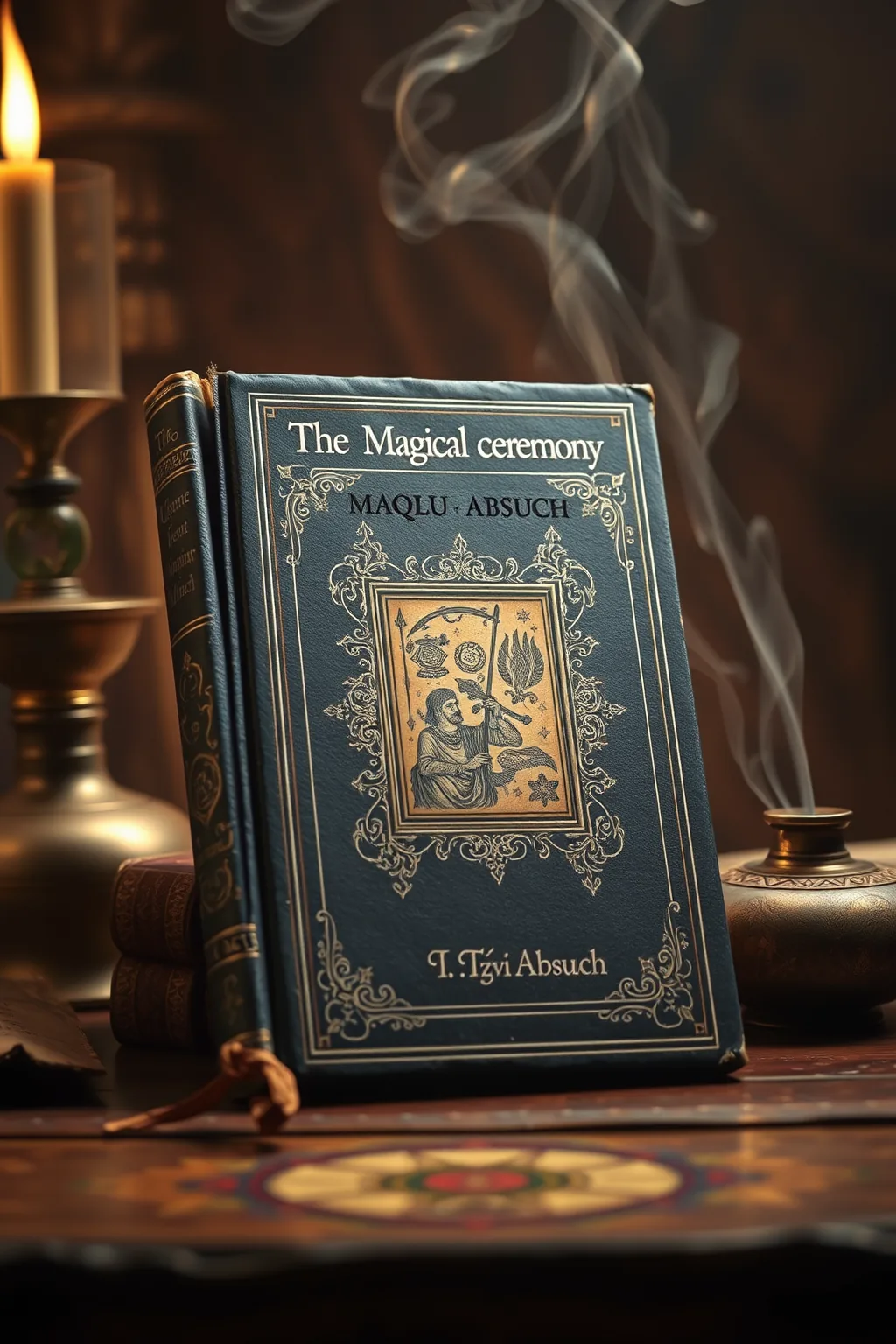
The magical ceremony Maqlu
 61
61

The magical ceremony Maqlu


Celeste Moreau (Divination & Symbolism Reviewer) — I. Tzvi Abusch's meticulous rendering of the Maqlû series is an indispensable cornerstone for any serious student of ancient magic. This work transcends mere translation, offering profound insights into the sophisticated anti-witchcraft practices of Assyro-Babylonian culture. Abusch masterfully illuminates the intricate textual layers and ceremonial architecture, revealing the deep symbolic resonance of each incantation and ritual act. Its strength lies in presenting a complete, coherent magical system, vital for understanding Mesopotamian cosmology and the human impulse to control unseen forces. Essential for scholars of ancient Near Eastern religions, practicing magicians, and those fascinated by the enduring power of ritual.
📝 Description
61
I. Tzvi Abusch translated the nine Maqlû tablets, a core Akkadian text against witchcraft, in 2015.
This book presents I. Tzvi Abusch's comprehensive translation and study of the Maqlû series, a nine-tablet Akkadian ritual collection. Known as 'Burning,' Maqlû details incantations and ceremonies aimed at combating witchcraft and malevolent forces in ancient Mesopotamia. It goes beyond a simple spell collection, revealing a worldview where spiritual and material realities were deeply connected.
Abusch reconstructs the development of this tradition, highlighting its symbolic power and specialized knowledge. The work is suited for practitioners, scholars, and those interested in ancient beliefs. It allows readers to examine a potent magical system, understand its mechanisms, and see the anxieties it addressed. The text's ritual instructions and descriptions create a sense of the sacred and dangerous, drawing readers into ancient Mesopotamian belief and magic.
The Maqlû texts belong to a significant corpus of Mesopotamian magical literature, particularly focused on protective and counter-sorcery rituals. This tradition, preserved on clay tablets, reflects a society deeply concerned with unseen forces and the use of ritual to maintain order and well-being. Unlike more speculative or philosophical esoteric systems, Mesopotamian magic was highly practical, relying on specific actions, words, and materials to achieve desired outcomes. Abusch's work places these rituals within their cultural and historical context, showing how they functioned as a response to perceived threats and social anxieties.
💡 Why Read This Book?
Uncover the most comprehensive ancient Mesopotamian ritual against witchcraft. Explore a sophisticated magical system rooted in millennia of tradition. Gain unparalleled insight into Assyro-Babylonian beliefs about sorcery and protection. Ideal for scholars, occult practitioners, and anyone seeking to understand the deep history of magical defense and ritualistic power.
⭐ Reader Reviews
Honest opinions from readers who have explored this book.
❓ Frequently Asked Questions
What is the primary purpose of the Maqlû series?
The Maqlû series is primarily a collection of incantations and rituals designed to combat and neutralize witchcraft and its effects within ancient Mesopotamian society. It outlines a complex ceremonial process for protection.
Who was I. Tzvi Abusch?
I. Tzvi Abusch was a renowned scholar specializing in ancient Near Eastern languages and religions, particularly Mesopotamian magic and literature. His work is highly respected for its scholarly rigor and insightful analysis.
What does 'Maqlû' mean?
'Maqlû' is an Akkadian word that translates to 'Burning'. This title directly refers to the central ritualistic act within the series, which involves the burning of symbolic effigies and materials.
How many tablets comprise the Maqlû series?
The Maqlû series is a substantial work composed of nine distinct tablets, each containing specific incantations and instructions for the magical ceremony.
What kind of knowledge can be gained from studying Maqlû?
Studying Maqlû offers insights into ancient Mesopotamian cosmology, religious beliefs, the social anxieties surrounding witchcraft, and the practical application of ritual magic for protection and spiritual warfare.
🔮 Key Themes & Symbolism
The Power of Incantation and Ritual
This theme explores the fundamental belief in the efficacy of spoken words and meticulously performed actions as conduits of supernatural power. Maqlû demonstrates how ancient Mesopotamians harnessed the potent force of incantations, believing that precise verbal formulas, when combined with specific ritualistic gestures and symbolic offerings, could directly influence the spiritual realm. The text reveals a sophisticated understanding of sympathetic magic and the power of naming, where invoking the names of deities and enemies, and employing symbolic representations, were crucial for achieving magical outcomes. It highlights a worldview where ritual was not mere superstition, but a vital tool for maintaining cosmic order and personal safety.
Witchcraft as a Cosmic Threat
Maqlû provides a stark portrayal of witchcraft as a pervasive and dangerous threat to individuals, families, and the social fabric of ancient Mesopotamia. The text reveals a deep-seated fear of malevolent magic, where witches were believed to possess the power to inflict illness, misfortune, and even death through curses and spiritual attacks. The elaborate rituals within Maqlû are a proof of the perceived severity of these threats, showcasing a society that actively sought to defend itself against unseen forces. Understanding this theme offers a crucial lens into the anxieties and beliefs that shaped ancient Mesopotamian life and their spiritual defense mechanisms.
The Symbolic Language of Protection
This theme explores the body of symbols employed within the Maqlû ceremonies to achieve protection. From the burning of effigies representing the sorcerers and their victims, to the use of specific herbs, oils, and divine imagery, every element carries profound symbolic weight. These symbols acted as a form of spiritual armor, designed to deflect negative energies and to invoke the aid of benevolent deities. The meticulous construction of the ritual space and the precise handling of symbolic objects underscore a complex system of magical correspondences, where the physical actions mirrored and manipulated spiritual realities. It's a proof of the ancient understanding of the power inherent in symbolic representation.
💬 Memorable Quotes
Direct passages from the work, attributed to the author.
“Let the sorcerer be burned like this reed.”
— This incantation highlights the core ritualistic act of 'burning' and its symbolic intent: to metaphorically destroy the power and influence of the sorcerer through fiery purification.
“May your witchcraft turn back upon you.”
— This phrase expresses the principle of 'returning' or 'reflecting' negative magic, a common theme in protective spells aimed at deflecting harm back to its source.
“The gods are witnesses to this burning.”
— This invokes divine authority and endorsement for the ritual, reinforcing the belief that the gods oversee and sanction the expulsion of malevolent forces.
“I bind your hands, I tie your feet.”
— This expresses the desire to neutralize the sorcerer's ability to act, a direct magical manipulation aimed at rendering the witch powerless.
“May your magic dissolve like wax in the sun.”
— This metaphor illustrates the desired outcome of the ritual – the complete dissolution and rendering ineffective of the witch's harmful spells and intentions.
🌙 Esoteric Significance
Tradition
Maqlû is a central to Mesopotamian magical tradition, specifically within the field of protective and counter-sorcery rituals. It represents the culmination of a long development in Akkadian incantatory literature and ceremonial practice. This tradition is characterized by its pragmatic approach to magic, aiming to directly influence worldly affairs and spiritual forces. It is deeply rooted in a polytheistic worldview where the appeasement, invocation, and manipulation of divine powers were essential for well-being and safety. Maqlû stands as a proof of the sophisticated understanding of ritual dynamics and the symbolic interplay between the human and divine spheres within this ancient esoteric lineage.
Symbolism
The symbolism in Maqlû is rich and multi-layered, revolving primarily around the concept of 'burning' as purification and destruction. Effigies made of clay, dough, or fat, representing the sorcerer and their victims, are ritually consumed by fire, symbolizing the annihilation of their power and influence. Other key symbols include specific herbs known for their purifying or protective properties, divine imagery invoked for aid, and the symbolic binding or severing of the witch's magical faculties. The act of 'burning' itself is a potent symbol of transformation, cleansing, and the ultimate triumph of order over chaos.
Modern Relevance
In the modern era, Maqlû offers clear insights into the enduring human need for protection against perceived threats, both internal and external. Its complex rituals and symbolic language resonate with contemporary practitioners of magic, occultism, and those interested in comparative religion. The text serves as a powerful reminder of the psychological and spiritual impact of belief systems and the universal human endeavor to exert control over the unpredictable aspects of existence. For scholars, it remains an invaluable primary source for understanding ancient belief systems, while for seekers, it provides a tangible link to powerful, time-tested methods of spiritual defense and empowerment.
👥 Who Should Read This Book
Scholars of ancient Near Eastern studies, Assyriology, and comparative religion will find Maqlû an indispensable primary source, offering exceptional access to Mesopotamian magical practices and beliefs. Occult practitioners and students of esoteric traditions will appreciate its detailed ceremonial instructions and potent symbolic language, providing a rich vein of practical and theoretical knowledge. Seekers of ancient wisdom and those fascinated by the history of magic will be drawn to its raw power and glimpse into a worldview where the spiritual and material were profoundly intertwined. Beginners in occult studies may find it challenging due to its complexity, but rewarding for its historical depth and foundational insights into ritualistic practice.
📜 Historical Context
The Maqlû series originates from the Neo-Assyrian period (c. 911-609 BCE) in Mesopotamia, a time marked by burgeoning empires, extensive trade networks, and a sophisticated urban culture. This era witnessed a peak in the development of cuneiform literature, including extensive magical and religious texts. The constant threat of warfare, political intrigue, and natural disasters likely fueled a heightened awareness of unseen forces and the need for divine and magical protection. Witchcraft was a significant social concern, and texts like Maqlû reflect a structured, organized approach to combating it, indicating a well-established priestly and magical class responsible for safeguarding the community. The meticulous preservation and study of these nine tablets highlight their immense cultural and religious importance, offering a rare glimpse into the anxieties and spiritual practices of one of history's most influential civilizations.
📔 Journal Prompts
Reflect on a time you felt threatened or powerless. How did you seek to regain control, and what symbolic actions did you take?
Consider the concept of 'burning' as purification in your own life. What aspects of yourself or your environment do you wish to cleanse?
Analyze the concept of witchcraft as presented in Maqlû. How do modern anxieties or fears manifest as perceived 'curses' or 'negative influences' today?
Imagine you are creating a protective ritual. What symbols, incantations, and actions would you employ, and why?
How does the Maqlû ritual’s attempt to bind the sorcerer’s power resonate with your own desires for personal boundaries and protection?
Explore the relationship between spoken word and action in magic. How does intent manifest through ritualistic performance?
🗂️ Glossary
Akkadian
An ancient Semitic language spoken in Mesopotamia, used for administrative, literary, and religious texts, including the Maqlû series.
Incantation
A series of words said or sung as a magic spell or charm. In Maqlû, these are potent verbal formulas believed to wield supernatural power.
Ritual
A set of actions performed in a fixed order, often with symbolic meaning, used in religious or magical ceremonies. Maqlû details a complex ritual process.
Witchcraft
The practice of magic or sorcery, often believed to be used for malevolent purposes. In Mesopotamia, it was a significant social concern addressed by texts like Maqlû.
Neo-Assyrian Period
A historical period in Mesopotamian history from roughly 911 to 609 BCE, during which many significant magical and literary texts, including Maqlû, were compiled and utilized.
This book appears in 3 collections
🔮 Readers Also Liked
Browse all →




From the “Ritual Magic” Collection
View all →






More Free Magic & Ritual Books
View all →