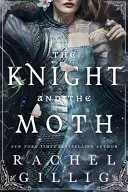
The Knight and the Moth
 81
81

The Knight and the Moth
Rachel Gillig's The Knight and the Moth charts a course through familiar archetypes with a fresh, albeit somewhat understated, intensity. The author skillfully employs the titular imagery not as mere decoration, but as a functional axis around which the protagonist's internal struggle revolves. A particular strength lies in the subtle unfolding of the Knight's motivations, which avoids the pitfall of overt exposition. However, the narrative's pacing occasionally falters, particularly in the middle sections where the symbolic weight seems to momentarily obscure forward momentum. A passage discussing the Knight's contemplation of the Moth's ephemeral existence before the flame offers a poignant, if brief, moment of profound reflection. It offers a solid, introspective read for those drawn to symbolic narratives.
📝 Description
81
Rachel Gillig's 2025 novel, The Knight and the Moth, examines internal transformation through symbolic quests.
The Knight and the Moth traces a narrative focused on archetypal journeys and hidden truths. It looks at transformation, not just from external events, but through internal changes that alter a person's view of reality. The book goes beyond simple storytelling to consider the symbolic meaning of character development and plot.
This novel appeals to readers interested in allegorical literature and psychological symbolism. Those who like stories that work on multiple levels, encouraging thought about courage, societal expectations, and the unseen forces that shape lives, will find depth here. It is for readers seeking meaning beyond the everyday. The narrative addresses inner conflict and the pursuit of difficult goals. It looks at the connection between perceived duty and personal desires, often shown through symbolic quests. The 'Moth' represents attraction to the unknown or dangerous, while the 'Knight' shows dedication to a difficult path.
Published in 2025, The Knight and the Moth appears during a time of renewed interest in Jungian psychology and archetypal criticism. This period has seen a growing demand for literature that explores existential questions using imaginative structures, moving away from purely empirical or materialistic views. The work fits into a literary trend that uses classic narrative forms to examine modern anxieties.
💡 Why Read This Book?
• Gain a deeper understanding of the archetypal struggle between duty and desire, as exemplified by the Knight's journey and the Moth's allure, offering a unique lens for personal introspection. • Explore the symbolic significance of the Knight and the Moth, concepts central to the narrative's exploration of attraction to the unknown and the commitment to a chosen path. • Experience a narrative that, published in 2025, reflects contemporary literary engagement with archetypal psychology and symbolic quest structures, providing a modern perspective on classic themes.
⭐ Reader Reviews
Honest opinions from readers who have explored this book.
❓ Frequently Asked Questions
What is the central symbolism in The Knight and the Moth?
The central symbolism revolves around the Knight, representing duty, steadfastness, and a chosen path, and the Moth, symbolizing attraction to the dangerous, the unknown, or the ultimately consuming.
When was The Knight and the Moth first published?
The Knight and the Moth was first published on April 3, 2025.
What genre does The Knight and the Moth fall under?
While narrative, it leans towards allegorical and symbolic literature, engaging with themes often explored in esoteric or psychological fiction.
Who is the author of The Knight and the Moth?
The author of The Knight and the Moth is Rachel Gillig.
Does the book explore themes of personal transformation?
Yes, the narrative framework of the Knight's journey inherently explores themes of internal shifts and redefinition of one's relationship with perceived reality.
What kind of reader would enjoy this book?
Readers who appreciate layered narratives, symbolic exploration, and stories that prompt contemplation on archetypal journeys and the nature of courage and aspiration.
🔮 Key Themes & Symbolism
The Knight's Quest
The narrative centers on the Knight's undertaking, which is less about external victory and more about the internal resolve required to pursue a path. This quest becomes a vehicle for exploring themes of commitment, sacrifice, and the often-unseen battles waged within the self. The journey is fraught with symbolic obstacles that mirror psychological challenges, pushing the Knight to confront his own limitations and definitions of purpose.
The Moth's Allure
The Moth serves as a powerful counterpoint to the Knight's structured pursuit. It represents an irresistible draw towards the unknown, the potentially perilous, or even the self-destructive. This allure is not depicted as purely negative but as a fundamental aspect of existence, embodying fascination with the ephemeral, the forbidden, or the transcendent, prompting questions about what truly calls to us.
Symbolic Transformation
The core of the work lies in the transformative potential inherent in confronting symbolic archetypes. The Knight and the Moth are not static figures but catalysts for change, their interplay forcing a re-evaluation of the protagonist's worldview. This transformation is depicted as an internal process, a shift in perception and understanding that reconfigures the individual's relationship with external reality and inner truth.
Duality and Balance
The book explores the inherent duality present in many quests and life paths. The Knight's structured approach and the Moth's chaotic attraction represent opposing forces that, when brought into proximity, reveal a deeper truth about balance. The narrative suggests that true understanding often emerges from the tension between these seemingly disparate elements, rather than their absolute separation.
💬 Memorable Quotes
Direct passages from the work, attributed to the author.
“The flame that beckons is the same that consumes.”
— This aphorism expresses the central duality of the Moth's symbolism. It speaks to the inherent danger in that which draws us, suggesting that ultimate fascination can lead to destruction, a concept explored throughout the Knight's journey.
“Where the light ends, the true shape of things is revealed.”
— This suggests that understanding is not solely derived from clarity or obviousness. It posits that confronting the obscured, the ambiguous, or the 'shadow' aspects of existence is crucial for a complete perception of reality.
“The Moth does not seek the flame; it is drawn by its very nature.”
— This interpretation of the Moth's motivation moves beyond simple desire, framing its attraction as an intrinsic, almost fated, response to a powerful external force, mirroring archetypal drives.
“His armor was his resolve, his sword, his unwavering gaze.”
— This metaphorical description highlights the Knight's inner strength. His true 'weapons' are not physical but psychological: his determination and focused intent, underscoring the internal nature of his struggle.
💡 Key Ideas
Editorial paraphrase of the work's core concepts — not direct quotes.
A path chosen is a path defended, even into shadow.
This quote emphasizes the commitment and resolve required by the Knight. It highlights that the act of choosing a direction in life necessitates a willingness to face adversity and the unknown, rather than shying away from difficulty.
🌙 Esoteric Significance
Tradition
While not explicitly tied to a single historical esoteric lineage, The Knight and the Moth engages with themes resonant within Hermeticism and Jungian psychology, both of which have influenced modern esoteric thought. The work's focus on archetypal symbolism, inner transformation, and the interplay of light and shadow aligns with perennial philosophy's emphasis on universal truths accessible through symbolic understanding.
Symbolism
The Knight embodies the disciplined seeker, representing the ego or conscious will striving towards a goal, often mirroring the alchemical concept of the 'solve' phase. The Moth, conversely, symbolizes the anima or the unconscious drive, drawn to that which illuminates but also potentially consumes, akin to the alchemical 'coagula' or the lure of the prima materia. The interplay suggests a necessary integration of these forces for true individuation.
Modern Relevance
Contemporary thinkers in fields ranging from depth psychology to spiritual coaching draw heavily on archetypal narratives. The Knight and the Moth's exploration of the internal quest and the magnetic pull of the unknown speaks directly to modern anxieties and aspirations for meaning, making it relevant for individuals seeking to understand their own psychological landscapes and life paths.
👥 Who Should Read This Book
• Students of Jungian psychology and archetypal symbolism: Readers seeking narrative examples that illustrate concepts like the shadow, the anima, and the hero's journey will find fertile ground. • Aspiring writers and storytellers: Those interested in crafting allegorical narratives or exploring psychological depth in their fiction can analyze Gillig's symbolic techniques. • Individuals on a personal quest for meaning: Readers who resonate with themes of inner conflict, purpose, and the allure of the unknown will find contemplative material for self-reflection.
📜 Historical Context
The Knight and the Moth, released in 2025, arrives during a period marked by a significant revival of interest in Jungian archetypes and symbolic interpretation within literary circles. This era, following decades where postmodernism often deconstructed grand narratives, sees a counter-movement embracing allegorical depth and psychological realism. While authors like Jordan Peterson have popularized Jungian concepts in broader discourse, literary works like Gillig's engage with these ideas through narrative form. The book's exploration of inherent drives and symbolic quests can be seen as a response to a contemporary cultural landscape seeking meaning beyond superficial materialism. Its reception will likely be measured against a backdrop of renewed fascination with mythic structures and the human psyche, a trend that contrasts with the more empirical and analytical literary criticism prevalent in the late 20th century.
📔 Journal Prompts
The Knight's chosen path and its shadowed destination.
The Moth's nature as a force of attraction and peril.
Moments where inner resolve superseded external circumstance.
The symbolic meaning of confronting the 'flame that consumes'.
Interpreting the balance between the Knight's duty and the Moth's allure in one's own life.
🗂️ Glossary
Archetype
A universal, inherited pattern of thought or image derived from the collective unconscious, as described by Carl Jung, often manifesting in myths and symbols.
Symbolic Quest
A narrative journey undertaken not just for external achievement, but as a means of inner exploration, transformation, and the discovery of deeper truths.
Inner Resolve
The steadfast determination and mental fortitude of an individual, often tested and strengthened through confronting internal conflicts or external challenges.
The Shadow
In Jungian psychology, the unconscious or repressed aspects of the personality, often perceived as negative or undesirable, which can nonetheless hold vital energy.
Allegory
A story, poem, or picture that can be interpreted to reveal a hidden meaning, typically a moral or political one, using symbolic figures and actions.
Individuation
The process of psychological development whereby a person becomes an individual; a unified, whole self, often involving the integration of conscious and unconscious elements.
Perennial Philosophy
The idea that all major religions and spiritual traditions share a common, underlying truth or wisdom, accessible through introspection and symbolic understanding.