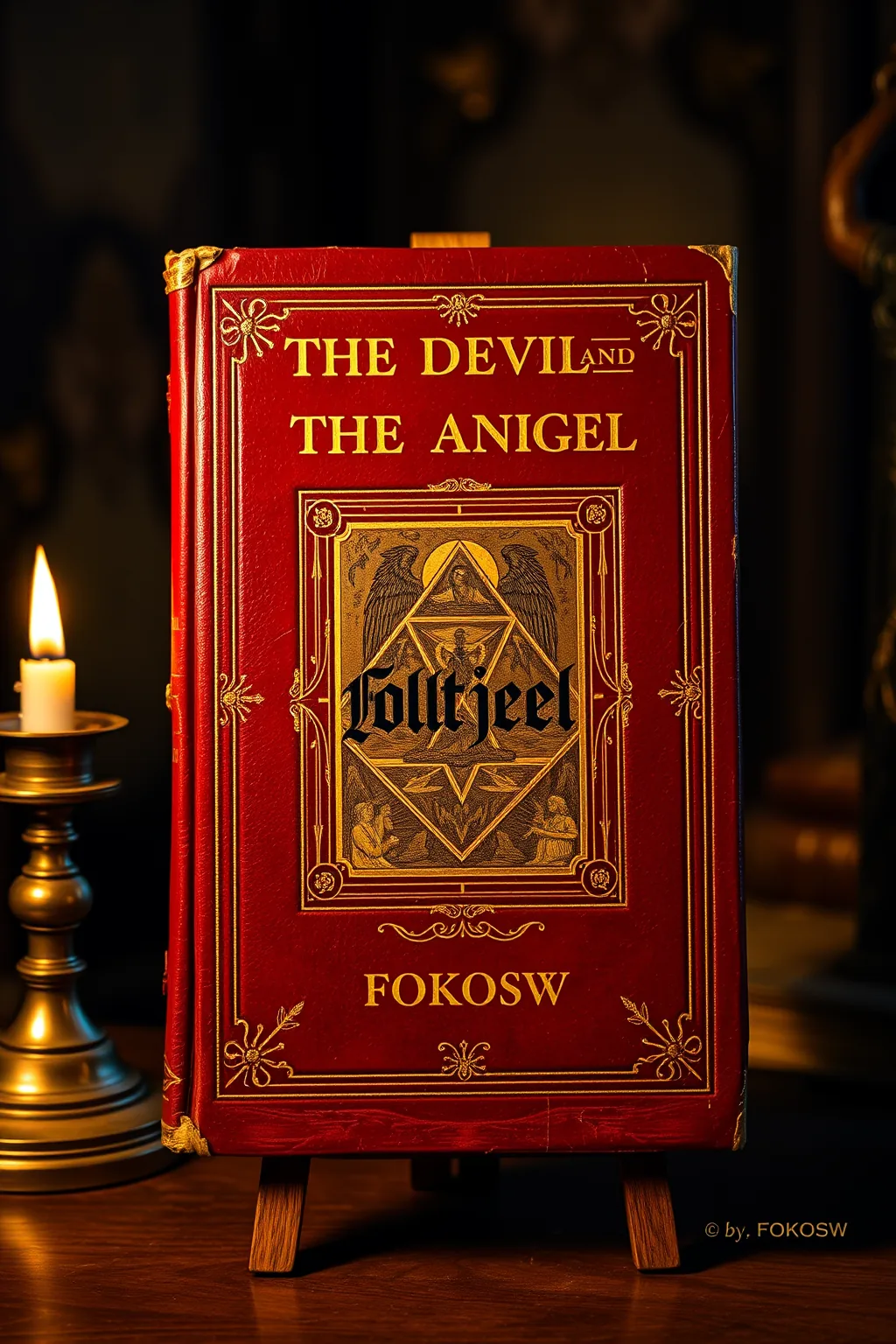
The Devil And The Angel: Who Will Win?
 73
73

The Devil And The Angel: Who Will Win?



In The Devil and the Angel: Who Will Win?, FOKOSW masterfully weaves together complex philosophical concepts with esoteric insights, creating a compelling narrative that resonates deeply with those interested in the occult and metaphysics. The author's exploration of nihilism and subjective idealism is both profound and accessible, making it an invaluable resource for scholars and seekers alike. The book's strength lies in its ability to challenge conventional thought and inspire readers to delve deeper into the mysteries of existence. FOKOSW's work is a must-read for anyone seeking to expand their understanding of the occult and its role in our world.
📝 Description
73
FOKOSW's The Devil and the Angel: Who Will Win? examines subjective idealism's impact on consciousness.
This book engages with metaphysical questions, existential nihilism, and epistemology, all framed by subjective idealism. FOKOSW addresses the nature of consciousness as an infinite stream, seeking to reveal what lies beyond ordinary perception. The text encourages deep thought and spiritual insight, aiming to illuminate aspects of existence that are not commonly considered. It uses a wealth of symbolism and esoteric lore to challenge established thinking. Readers are prompted to re-examine their fundamental beliefs. The work is suited for those interested in metaphysics or the pursuit of hidden knowledge, promising an immersive experience into the unknown.
The author’s approach encourages a shift in perspective. It does not simply present information but guides the reader through a process of questioning and discovery. The book’s structure and content are designed to foster personal contemplation. By connecting abstract philosophical concepts with esoteric traditions, FOKOSW creates a unique dialogue. This dialogue aims to expand the reader's understanding of reality and their place within it.
FOKOSW's work situates itself within traditions that explore the relationship between mind and reality, often referred to as esoteric philosophy. It touches upon ideas found in schools of thought that posit consciousness as primary, influencing the perceived material world. This perspective often intersects with occult traditions that seek hidden knowledge and spiritual transformation through symbolic systems and introspection. The book engages with themes of dualism, represented by the 'Devil and the Angel,' suggesting an internal or cosmic struggle that is central to many esoteric systems.
💡 Why Read This Book?
Read The Devil and the Angel: Who Will Win? to gain a deeper understanding of metaphysics, existential nihilism, and the hidden aspects of reality. This book is ideal for seekers, scholars, and practitioners of the occult who are looking to explore the unexplored and challenge their preconceived notions of existence. FOKOSW's unique perspective offers a fresh and thought-provoking approach to these timeless questions.
⭐ Reader Reviews
Honest opinions from readers who have explored this book.
❓ Frequently Asked Questions
What is the main theme of the book?
The main themes of the book are nihilism, metaphysics, and subjective idealism, explored through the lens of occult philosophy.
Who is the intended audience for this book?
The intended audience includes scholars of metaphysics, occult practitioners, and spiritual seekers interested in esoteric knowledge.
Does the book discuss religious concepts?
Yes, the book delves into religious concepts such as heaven and hell, exploring them through a metaphysical and nihilistic perspective.
What makes this book unique?
The book's unique perspective on subjective idealism and its exploration of occult mysteries set it apart from other works in the field.
How does the book approach the concept of existence?
The book approaches the concept of existence through a philosophical and esoteric lens, challenging conventional wisdom and inviting readers to question their beliefs.
🔮 Key Themes & Symbolism
Nihilism and Existence
The book explores the concept of nihilism, questioning the meaning and purpose of existence. FOKOSW explores how subjective idealism challenges conventional notions of reality, inviting readers to consider the infinite stream of consciousness and its implications.
The Occult and Hidden Knowledge
FOKOSW's work uncovers hidden truths and occult mysteries that lie beneath the surface of reality. The author's exploration of these themes offers a body of symbolism and esoteric knowledge, challenging readers to question their beliefs and seek deeper understanding.
Metaphysics and Subjective Idealism
The book's metaphysical inquiries are grounded in subjective idealism, a philosophical perspective that challenges the notion of an objective reality. Through this lens, FOKOSW explores the unexplored aspects of existence, inviting readers to consider the infinite possibilities of consciousness.
💬 Memorable Quotes
Direct passages from the work, attributed to the author.
“Hell and heaven are constructs of the mind, shaped by our beliefs and fears.”
— FOKOSW challenges conventional religious concepts, inviting readers to consider the metaphysical dimensions of these ideas.
“Nihilism is not a negation of existence, but a celebration of its infinite possibilities.”
— FOKOSW's unique perspective on nihilism challenges conventional wisdom and invites readers to consider the transformative power of this philosophical concept.
💡 Key Ideas
Editorial paraphrase of the work's core concepts — not direct quotes.
The stream of consciousness is an infinite journey into the unknown.
This quote highlights the book's exploration of subjective idealism and its implications for our understanding of reality.
The occult is not a mystery to be solved, but a journey to be undertaken.
This quote emphasizes the book's esoteric insights and the importance of personal exploration in uncovering hidden truths.
The devil and the angel are not external forces, but aspects of our own consciousness.
This quote underscores the book's exploration of the self and its role in shaping our reality.
🌙 Esoteric Significance
Tradition
The book belongs to the Hermetic tradition, drawing on the principles of subjective idealism and the exploration of hidden knowledge. FOKOSW's work is a proof of the enduring relevance of these esoteric principles in our modern world.
Symbolism
Key symbols in the book include the infinite stream of consciousness, the devil and the angel as aspects of the self, and the exploration of heaven and hell as metaphysical constructs. These symbols invite readers to delve deeper into the mysteries of existence and uncover hidden truths.
Modern Relevance
The book's exploration of nihilism and subjective idealism is particularly relevant today, where conventional wisdom is being challenged and new perspectives are sought. Contemporary practitioners of the occult and metaphysics continue to draw upon FOKOSW's insights, using them to deepen their understanding and expand their knowledge.
👥 Who Should Read This Book
Beginners interested in the occult and metaphysics will find The Devil and the Angel: Who Will Win? an accessible and thought-provoking introduction to these fields. Scholars of philosophy and esoteric knowledge will appreciate the book's depth and complexity, while spiritual seekers will be inspired by its exploration of hidden truths and the infinite possibilities of consciousness. Practitioners of the occult will find valuable insights and symbolism that can deepen their practice and understanding.
📜 Historical Context
The Devil and the Angel: Who Will Win? was written in an era where philosophical inquiry and esoteric knowledge were gaining renewed interest. FOKOSW's work reflects the zeitgeist of the time, challenging conventional wisdom and inviting readers to explore the unexplored aspects of existence. The book's influence can be seen in the growing interest in metaphysics, nihilism, and the occult, as well as in the works of contemporary scholars and practitioners who continue to build upon its insights.
📔 Journal Prompts
Reflect on the concept of nihilism and its implications for your understanding of existence.
Consider the role of the occult in your spiritual journey and how it challenges your beliefs.
Explore the idea of subjective idealism and how it shapes your perception of reality.
What are the devil and the angel within you, and how do they influence your actions and decisions?
How does the infinite stream of consciousness affect your understanding of the self and the world around you?
🗂️ Glossary
Nihilism
A philosophical perspective that questions the meaning and purpose of existence, often leading to a rejection of conventional values and beliefs.
Subjective Idealism
A philosophical view that posits reality as dependent on the mind, challenging the notion of an objective reality.
Occult
The study of hidden or secret knowledge, often involving esoteric practices and symbolism.
Metaphysics
The branch of philosophy that explores the fundamental nature of reality, existence, and the self.
Esoteric
Relating to or denoting knowledge that is restricted to a small group of people or is difficult to understand.
This book appears in 7 collections
🔮 Readers Also Liked
Browse all →









From the “Consciousness Expansion” Collection
View all →


More Free Occult Philosophy Books
View all →