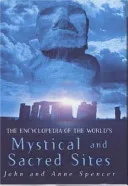
The Encyclopedia of the World's Mystical and Sacred Sites
 81
81

The Encyclopedia of the World's Mystical and Sacred Sites
Spencer and Spencer's encyclopedia arrives not with the thunderclap of revelation, but with the steady, informative hum of a well-researched guide. It excels in its breadth, cataloging sites from the Andean heights of Machu Picchu to the chalk figures of England with commendable detail. The section on Glastonbury Tor, for instance, efficiently summarizes its Arthurian and pre-Christian associations, a feat many a lesser work might overcomplicate. However, the sheer scope occasionally leads to a certain superficiality; the mystical underpinnings, while present, are often stated rather than deeply explored. The limitation lies in its encyclopedic nature – it maps the terrain of sacred geography but rarely ventures into the uncharted territories of lived spiritual experience. It functions best as a robust starting point, a cartographer's detailed atlas of the world's holy places, rather than a mystic's personal journal.
📝 Description
81
Published in 2002, this encyclopedia surveys global sites of spiritual significance.
The Encyclopedia of the World's Mystical and Sacred Sites, by John and Anne Spencer, meticulously documents locations across the globe that have held spiritual meaning for humanity. It covers places of worship, pilgrimage, and potent energy, from ancient megalithic structures to sites central to major world religions. The book combines geographical data with historical and mythological context, serving as a reference for those interested in the physical expressions of belief systems.
This volume appeals to explorers of the sacred, armchair travelers, and academic researchers. Students of comparative religion, mythology enthusiasts, and anyone curious about the intersection of geography and spirituality will find value. It is for individuals seeking to understand the physical foundations of belief, the enduring power of pilgrimage sites, and the historical narratives woven around sacred places.
Published in 2002, this work emerged during a period of increased interest in esoteric studies and global spiritual traditions. The late 20th and early 21st centuries saw many books attempting to synthesize diverse belief systems and historical accounts. This encyclopedia contributes to that trend by structuring information on sacred geography, detailing how specific locations become focal points for collective belief, often predating or coexisting with organized religious doctrines.
💡 Why Read This Book?
• Gain a foundational understanding of over 100 sacred sites, from Easter Island's Moai to Egypt's Pyramids, appreciating their historical and spiritual roles. • Explore the concept of pilgrimage routes and their significance across diverse cultures, understanding how locations like Lourdes became spiritual centers. • Discover the geographical and architectural elements of sacred places, learning how sites like Stonehenge were constructed and aligned with celestial events.
⭐ Reader Reviews
Honest opinions from readers who have explored this book.
❓ Frequently Asked Questions
What is the primary focus of The Encyclopedia of the World's Mystical and Sacred Sites?
The book focuses on documenting and explaining the historical, mythological, and spiritual significance of various sacred and mystical sites across the globe, acting as a comprehensive reference guide.
Which types of locations are covered in the encyclopedia?
It covers a wide array, including ancient strongholds like Machu Picchu, religious centers such as Lourdes, prehistoric monuments like Stonehenge, and sites tied to the dawn of civilization like the Egyptian Pyramids.
Who are the authors of this encyclopedia?
The book is authored by John Spencer and Anne Spencer, first published in 2002.
Is this book suitable for beginners in esoteric studies?
Yes, its encyclopedic format and clear explanations make it accessible for beginners interested in sacred geography and comparative religion.
Does the book discuss lesser-known sacred sites?
Yes, alongside famous locations, the work also explores lesser-known sites that hold significant spiritual or historical importance.
What is the original publication year of this work?
The Encyclopedia of the World's Mystical and Sacred Sites was first published on January 1, 2002.
🔮 Key Themes & Symbolism
Sacred Geography and Earth Energies
The work meticulously maps locations imbued with spiritual power, positing that certain geographical formations and alignments possess inherent energies. It examines how ancient cultures recognized and utilized these energies, often aligning their structures, like Stonehenge, with celestial events or geological features. The book details how sites across continents, from the Andes to the British Isles, share common threads in their perceived energetic significance, influencing human consciousness and spiritual practices.
Pilgrimage and Spiritual Journeys
Central to the book is the concept of pilgrimage as a transformative human practice. It chronicles journeys to sites such as Lourdes and the Egyptian Pyramids, illustrating how physical travel to sacred locations facilitates spiritual growth and connection. The encyclopedia explores the motivations behind these journeys, the rituals performed, and the lasting impact on individuals and communities, highlighting the enduring power of place in spiritual seeking.
Myth, Religion, and Site Foundation
This volume investigates the deep connections between foundational myths, religious doctrines, and the physical sites where they are enacted. It presents how stories of creation, divine intervention, and heroic deeds are inextricably linked to specific geographical locations, from the Inca stronghold of Machu Picchu to sites in Easter Island. The book demonstrates how these narratives shape the perceived sanctity of a place and its role in collective belief systems.
Ancient Civilizations and Sacred Architecture
The encyclopedia looks at the architectural achievements of ancient peoples, focusing on structures designed for spiritual or ceremonial purposes. It analyzes the deliberate construction and placement of sites like the Pyramids and megalithic monuments, exploring their astronomical alignments and symbolic meanings. The work underscores how these architectural endeavors represent a profound understanding of cosmology and the sacred, serving as physical manifestations of complex belief systems.
💬 Memorable Quotes
Direct passages from the work, attributed to the author.
“Certain places on Earth continue to exert a mysterious hold over us through the centuries.”
— This sentiment captures the enduring fascination with sacred sites, suggesting an intrinsic, almost magnetic quality that draws human attention and reverence across historical epochs.
“The foundations of religions and beliefs have been laid [in these places].”
— This highlights the important role of specific geographical locations in the genesis and development of spiritual traditions and belief systems worldwide.
“From the Machui Picchu - the Inca stronghold in the Peruvian Andes - to the Pyramids in Egypt - the site of the dawn of civilization...”
— This establishes the vast geographical and chronological scope of the encyclopedia, linking prominent ancient sites as examples of humanity's deep-seated connection to the sacred.
“In an easy-to-use reference form, this text tells the stories and the places...”
— This describes the book's practical utility, aiming to provide accessible information on significant spiritual locations and their associated narratives for a broad audience.
“The work covers both the famous, such as Easter Island, Lourdes in France, and England's Stonehenge, and the less well known...”
— This indicates the book's comprehensive approach, ensuring that readers are exposed not only to universally recognized sacred sites but also to more obscure yet significant locations.
🌙 Esoteric Significance
Tradition
While not strictly adhering to a single esoteric lineage, the work draws heavily from traditions that recognize the sacredness of place, including Hermeticism's emphasis on correspondence between the macrocosm and microcosm, and Gnostic ideas of divine immanence in the material world. It aligns with Theosophical interests in ancient wisdom and global spirituality by presenting a unified view of humanity's sacred sites. The book departs from rigid dogma by focusing on the observable phenomena of pilgrimage and sacred architecture across cultures.
Symbolism
The encyclopedia implicitly explores the symbolism of mountains as points of divine connection (e.g., Machu Picchu) and water bodies as sources of purification and life (e.g., Lourdes). It also touches upon the symbolism of stone circles like Stonehenge, representing cosmic order, astronomical cycles, and ancient ritual practices. These symbols function as archetypal anchors, reflecting a universal human need to find meaning and connection through the natural and constructed landscape.
Modern Relevance
Contemporary spiritual seekers, eco-spiritual movements, and practitioners of earth-based spirituality often reference works like this encyclopedia. It provides a foundational mapping for understanding the energetic significance of locations, which is a key tenet in modern paganism and New Age thought. Researchers in comparative mythology and scholars interested in the phenomenology of religious experience also find value in its broad survey of sites that continue to inspire awe and devotion.
👥 Who Should Read This Book
• Armchair travelers and armchair explorers of the sacred interested in learning about significant global pilgrimage destinations and their historical contexts. • Students of comparative religion and mythology seeking a broad overview of how different cultures perceive and interact with sacred landscapes. • Individuals curious about the intersection of history, geography, and spirituality, wanting to understand the physical foundations of belief systems worldwide.
📜 Historical Context
The Encyclopedia of the World's Mystical and Sacred Sites, published in 2002, arrived at a time when academic and popular interest in comparative religion, mythology, and esoteric traditions was flourishing. The late 20th century saw a surge in works seeking to synthesize diverse spiritual practices and ancient wisdom, moving beyond purely Western religious frameworks. This book contributed to that milieu by providing a structured, geographically organized overview. It engaged with the growing field of sacred geography, which examines the relationship between human consciousness and landscape. While not directly engaging in polemics, its comprehensive nature implicitly challenged narrower, dogma-bound perspectives on spirituality by presenting a global panorama of belief. Contemporary authors like Mircea Eliade had already laid significant groundwork in the phenomenology of religion and the study of sacred space, and this encyclopedia can be seen as a popular synthesis building upon such scholarly foundations.
📔 Journal Prompts
Machu Picchu's strategic placement in the Andes: What does its geography suggest about the Inca worldview?
The enduring draw of Lourdes: How does the narrative of the site shape its perceived spiritual power?
Stonehenge's alignment with solstices: Reflect on the significance of celestial observation in ancient sacred sites.
The varied functions of sacred sites: Compare the purposes of a pilgrimage center like Lourdes with a defensive stronghold like Machu Picchu.
The concept of 'dawn of civilization' sites: Consider what makes locations like the Egyptian Pyramids foundational to human belief.
🗂️ Glossary
Megalithic
Relating to or denoting prehistoric structures built solely of large, rough stones, such as Stonehenge. These structures often served ceremonial or astronomical purposes.
Pilgrimage
A journey or search of moral or spiritual significance. Typically, it is a journey to a place considered sacred or holy by people of a certain faith or purpose.
Sacred Geography
The study of the relationship between sacred beliefs and the physical environment. It examines how places are imbued with religious or spiritual meaning and how these meanings influence human behavior.
Archetypal
Relating to or denoting an original model or type after which similar things are patterned. In a spiritual context, it refers to universal symbols or motifs.
Cosmology
The branch of astronomy concerned with the origin and development of the universe. In a spiritual context, it refers to a belief system's understanding of the order of the universe.
Inca Stronghold
Refers to fortified settlements or strategic locations established and controlled by the Inca Empire in South America, such as Machu Picchu.
Prehistoric Monuments
Ancient structures built by people before the development of written records, often serving religious, astronomical, or social functions, e.g., Stonehenge.