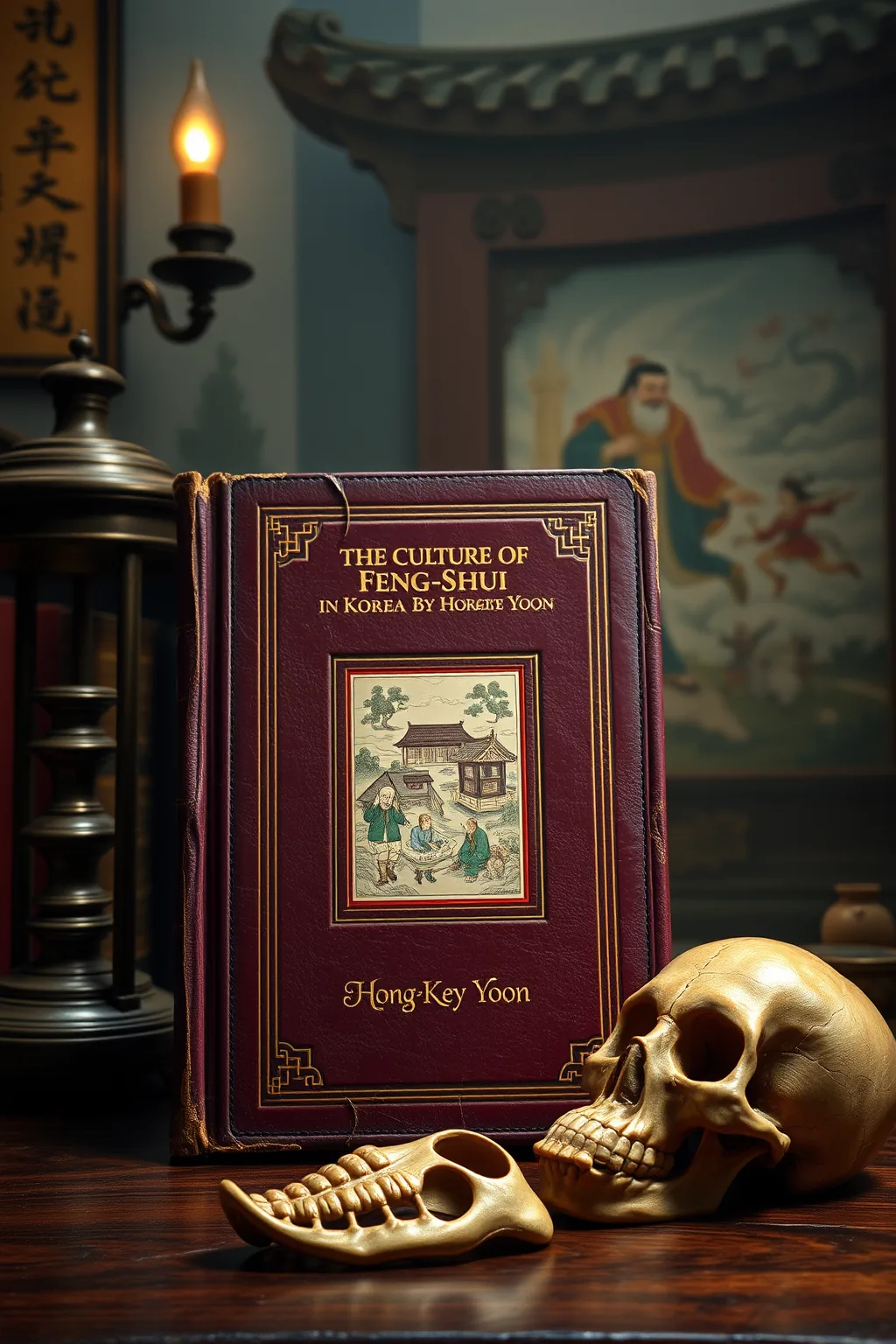
The Culture of Feng-Shui in Korea
 62
62

The Culture of Feng-Shui in Korea



Review by Balthazar Finch (Senior Critic, Occult Philosophy) — Hong-Key Yoon's "The Culture of Feng-Shui in Korea" is a seminal work, offering an authoritative and deeply insightful exploration of Korean geomancy. Yoon masterfully deciphers the intricate interplay of elemental forces and cosmic energies that have guided Korean life. He transcends superficial interpretations, revealing the profound philosophical and spiritual dimensions of this ancient practice. The book is a treasure trove of hidden knowledge, illuminating how the landscape itself becomes a living text for understanding destiny and harmony. Esoteric practitioners will find invaluable insights into the practical application and symbolic depth of Feng-Shui, while scholars will appreciate its rigorous historical and cultural analysis. This is essential reading for anyone seeking to grasp the esoteric underpinnings of Eastern cosmology and its manifestation in the tangible world.
📝 Description
62
Hong-Key Yoon's 1984 book examines how Korean geomancy shaped society, architecture, and culture.
First published in 1984, "The Culture of Feng-Shui in Korea" investigates the role of geomancy, known as P'ungsu in Korean, within Korean society. Hong-Key Yoon details how these principles influenced everything from the layout of villages and homes to the siting of graves and palaces. The book moves beyond a simple description of practices to analyze the underlying philosophy that connects human settlements with the natural environment.
Yoon's work connects the Korean understanding of P'ungsu to broader East Asian metaphysical concepts, including yin and yang and the five elements. It shows how these ideas were not just abstract theories but practical guides for living, impacting decisions about land use, architecture, and even personal fortune. The book provides concrete examples of P'ungsu in action across different strata of Korean society.
This book situates Korean geomancy, P'ungsu, within the larger tradition of Feng Shui originating in China. It explores how these principles, concerned with the flow of vital energy (Qi) and the balance of cosmic forces, became integrated into Korean culture. The work examines the philosophical and cosmological underpinnings that informed the Korean approach to harmonizing human life with the surrounding landscape, affecting everything from the placement of burial sites to the design of dwellings and public buildings.
💡 Why Read This Book?
Uncover the hidden energetic blueprint of Korean culture. This book offers a rare glimpse into how geomancy, or Feng-Shui, has profoundly influenced Korean social structures, historical events, and daily life. For seekers of esoteric knowledge, scholars of Eastern traditions, and practitioners of geomancy, it provides a rich tapestry of insights into the profound connection between humanity, the land, and the cosmos.
⭐ Reader Reviews
Honest opinions from readers who have explored this book.
❓ Frequently Asked Questions
What is the core concept of Korean Feng-Shui?
The core concept revolves around the harmonious arrangement of physical spaces and environments to facilitate the optimal flow of 'Qi' (vital energy), fostering well-being, prosperity, and good fortune for individuals and communities.
How does Korean Feng-Shui differ from Chinese Feng-Shui?
While sharing foundational principles, Korean Feng-Shui often emphasizes the unique geographical features of the Korean peninsula and has incorporated distinct cultural interpretations and historical developments over centuries.
What role does landscape play in Korean Feng-Shui?
The landscape is paramount. Mountains, rivers, and bodies of water are seen as living entities imbued with spiritual significance, dictating auspicious locations for homes, villages, and burial sites.
Is this book suitable for beginners interested in Feng-Shui?
Yes, the book provides a comprehensive introduction, explaining complex concepts in an accessible manner, making it ideal for both beginners and those with prior knowledge seeking a deeper understanding of its Korean context.
What are the primary benefits of understanding Korean Feng-Shui?
Understanding Korean Feng-Shui offers insights into creating balanced living spaces, fostering personal harmony, appreciating the spiritual connection to nature, and gaining a deeper cultural understanding of Korea's historical development.
🔮 Key Themes & Symbolism
The Energetic Range of Korea
This theme explores the profound belief that the Korean peninsula is imbued with intrinsic energetic currents. Mountains are seen as benevolent guardians, rivers as lifeblood, and the very topography as a map of cosmic forces. The book illustrates how this perception shaped settlement patterns, architectural design, and the spiritual reverence for nature, revealing a worldview where the land itself is a sentient entity guiding human destiny.
Ancestral Harmony and Geomantic Sites
A crucial aspect of Korean Feng-Shui involves the meticulous placement of ancestral graves. This theme explores the belief that the energy of the departed directly influences the fortune of their descendants. The book details the elaborate geomantic considerations for selecting burial sites, ensuring a harmonious connection between the earthly area of the living and the spiritual area of ancestors, thereby safeguarding prosperity and lineage continuity.
The Five Elements and Cosmic Cycles
This theme elucidates the foundational principles of the Five Elements (Wood, Fire, Earth, Metal, Water) and their dynamic interplay within the Korean geomantic framework. It examines how these elements manifest in architecture, urban planning, and daily life, influencing balance, harmony, and the cyclical progression of time. Understanding these elemental relationships is key to grasping the esoteric logic that underpins Korean spatial philosophy.
💬 Memorable Quotes
Direct passages from the work, attributed to the author.
“Where water flows, fortune follows.”
— Highlights the importance of water sources in Feng-Shui, symbolizing wealth, prosperity, and the continuous flow of positive energy.
“A mountain's embrace shields the home.”
— Illustrates the protective and nurturing aspect attributed to mountains in Feng-Shui, providing stability and security to dwellings.
“The unseen currents shape our destiny.”
— Emphasizes the esoteric nature of Feng-Shui, suggesting that invisible energetic forces play a significant role in determining life's path and outcomes.
“Harmony with nature is harmony within.”
— Connects the external practice of geomancy with internal spiritual and psychological well-being, advocating for a holistic approach to life.
💡 Key Ideas
Editorial paraphrase of the work's core concepts — not direct quotes.
The land breathes, and we breathe with it.
This quote expresses the core animistic belief in Korean geomancy, where the environment is not inert but alive, sharing a vital connection with human existence.
🌙 Esoteric Significance
Tradition
Korean Feng-Shui is deeply rooted in East Asian cosmological traditions, drawing heavily from Taoist principles of Qi, Yin and Yang, and the Five Elements. It integrates indigenous Korean shamanistic beliefs and animism, viewing the natural world as imbued with spiritual essence and vital energy, accessible through careful observation and harmonious interaction.
Symbolism
Key symbols include mountains (stability, protection), water (wealth, flow), and celestial bodies (cosmic order). The arrangement of these elements, along with the precise orientation of structures, creates a symbolic language that speaks of balance, prosperity, and the interconnectedness of the earthly and heavenly realms. The interplay of Yin (passive, dark) and Yang (active, light) further defines auspicious relationships within the environment.
Modern Relevance
In contemporary Korea, while traditional practices may have evolved, the underlying principles of Feng-Shui continue to subtly influence urban development, interior design, and even personal career choices. It offers a framework for understanding the psychological impact of our surroundings and a perennial philosophy for seeking balance and well-being in an increasingly complex world, connecting modern life to ancient wisdom.
👥 Who Should Read This Book
This book is a vital resource for a diverse audience. **Beginners** will find an accessible entry point into the fascinating world of geomancy, learning the foundational principles and their cultural significance. **Scholars** of East Asian studies, cultural anthropology, and religious history will appreciate its rigorous research and nuanced analysis. **Esoteric practitioners** and **seekers of hidden knowledge** will discover clear insights into the practical and spiritual applications of Feng-Shui, enriching their understanding of cosmic energies and environmental harmony. Anyone interested in the profound connection between place, culture, and destiny will find this book useful.
📜 Historical Context
During the Joseon Dynasty (1392-1897), the influence of Neo-Confucianism intertwined with deeply rooted animistic beliefs and the adoption of Chinese geomantic principles. This era saw Feng-Shui become an integral part of statecraft, urban planning, and social hierarchy. The selection of capital cities, the placement of royal tombs, and the design of administrative buildings were all subject to rigorous geomantic analysis, aiming to secure dynastic longevity and national prosperity. Simultaneously, common people applied these principles to their homes, villages, and burial sites, seeking personal well-being and protection from malevolent forces. This period solidified Feng-Shui as a pervasive cultural force, shaping the physical and spiritual range of Korea for centuries to come.
📔 Journal Prompts
How does the concept of 'Qi' influence your perception of your living space?
Reflect on a natural landscape that evokes a sense of peace or power. What elements contribute to this feeling?
Consider the placement of your home or workspace. Does it feel energetically balanced?
How have historical beliefs about the land shaped the architecture or layout of your community?
What are the 'mountains' and 'waters' in your personal life that provide stability and foster growth?
🗂️ Glossary
Qi (Chi)
The vital life force or cosmic energy believed to flow through all things, influencing health, fortune, and the environment.
Yin and Yang
The fundamental principle of complementary opposites in Taoist philosophy, representing passive/feminine (Yin) and active/masculine (Yang) forces.
Five Elements
The classical Chinese cosmological concept of five fundamental elements (Wood, Fire, Earth, Metal, Water) whose interactions govern all phenomena.
Geomancy
The practice of divining or determining the auspiciousness of a site based on its geographical features and energetic properties; Feng-Shui is a form of geomancy.
Daesangmok
A term referring to a significant or auspicious topographical feature, often a mountain or river, considered vital in geomantic analysis.
This book appears in 3 collections
🔮 Readers Also Liked
Browse all →








More by Hong-Key Yoon
All books →



From the “Geomancy” Collection
View all →






More Free Divination & Tarot Books
View all →