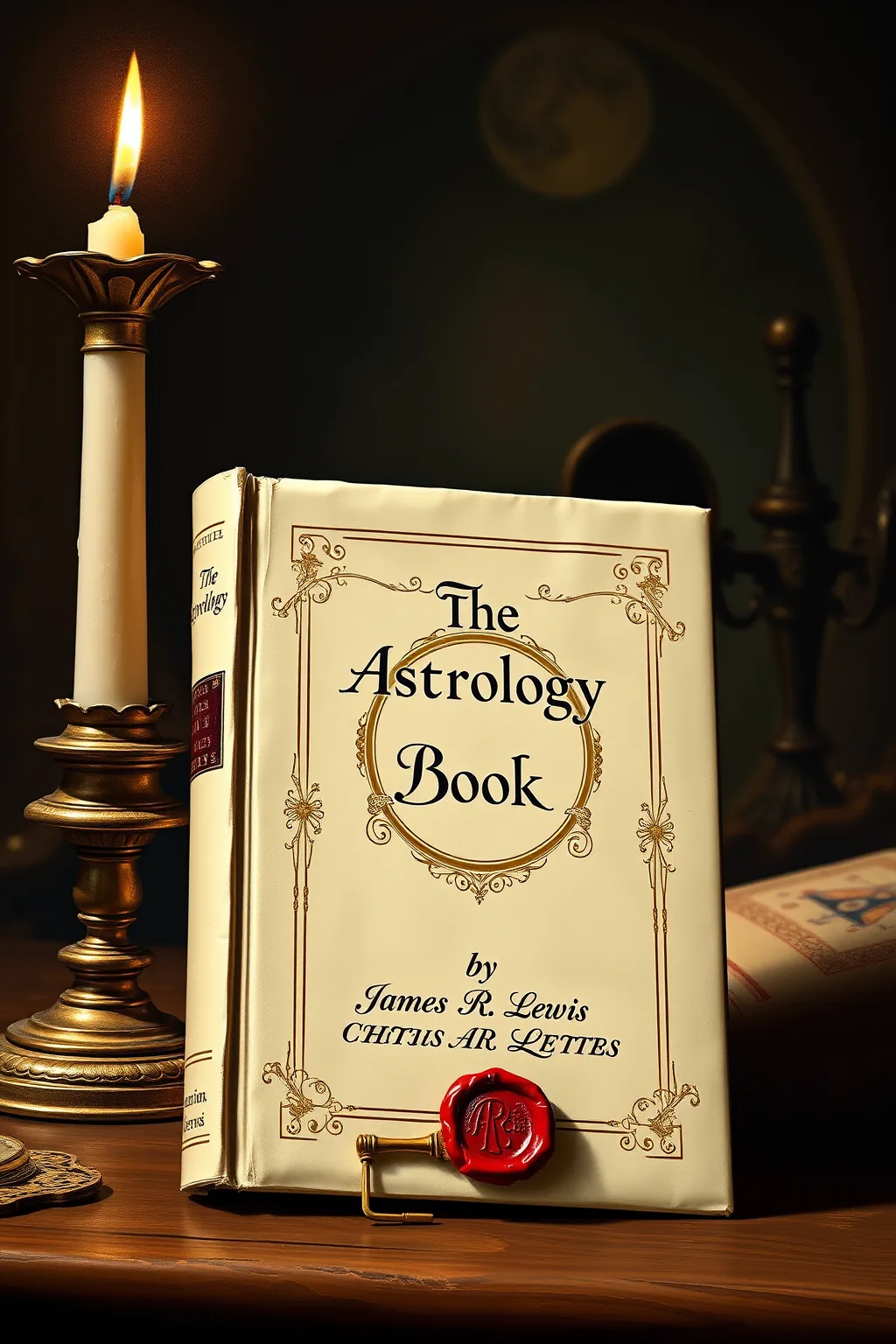
The Astrology Book
 76
76

The Astrology Book
James R. Lewis’s The Astrology Book is undeniably ambitious, attempting to catalog the entirety of astrological terminology in a single, hefty volume. Its strength lies in its sheer scope; the breadth of terms defined, from the common (sun signs) to the more obscure (Zeus, in an astrological context), is impressive. The book’s approach to defining over 800 concepts offers a readily accessible reference point for practitioners and curious laypeople alike. However, the work’s encyclopedic nature, while comprehensive, can sometimes feel like a list rather than a cohesive exploration. For instance, its definition of the astrological concept of 'aspects' is factually accurate but lacks the interpretive depth one might seek in understanding how these planetary relationships truly function in a chart. The true limitation is that while it defines terms, it doesn't always fully illuminate the complex interplay that gives astrology its predictive and symbolic power. It serves best as a dictionary, not a divinatory guide. Ultimately, it’s a valuable resource for its factual compilation, if not for its philosophical exposition.
📝 Description
76
James R. Lewis's The Astrology Book, published in March 2003, defines over 800 astrological terms.
The Astrology Book is a reference volume on astrology published in March 2003. It covers a wide array of celestial influences and their supposed effects on human life. The work contains definitions for more than 800 astrological terms and concepts, spanning 928 pages. Lewis's book is structured for both beginners and experienced students of astrology. Its encyclopedic format allows for quick lookups of specific terms and helps build a general understanding of astrological principles. The book also addresses the historical and cultural aspects of celestial interpretation, making it useful for a general audience interested in these dimensions.
It systematically defines and elaborates on core astrological concepts. This includes detailed explanations of the twelve zodiac signs, the planets and their archetypal meanings, the twelve houses representing different life areas, and the aspects that describe the angular relationships between celestial bodies. The book also addresses more obscure terms and historical figures relevant to the field, aiming for a thorough cataloging of astrological lore.
Published in the early 2000s, The Astrology Book appeared during a time of renewed interest in esotericism, often linked to the lingering influence of the 'New Age' movement. This period saw many guides aiming to make complex subjects accessible. Lewis's work contributed to a trend of organizing occult and esoteric traditions into encyclopedic formats, moving away from earlier, less structured approaches to these subjects.
💡 Why Read This Book?
• Gain a precise understanding of over 800 astrological terms, from 'air signs' to specific planetary deities, by referencing the extensive glossary and definitions provided in this 928-page tome. • Explore the historical influences and meanings of celestial bodies and their positions, as detailed in the book's comprehensive explanations of zodiac signs and planetary archetypes. • Demystify complex astrological concepts by consulting the detailed explanations, enabling you to grasp the foundational principles that underpin astrological interpretation as presented by James R. Lewis.
⭐ Reader Reviews
Honest opinions from readers who have explored this book.
❓ Frequently Asked Questions
What is the primary purpose of James R. Lewis's The Astrology Book?
The primary purpose of The Astrology Book is to serve as a comprehensive, single-volume reference guide to astrology. It defines and explains over 800 astrological terms and concepts, making it a detailed resource for students and enthusiasts of celestial influences.
How many pages does The Astrology Book contain?
The Astrology Book is a substantial volume containing 928 pages, reflecting its aim to be a thorough and complete reference on the subject of astrology.
Who is the author of The Astrology Book?
The Astrology Book was written by James R. Lewis. It was first published in March 2003.
What kind of information can I expect to find in The Astrology Book?
You can expect to find definitions and explanations for a vast array of astrological terms and concepts, ranging from zodiac signs and planets to houses, aspects, and more obscure astrological lore.
Is The Astrology Book suitable for beginners?
Yes, its encyclopedic format and extensive definitions make it suitable for beginners seeking to understand astrological terminology, as well as for more experienced students needing a quick reference.
What is the publication date of The Astrology Book?
The Astrology Book was first published on March 1, 2003.
🔮 Key Themes & Symbolism
Zodiacal Archetypes
The book systematically breaks down the twelve zodiac signs, from Aries to Pisces, exploring their elemental associations (fire, earth, air, water) and their associated qualities. It explains how these archetypes are believed to influence personality, behavior, and life paths, providing a foundational understanding of one of astrology's most recognizable components. Each sign is presented with its ruling planet and key characteristics, offering a structured approach to understanding these fundamental celestial influences.
Planetary Meanings
Central to astrological interpretation is the role of the planets. The Astrology Book details the traditional and modern interpretations of each planet, from the Sun and Moon to Mars, Venus, Jupiter, Saturn, Uranus, Neptune, and Pluto. It explains their symbolism as energetic forces or archetypal principles that govern different facets of human experience and destiny. The book clarifies how planetary positions and interactions are understood to shape individual horoscopes.
Astrological Houses
The twelve houses of the zodiac represent different areas of life, such as self, possessions, communication, home, career, and relationships. This work defines each house and its significance, explaining how the placement of planets within these houses is interpreted to provide insight into specific life domains. Understanding the houses is crucial for a holistic astrological reading, and Lewis's book offers a clear exposition of their roles.
Aspects and Configurations
Beyond the signs, planets, and houses, astrology considers the geometric relationships between celestial bodies, known as aspects. The book explains these angles—such as conjunctions, oppositions, squares, and trines—and their significance in describing the dynamics and challenges within a birth chart. It details how these configurations indicate areas of harmony, tension, or integration in an individual's life and fate.
💬 Memorable Quotes
Direct passages from the work, attributed to the author.
“Definitions for over 800 astrological terms and concepts.”
— This statement highlights the book's core function as an exhaustive reference. It emphasizes the sheer volume of information, positioning the work as a comprehensive dictionary for anyone seeking to understand the specialized language of astrology.
“The definitive work on celestial forces and the influence of the stars.”
— This assertion frames the book as the ultimate authority on astrological principles. It suggests a depth and completeness that aims to satisfy even the most rigorous inquiries into how the heavens purportedly affect earthly matters and human destiny.
“From air signs to Zeus and everything in between.”
— This phrase illustrates the broad scope of the book's coverage. It signals that the work addresses both fundamental astrological elements like zodiac signs and extends to more diverse or classical references, promising a wide-ranging exploration.
“Students of the sun and stars and the laypeople interested in knowing.”
— This identifies the intended audience, suggesting the book is accessible to both dedicated practitioners and newcomers. It implies that the content is presented in a manner suitable for various levels of astrological knowledge and interest.
“Massive 928-page tome.”
— This descriptor emphasizes the physical scale and comprehensive nature of the book. It conveys that the volume is substantial and likely contains a great deal of detailed information, positioning it as a significant resource.
🌙 Esoteric Significance
Tradition
While not explicitly tied to a single esoteric lineage like Hermeticism or Kabbalah, The Astrology Book functions within the broader Western esoteric tradition that has long incorporated astrological systems. It draws upon the ancient practice of astrology, which has historically been intertwined with Hermetic philosophy and Neoplatonism, providing a modern, encyclopedic framework for these age-old celestial arts. The work aims to catalog the language and concepts that have been central to these traditions for millennia.
Symbolism
Key symbols explored include the twelve zodiac signs (e.g., Aries as the Ram, Taurus as the Bull), each representing distinct archetypes and energies. The planets (e.g., Mars for action, Venus for love) are also central, acting as symbolic representations of divine or psychological forces. Furthermore, the houses symbolize specific life arenas, and aspects represent the dynamic interplay between these celestial forces, all forming a complex symbolic language.
Modern Relevance
Contemporary practitioners of psychological astrology, often influenced by figures like Carl Jung, find value in Lewis's structured definitions of archetypes and planetary meanings. Modern occultists and students of Western esotericism utilize such comprehensive references to ground their understanding of astrological symbolism, which remains a core component in many magical and divinatory practices today.
👥 Who Should Read This Book
['• Aspiring astrologers seeking a foundational reference to understand the lexicon of celestial interpretation, from basic zodiac signs to complex planetary aspects.', '• Researchers in comparative religion and cultural studies interested in the historical development and symbolic language of astrological traditions across different eras.', '• Enthusiasts of esotericism looking for a comprehensive guide to clarify astrological concepts and their purported influence on human personality and fate.']
📜 Historical Context
Published in March 2003, James R. Lewis's The Astrology Book arrived during a period of significant popular engagement with esoteric subjects, often termed the 'New Age' movement's continued cultural footprint. This era saw a demand for accessible, comprehensive guides that clarified complex traditions. Lewis's work was part of a broader trend to systematize astrological knowledge, moving beyond individual practitioners' interpretations towards encyclopedic compilations. It emerged in contrast to earlier, more fragmented approaches to astrological texts. While not directly engaging with a specific contemporary author in its blurb, it occupied a space alongside other large-scale reference works appearing in the late 20th and early 21st centuries, aiming to provide a definitive resource in a field often characterized by diverse schools of thought and varying interpretations.
📔 Journal Prompts
The definition of 'air signs' and their elemental associations.
The symbolic meaning of Mars as a ruling planet.
The function of the twelfth house in a natal chart.
The interpretation of a square aspect between two planets.
The historical context behind the term 'Zeus' in astrological discussions.
🗂️ Glossary
Air Signs
The zodiac signs Gemini, Libra, and Aquarius. They are traditionally associated with intellect, communication, and social interaction, embodying the qualities of air: lightness, movement, and dissemination of ideas.
Aspect
The angular relationship between two or more planets or sensitive points in an astrological chart. Aspects are believed to indicate how the energies of the involved celestial bodies interact, creating harmony, tension, or complexity.
House
One of the twelve divisions of the celestial sphere, used in astrology to represent different areas of life and experience, such as career, relationships, home, and personal identity.
Natal Chart
A map of the heavens at the exact moment of a person's birth, calculated based on their date, time, and location. It is used to interpret personality, potential, and life path.
Planet
In astrology, celestial bodies (including the Sun and Moon) that are considered to exert influence on human affairs and personality. Each planet is associated with specific archetypes and energies.
Ruling Planet
The planet that governs a particular zodiac sign. For example, Mars rules Aries, and Venus rules Taurus. The ruling planet is believed to impart its qualities to the sign it governs.
Zodiac
A band of the celestial sphere, divided into twelve equal parts, each represented by a sign. It is used by astrologers to interpret the positions and influences of celestial bodies.