Tarot Techniques
 62
62

Tarot Techniques



Silas Hawthorne (Hermetic Studies Editor) — Myrtis Smith's "Tarot Techniques" is a masterful exposition, a beacon for those navigating the intricate pathways of Tarot divination. Smith eschews simplistic memorization in favor of a deep dive into the symbolic grammar and philosophical underpinnings of the cards. Her approach reveals the Tarot not just as a predictive tool, but as a mirror to the soul and a compendium of arcane knowledge. This volume is indispensable for the serious practitioner and the contemplative scholar alike, offering insights that resonate with the core tenets of Hermeticism and Gnosticism. Its strength lies in its ability to empower readers to develop their own intuitive connection with the cards, fostering a truly personal and profound relationship with this ancient art.
📝 Description
62
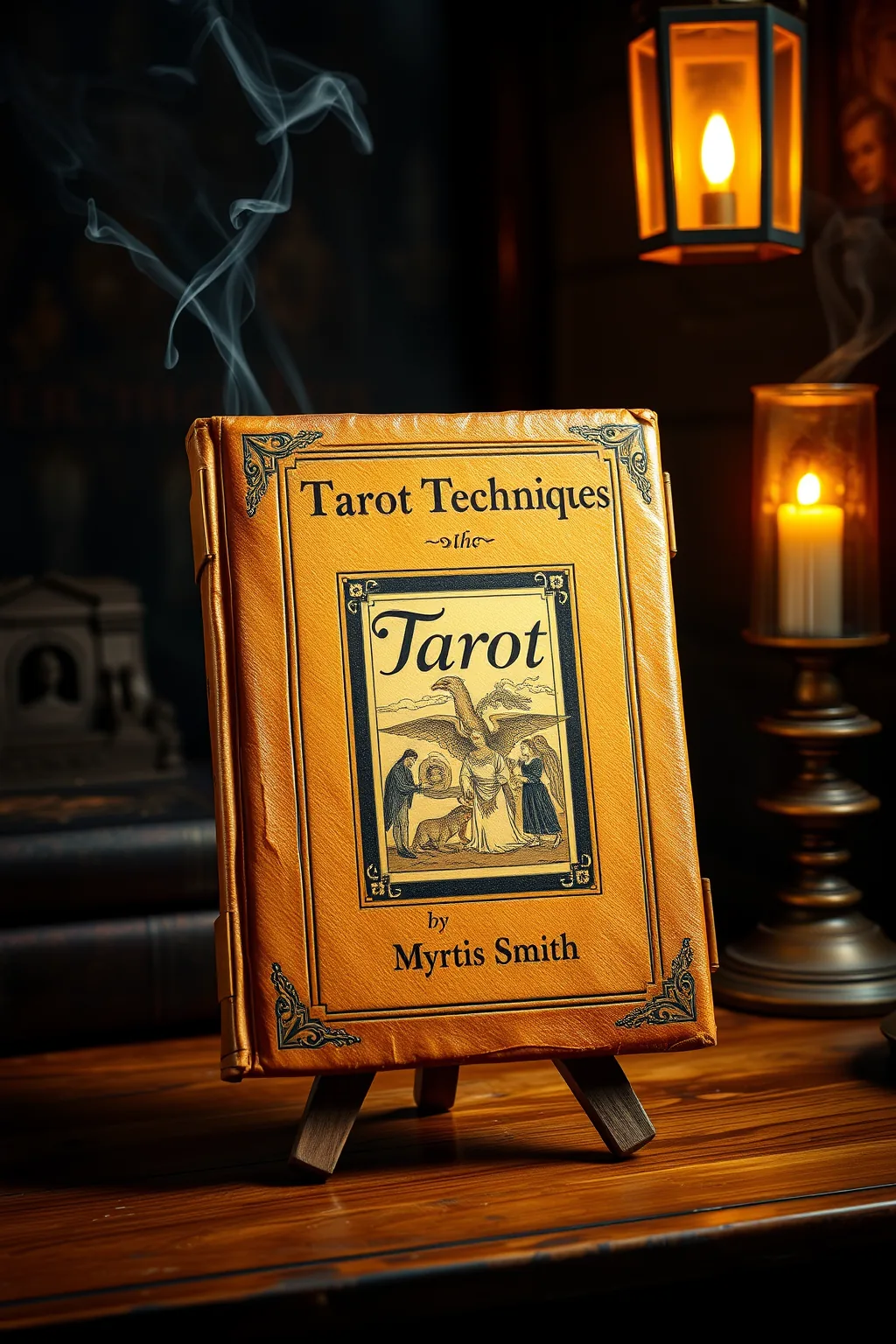
Myrtis Smith's 1977 book, Tarot Techniques, connects Rider-Waite-Smith imagery to deeper esoteric currents.
Tarot Techniques, by Myrtis Smith, moves beyond simple card meanings to examine the symbolic architecture of the Rider-Waite-Smith deck. Smith details the connections between the Major and Minor Arcana, drawing on a range of esoteric traditions. The book aims to help readers understand the philosophical and psychological forces represented by the cards.
This work is intended for serious students of the Tarot who wish to deepen their practice. It encourages a more analytical approach to readings, seeking to uncover the underlying patterns and archetypes. Smith's method emphasizes understanding the 'why' behind the symbolism, not just the 'what'. The goal is to facilitate personal transformation through a more informed engagement with the Tarot.
Published in 1977, Tarot Techniques fits within the surge of esoteric interest in the mid-20th century, particularly concerning the Tarot. It aligns with authors who viewed the deck not merely as a tool for fortune telling, but as a symbolic map of the human psyche and spiritual development. Smith's approach echoes the work of figures who sought to integrate occult symbolism with psychological understanding, framing the Tarot as a system for self discovery and a reflection of universal principles.
💡 Why Read This Book?
Delve into the hidden language of the Tarot, moving beyond surface-level readings to uncover profound symbolic meanings and philosophical depth. "Tarot Techniques" is essential for seekers aiming to develop a truly intuitive and powerful connection with the cards, and for scholars of divination eager to understand the esoteric underpinnings of this ancient art. Empower your practice with techniques that illuminate the soul's journey.
⭐ Reader Reviews
Honest opinions from readers who have explored this book.
❓ Frequently Asked Questions
What makes "Tarot Techniques" different from other Tarot books?
Unlike many introductory guides, "Tarot Techniques" prioritizes the esoteric and philosophical dimensions of the Tarot, exploring its deep symbolism and ancient roots. It encourages intuitive development alongside intellectual understanding.
Who is the ideal reader for this book?
This book is ideal for intermediate to advanced Tarot practitioners, spiritual seekers, students of occultism, and anyone interested in the deeper symbolic language and philosophical aspects of divination.
Does the book focus on a specific Tarot deck?
While rooted in the archetypal imagery often found in the Rider-Waite-Smith tradition, the techniques and principles discussed are broadly applicable to most Western Tarot decks, encouraging universal interpretation.
Can beginners benefit from "Tarot Techniques"?
While more advanced, dedicated beginners with a strong desire to understand the esoteric aspects can certainly benefit. However, a foundational familiarity with basic Tarot meanings is recommended for optimal engagement.
What kind of "techniques" does the book cover?
The book explores advanced methods of card interpretation, including spread design, symbolic interplay, numerological and astrological correspondences, and intuitive amplification techniques beyond simple keyword memorization.
🔮 Key Themes & Symbolism
The Hermetic Tarot: Unveiling the Macrocosm and Microcosm
This theme explores the profound connection between the Tarot and Hermetic philosophy, viewing the cards as a map of the universe and the human psyche. Smith elucidates how the archetypes within the Tarot mirror the principles of "as above, so below," presenting the deck as a tool for understanding both cosmic order and individual spiritual evolution. It examines the esoteric correspondences, revealing how the Major Arcana represent stages of initiation and the Minor Arcana reflect the unfolding of divine will through elemental forces.
The Language of Symbols: Decoding the Archetypal Imagery
Central to "Tarot Techniques" is the intricate exploration of the Tarot's symbolic language. This theme focuses on deciphering the wide range of imagery, color, and number woven into each card. Smith guides readers to understand the universal archetypes that resonate within the collective unconscious, revealing how these symbols act as keys to unlocking hidden knowledge and intuitive wisdom. The emphasis is on moving beyond literal interpretations to grasp the multi-layered meanings embedded within the visual narrative of the cards.
Intuitive Amplification and Esoteric Practice
This theme highlights the book's commitment to fostering a deeply intuitive and personalized connection with the Tarot. Smith provides methods for amplifying intuitive perception, encouraging practitioners to develop their own unique dialogue with the cards. It moves beyond rote memorization, offering techniques for spiritual attunement, meditation, and the integration of Tarot insights into daily life. The focus is on transforming the Tarot from a mere predictive tool into a powerful catalyst for self-discovery and spiritual transformation.
💬 Memorable Quotes
Direct passages from the work, attributed to the author.
“Each card is a whispered secret from the universe, waiting for the attuned ear.”
— This highlights the esoteric nature of Tarot, suggesting that the cards hold profound, hidden wisdom that can be accessed through developed intuition and spiritual sensitivity.
“To read the Tarot is to converse with the archetypes that shape our reality.”
— This emphasizes the deep psychological and philosophical aspect of Tarot, framing it as an interaction with fundamental patterns of human experience and consciousness.
“The true power of the Tarot lies not in the spread, but in the reader's inner landscape.”
— This underscores the importance of the practitioner's inner state, intuition, and personal development in the effective and insightful use of Tarot.
“Let the symbols guide you, not dictate to you; become the interpreter, not the echo.”
— This encourages an active, empowered approach to Tarot reading, urging readers to develop their own understanding and insights rather than passively accepting external interpretations.
💡 Key Ideas
Editorial paraphrase of the work's core concepts — not direct quotes.
The Tarot is not a mirror to the future, but a lens through which the soul perceives its eternal present.
This quote reframes the Tarot's purpose from mere fortune-telling to a tool for present-moment awareness and soul-level understanding, emphasizing self-discovery over passive prediction.
🌙 Esoteric Significance
Tradition
This work is deeply rooted in the Hermetic and Western Esoteric traditions, drawing heavily from Kabbalistic principles, Alchemical symbolism, and Astrological correspondences, particularly as popularized through the Rider-Waite-Smith Tarot. It aligns with the Hermetic principle of "as above, so below," viewing the Tarot as a microcosm reflecting the macrocosm and a map of the soul's journey.
Symbolism
The book meticulously decodes the profound symbolism inherent in the Tarot. It explores the archetypal figures of the Major Arcana as stages of spiritual initiation, the numerological significance of the Pip cards, and the elemental and astrological associations of the Minor Arcana. Understanding this rich symbolic language is presented as the key to unlocking the Tarot's deeper, esoteric messages.
Modern Relevance
In an age often characterized by superficiality and rapid information flow, "Tarot Techniques" offers a pathway to deeper introspection and spiritual grounding. Its emphasis on symbolism and archetypal wisdom provides a timeless framework for understanding the human condition, navigating life's challenges, and fostering intuitive development. The book's teachings remain profoundly relevant for those seeking authentic self-knowledge and a more meaningful connection to the unseen forces that shape our existence.
👥 Who Should Read This Book
This comprehensive guide is essential for the dedicated Tarot practitioner seeking to transcend basic readings and master the art of symbolic interpretation. Aspiring oracles will find the techniques for intuitive amplification invaluable. Scholars of esoteric traditions will appreciate the deep dive into Hermetic correspondences and philosophical underpinnings. For the spiritual seeker, "Tarot Techniques" offers a profound tool for self-discovery, introspection, and understanding the archetypal journey of the soul. It is a necessary addition to the library of anyone serious about the transformative power of the Tarot.
📜 Historical Context
Myrtis Smith's "Tarot Techniques" emerged during a period of burgeoning interest in esoteric studies and occult revival in the mid-to-late 20th century. This era saw a significant resurgence of interest in ancient wisdom traditions, mysticism, and alternative spiritual paths, often spurred by the accessibility of texts from earlier periods and the work of influential figures like Aleister Crowley and the Hermetic Order of the Golden Dawn. The Rider-Waite-Smith deck, published in 1909, had by this time cemented its place as the archetypal Western Tarot, making books that explored its deeper meanings highly sought after. Smith's work contributed to this landscape by offering a more sophisticated, philosophically grounded approach, moving beyond simplistic divinatory methods to explore the Tarot's potential as a serious tool for spiritual growth and self-understanding, aligning with the era's broader search for meaning and esoteric knowledge.
📔 Journal Prompts
Reflect on the concept of the Tarot as a 'lens' for the soul. How has your understanding of the Tarot evolved from a predictive tool to a tool for inner perception?
Choose one Major Arcana card that speaks to a current challenge you face. How do its symbols and archetypal energies offer guidance or insight into your situation?
Consider the interplay of elemental forces (Fire, Water, Air, Earth) in the Minor Arcana. How do these elements manifest in your daily life and relationships?
Explore the idea of 'whispered secrets' from the universe. What intuitive messages have you received recently, and how might the Tarot help you decipher them further?
If the Tarot is a 'map of the soul's journey,' what stage do you feel you are currently navigating, and which cards might represent this phase?
🗂️ Glossary
Archetype
Universal, archaic patterns and images that derive from the collective unconscious and are the psychic conditions of the evolution of the human mind.
Hermeticism
A philosophical and religious tradition based primarily upon the writings attributed to Hermes Trismegistus, emphasizing spiritual wisdom, alchemy, and astrology.
Kabbalah
A system of Jewish mysticism that deals with the nature of God and the creation of the universe, often represented by the Tree of Life diagram.
Correspondences
In esoteric traditions, the symbolic relationships and connections between different elements, such as planets, elements, numbers, and Tarot cards.
Collective Unconscious
A term coined by Carl Jung, referring to a reservoir of latent memories and patterns of thought inherited from one's ancestral past, shared by all humanity.
This book appears in 3 collections
🔮 Readers Also Liked
Browse all →
From the “Tarot” Collection
View all →
More Free Divination & Tarot Books
View all →