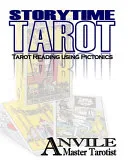
Storytime Tarot
 72
72

Storytime Tarot
Anvile Master Tarotist’s Storytime Tarot offers a refreshingly intuitive pathway into cartomancy, directly challenging the often-intimidating memorization required by traditional Tarot study. The central tenet of 'Pictonics'—interpreting images to unlock meaning—is a compelling argument against dry, academic approaches. I found the section detailing how to approach the Fool card particularly effective, demonstrating how a simple visual can spark a cascade of personal associations. However, the book could benefit from more explicit guidance on distinguishing between personal intuition and mere projection, a common pitfall for novice readers. The work provides a solid foundation for intuitive development, but experienced practitioners might find it a bit too elementary. Storytime Tarot succeeds in making Tarot accessible through its unique, visually-driven methodology.
📝 Description
72
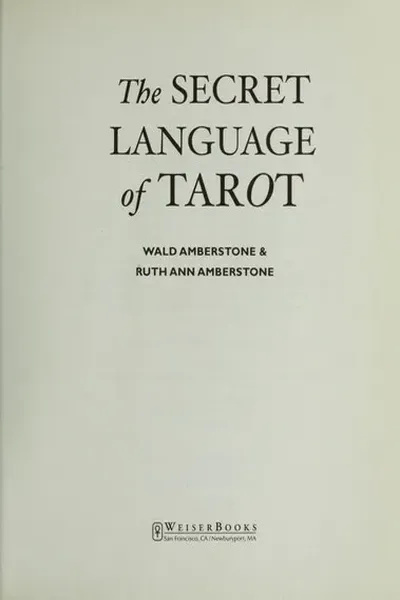
Anvile Master Tarotist's 2023 book, Storytime Tarot, introduces 'Pictonics' for learning cartomancy.
Storytime Tarot offers a method for learning Tarot called 'Pictonics,' which relies on visual interpretation over memorization. This system encourages readers to use their intuition to understand the symbolic language of the cards, fostering a more personal connection. The book is suited for those who find traditional Tarot study methods tedious or ineffective. It aims to help individuals develop their intuitive abilities and receive messages through visual cues within the card imagery.
The 'Pictonics' approach treats card images like letters in a phonetic system. Instead of recalling predefined meanings, users are guided to 'sound out' the messages embedded in the artwork. This creates a more direct and intuitive dialogue with the Tarot and the wider universe. The author's intent is to bypass rote learning and facilitate a natural understanding of the cards' symbolism.
Published in 2023, Storytime Tarot represents a shift in esoteric pedagogy for cartomancy. Unlike earlier 20th-century approaches that emphasized extensive textual glossaries and standardized interpretations, 'Pictonics' promotes experiential learning. This aligns with a broader movement in occult and divination studies that favors cultivating personal gnosis and direct engagement with symbolic systems over strict adherence to established doctrines. The focus is on developing an individual's inherent perceptive faculties.
💡 Why Read This Book?
• Learn the 'Pictonics' method to interpret Tarot through visual cues, bypassing the need for rote memorization of card meanings, as demonstrated with the Fool card. • Develop your natural intuition by engaging directly with the symbolic imagery of the cards, fostering a personal dialogue with the Tarot. • Understand a modern approach to cartomancy that emerged in 2023, diverging from older, text-heavy learning systems prevalent in the early 20th century.
⭐ Reader Reviews
Honest opinions from readers who have explored this book.
❓ Frequently Asked Questions
What is 'Pictonics' as described in Storytime Tarot?
'Pictonics' is a system presented in Storytime Tarot for learning Tarot by interpreting the visual elements of the cards, similar to how phonics helps in reading words. It emphasizes intuition over memorization.
Is Storytime Tarot suitable for complete beginners?
Yes, Storytime Tarot is specifically designed for those who find traditional Tarot learning methods difficult, offering an intuitive, image-based approach that bypasses tedious memorization.
When was Storytime Tarot first published?
Storytime Tarot was first published on April 13, 2023, by Anvile Master Tarotist.
How does this book differ from traditional Tarot guides?
Unlike traditional guides that rely heavily on memorizing card meanings, Storytime Tarot uses 'Pictonics' to encourage intuitive interpretation of card imagery, fostering a more personal connection.
What kind of intuition does Storytime Tarot aim to develop?
The book aims to develop natural intuition by encouraging readers to tune into the messages conveyed by the visual symbolism of the Tarot cards, fostering a direct connection with the universe.
Can 'Pictonics' be used with any Tarot deck?
While the book presents the 'Pictonics' system, its core principles of visual interpretation are intended to be applicable to most Tarot decks featuring symbolic imagery, encouraging a flexible approach.
🔮 Key Themes & Symbolism
Intuitive Interpretation
The central theme is the cultivation of natural intuition as the primary tool for understanding Tarot. The 'Pictonics' system, as introduced by Anvile Master Tarotist, shifts focus from memorized meanings to direct engagement with the visual narrative of each card. This encourages a personal resonance with the archetypal imagery, allowing the universe's messages to be perceived more organically. It's about learning to 'read' the symbols as if they were a language one naturally understands.
Pictonics Method
This theme introduces 'Pictonics' as an alternative pedagogical framework for Tarot study. Contrasting with traditional methods that often rely on extensive glossaries and fixed interpretations, Pictonics uses the visual content of the cards as its foundation. The analogy to phonics in learning to read words highlights the system's aim to decode symbolic language through innate pattern recognition and visual processing, making the learning curve more accessible.
Overcoming Learning Barriers
Storytime Tarot addresses the common frustration of aspiring Tarot readers who struggle with rote memorization. The work positions itself as a solution for those who have previously failed to 'get the knack' of Tarot reading. By emphasizing intuitive perception and visual interpretation, it seeks to remove the intellectual barriers that often impede spiritual or esoteric learning, fostering a more fluid and less academic connection to the practice.
Dialogue with the Universe
The book frames Tarot reading not as a solitary act of deciphering symbols, but as a form of communication with a higher power or the universe itself. The 'Pictonics' approach facilitates this dialogue by encouraging readers to be receptive to the insights and guidance that emerge from their intuitive engagement with the cards. It suggests that the Tarot acts as a conduit, and intuitive interpretation is the key to receiving its wisdom.
💬 Memorable Quotes
Direct passages from the work, attributed to the author.
“Phonics is a way to learn to read [words] by sounding them out. Pictonics is a way to learn to read [ Tarot ] by interpreting pictures.”
— This core analogy succinctly defines the book's innovative 'Pictonics' method. It frames Tarot reading not as an arcane skill requiring extensive memorization, but as an accessible, visual language that can be intuitively deciphered, much like learning basic literacy.
“STORYTIME TAROT will move you away from tedious memorization by getting you to open up your natural intuition and start tuning into what the Univesre has to say to you.”
— This statement highlights the book's primary objective: to liberate readers from the burden of memorizing card meanings. It emphasizes the development of intuition and a direct, receptive connection with universal guidance as the pathway to understanding the Tarot.
“If you have tried in the past to learn how to read Tarot cards but just couldn't get the knack of it; then STORYTIME TAROT is the answer to that problem.”
— This directly targets individuals who have felt discouraged by previous attempts at learning Tarot. It positions the book as a practical solution, promising an effective alternative method for those who haven't succeeded with conventional approaches.
“Pictonics is a system”
— Though brief, this declarative statement underscores the structured nature of the 'Pictonics' approach. It suggests that despite its intuitive focus, the method is a coherent system with underlying principles designed for learning and application.
“Anvile Master Tarotist (first published 2023-04-13)”
— This factual anchor provides crucial context regarding the author and the work's recent publication date, placing it within the contemporary field of esoteric literature and indicating its novelty.
🌙 Esoteric Significance
Tradition
Storytime Tarot interfaces with the broad Hermetic and Neo-Platonic traditions that underpin Western esoteric thought, particularly concerning the idea of the universe communicating through symbols. While not explicitly Kabbalistic or Gnostic, its emphasis on intuitive perception aligns with mystical paths across traditions that seek direct gnosis. It departs from rigid, codified systems by prioritizing personal intuition, reflecting a modern, more individualized approach to esoteric practice that gained traction in the late 20th century.
Symbolism
The work's core symbolism lies in its very methodology: 'Pictonics'. The visual elements of Tarot cards—such as the journey of the Fool, the stoicism of the Hanged Man, or the celestial guidance implied by the Star—are presented not as static symbols with fixed meanings, but as dynamic cues for intuitive interpretation. The emphasis is on how these images evoke personal understanding and facilitate a dialogue, turning static symbols into living messages.
Modern Relevance
The 'Pictonics' approach resonates strongly with contemporary trends in mindfulness, self-help, and intuitive development practices. Thinkers and practitioners focused on decolonizing knowledge, reclaiming personal gnosis, and emphasizing embodied learning find value in methods that bypass traditional academic or dogmatic structures. Its focus on visual literacy also connects with digital-native generations accustomed to processing information primarily through imagery.
👥 Who Should Read This Book
['• Aspiring Tarot readers who find traditional memorization overwhelming and seek a more intuitive, image-based learning method.', '• Individuals interested in developing their natural intuition and exploring methods of self-discovery through symbolic language.', '• Esoteric students exploring alternative pedagogical approaches to divination and cartomancy beyond established textual traditions.']
📜 Historical Context
The early 21st century has seen a diversification in how esoteric knowledge, including cartomancy, is disseminated and learned. Anvile Master Tarotist’s Storytime Tarot, published in 2023, emerges within this environment, offering 'Pictonics' as a counterpoint to the more text-heavy, memorization-focused methods that dominated Tarot pedagogy through much of the 20th century. Influential figures like A.E. Waite and Pamela Colman Smith, whose Rider-Waite deck became a standard from its 1909 publication, laid groundwork often interpreted through detailed textual guides. While Waite himself provided extensive commentary, later generations often codified these interpretations into rigid systems. Storytime Tarot, by contrast, aligns with a contemporary movement favoring experiential learning and intuitive development, potentially drawing inspiration from New Age philosophies that emphasize inner knowing over external authority. Its reception is part of a broader dialogue about accessibility versus tradition in occult studies.
📔 Journal Prompts
Reflect on the visual narrative presented by the High Priestess card before consulting any textual interpretations.
How does the 'Pictonics' system challenge your previous understanding of Tarot card meanings?
Consider the symbolism of the Fool's journey as depicted visually; what personal narrative emerges?
Explore the concept of 'sounding out' the Tarot, similar to phonics, in relation to a card you find challenging.
What intuitive insights arise when you focus solely on the colors and composition of the Sun card?
🗂️ Glossary
Pictonics
A system for learning Tarot by interpreting the visual elements and imagery of the cards, rather than relying on memorized meanings. It emphasizes intuitive understanding.
Intuition
The innate capacity to understand or know something immediately, without conscious reasoning. In the context of Storytime Tarot, it's the primary tool for interpreting card symbolism.
Cartomancy
The practice of divination using a deck of cards. Tarot reading is a prominent form of cartomancy, employing a specialized deck of 78 cards.
Archetypes
Universal, primal symbols or motifs that are part of the collective unconscious, often represented in Tarot cards (e.g., The Magician, The Empress).
Symbolic Language
A form of communication that uses symbols to convey deeper meanings or concepts beyond their literal representation. Tarot cards are considered a form of symbolic language.
Rote Memorization
The process of learning through repetition and memorization, often without deep understanding. Storytime Tarot aims to move away from this method for Tarot study.
Universe
In this context, refers to the totality of existence, often perceived as a source of wisdom, guidance, or energy that can be accessed through spiritual or intuitive practices.