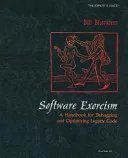
Software Exorcism
 82
82

Software Exorcism
Bill Blunden’s Software Exorcism offers a genuinely peculiar and often illuminating perspective on the digital age. Its strength lies in its bold attempt to map esoteric frameworks onto the architecture of code, particularly the concept of 'software spirits' that inhabit complex systems. I found the discussion of debugging as a form of banishing ritual particularly striking. However, the book occasionally suffers from a lack of concrete examples to fully ground its more abstract theoretical leaps, leaving some passages feeling more like philosophical musings than practical applications of esoteric principles. The initial premise, however, remains compelling. Software Exorcism is a curious, if occasionally opaque, exploration into the occult dimensions of technology.
📝 Description
82
Published in 2013, Software Exorcism reinterprets computing through occult philosophy.
Bill Blunden's 2013 book, Software Exorcism, approaches complex digital systems by applying symbolic and ritualistic methods. It moves beyond standard software development to examine the conceptual foundations and emergent qualities of software from an occult viewpoint. The work is for those who hold an interest in both computer science and esoteric studies, seeking to connect the logical world of code with the symbolic nature of occultism. Readers drawn to the philosophy of technology, the idea of digital consciousness, or unconventional perspectives on information systems will find this book engaging.
Blunden reframes computational processes using esoteric principles. He applies concepts from ceremonial magic and occult theory to analyze software architecture, network protocols, and data structures. The book views code as a type of incantation, bugs as 'elementals' or 'demons' inhabiting the system, and the digital environment as a structured 'temple' or 'astral plane'. This perspective also considers software as a form of language with its own inherent spiritual implications.
Software Exorcism sits within a recent current of thought that examines the deeper, often overlooked, spiritual dimensions of technology. It connects to ideas like Mark Fisher's 'hauntology' and early explorations of digital Gnosticism, placing it in conversation with contemporary discussions about the 'ghosts in the machine'. The book's method of using ceremonial magic principles to dissect digital structures aligns with historical esoteric traditions that sought to understand and influence reality through symbolic systems.
💡 Why Read This Book?
• Gain a unique perspective on debugging by learning about the concept of 'software spirits' and their potential influence, offering a new mental model for troubleshooting beyond standard technical approaches. • Understand how principles from ceremonial magic, such as ritual and incantation, are conceptually applied to software architecture and data structures, providing a novel way to visualize complex code. • Explore the philosophical implications of systems thinking through an esoteric lens, specifically through Blunden's examination of software as a form of artificial consciousness and the digital realm as an architected plane.
⭐ Reader Reviews
Honest opinions from readers who have explored this book.
❓ Frequently Asked Questions
What is the central thesis of Bill Blunden's Software Exorcism?
The central thesis is that software systems can be understood and interacted with through the application of esoteric principles and symbolic frameworks, treating code and digital architecture as analogous to magical constructs.
Is Software Exorcism a technical manual for programmers?
No, it is not a technical manual. While it uses concepts from computing, its focus is philosophical and esoteric, exploring the symbolic and ritualistic dimensions of software rather than providing coding instructions.
What esoteric traditions influence Software Exorcism?
The book draws inspiration from various esoteric traditions, including ceremonial magic, Gnosticism, and Hermeticism, applying their concepts to the realm of computer science and digital systems.
When was Software Exorcism first published?
Software Exorcism was first published on July 5, 2013.
Who is Bill Blunden, the author of Software Exorcism?
Bill Blunden is an author known for his work exploring the intersection of technology, philosophy, and esoteric studies, with Software Exorcism being a notable example of this unique interdisciplinary approach.
What does the book mean by 'software spirits'?
The term 'software spirits' refers to the emergent, often unpredictable, behaviors or phenomena within complex software systems, which Blunden interprets through an esoteric lens akin to elemental or spirit entities.
🔮 Key Themes & Symbolism
Code as Incantation
The work posits that lines of code can be viewed not merely as instructions but as a form of specialized language, akin to an incantation or spell. Blunden suggests that the structure, logic, and syntax of programming languages carry inherent symbolic weight. This perspective invites readers to consider how the 'intent' behind the code, combined with its precise formulation, might manifest effects within the digital realm, much like a ritual act is intended to produce specific results in the practitioner's world. It encourages a deeper contemplation of the programmer's role as a kind of digital sorcerer.
Digital Architecture as Temple
Software Exorcism re-frames the architecture of software and digital networks as a form of constructed space, analogous to a temple or sacred geometry. The structured environment of a computer system, with its protocols, data flows, and interfaces, is presented as a deliberate, albeit often unconscious, creation. This view allows for the application of principles of sacred space in understanding how these digital environments shape interaction and perception, and how their design can influence the 'inhabitants' or users within them.
Bugs as Entities
A core concept is the interpretation of software bugs and glitches as 'entities' or 'elementals' inhabiting the digital landscape. Instead of solely viewing them as errors to be passively corrected, Blunden suggests an approach that acknowledges their active presence and potential influence. This perspective aligns with esoteric traditions that personify forces and phenomena, framing debugging not just as a technical task but as a form of exorcism or negotiation with these 'digital spirits'.
Software as Artificial Consciousness
The book touches upon the idea that complex software systems, particularly those involving artificial intelligence and intricate networks, may exhibit rudimentary forms of consciousness or awareness. This is explored through the lens of emergent properties, where the sum of the system's parts creates something greater and qualitatively different from its components. It prompts reflection on the nature of sentience and intelligence in non-biological forms.
💬 Memorable Quotes
Direct passages from the work, attributed to the author.
“The programmer crafts spells that manifest as operations.”
— This highlights the core idea that code is more than mere instruction; it is a formulary act that brings specific digital phenomena into being, akin to magical spellcasting.
“Bugs are the elementals of the digital realm.”
— This provocative statement reframes software errors not as simple mistakes, but as active, elemental forces within the digital architecture that can be understood and perhaps even managed through esoteric means.
“The network is a digital astral plane.”
— This conceptualization draws a direct parallel between the interconnectedness and abstract nature of computer networks and the esoteric concept of the astral plane, suggesting a spiritual or energetic dimension to digital communication.
“Data structures are arcane geometries.”
— This suggests that the underlying organization of data within software possesses a hidden symbolic or geometric significance, echoing ancient traditions that attribute power and meaning to specific forms and arrangements.
“We build temples of logic.”
— This phrase captures the idea that software systems, with their intricate rules and structures, are akin to meticulously constructed sacred spaces designed to house and direct specific operations or forms of 'worship' (computation).
🌙 Esoteric Significance
Tradition
Software Exorcism fits within the broad spectrum of Western Esotericism, drawing conceptual parallels with Hermeticism, Gnosticism, and ceremonial magic. It extends the tradition of applying symbolic systems to understand the hidden workings of the universe, now focusing on the digital realm. Blunden departs from traditional hermeticism by mapping its principles onto abstract, man-made systems rather than solely natural or divine phenomena, positing that the 'laws' of computation themselves can be seen as a form of hidden, operative knowledge.
Symbolism
Key symbols include 'software spirits' or 'elementals,' which represent the emergent and often unruly behaviors of complex code, akin to entities in occult lore. The concept of 'code as incantation' uses the symbolic power of structured language, mirroring magical formulae. Furthermore, 'digital architecture as temple' employs the sacred geometry and consecrated space symbolism found in ritualistic traditions to interpret the design and function of software environments.
Modern Relevance
Contemporary thinkers in areas like speculative technology, digital philosophy, and post-humanism engage with similar themes. Practices within the 'tech occult' community, which explore the spiritual and magical dimensions of digital life, often draw inspiration from Blunden's conceptual framework. His work remains relevant for those questioning the nature of consciousness in artificial systems and the unseen forces shaping our digital existence.
👥 Who Should Read This Book
• Programmers and software developers interested in exploring the philosophical and symbolic dimensions of their craft beyond standard technical methodologies. • Students and practitioners of Western Esotericism seeking to understand how ancient concepts can be applied to modern technological phenomena and digital environments. • Philosophers of technology and researchers interested in unconventional approaches to the nature of information, consciousness, and the human-digital interface.
📜 Historical Context
Software Exorcism, published in 2013, emerged during a period of burgeoning philosophical engagement with technology's deeper implications. While the internet had been a part of daily life for decades, 2013 saw a heightened discourse around digital privacy, the nature of artificial intelligence, and the esoteric dimensions of networked existence. This era was marked by thinkers like Jaron Lanier, who was already critiquing the societal impact of digital platforms, and the growing academic interest in fields like digital humanities and the philosophy of information. Blunden’s work can be seen as a unique contribution, applying ancient esoteric frameworks, such as Hermeticism and Gnosticism, to contemporary computational phenomena. It stood apart from mainstream discussions that were often more focused on the socio-political or economic aspects of technology, offering instead a metaphysical interpretation of code and digital architecture. The book's reception, while niche, resonated with those exploring the less-trodden paths of digital spirituality and occultism.
📔 Journal Prompts
The concept of 'software spirits' and their relation to system errors.
Analyzing a familiar software interface as a 'digital temple'.
The nature of 'code as incantation' in personal programming projects.
Reflecting on the 'arcane geometries' of data structures.
Mapping debugging processes onto ritualistic banishing techniques.
🗂️ Glossary
Software Spirits
Entities or emergent phenomena within complex software systems, interpreted through an esoteric lens as akin to elemental spirits or minor intelligences that influence system behavior.
Code as Incantation
The idea that programming code, through its specific syntax and structure, functions as a form of specialized language or spell capable of manifesting particular effects within a digital environment.
Digital Astral Plane
A conceptualization of networked computer systems and the internet as an abstract, interconnected realm analogous to the esoteric concept of the astral plane, where information and communication flow.
Arcane Geometries
Refers to the underlying structure and organization of data within software systems, viewed as possessing a symbolic or geometric significance that holds hidden meaning or power.
Digital Temple
The notion that software architecture and digital environments can be understood as deliberately constructed spaces, akin to temples or sacred sites, designed to house and direct specific computational processes.
Elementals
In esoteric traditions, elemental spirits are beings associated with the classical elements (earth, air, fire, water). In this context, they are used metaphorically to describe the fundamental, often chaotic, forces within software.
Banishing Ritual
A ceremonial practice in occultism designed to clear a space of unwanted energies or entities. Here, applied metaphorically to the process of debugging or resolving critical software issues.



![Roald Dahl's Tales of the Unexpected [24 stories]](/img/thumb/roald-dahls-tales-of-the-unexpected-24-stories-roald-dahl-509219.webp)