Roman Augury and Etruscan Divination (Ancient religion and mythology)
 62
62

Roman Augury and Etruscan Divination (Ancient religion and mythology)



Balthazar Finch (Senior Critic, Occult Philosophy) — Connor's 'Roman Augury and Etruscan Divination' is a monumental achievement in esoteric scholarship. He brilliantly illuminates the intricate methodologies and profound philosophical underpinnings of these ancient divinatory arts, moving beyond mere historical description to uncover their genuine spiritual depth. The meticulous research reveals a sophisticated understanding of natural phenomena as divine communication, a perspective often lost in modern discourse. This is not simply a historical account; it is an invitation to contemplate the ancient worldview, a necessary text for serious practitioners and scholars of Western esotericism seeking authentic roots. Its clarity and insightful analysis make it indispensable.
📝 Description
62
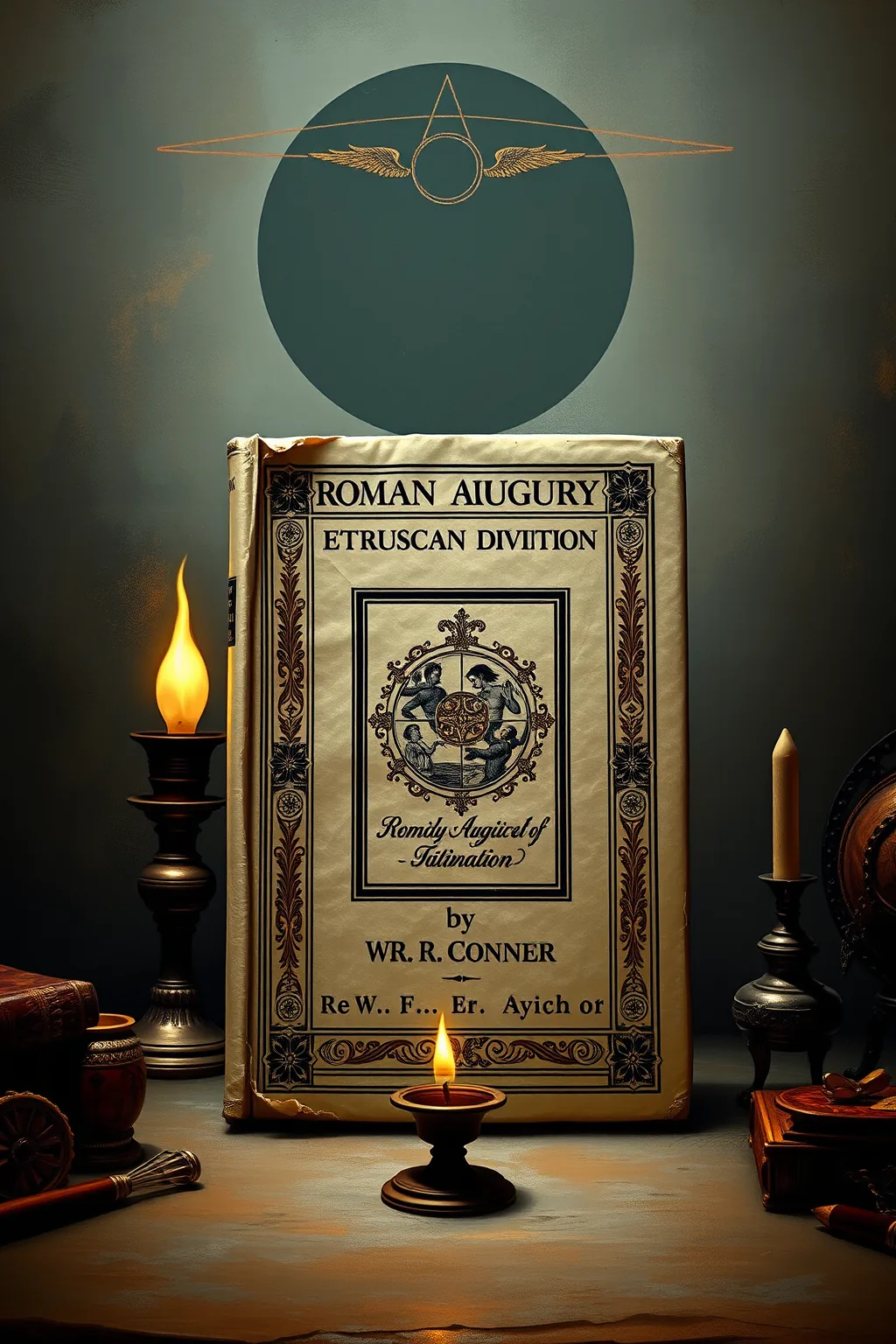
W. R. Connor's 1990 book examines Roman augury and Etruscan divination.
W. R. Connor's study reconstructs the practices of Roman augury and Etruscan divination. The book details how these ancient peoples interpreted signs from the natural world, such as bird flight, animal entrails, and lightning patterns, to understand divine will. Connor explains the rituals and symbolic systems involved, showing how these practices were central to Roman and Etruscan societal and political life.
The work is structured to clarify the methods and beliefs underlying these forms of divination. It moves beyond simple descriptions to analyze the philosophical and religious frameworks that supported them. Connor’s research illuminates a significant aspect of ancient Western religious thought and its connection to broader esoteric traditions.
This book situates Roman augury and Etruscan divination within the broader history of Western esotericism. It treats these practices not merely as historical curiosities but as complex systems of knowledge aimed at understanding cosmic order and human destiny. The work connects these ancient divinatory arts to later esoteric traditions that sought similar insights through symbolic interpretation and the reading of natural phenomena. It highlights how understanding these early forms of divination is crucial for tracing the development of esoteric thought in the West.
💡 Why Read This Book?
Unravel the secrets of ancient prophecy and divine communication. 'Roman Augury and Etruscan Divination' offers a rare glimpse into the esoteric systems that governed the classical world. Ideal for seekers of occult knowledge, students of ancient religions, and practitioners of divination eager to connect with foundational practices. Discover the hidden symbolism and philosophical depth that continue to inspire mystical traditions.
⭐ Reader Reviews
Honest opinions from readers who have explored this book.
❓ Frequently Asked Questions
What is Roman Augury?
Roman Augury was a complex system of divination practiced by priests (augurs) who interpreted the will of the gods by observing natural phenomena, particularly the flight of birds and celestial signs. It was a cornerstone of Roman religious and political life.
What distinguishes Etruscan Divination?
Etruscan divination was renowned for its sophistication, focusing on hepatoscopy (reading animal entrails, especially the liver) and interpretating lightning. They believed these signs offered detailed insights into the gods' intentions and future events.
How did these practices influence Roman society?
Augury and Etruscan divination were integral to Roman decision-making. They influenced military campaigns, state policies, and public ceremonies, providing a perceived divine mandate and ensuring societal order through consultation with the gods.
Is this book suitable for beginners?
While scholarly, the book's clear prose and evocative descriptions make it accessible to motivated beginners interested in the esoteric roots of Western civilization and divination. It provides foundational knowledge for deeper study.
What is the esoteric significance of these practices?
Their esoteric significance lies in the belief that the cosmos communicated directly with humanity. These practices represent an ancient attempt to bridge the human and divine realms, seeking wisdom and guidance through meticulous observation and symbolic interpretation.
🔮 Key Themes & Symbolism
The Language of the Heavens and Earth
This theme explores the profound belief that the natural world—from the patterns of birds in flight to the very structure of animal entrails—served as a divine script. Connor meticulously details how Roman and Etruscan seers perceived and interpreted these 'signs,' transforming mundane observations into sacred pronouncements. It highlights a worldview where the cosmos was a living, communicative entity, constantly offering guidance and revealing the will of the gods to those attuned to its subtle language. This section emphasizes the symbolic richness inherent in these practices.
Ritual, Symbolism, and Divine Authority
The core of this theme lies in understanding the intricate rituals that governed Roman augury and Etruscan divination, and the potent symbolism embedded within them. Connor examines the precise procedures, the sacred objects used, and the solemnity with which these practices were conducted. It explores how these rituals not only sought to ascertain divine will but also served to legitimize power, shape public opinion, and maintain social order. The symbolism, often tied to cosmic principles and archetypal forces, provided a framework for understanding complex societal and personal challenges through a divine lens.
Bridging the Mortal and Divine Realms
This theme focuses on the ultimate purpose of these divinatory systems: to establish a tangible connection between the human realm and the divine. Connor illuminates how Roman and Etruscan societies used these practices as conduits for understanding fate, averting disaster, and ensuring prosperity. It explores the philosophical underpinnings of this relationship, where the gods were not distant entities but active participants in human affairs, their will accessible through careful observation and interpretation. This theme underscores the enduring human desire to seek meaning and guidance beyond the visible world.
💬 Memorable Quotes
Direct passages from the work, attributed to the author.
“The sky was a scroll, the birds its ink.”
— This evocative phrase captures the essence of Roman augury, where celestial phenomena, particularly the flight of birds, were perceived as direct divine messages, a written language of the heavens.
“Within the entrails, the gods etched their will.”
— This highlights the Etruscan practice of hepatoscopy, emphasizing the belief that the intricate patterns on animal livers were a direct manifestation of divine intent, readable by skilled interpreters.
“Fate was not a decree, but a conversation.”
— This suggests that rather than a fixed destiny, the ancients viewed fate as something that could be influenced and understood through a continuous dialogue with the divine, facilitated by divination.
“The lightning's flash, a thunderous whisper from Olympus.”
— This poetic line conveys the awe and reverence with which lightning was interpreted, seen as a powerful, albeit fleeting, communication from the gods, carrying significant portents.
“To know the signs was to hold the reins of order.”
— This underscores the practical and societal importance of divination, suggesting that understanding and correctly interpreting divine signs provided a sense of control and authority over the unfolding events of life.
🌙 Esoteric Significance
Tradition
These practices are foundational to Western Esotericism, particularly in their contribution to the broader field of divination and occult philosophy. They represent an early form of 'natural magic' and gnosis, where understanding the universe's patterns was key to unlocking divine knowledge. Their emphasis on symbolic interpretation and the belief in a divinely ordered cosmos directly influenced later hermetic, alchemical, and astrological traditions, establishing a lineage of seeking hidden truths within the fabric of reality.
Symbolism
Key symbols include birds (representing divine messages, direction, and fortune), animal entrails (especially the liver, symbolizing the totality of fate and divine judgment), lightning (portents of divine power, wrath, or intervention), and thunder (divine pronouncements). These symbols were not merely decorative but held profound, multi-layered meanings, acting as a sophisticated visual and conceptual language for communicating with the divine and understanding the forces shaping existence.
Modern Relevance
In an age often perceived as secular and rational, Roman Augury and Etruscan Divination offer a powerful reminder of humanity's enduring spiritual quest and the potential for finding meaning in the unseen. Their principles of deep observation, symbolic interpretation, and seeking guidance from patterns resonate with modern practices in psychology, mindfulness, and even ecological awareness. They encourage a more holistic view of existence, where synchronicity and subtle signs can offer clear insights into our lives and the world around us.
👥 Who Should Read This Book
This informative text is essential for several distinct groups. For the **esoteric scholar**, it provides rigorous historical and philosophical grounding in ancient divinatory systems. **Seekers of occult knowledge** will find a rich exploration of pre-Christian spiritual practices and their enduring influence. **Practitioners of modern divination**, such as tarot readers or astrologers, will gain invaluable context and historical perspective on the roots of their craft. **Beginners** interested in the intersection of religion, mythology, and the supernatural will discover a fascinating and accessible entry point into understanding ancient worldviews and the human desire to connect with the divine.
📜 Historical Context
Emerging from the body of the ancient Mediterranean, Roman Augury and Etruscan Divination flourished during periods of immense political, social, and cultural upheaval. The Etruscans, a mysterious and influential civilization that predated Roman dominance, developed sophisticated divinatory practices that were later absorbed and adapted by the Romans. These systems were integral to the functioning of the Roman Republic and Empire, reaching their zenith during the centuries BCE and CE. At a time when scientific understanding was nascent, these practices offered a framework for comprehending the world, seeking divine favor, and legitimizing authority. The influence of these divinatory traditions extended beyond religious rites, deeply embedding themselves into legal proceedings, military strategies, and the daily lives of citizens, reflecting a profound worldview where the cosmos was in constant communication with humanity.
📔 Journal Prompts
Reflect on a time you felt the 'language of the heavens or earth' spoke to you. What were the signs, and how did you interpret them?
Consider the symbolism of birds in your own life or culture. What meanings do they convey beyond their literal existence?
If you were an augur or a diviner in ancient Rome or Etruria, what phenomena would you focus on to understand the divine will today?
How does the concept of fate as a 'conversation' rather than a 'decree' change your perspective on your own life's path?
Imagine a modern-day ritual of divination based on the principles described. What would it involve, and what would be its purpose?
🗂️ Glossary
Augur
A priest in ancient Rome responsible for interpreting omens, particularly the flight of birds and celestial phenomena, to determine the will of the gods.
Hepatoscopy
A form of Etruscan divination involving the examination of animal entrails, most notably the liver, to divine future events and the intentions of the gods.
Haruspicy
The practice of divination by examining the entrails of sacrificed animals, primarily associated with Etruscan and Roman traditions.
Omens
Events or phenomena believed to foreshadow future occurrences, interpreted by diviners as divine messages or warnings.
Sacrifice
The ritual offering of an animal or other valuable item to a deity, often performed before or during divinatory practices to appease the gods or seek their favor.
This book appears in 1 collection
🔮 Readers Also Liked
Browse all →








From the “Divination” Collection
View all →







More Free Divination & Tarot Books
View all →