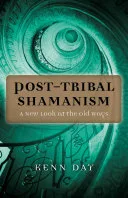
Post-Tribal Shamanism
 74
74

Post-Tribal Shamanism
Kenn Day's "Post-Tribal Shamanism" confronts the pervasive spiritual malaise of modern life head-on, diagnosing a collective "Invisible Wound" born from our disconnect from nature, ancestors, and soul. This is not another romanticized call to "go back to the woods"; instead, Day crafts a compelling argument for a forward-looking shamanism. The book's strength lies in its clear articulation of how soul hunger, a direct consequence of this wound, manifests in contemporary addictions and anxieties. For instance, Day's analysis of how fragmented selves seek solace in self-destructive behaviors feels acutely relevant. A limitation, however, is the occasional density of the theoretical framework, which might require careful rereading for full absorption. The concept of "soul hunger" is particularly potent, offering a lens to understand personal and societal suffering. "Post-Tribal Shamanism" offers a pragmatic, albeit challenging, path toward spiritual re-integration for the modern soul.
📝 Description
74
Kenn Day's 2014 book, Post-Tribal Shamanism, identifies a spiritual void in modern life.
Published in 2014, Post-Tribal Shamanism by Kenn Day addresses a perceived disconnection in contemporary Western society. Day argues that modern life, separated from ancestral ties, nature, and spiritual practices, creates an "Invisible Wound." This void, he contends, fuels societal problems like addiction and self-destructive behavior.
The book does not advocate for a literal return to ancient customs. Instead, it proposes integrating shamanic principles into daily life to heal this spiritual and psychological fragmentation. It aims to restore connections often lost due to industrialized living. The work is suited for individuals feeling existential emptiness or alienation, particularly those disconnected from nature, heritage, or a deeper sense of self. It appeals to those questioning the origins of modern anxieties and dysfunctions, seeking explanations beyond psychology or sociology. Readers interested in applying spiritual ideas to everyday challenges, and how older traditions can inform current issues, will find this book useful.
Post-Tribal Shamanism emerged in 2014 amidst a growing interest in animistic and shamanic practices, often labeled the 'neo-shamanic' movement. While many contemporary works explored indigenous traditions, sometimes out of context, Day's book distinguished itself with a 'post-tribal' perspective. This approach suggested moving beyond simple imitation of past rituals. It engaged with a broader discourse on shamanism that included figures influential in popularizing such practices, like Michael Harner.
💡 Why Read This Book?
• You will learn to identify and understand the "Invisible Wound" as described by Kenn Day, recognizing how it contributes to modern anxieties and addictions, allowing for a more conscious approach to personal healing. • You will gain practical insights into "Post-Tribal Shamanism," a framework for reconnecting with ancestral wisdom and elemental forces, as presented in Day's original 2014 publication, offering a unique path beyond mere historical replication. • You will discover how "soul hunger" is addressed through reclaiming vital connections, providing a new perspective on fulfilling deep spiritual needs that are often displaced onto unhealthy coping mechanisms, as detailed within the book's chapters.
⭐ Reader Reviews
Honest opinions from readers who have explored this book.
❓ Frequently Asked Questions
What is the core problem addressed in Post-Tribal Shamanism?
The book addresses the "Invisible Wound," a concept describing the spiritual and psychological fragmentation caused by modern life's disconnect from nature, ancestors, and the soul, leading to widespread anxiety and addiction.
What does Kenn Day mean by 'soul hunger'?
'Soul hunger' refers to the deep, unmet spiritual needs arising from the "Invisible Wound." The book explains how these needs are often displaced onto unhealthy behaviors like addiction or self-destruction.
Is Post-Tribal Shamanism a return to ancient tribal practices?
No, Kenn Day emphasizes a "post-tribal" approach. It's about moving forward and integrating shamanic principles into contemporary life, rather than attempting to recreate past societal structures.
When was Post-Tribal Shamanism first published?
The book "Post-Tribal Shamanism" by Kenn Day was first published on January 31, 2014.
What kind of connections does the book aim to restore?
The work focuses on restoring connections to the soul, ancestors, the earth, and elemental forces, which are seen as vital for a fulfilling and integrated life in the modern era.
Who is the author of Post-Tribal Shamanism?
The author of "Post-Tribal Shamanism" is Kenn Day. The book was first published in 2014.
🔮 Key Themes & Symbolism
The Invisible Wound
This central concept describes the pervasive spiritual and psychological fragmentation of modern individuals, stemming from a disconnection with nature, ancestral heritage, and authentic selfhood. Day argues this void is the root cause of much contemporary suffering, manifesting as 'soul hunger' that drives addictions and self-destructive behaviors. The book posits that this wound is not an individual failing but a collective condition of industrialized society, necessitating a re-evaluation of our relationship with the world and ourselves.
Soul Hunger and Its Manifestations
Day defines 'soul hunger' as the deep yearning for connection and meaning that arises from the 'Invisible Wound.' He meticulously details how this hunger is frequently misdirected, leading to societal issues such as addiction, consumerism, and mental health crises. These are presented not as moral failings but as desperate attempts to fill a spiritual void. The work explores how these displaced desires indicate a deep-seated need for authentic spiritual nourishment that modern life fails to provide.
Post-Tribal Shamanism as a Solution
This theme presents a practical framework for healing the 'Invisible Wound.' Unlike a romanticized return to past tribal structures, "Post-Tribal Shamanism" advocates for adapting ancient wisdom and shamanic principles to contemporary contexts. It's about moving forward by reclaiming vital energies and fostering a direct relationship with the earth, elemental forces, and ancestral wisdom. The goal is to reintegrate fragmented aspects of the self and build a more whole, meaningful existence in the present.
Reconnection with Nature and Ancestors
A crucial element of Day's work involves re-establishing a vital connection with the natural world and ancestral lineage. He argues that these connections are fundamental to human well-being and spiritual health, yet have been severely eroded by modern lifestyles. The book explores how understanding our place within the web of life and honoring the wisdom of those who came before us can provide a powerful antidote to alienation and foster a sense of belonging.
💬 Memorable Quotes
Direct passages from the work, attributed to the author.
“Modern life is lived cut off from our souls, our ancestors, the earth and other elements of what once made life worth living.”
— This statement captures the core problem identified by Day: the alienation inherent in contemporary Western society. It highlights the severing of fundamental human connections that the book aims to address and mend.
“Our souls still yearn for these missing pieces, causing what the author calls the Invisible Wound.”
— This highlights the inherent drive for wholeness within the human spirit. The 'Invisible Wound' is presented not as a pathology, but as a natural response to the loss of essential spiritual and communal bonds.
“This wound is responsible for much of the grief of modern life -- through soul hungers displaced onto addictions and self-destructive behavior.”
— This interpretation directly links the spiritual void ('Invisible Wound') to tangible societal problems like addiction. It reframes these issues as symptoms of a deeper spiritual deficit rather than purely personal failings.
“Post-Tribal Shamanism offers a means of reclaiming many of these pieces, not by a return to the past, but by moving forward into a new synthesis.”
— This defines the book's proposed solution. It's crucial to note the emphasis on 'moving forward' and 'synthesis,' differentiating it from a simple revival of archaic practices and positioning it as a relevant contemporary path.
“The book addresses the pervasive sense of disconnection in contemporary Western society.”
— This is a concise summary of the book's primary focus. It sets the stage for the detailed exploration of the causes and consequences of this disconnection throughout Day's work.
🌙 Esoteric Significance
Tradition
The work draws heavily from shamanic traditions but positions itself as a modern adaptation, a "post-tribal" evolution. It fits within contemporary Western Esotericism's broader interest in animism and nature-based spirituality, offering a path that acknowledges the losses of modernity while seeking to reclaim vital spiritual energies without resorting to romanticized notions of past tribal life.
Symbolism
While not explicitly detailed in the blurb, the core symbolism likely revolves around themes of fragmentation and wholeness. The "Invisible Wound" itself can be seen as a symbolic representation of spiritual injury. The concept of "soul hunger" points to the symbolism of emptiness and yearning, while "Post-Tribal Shamanism" suggests a path towards reintegration, possibly symbolized by natural elements and ancestral connections that offer grounding and continuity.
Modern Relevance
Day's framework for understanding modern alienation and proposing a reintegrative spiritual path remains highly relevant. It speaks to contemporary discussions in ecopsychology, depth psychology, and the ongoing search for meaning outside of mainstream consumer culture. Thinkers and practitioners exploring ancestral healing, nature-based spiritual practices, and critiques of hyper-modernity often find resonance in his articulation of the 'Invisible Wound' and 'soul hunger.'
👥 Who Should Read This Book
• Individuals experiencing existential alienation and a sense of spiritual void, seeking to understand the roots of modern malaise beyond conventional psychological frameworks. • Practitioners and students of shamanism or nature-based spiritualities who are looking for a contemporary, forward-looking approach that avoids romanticizing or misusing indigenous traditions. • Those interested in the intersection of spirituality, psychology, and societal issues, particularly concerning addiction and self-destructive behaviors, who want to explore a framework for healing.
📜 Historical Context
Published in 2014, "Post-Tribal Shamanism" arrived during a period of significant interest in neo-shamanism and alternative spiritualities, a trend that had gained momentum since the late 20th century. Kenn Day's work engaged with a discourse shaped by earlier figures like Michael Harner, whose Foundation for Shamanic Studies had popularized core shamanic techniques. However, Day's "post-tribal" framing marked a departure, seeking to evolve beyond direct emulation of indigenous practices. This approach resonated with a growing intellectual current questioning the sustainability and spiritual efficacy of purely modern, secularized existence. While not a direct critique of any single movement, it offered an alternative to approaches perceived as potentially appropriative or anachronistic, proposing a way to integrate ancient wisdom into the fabric of contemporary, post-industrial life.
📔 Journal Prompts
Reflect on the nature of the 'Invisible Wound' in your own life.
Consider the various ways 'soul hunger' might be manifesting in your daily experience.
Explore potential 'post-tribal' shamanic practices that could foster reconnection with nature.
Identify one ancestral connection you wish to explore further.
How might you begin to move forward rather than return to a perceived 'golden age'?
🗂️ Glossary
Invisible Wound
A term coined by Kenn Day to describe the pervasive spiritual and psychological fragmentation experienced in modern life due to disconnection from nature, ancestors, and the soul.
Soul Hunger
The deep, unmet spiritual yearning that arises from the 'Invisible Wound.' Day posits that this hunger is often displaced onto addictions and self-destructive behaviors as individuals seek fulfillment.
Post-Tribal Shamanism
A framework proposed by Kenn Day for reclaiming spiritual wholeness in contemporary society. It emphasizes adapting shamanic principles for modern life without attempting a literal return to ancient tribal structures.
Disconnection
The state of being severed from fundamental aspects of existence, including the natural world, ancestral lineage, and one's own soul, as described in the context of modern life.
Reclaiming Pieces
The process within Post-Tribal Shamanism of recovering lost spiritual vitality and fragmented aspects of the self that have been diminished by modern alienation.
Synthesis
In the context of Post-Tribal Shamanism, this refers to the integration of ancient wisdom and shamanic principles into a new, relevant form for contemporary life, representing progress rather than regression.
Elemental Forces
The fundamental aspects of nature (e.g., earth, air, fire, water) that the book suggests reconnecting with to foster spiritual health and wholeness.