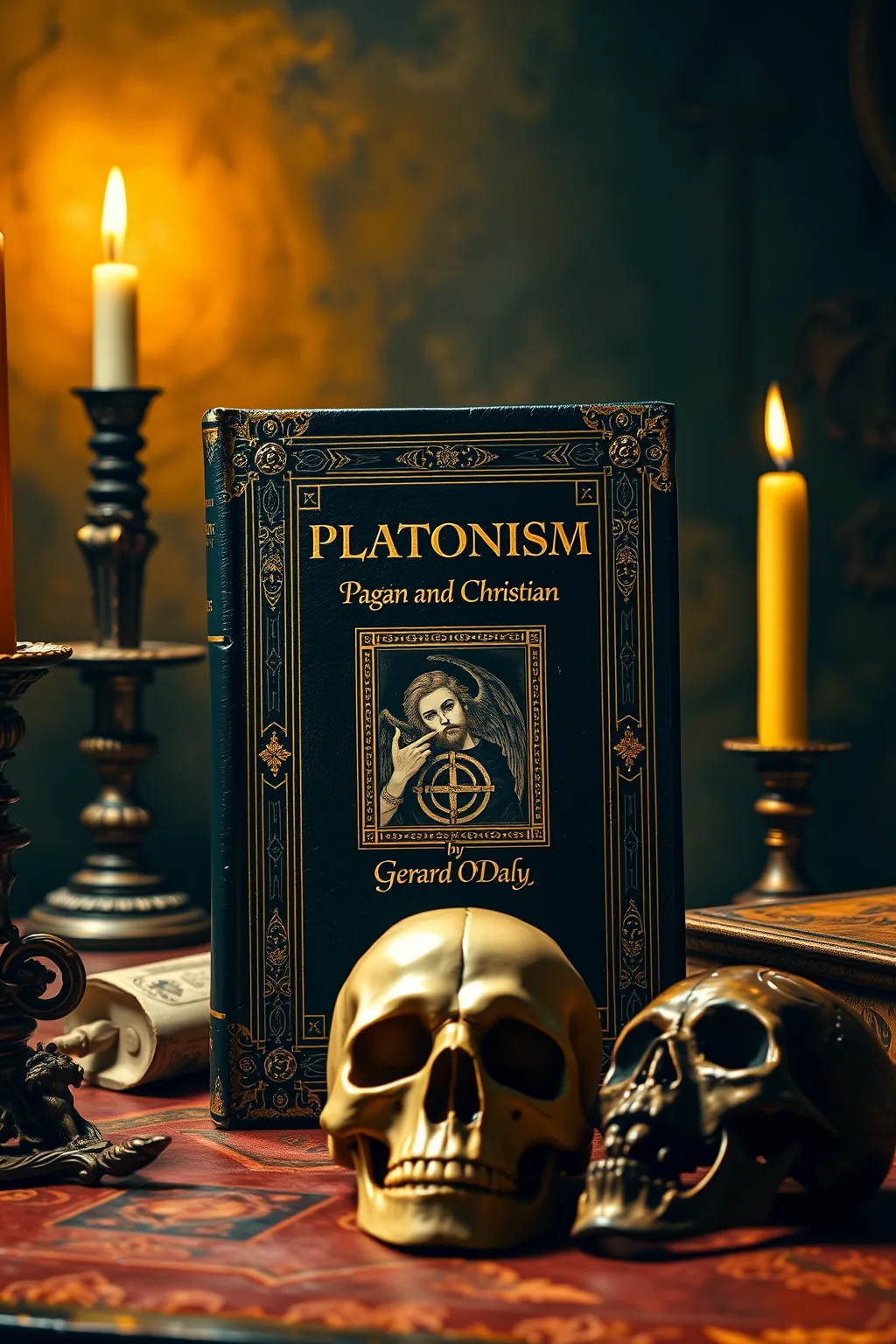
Platonism Pagan and Christian
 62
62

Platonism Pagan and Christian



In 'Platonism Pagan and Christian,' Gerard O'Daly masterfully navigates the complex web of influences that shaped the early Christian mind. Aurelia Blackwood, an occult philosophy critic, praises the book's deep esoteric insights and its ability to illuminate the mystical connections between Platonism and Christianity. O'Daly's work is particularly strong in its exploration of Plotinus and Augustine, revealing the hidden symbolism and philosophical significance of their teachings. This book is an invaluable resource for scholars of esoteric history and spiritual seekers alike.
📝 Description
62
Gerard O'Daly's 2002 book examines Platonism's influence on early Christianity.
Gerard O'Daly's 'Platonism Pagan and Christian' investigates the connections between ancient Greek philosophy and early Christian doctrine. The book focuses on the thought of Plotinus and Saint Augustine, tracing how Neoplatonism shaped spiritual and intellectual currents in the late Roman Empire. O'Daly seeks to reveal the symbolic meanings and hidden knowledge within these philosophical systems. He aims to illuminate the esoteric foundations of these thinkers, inviting those interested in mystical philosophy and hidden truths to engage with his analysis. The work attempts to connect pagan mysticism with Christian theology. It offers a specific viewpoint on how Western esoteric traditions developed. The writing aims for both academic depth and an esoteric sensibility.
This book fits within the study of Western esotericism by examining how philosophical ideas, particularly those derived from Plato and elaborated by Plotinus, were adapted and integrated into early Christian thought. It looks at the ways in which concepts like the One, the Intellect, and the Soul were reinterpreted. The focus is on the transmission and transformation of these ideas, suggesting a continuity or at least a dialogue between pagan philosophical traditions and emerging Christian mysticism. It considers how these concepts functioned as esoteric knowledge for initiates or as a deeper spiritual framework within the broader religious landscape.
💡 Why Read This Book?
Read 'Platonism Pagan and Christian' to gain a deeper understanding of the mystical foundations of early Christian thought. This book is ideal for seekers of hidden knowledge, scholars of esoteric philosophy, and practitioners of spiritual disciplines who wish to explore the intersections of pagan mysticism and Christian theology. O'Daly's work offers a unique perspective on the evolution of Western esoteric traditions, making it a must-read for anyone interested in the esoteric roots of Western spirituality.
⭐ Reader Reviews
Honest opinions from readers who have explored this book.
❓ Frequently Asked Questions
What is the main focus of 'Platonism Pagan and Christian'?
The book explores the influence of Platonist philosophies on early Christian thought, particularly through the works of Plotinus and Saint Augustine.
Who is the intended audience for this book?
This book is intended for scholars of esoteric philosophy, spiritual seekers, and practitioners interested in the mystical foundations of early Christian thought.
What makes this book significant in the study of esoteric traditions?
It provides a unique perspective on the evolution of Western esoteric traditions by bridging the gap between pagan mysticism and Christian theology.
How does the book approach the subject matter?
The book approaches the subject matter with a combination of scholarly rigor and esoteric insight, delving into the hidden knowledge and symbolism embedded within Neoplatonism.
Can beginners in esoteric studies benefit from this book?
While the book is rich in esoteric insights, beginners may find it challenging without prior knowledge of Platonist philosophies and early Christian thought.
🔮 Key Themes & Symbolism
Neoplatonism and Early Christianity
The book examines the profound influence of Neoplatonism on early Christian thought, particularly through the works of Plotinus and Saint Augustine. It reveals the hidden knowledge and symbolism that shaped the mystical foundations of Christianity.
Symbolism in Mystical Philosophy
O'Daly explores the strong symbolism embedded within Neoplatonist and early Christian texts, offering readers a deeper understanding of the esoteric underpinnings of these traditions. The book provides insights into the mystical language and imagery that have captivated seekers for centuries.
The Evolution of Western Esoteric Traditions
This work offers a unique perspective on the evolution of Western esoteric traditions by examining the interplay between pagan mysticism and Christian theology. It reveals how these traditions have influenced each other and shaped the spiritual range of the West.
💬 Memorable Quotes
Direct passages from the work, attributed to the author.
“Augustine's conversion was a mystical experience rooted in Platonist philosophy.”
— This insight reveals the deep esoteric connections between pagan mysticism and early Christian thought.
💡 Key Ideas
Editorial paraphrase of the work's core concepts — not direct quotes.
The soul's journey towards the divine is a path of spiritual alchemy.
This quote highlights the transformative nature of the soul's quest for divine union, a central theme in Neoplatonism.
Plotinus' teachings offer a map to the hidden areas of the spirit.
This quote underscores the esoteric significance of Plotinus' philosophy, which guides seekers on a journey of spiritual discovery.
The symbolism of light and darkness is central to understanding Neoplatonist mysticism.
This passage emphasizes the importance of symbolism in Neoplatonist thought, providing a key to unlocking its mystical teachings.
The interplay between pagan and Christian thought reveals the unity of spiritual truth.
This quote underscores the book's central theme of the interconnectedness of mystical traditions.
🌙 Esoteric Significance
Tradition
This book belongs to the Hermetic tradition, which emphasizes the pursuit of hidden knowledge and spiritual transformation. It draws on Neoplatonist teachings to reveal the mystical underpinnings of early Christian thought.
Symbolism
Key symbols in the book include the symbolism of light and darkness, the soul's journey towards the divine, and the transformative power of mystical experiences. These symbols are central to understanding the esoteric teachings of Neoplatonism and early Christianity.
Modern Relevance
Today, this book remains relevant for modern practitioners of esoteric disciplines who seek to understand the mystical foundations of Western spirituality. It continues to inspire scholars and seekers, offering insights into the evolution of esoteric traditions.
👥 Who Should Read This Book
Beginners in esoteric studies may find this book challenging but rewarding, as it provides a deep dive into the mystical foundations of early Christian thought. Scholars of esoteric philosophy will appreciate the book's scholarly rigor and esoteric insights. Spiritual seekers and practitioners interested in the intersections of pagan mysticism and Christian theology will find this work particularly enlightening. Those engaged in the study of Neoplatonism and early Christian thought will benefit from the book's unique perspective on the evolution of Western esoteric traditions.
📜 Historical Context
Written in the late 20th century, 'Platonism Pagan and Christian' provides a timely exploration of the mystical foundations of early Christian thought. The era saw a renewed interest in esoteric traditions, and O'Daly's work contributed significantly to this resurgence by clear the hidden connections between pagan mysticism and Christian theology. The book's influence can be seen in the growing field of esoteric studies, where it continues to inspire scholars and seekers alike.
📔 Journal Prompts
Reflect on the ways in which Neoplatonist philosophy influenced early Christian thought.
Consider the symbolism of light and darkness in your own spiritual journey.
Explore the concept of the soul's journey towards the divine in your personal experiences.
How does the interplay between pagan mysticism and Christian theology shape your understanding of spiritual truth?
What insights can you gain from the esoteric teachings of Plotinus and Augustine?
🗂️ Glossary
Neoplatonism
A philosophical and mystical tradition that builds on the teachings of Plato, emphasizing the pursuit of spiritual enlightenment and the unity of all things.
Plotinus
A key figure in Neoplatonism, known for his mystical teachings on the soul's journey towards the divine.
Saint Augustine
A bishop of Hippo and early Christian theologian whose thought was deeply influenced by Neoplatonist philosophy.
Esoteric Philosophy
The study of hidden knowledge and mystical truths, often involving symbolism and spiritual practices.
Symbolism in Mysticism
The use of symbols and imagery to convey mystical and spiritual truths, central to many esoteric traditions.
This book appears in 3 collections
🔮 Readers Also Liked
Browse all →








More by Gerard O'Daly
All books →

From the “Neoplatonism” Collection
View all →






More Free Alchemy & Hermeticism Books
View all →