Patanjali Yoga Sutras
 78
78

Patanjali Yoga Sutras
Swami Prabhavananda's translation of the Patanjali Yoga Sutras offers a lucid entry point into a text that has shaped millennia of spiritual inquiry. Its strength lies in its directness, stripping away ornate language to present the core philosophy of Yoga as a method for quieting the mind. The commentary, though brief in this edition, aids in grasping the practical implications of sutras like II.17, which describes the objects of the senses as sources of suffering. A notable limitation, however, is that the 1953 publication date means it doesn't engage with later scholarship or a broader spectrum of interpretive traditions that have since emerged. The rendering of *asana* as 'stable and comfortable posture' captures its essence but might understate its full somatic implications for some readers. This edition serves well as an introduction to Patanjali's systematic psychology of liberation.
📝 Description
78
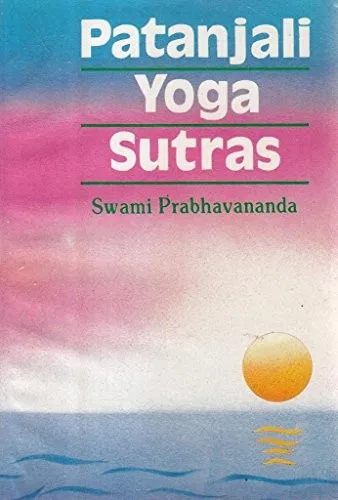
Swami Prabhavananda's 1953 translation makes Patanjali's Yoga Sutras accessible.
The Patanjali Yoga Sutras is a key text in Yoga philosophy. Compiled by Patanjali around the 2nd century CE, it presents Yoga not just as physical exercise, but as a system for mental discipline and spiritual freedom. The work details the eight limbs of Yoga, Ashtanga Yoga, providing a structure for attaining samadhi, a state of deep meditative focus.
This edition, translated by Swami Prabhavananda and published in 1953, aims to offer a clear philosophical perspective on Yoga's deeper aspects. It is suitable for students of comparative religion, meditation practitioners wanting to grasp the theoretical basis of their practice, and those studying ancient Indian thought. The book also contains substantial material for individuals interested in the ethical and psychological dimensions of spiritual growth.
Patanjali's work arose during a period of significant philosophical activity in India, likely between 200 BCE and 200 CE. It brought together existing yogic practices and formalized a distinct philosophical school. While other Indian traditions like Samkhya, Vedanta, and Buddhism also addressed consciousness and liberation, the Yoga Sutras provided a methodical framework. Over centuries, it has shaped numerous commentaries and spiritual practices.
💡 Why Read This Book?
• Understand the philosophical foundation of Yoga beyond physical postures, learning about *vritti* (mental fluctuations) and the eight limbs as presented by Patanjali. • Explore the concept of *kleshas* (afflictions) as detailed in the Sutras, gaining insight into the root causes of suffering and how to address them. • Grasp the ultimate goal of Yoga as *Kaivalya* (absolute freedom) through the systematic practice outlined in the Sutras, aiming for the cessation of mental disturbances.
⭐ Reader Reviews
Honest opinions from readers who have explored this book.
❓ Frequently Asked Questions
When was Patanjali's Yoga Sutras likely compiled?
The Yoga Sutras were likely compiled by Patanjali between the 2nd century BCE and the 2nd century CE, synthesizing earlier yogic traditions into a coherent philosophical system.
What is the primary focus of the Patanjali Yoga Sutras?
The primary focus is the cessation of mental fluctuations (*chitta-vritti-nirodhah*) through disciplined practice, leading to spiritual liberation (*Kaivalya*).
What are the eight limbs of Yoga according to Patanjali?
The eight limbs are Yama, Niyama, Asana, Pranayama, Pratyahara, Dharana, Dhyana, and Samadhi, forming a progressive path of self-mastery.
Who is Swami Prabhavananda?
Swami Prabhavananda was a monk and spiritual teacher who founded the Vedanta Society of Southern California, known for translating and popularizing Indian spiritual texts in the West.
What does 'Sutra' mean in the context of this book?
'Sutra' means 'thread' or 'aphorism' in Sanskrit. The Yoga Sutras are a collection of concise verses intended to be memorized and elaborated upon by a teacher.
Is this book about physical yoga?
While the Sutras include *asana* (posture), the book's focus is primarily on the mental and philosophical aspects of Yoga, viewing physical practice as one component of a larger system.
🔮 Key Themes & Symbolism
Chitta-Vritti-Nirodhah
The central tenet, 'the cessation of the fluctuations of consciousness,' is the operational definition of Yoga presented. This isn't about emptying the mind but about controlling its restless movements (*vritti*). The text details how these mental modifications arise from both external sensory input and internal psychological processes, often leading to suffering. Understanding this principle is key to unlocking the path towards inner stillness and clarity that the Sutras advocate.
The Kleshas
Patanjali identifies five fundamental afflictions (*kleshas*) that cloud consciousness and perpetuate the cycle of suffering: ignorance (*avidya*), egoism (*asmita*), attachment (*raga*), aversion (*dvesha*), and the fear of death (*abhinivesha*). The Yoga Sutras present a systematic approach to understanding and neutralizing these afflictions, not through suppression, but through discriminative knowledge and practice, paving the way for mental equanimity.
Ashtanga Yoga
The eight limbs of Yoga provide a practical, step-by-step methodology for achieving the state of Yoga. Beginning with ethical observances (Yama and Niyama), it progresses through physical posture (*asana*), breath control (*pranayama*), withdrawal of the senses (*pratyahara*), concentration (*dharana*), meditation (*dhyana*), and culminates in profound absorption (*samadhi*). This integrated approach highlights Yoga as a holistic discipline for mind, body, and spirit.
Kaivalya
The ultimate goal articulated in the Sutras is *Kaivalya*, often translated as liberation, isolation, or absolute freedom. It represents a state of pure consciousness, distinct from the fluctuations of the mind and the objects of experience. This state is not an annihilation but a realization of one's true, unconditioned nature, free from the limitations imposed by the ego and the material world.
💬 Memorable Quotes
Direct passages from the work, attributed to the author.
“Yoga is the cessation of the fluctuations of consciousness.”
— This aphorism (I.2) defines the very essence of Yoga. It shifts the focus from external performance to internal mastery, identifying the mind's restless nature as the primary obstacle to be addressed.
“The five afflictions are ignorance, egoism, attachment, aversion, and the desire to live.”
— This identifies the root psychological patterns that obstruct clear perception and lead to suffering. Understanding these *kleshas* is the first step toward their dissolution.
“A stable and comfortable posture.”
— Describing *asana* (II.46), this emphasizes that the physical pose should be steady yet relaxed, facilitating sustained meditation rather than muscular strain.
“When the mind is steady, one can see the self.”
— This highlights the correlation between mental stillness and self-realization, suggesting that true insight arises from a quieted consciousness.
“Then, the seer rests in its own true nature.”
— This describes the state of *Kaivalya* (I.3), where consciousness is no longer identified with mental modifications but abides in its essential, pure form.
🌙 Esoteric Significance
Tradition
The Yoga Sutras are a core part of the classical Indian philosophical system of Yoga, deeply intertwined with the Sankhya school. While not strictly 'esoteric' in the Western sense of hidden traditions, its profound focus on inner transformation, consciousness manipulation, and the attainment of liberation through disciplined practice places it within the broader spectrum of spiritual paths seeking direct experience of reality beyond the mundane.
Symbolism
Key symbols include the concept of *vritti* (mental waves) representing the turbulent surface of consciousness, contrasted with the stillness of *Samadhi*. The five *kleshas* (afflictions) function as symbolic representations of the root psychological obstacles to liberation. The eight limbs (*Ashtanga*) themselves can be viewed as a symbolic progression, a ladder leading from worldly engagement to transcendental awareness.
Modern Relevance
Contemporary yoga practices, mindfulness movements, and psychotherapeutic approaches focused on meditation and self-awareness draw heavily from the principles laid out in the Sutras. Thinkers and practitioners in fields ranging from contemplative neuroscience to transpersonal psychology engage with Patanjali's framework for understanding consciousness and well-being.
👥 Who Should Read This Book
• Dedicated yoga practitioners seeking to understand the philosophical underpinnings and original intent of Yoga beyond asana. • Students of comparative philosophy and religion interested in the systematic exploration of consciousness and liberation in Indian traditions. • Individuals seeking a structured, introspective approach to mental discipline and self-awareness, grounded in ancient wisdom.
📜 Historical Context
Patanjali's Yoga Sutras emerged in the fertile intellectual range of ancient India, likely between the 2nd century BCE and 2nd century CE. This era saw vigorous development in philosophical systems, including Samkhya, Vedanta, and early Buddhist thought, all grappling with questions of existence, consciousness, and liberation. Patanjali’s work can be seen as a synthesis and systematization of existing yogic practices and philosophies, providing a clear, structured path distinct from the more ascetic or ritualistic approaches prevalent at the time. While not subject to widespread censorship, its interpretation has been debated across various schools of Indian philosophy for centuries. Its influence spread significantly, becoming a cornerstone text for the classical Yoga tradition, a status solidified through numerous commentaries, such as Vyasa's Yoga Bhashya, which further elaborated on its aphorisms.
📔 Journal Prompts
The nature of *chitta-vritti* and its impact on perception.
Personal identification and experience of the five *kleshas*.
The role of *asana* and *pranayama* in preparing for deeper states.
Reflections on the practice of *pratyahara* and sense withdrawal.
Exploring the distinction between *dhyana* and *samadhi* in personal practice.
🗂️ Glossary
Sutra
An aphorism or concise verse in Sanskrit, designed for memorization and elaboration, forming the fundamental units of philosophical texts.
Chitta
The internal organ or mind-stuff; the aggregate of consciousness, intellect, and ego.
Vritti
A mental modification, fluctuation, or pattern of thought that arises in the mind-stuff (chitta).
Kleshas
Afflictions or causes of suffering that cloud the mind and obscure true perception, including ignorance, egoism, attachment, aversion, and fear of death.
Asana
A steady and comfortable posture; the third limb of Yoga, intended to facilitate prolonged meditation.
Samadhi
A state of profound meditative absorption or concentration where the mind becomes still and unified with its object.
Kaivalya
Absolute freedom, liberation, or isolation of consciousness from the fluctuations of the mind and the empirical world.
🔮 Readers Also Liked
Browse all →









More by Swami Prabhavananda
All books →





More Free Occult Philosophy Books
View all →