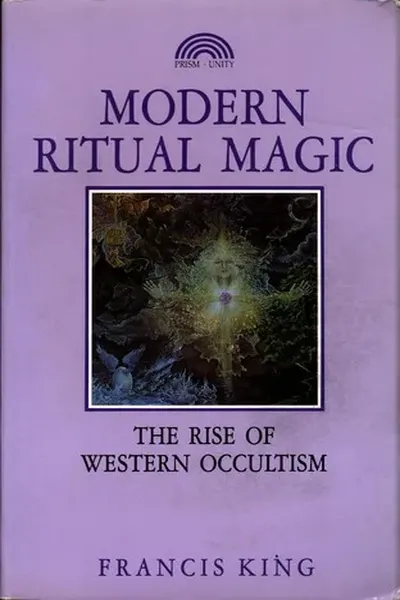
Modern Ritual Magic

 72
72

Modern Ritual Magic
Francis X. King's *Modern Ritual Magic* offers a valuable, if sometimes dry, dissection of ritual practice. Unlike many popular occult guides, King grounds his discussion in a rigorous, almost anthropological, approach. His analysis of the components of ritual – from visualization to the symbolic weight of tools – provides a clear framework for understanding *why* certain practices are believed to function. The chapter on the 'sympathetic link' is particularly illuminating, offering a concrete example of magical theory in action. However, the book's academic tone can occasionally feel detached, lacking the experiential fervor some readers might seek. While King meticulously details the mechanics of ritual, the passionate fire that often fuels magical practice sometimes feels muted. Despite this, *Modern Ritual Magic* is an indispensable reference for anyone seeking a structured, intelligent understanding of ritual's place in esoteric traditions.
📝 Description
72
Francis X. King's 1989 book examines the practical mechanics of Western ritual magic.
Published in 1989, Modern Ritual Magic by Francis X. King moves past theory to detail the practical application of magical principles within Western esotericism. King systematically analyzes the structure, intent, and effectiveness of various ritual forms, presenting a framework for how individuals use symbolic systems for personal and spiritual growth. This work is geared towards serious students of Western esoteric traditions, occult practitioners aiming to enhance their understanding of ritual processes, and historians of religion interested in the development of magical practices.
The book requires a basic familiarity with occultism and an openness to engaging with complex symbolic language. While the depth of information may challenge newcomers, persistent readers will find a thorough exploration of the subject's core ideas. King's analytical style provides a distinct perspective on established traditions, engaging with concepts from earlier figures like Aleister Crowley and Dion Fortune. Its 1989 publication coincided with a renewed interest in occultism and New Age spirituality, offering a structured viewpoint amidst more experiential texts.
Modern Ritual Magic was published during a late 20th-century revival of interest in occultism and spirituality. It offered a structured, analytical approach to ritual practices, contrasting with purely devotional or experiential works common at the time. The book engages with ideas from prominent figures in Western esotericism such as Aleister Crowley and Dion Fortune, but King applies his own distinct analytical lens. Its appearance in 1989 reflected a broader intellectual climate re-examining mysticism and magic's role in contemporary society.
💡 Why Read This Book?
• Gain a structured understanding of ritual components, such as the 'sympathetic link' concept, enabling you to analyze magical operations with greater clarity. • Appreciate the historical trajectory of Western ritual magic, understanding its evolution from earlier traditions up to the late 20th century. • Develop a critical framework for evaluating magical practices by learning King's analytical approach to intent, symbolism, and efficacy.
⭐ Reader Reviews
Honest opinions from readers who have explored this book.
❓ Frequently Asked Questions
What is the historical period covered by Modern Ritual Magic?
The book, first published in 1989, examines ritual magic from its historical roots through to contemporary practices relevant at the time of its writing.
Does Modern Ritual Magic explain how to perform specific spells?
While it details the components and theory behind ritual, its focus is on understanding the principles rather than providing a spellbook. It explains the 'how' and 'why' of ritual mechanics.
Who was Francis X. King?
Francis X. King was a significant figure in 20th-century esoteric studies, known for his analytical and historically informed writings on magic and occultism.
Is Modern Ritual Magic suitable for beginners?
It's best suited for those with some prior knowledge of occultism or comparative religion, as it delves into complex concepts and historical context.
What makes King's approach to ritual unique?
King emphasizes a systematic and analytical examination of ritual components, focusing on the underlying principles and psychological impact rather than solely on experiential outcomes.
When was Modern Ritual Magic first published?
The original publication date for Modern Ritual Magic by Francis X. King was 1989.
🔮 Key Themes & Symbolism
Structure of Ritual
King meticulously breaks down the architecture of ritual magic, analyzing its essential components. This includes the deliberate construction of sacred space, the careful selection and consecration of tools, and the critical role of focused intent. He explores how these elements work in concert to create a container for magical operations. The work emphasizes that effective ritual is not haphazard but a carefully orchestrated process, drawing parallels to theatrical performance and psychological conditioning to underscore the structured nature of magical work.
Sympathetic Magic
A core concept explored is sympathetic magic, the principle that like affects like and that things once connected can act upon each other at a distance. King examines how this ancient principle underpins many magical practices, from the use of effigies to the creation of talismans. He discusses the theoretical basis for these connections, whether viewed through a lens of energetic resonance, psychic influence, or divine mandate, and how practitioners leverage these perceived links for specific outcomes.
Symbolism and Visualization
The book highlights the profound importance of symbolism and visualization in ritual. King explains how symbols act as conduits for energy and intent, representing complex ideas and forces in accessible forms. He details the process of visualization, not merely as mental imagery but as a dynamic act of creation and manifestation. The practitioner's ability to vividly imagine and imbue symbols with psychic energy is presented as a fundamental skill for achieving magical results.
Psychological Impact
Beyond external operations, King addresses the internal transformation ritual can engender. He discusses how engaging in ritual can profoundly affect the practitioner's psyche, altering perception, strengthening willpower, and fostering self-awareness. The book posits that ritual acts as a powerful psychological tool, capable of unlocking latent potentials and reshaping an individual's relationship with themselves and the cosmos. This focus on inner change is presented as integral to the efficacy of magical practice.
💬 Memorable Quotes
Direct passages from the work, attributed to the author.
“The efficacy of a ritual depends upon the clarity of the magician's intent.”
— This highlights King's analytical view that magical results are tied to precise mental focus and purpose, rather than vague desires or emotional states.
“Symbols are the language of the subconscious and the bridge to deeper realities.”
— This interpretation emphasizes the role of symbolic imagery in accessing hidden aspects of the mind and connecting with transcendent dimensions.
“Ritual demands the conscious manipulation of psychic energies.”
— This captures King's view of magic as an active, intentional process involving the directed use of internal and external forces.
“Visualization is not mere daydreaming; it is the active shaping of possibility.”
— This emphasizes King's distinction between passive imagination and the potent, focused visualization required for magical manifestation.
💡 Key Ideas
Editorial paraphrase of the work's core concepts — not direct quotes.
The sympathetic link between objects allows for action at a distance.
This paraphrased concept points to King's explanation of how magical connections are established and utilized through perceived relationships between items.
🌙 Esoteric Significance
Tradition
This work primarily engages with the Western Esoteric Tradition, drawing heavily from Hermeticism, ceremonial magic, and occult psychology. It fits within this lineage by analyzing the systematic application of magical principles, particularly as codified and practiced in the late 19th and 20th centuries. King departs from some traditions by emphasizing a more detached, analytical perspective, dissecting ritual components with a clarity that seeks to clarify rather than mystify. His approach can be seen as a bridge between historical occultism and modern psychological interpretations.
Symbolism
Key symbols explored include the magical circle, representing a consecrated space for protection and focus, and the wand, symbolizing willpower and the active principle of invocation. The concept of the 'sympathetic link' itself functions as a symbolic motif, representing the interconnectedness of all things and the potential for distant influence. These symbols are presented not merely as decorative elements but as functional components that channel and direct esoteric energies.
Modern Relevance
King's analytical framework continues to influence contemporary occultists and ritual practitioners who seek a deeper understanding of magical mechanics. Thinkers and groups focused on ceremonial magic, chaos magic, and psychological approaches to witchcraft often reference his systematic breakdowns of ritual components. His work provides a foundation for those looking to construct their own effective rituals, emphasizing intentionality and symbolic coherence in an era where magical practice is increasingly diverse and personalized.
👥 Who Should Read This Book
• Serious students of Western Esotericism seeking a structured understanding of ritual mechanics and historical context. • Occult practitioners desiring to deepen their theoretical knowledge of magical operations, beyond simple spellcasting. • Comparative religion scholars interested in the practical application and evolution of ritualistic practices within magical traditions.
📜 Historical Context
Francis X. King's *Modern Ritual Magic* emerged in 1989, a period marked by a renewed public fascination with occultism and alternative spiritualities, often termed the 'New Age' movement. This era saw a proliferation of accessible esoteric texts, yet King’s work distinguished itself through its analytical rigor and historical grounding, moving beyond purely experiential accounts. It engaged with intellectual currents influenced by figures like Aleister Crowley and the Hermetic Order of the Golden Dawn, but King offered a more measured, less dogmatic perspective. While contemporary authors like Doreen Valiente were exploring witchcraft traditions, King focused on the broader spectrum of Western ritual practice. The book's structured approach provided a counterpoint to more syncretic or emotionally driven approaches, offering a framework for understanding ritual mechanics that appealed to practitioners and scholars alike.
📔 Journal Prompts
Reflect on the concept of the 'sympathetic link' and its potential application in personal practice.
Analyze the role of symbolism in your own life, independent of magical intent.
Consider the importance of focused intent when approaching any goal, magical or mundane.
How might constructing a 'sacred space,' however temporary, alter your mental state?
Explore the relationship between visualization and the achievement of desired outcomes.
🗂️ Glossary
Ritual Magic
A form of magic involving the use of ceremonies, symbolic actions, and specific language to effect change in consciousness or the external world.
Sympathetic Magic
A type of magic based on the principle that things which are similar or have been in contact can affect one another at a distance.
Intent
The focused will and purpose behind a magical operation, considered crucial for its success.
Visualization
The mental creation of images, scenes, or figures, used in magic to impress the subconscious and influence reality.
Symbolism
The use of objects, gestures, or images to represent deeper meanings, energies, or concepts within a magical context.
Consecration
The act of dedicating or setting apart a person, object, or place for a sacred purpose, often through ritual.
Psychic Energy
The subtle or vital force that practitioners believe can be manipulated through mental and ritualistic means.
🔮 Readers Also Liked
Browse all →









More by Francis X. King
All books →

More Free Occult Philosophy Books
View all →