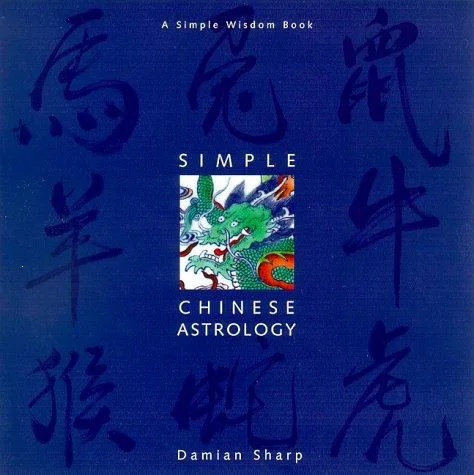
Light on Life: An Introduction to the Astrology of India
 74
74

Light on Life: An Introduction to the Astrology of India
Hart de Fouw and Dr. Robert Svoboda’s *Light on Life* arrives as a welcome, sober corrective to the often sensationalized or oversimplified presentations of Jyotish found in popular Western astrology. The authors, drawing on decades of dedicated study and practice, approach the subject with a scholarly rigor that is both commendable and, at times, demanding. Their explanation of the sidereal zodiac and the critical concept of Nakshatras, for instance, is particularly lucid, offering a genuine glimpse into the system's distinct logic. However, the sheer density of information, while a strength for the serious student, might present a steep learning curve for the absolute beginner seeking quick answers. The detailed exposition on planetary periods (Dashas) is thorough but requires careful attention. Ultimately, this handbook serves as a robust, no-nonsense introduction to Indian astrology for those prepared to engage with its intricacies.
📝 Description
74
Published in 2019, Light on Life offers a clear introduction to Indian astrology.
Hart de Fouw and Dr. Robert Svoboda wrote Light on Life to explain Jyotish, the Indian astrological system, to those new to it. They aim to make this complex Vedic science understandable without losing its depth. The book shows how birth charts and current planetary movements are thought to shape a person's life, character, and future.
This book is for Westerners interested in astrology beyond the familiar tropical zodiac. It is also for students of comparative spirituality, yoga and meditation practitioners wanting to grasp Vedic cosmology, and anyone seeking personal insight through astrology. Readers who want a solid, academic introduction to Jyotish, not just a surface-level look, will find it valuable. It is also helpful for people who know some basic Vedic ideas and want to learn about their astrological basis.
Jyotish, or Vedic astrology, has roots stretching back thousands of years, connected to Hindu thought, astronomy, and Sanskrit texts. Its arrival in the West has been a slow process, often passed through various interpreters. The 2019 publication of Light on Life by de Fouw and Svoboda is a notable attempt to present this ancient knowledge accurately and comprehensively for today's worldwide readers. It builds on many years of study and practice by figures like B.V. Raman, who was important in spreading Indian astrology internationally.
Jyotish is an ancient system of astrology originating in India, deeply tied to Hindu philosophy and cosmology. Unlike Western astrology, it uses a sidereal zodiac and emphasizes the karma and dharma of an individual as revealed through celestial patterns. Its practice is intertwined with concepts of time, cycles, and spiritual development, viewing astrological influences as guides within a larger cosmic order. This book serves as a bridge, translating these complex ideas for a contemporary, often Western, audience.
💡 Why Read This Book?
• Gain a foundational understanding of Jyotish, including its sidereal zodiac and the significance of the 27 Nakshatras, which offer a unique interpretive layer distinct from Western astrology. • Learn about the Dasha system, a unique predictive technique in Vedic astrology that maps out planetary influences over time, allowing for more precise forecasting. • Explore the concept of karma as understood through Vedic astrology, providing a framework for interpreting life events and personal destiny through the lens of planetary influences.
⭐ Reader Reviews
Honest opinions from readers who have explored this book.
❓ Frequently Asked Questions
What is Jyotish and how does it differ from Western astrology?
Jyotish, or Indian astrology, is an ancient Vedic system that uses the sidereal zodiac, aligning with the fixed stars. This contrasts with Western astrology's tropical zodiac, which is based on the seasons. Jyotish also incorporates lunar mansions called Nakshatras and a unique system of planetary periods known as Dashas for predictions.
Who are the authors of Light on Life?
The book is authored by Hart de Fouw and Dr. Robert Svoboda. Both are recognized experts and long-term practitioners of Indian astrology, bringing considerable experience and scholarly depth to the subject.
What is the sidereal zodiac mentioned in the book?
The sidereal zodiac is a system of astronomical coordinates that is fixed relative to the constellations. In Jyotish, it is used to calculate planetary positions, differing from the tropical zodiac in Western astrology which is aligned with the Earth's seasons and equinoxes.
Are Nakshatras important in Indian astrology?
Yes, Nakshatras, or lunar mansions, are a crucial component of Jyotish. The 27 Nakshatras divide the ecliptic into smaller segments, providing a finer level of interpretation and predictive detail that is not present in the broader 12-sign zodiac.
What are Dashas in the context of Light on Life?
Dashas are planetary periods used in Vedic astrology for timing life events. The book explains how these cycles, based on the Moon's Nakshatra at birth, map out the influence of planets over a person's lifetime, aiding in predictive astrology.
Is this book suitable for complete beginners?
Light on Life is a comprehensive handbook suitable for serious beginners. While it aims for clarity, it delves into the complexities of Jyotish, requiring dedicated study rather than offering a superficial overview. Prior exposure to astrological concepts may be helpful but not essential.
🔮 Key Themes & Symbolism
Vedic Cosmology and Karma
The book anchors Jyotish within the broader Vedic worldview, where astrology is seen not merely as a predictive tool but as a map of karma. It explains how the planetary positions at birth (the natal chart) are understood as the unfolding results of past actions. The interplay of Grahas (planets), Rasis (signs), and Bhavas (houses) in the natal chart is presented as a blueprint for an individual's inherent tendencies, life challenges, and potential spiritual growth. This perspective offers a framework for understanding destiny as an intricate dance between free will and the karmic patterns imprinted at birth.
The Sidereal Zodiac and Nakshatras
A central theme is the distinction between the sidereal zodiac, used in Jyotish, and the tropical zodiac of Western astrology. The authors meticulously detail the 360-degree sidereal zodiac, which is fixed relative to the constellations. Crucially, they introduce the 27 Nakshatras, or lunar mansions, which further subdivide the ecliptic into 13°20' segments. Each Nakshatra possesses unique symbolism, deities, and characteristics, offering a profound layer of interpretive depth for understanding planetary placements and lunar phases that is often absent in Western systems.
Predictive Techniques: Dashas and Transits
Light on Life provides a thorough introduction to the predictive mechanisms of Jyotish, primarily focusing on the Dasha system and planetary transits. The Dasha system, particularly the Vimshottari Dasha, is explained as a method for timing life events by assigning specific planetary periods of influence throughout a person's life. The book illustrates how these periods, based on the Moon's position at birth, can illuminate when certain karmic potentials are likely to manifest. Transits, the movement of planets through the zodiac after birth, are also discussed as secondary indicators that activate or modify the Dasha periods.
The Nature of Planets (Grahas)
The book explores the archetypal nature of the Grahas, often referred to as planets, within the Vedic framework. Each Graha—Surya (Sun), Chandra (Moon), Mangala (Mars), Budha (Mercury), Guru (Jupiter), Shukra (Venus), Shani (Saturn), Rahu, and Ketu—is presented with its associated qualities, significations, and potential effects on human life. Understanding the inherent nature of these celestial bodies and their interactions within the chart is fundamental to interpreting the astrological map and is a recurring theme throughout the text.
💬 Memorable Quotes
Direct passages from the work, attributed to the author.
“The planets are not merely physical bodies but represent forces that influence our lives.”
— This statement underscores the Vedic astrological view that planets are more than astronomical objects; they are symbolic representations of cosmic energies and karmic influences that shape human experience and destiny.
“The houses, or Bhavas, represent the different areas of life where these planetary energies manifest.”
— This highlights the functional aspect of the astrological chart, explaining that the houses provide the context for understanding how the planets' inherent qualities are expressed in specific life domains, from career to relationships.
“The Nakshatras add a layer of subtle interpretation to the zodiacal signs.”
— This points to the unique contribution of the lunar mansions in Jyotish, suggesting that they offer a more nuanced and detailed understanding of astrological influences than the broader Rasis alone.
“Vedic astrology is a science of time, offering a framework for understanding the unfolding of karma.”
— This interpretation emphasizes Jyotish's role not just in chart delineation but in understanding temporal cycles and how they correlate with the manifestation of karmic patterns throughout a lifetime.
“The Grahas, or planets, are considered messengers of the divine, indicating the lessons one is meant to learn.”
— This perspective frames the planets as teachers, suggesting that their placements and influences in a chart point towards specific life lessons and developmental opportunities essential for spiritual evolution.
🌙 Esoteric Significance
Tradition
Light on Life is firmly situated within the Jyotish tradition, which is an integral part of the Vedic spiritual and philosophical system. While not strictly an esoteric text in the Hermetic or Kabbalistic sense, Jyotish itself is considered a Vedanga, or limb of the Vedas, implying a sacred and divinatory function. Its esoteric nature lies in its philosophical underpinnings related to karma, reincarnation, and the divine order, offering a cosmic map for understanding life's purpose and challenges within a spiritual framework.
Symbolism
Key symbols include the Grahas (planets), which are not merely celestial bodies but archetypal divine forces influencing human destiny. The Rasis (zodiac signs) and Bhavas (houses) form the structure of the astrological chart, representing cosmic influences and areas of life experience. A highly significant symbolic element unique to Jyotish are the Nakshatras, the 27 lunar mansions, each with its own deity, animal, and symbolic representation, offering a deeper, more nuanced layer of interpretation than the broader zodiacal signs.
Modern Relevance
The work of Svoboda and de Fouw is highly relevant to contemporary practitioners of yoga, Ayurveda, and meditation, offering a deeper cosmological context for these practices. Thinkers and schools focusing on comparative spirituality and Eastern philosophies also draw upon Jyotish for its integrated view of the cosmos and human life. Its emphasis on karma and destiny continues to resonate with individuals seeking meaning and a framework for understanding life's patterns beyond purely materialistic or psychological explanations.
👥 Who Should Read This Book
['• Students of comparative religion and philosophy seeking to understand the astrological dimensions of Indic traditions.', '• Practitioners of yoga and Ayurveda interested in the astrological principles that inform these disciplines within the Vedic worldview.', '• Aspiring astrologers looking for a comprehensive and authoritative introduction to the distinct principles and techniques of Indian astrology (Jyotish).']
📜 Historical Context
The practice of Jyotish, deeply rooted in Vedic traditions dating back to at least the 2nd millennium BCE, has undergone centuries of development and commentary. Its transmission to the West gained significant momentum in the 20th century, notably through the work of Indian astrologers like B.V. Raman, who championed its study internationally. Light on Life, published in 2019, emerges within a landscape where various interpretations of Vedic astrology exist. The authors, Hart de Fouw and Dr. Robert Svoboda, are respected figures who have dedicated decades to studying and practicing Jyotish, often drawing from traditional lineages and extensive textual study. Their work aims to present an authentic and comprehensive introduction, contrasting with more popularized or esoteric Westernized versions, and making a substantial contribution to the serious study of this ancient system in contemporary times.
📔 Journal Prompts
The concept of the Nakshatras and their specific deities.
Your own planetary periods (Dashas) as outlined in Vedic astrology.
The Rasis (zodiac signs) in the context of the sidereal zodiac.
The interplay between the Grahas (planets) and the Bhavas (houses) in your natal chart.
The philosophical implications of karma as presented through Jyotish.
🗂️ Glossary
Jyotish
The traditional Indian system of astrology, also known as Vedic astrology. It is considered one of the Vedangas, or auxiliary disciplines of the Vedas, focusing on the study of celestial influences.
Sidereal Zodiac
A zodiac system based on the fixed constellations as they are observed in the sky. It aligns with the actual positions of stars, differing from the tropical zodiac used in Western astrology.
Nakshatra
A lunar mansion; one of the 27 divisions of the ecliptic used in Indian astrology. Each Nakshatra has unique characteristics, deities, and symbolism that refine astrological interpretation.
Rasi
The Sanskrit term for a zodiac sign in Indian astrology. There are 12 Rasis, corresponding to the familiar zodiac signs, but calculated using the sidereal zodiac.
Bhava
A house in the astrological chart. There are 12 Bhavas, representing different areas of life and experience where planetary influences are expressed.
Graha
Literally 'seizer' or 'planet' in Sanskrit. Refers to the Sun, Moon, and the five visible planets (Mercury, Venus, Mars, Jupiter, Saturn), as well as the lunar nodes Rahu and Ketu.
Dasha
A system of planetary periods used in Vedic astrology to time life events. The Vimshottari Dasha is the most common system, based on the lunar mansion at birth.

![Mr. Patridge's [sic] judgement and opinion of this frost. Foretelling how long it is like to continue, according to the rules of astrology. ... 1709](/img/thumb/mr-patridge-s-sic-judgement-and-opinion-of-this-frost-foretelling-how-long-it-is-like-to-continue-according-to-the-rules-of-astrology-1709-patridge-mr.webp)