Les grimoires
 83
83

Les grimoires
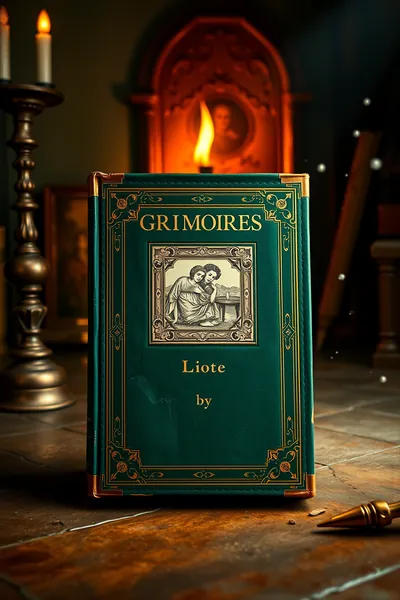
Louis-Joseph Doucet’s *Les grimoires* offers a commendable effort to demystify the often-sensationalized world of magical grimoires. Rather than succumbing to the allure of conjured spirits or arcane power, Doucet grounds his analysis in textual history and cultural context. A particular strength lies in the detailed examination of grimoire transmission, highlighting how these texts evolved through manuscript copies, often with significant variations. However, the work occasionally suffers from an academic dryness that might alienate readers seeking a more immediate connection to the practice of magic. The section on the influence of late antiquity texts is particularly illuminating, demonstrating the deep roots of these magical traditions. While valuable for its scholarly approach, it may leave those looking for practical instruction wanting. Doucet provides a solid foundation for understanding, but not necessarily for doing.
📝 Description
83
Louis-Joseph Doucet's Les grimoires examines magical texts circulating for centuries.
Les grimoires offers a scholarly look at the history and texts of magical books known as grimoires. Doucet moves past sensational ideas to analyze these misunderstood historical artifacts. The book looks at where grimoires came from, what they contain, and the societies that used them. It works to understand these texts not just as oddities but as important cultural and intellectual records.
This study is for those seriously interested in Western esotericism, religious history, and the theory behind historical magic. It assumes some knowledge of occult ideas and research methods. The book appeals to readers who want a deep, rigorous understanding rather than a surface look. Doucet's work fits into the long tradition of studying these texts critically.
The academic study of grimoires gained momentum in the late 19th and early 20th centuries. This period saw the growth of folklore and comparative religion studies. Figures like Eliphas Lévi and Arthur Edward Waite helped bring attention to these texts, though sometimes through their own occult views. Doucet's work builds on this critical line of inquiry, aiming to understand grimoires as significant cultural and intellectual documents.
💡 Why Read This Book?
• Gain a nuanced understanding of grimoire evolution, learning how texts like the *Grimorium Verum* were adapted and disseminated through manuscript culture across centuries. • Explore the historical context of magical texts, understanding their place within intellectual currents of periods like the Renaissance and Enlightenment, moving beyond simplistic notions of witchcraft. • Appreciate the scholarly methodology applied to occult studies, recognizing how textual criticism and historical analysis can illuminate the practices and beliefs surrounding ceremonial magic.
⭐ Reader Reviews
Honest opinions from readers who have explored this book.
❓ Frequently Asked Questions
What is the primary focus of Louis-Joseph Doucet's 'Les grimoires'?
The book primarily focuses on the historical and textual tradition of grimoires, examining their origins, content, and the cultural context of their production and use, rather than sensationalizing their occult aspects.
When was 'Les grimoires' first published?
The work was first published in 2019, positioning it as a relatively recent contribution to the academic study of esoteric literature.
Does 'Les grimoires' provide practical instructions for performing magic?
No, the book is a scholarly examination and does not offer practical instructions for performing magical rituals. Its aim is historical and analytical.
What kind of historical periods does the book cover regarding grimoires?
The book covers a broad historical span, discussing the origins and evolution of grimoires, often touching upon periods such as the late Middle Ages, Renaissance, and Enlightenment.
Who would benefit most from reading 'Les grimoires'?
Students of Western esotericism, historians of religion, and academics interested in occult traditions would benefit most from its rigorous, research-based approach.
Are specific grimoire texts analyzed in detail?
Yes, the work likely analyzes specific grimoires, discussing their textual variations and the scholarly debates surrounding their authenticity and influence.
🔮 Key Themes & Symbolism
Textual Transmission and Variation
The work meticulously traces how grimoires, such as those attributed to figures like Solomon or included in collections like the *Lemegeton*, were not static documents. It highlights their transmission through manuscript culture, detailing how scribal errors, additions, and regional adaptations led to significant variations between different copies. This process reveals the dynamic nature of occult knowledge as it moved through time and space, impacting the understanding and practice of magic.
The Social and Intellectual Milieu
Doucet situates the creation and use of grimoires within their specific historical and intellectual environments. This includes exploring the influence of Renaissance Neoplatonism, Kabbalistic ideas, and even folk beliefs. The book examines who created and consulted these texts—whether scholars, clergy, or common folk—and how societal attitudes towards magic, demonology, and divine power shaped their content and reception.
Categorization of Magical Practice
The study addresses the various classifications of magic found within grimoires, distinguishing between categories like ceremonial magic, goetia, and theurgy. It analyzes the structure and intended purpose of different types of grimoires, such as those focused on summoning spirits, creating talismans, or performing divination. This thematic organization helps clarify the diverse aims and methodologies employed in historical magical traditions.
Influence on Later Esotericism
The book explores the enduring legacy of grimoires, showing how they formed a foundational layer for later esoteric movements. It discusses how figures in the 19th-century occult revival, such as those associated with the Hermetic Order of the Golden Dawn, drew upon and reinterpreted material found in these older magical texts, demonstrating a continuous thread in Western esotericism.
💬 Memorable Quotes
Direct passages from the work, attributed to the author.
“Grimoires codified magical operations, often drawing upon a synthesis of biblical, classical, and folk elements.”
— This statement underscores the hybrid nature of grimoire magic, indicating that its practitioners did not invent entirely new systems but rather compiled and adapted existing religious, philosophical, and popular lore into structured magical procedures.
“The circulation of grimoires was largely dependent on manuscript culture, leading to significant textual drift.”
— This highlights a key aspect of how magical knowledge was preserved and transmitted before widespread printing. The reliance on hand-copied manuscripts meant that errors and intentional alterations were common, shaping the diverse versions of grimoires that exist.
“Understanding grimoires requires examining the intellectual currents of their time, not just their perceived supernatural content.”
— This emphasizes a scholarly approach, suggesting that to grasp the significance of grimoires, one must consider the philosophical, religious, and scientific ideas prevalent during the periods they originated and circulated, rather than viewing them in isolation.
“Distinguishing between learned magic and popular sorcery is crucial for analyzing grimoire traditions.”
— This points to a necessary analytical framework for studying magical texts. It suggests that grimoires often occupied a space between more formalized, scholarly magical systems and the everyday practices of folk magic, and understanding this distinction is key.
“The structure of a grimoire often reflects a specific cosmological or theological worldview.”
— This interpretation suggests that the organization of rituals, incantations, and lists of spirits within a grimoire is not arbitrary but is a manifestation of the author's or compiler's understanding of the universe and humanity's place within it.
🌙 Esoteric Significance
Tradition
This work engages with the Western Esoteric Tradition, specifically focusing on the lineage of ceremonial magic and its textual foundations. It sits within the scholarly examination of magical texts that have influenced Hermetic, Kabbalistic, and later occult revival movements. Doucet's approach departs from purely practical occult manuals by grounding the study in historical scholarship, offering a critical perspective on the development and transmission of these traditions.
Symbolism
Key symbols explored include angelic and demonic hierarchies, often presented in detailed lists and correspondences, reflecting a Neoplatonic or Kabbalistic worldview where the cosmos is structured by divine emanations and intelligences. Talismans and sigils, as visual representations of spiritual power or divine names, are also central, functioning as focal points for ritual energy and symbolic communication with unseen forces.
Modern Relevance
Contemporary practitioners of Western ceremonial magic, particularly those involved in reconstructivist traditions or seeking to understand the historical roots of modern occult orders like the Golden Dawn, draw heavily on the scholarly understanding of grimoires. Thinkers exploring the history of religiosity, the evolution of magical thinking, and the impact of manuscript culture on knowledge transmission also find value in such analyses.
👥 Who Should Read This Book
• Students of Western Esotericism: Those seeking a rigorous historical and textual understanding of the grimoire tradition, moving beyond popular occult stereotypes. • Religious Historians: Scholars interested in the evolution of magical beliefs, demonology, and the interplay between religion and magic across different historical periods. • Comparative Religion Researchers: Individuals examining cross-cultural influences on magical practices and the historical development of esoteric knowledge systems.
📜 Historical Context
The study of grimoires gained academic momentum in the late 19th and early 20th centuries, a period marked by intense interest in occultism and the burgeoning field of comparative religion. Scholars and occultists alike began to unearth and analyze these often-marginalized texts. Eliphas Lévi's influential works in the mid-19th century, while more syncretic and philosophical, helped pave the way for a more direct engagement with grimoire literature. Arthur Edward Waite, a prominent figure in occult scholarship, also dedicated significant effort to cataloging and interpreting these magical books, though often from a critical, sometimes skeptical, perspective. Doucet's work engages with this lineage, seeking to provide a more systematic historical and textual analysis, distinguishing it from earlier, more romanticized or purely occult-focused interpretations. The reception of grimoires themselves varied wildly, from being condemned as demonic texts by religious authorities to being prized by collectors and practitioners of esoteric arts.
📔 Journal Prompts
The concept of textual drift in grimoires, as discussed in the book, how might it relate to the evolution of oral traditions?
Consider the 'symbolism' section's mention of angelic and demonic hierarchies; how do these structures reflect ancient cosmological views?
Reflect on the historical context of grimoires and their potential condemnation by authorities; what fears might they have represented?
Analyze the distinction between 'learned magic' and 'popular sorcery' as presented in the work; where might the *Grimorium Verum* fit?
How does the focus on manuscript culture, detailed in the 'Textual Transmission' theme, impact our understanding of occult knowledge dissemination?
🗂️ Glossary
Grimoire
A textbook of magic, typically containing instructions for summoning spirits, casting spells, and creating magical objects like talismans. The term originated in medieval France.
Ceremonial Magic
A form of magic that involves the use of ritual, elaborate procedures, specific tools, and often invocations or evocations of spiritual entities.
Goetia
A branch of magic concerned with the evocation of demons or spirits, often involving complex rituals and protective measures, as detailed in certain grimoires like the *Lemegeton*.
Theurgy
A system of magic aiming to invoke the gods or divine beings for the purpose of spiritual purification and union with the divine, contrasting with goetia's focus on commanding spirits.
Manuscript Culture
The practice of creating, copying, and disseminating texts by hand, prevalent before the invention of the printing press, significantly impacting the transmission and variation of texts like grimoires.
Talismans
Objects inscribed with magical symbols, words, or images, believed to possess protective or magical powers when worn or kept in a specific location.
Sigil
A symbol or sign representing a magical intention, entity, or concept, often created through specific methods and used in ritual practice.