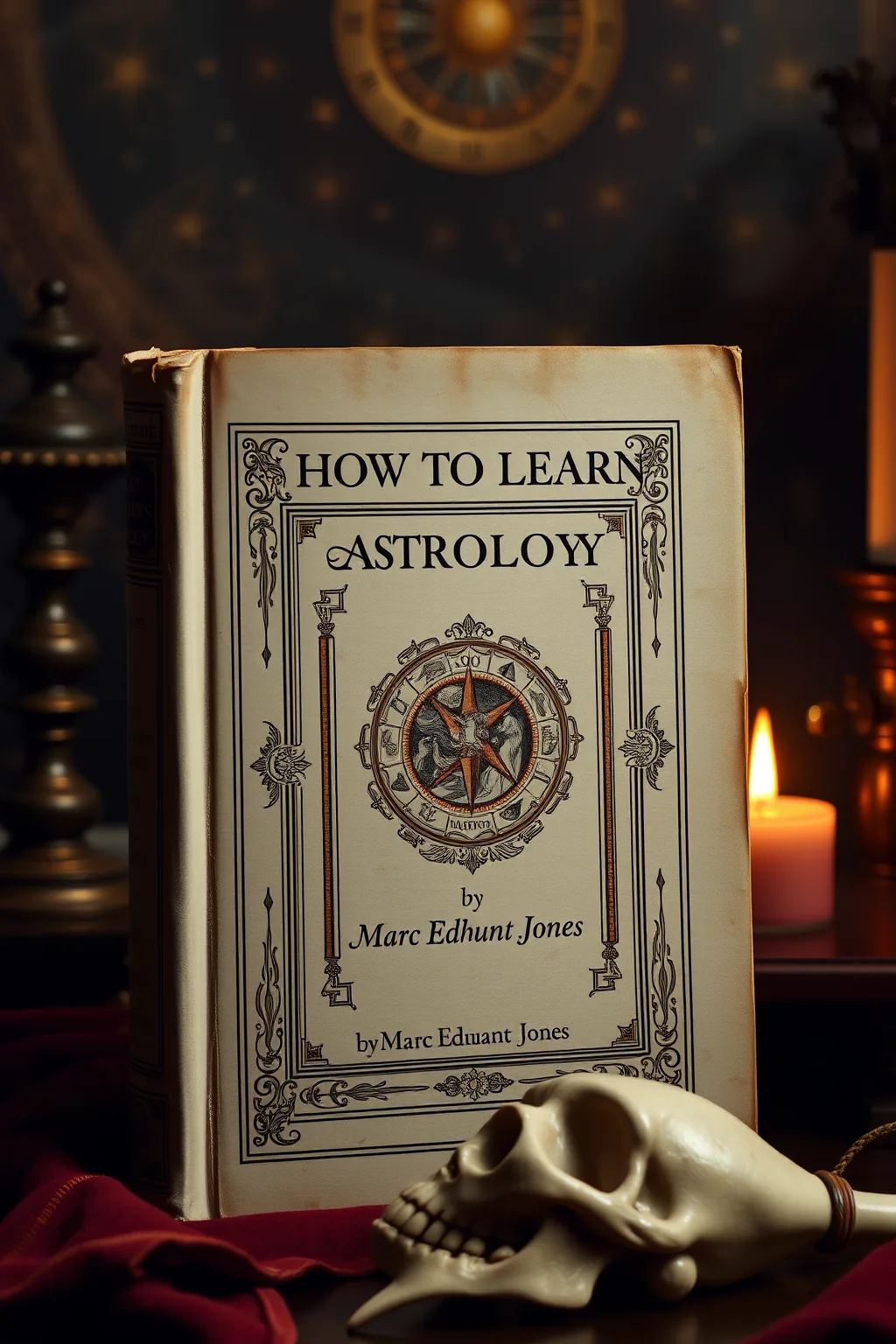
How to Learn Astrology
 79
79

How to Learn Astrology
Marc Edmund Jones's "How to Learn Astrology" offers a refreshingly direct approach to a field often obscured by jargon. The book eschews romanticism for a pragmatic, almost scientific, breakdown of astrological elements. Jones's strength lies in his ability to articulate complex ideas about planetary symbolism and sign dynamics with clarity, particularly in his explanations of the twelve houses as distinct arenas of experience. However, the 1969 publication date is evident in its pacing and certain dated terminology, which might require readers to bridge a generational gap in expression. A standout section, in my view, is the detailed explication of the luminaries (Sun and Moon) and their relationship to core identity and emotional needs. It’s a solid, if somewhat austere, primer for the dedicated student.
📝 Description
79
Marc Edmund Jones published "How to Learn Astrology" in 1969, presenting astrology as a symbolic language.
Published in 1969, Marc Edmund Jones's "How to Learn Astrology" moves past simple horoscopes to frame astrology as a symbolic language. The book aims to provide readers with a structured method for interpreting celestial configurations, focusing on psychological patterns and universal energies. It is intended for those seeking a serious introduction to astrology, particularly those drawn to its psychological and philosophical dimensions. Jones's work appeals to students wanting to understand the symbolic grammar of the cosmos, rather than relying on quick divination techniques.
The text covers fundamental astrological components such as zodiacal signs, planetary archetypes, and the houses. Jones emphasizes the symbolic significance of these elements and how they interact, viewing astrology as a map of consciousness. A central concept is the 'Chart of the Soul,' which the book suggests reveals inherent potentials and challenges for personal growth, rather than predetermining one's fate.
Published in 1969, "How to Learn Astrology" appeared during a time of increased interest in esoteric subjects, influenced by the counterculture and a revived focus on Western occult traditions and Eastern philosophies. This period saw astrology re-emerging, often with a shift away from deterministic views. Jones's book contributed to a more psychological and humanistic interpretation of astrology, distinguishing it from fortune-telling practices and aligning with the growing integration of astrology and depth psychology.
💡 Why Read This Book?
• Gain a structured understanding of astrological fundamentals, including the twelve houses and planetary archetypes, as presented in the book's original 1969 framework, offering a historical perspective on modern astrological thought. • Learn to view astrological symbols not as predictive tools but as a language for psychological exploration, a core tenet emphasized by Jones's approach to the 'Chart of the Soul'. • Grasp the symbolic interplay between zodiacal signs and planets, as detailed in the text, enabling a deeper comprehension of how these elements combine to describe individual potentials.
⭐ Reader Reviews
Honest opinions from readers who have explored this book.
❓ Frequently Asked Questions
When was Marc Edmund Jones's "How to Learn Astrology" first published?
Marc Edmund Jones's "How to Learn Astrology" was first published in 1969, placing it within a significant period of renewed interest in esoteric studies.
What is the primary focus of "How to Learn Astrology"?
The book focuses on the fundamental principles of astrology, presenting it as a symbolic language for understanding psychological patterns and universal energies, rather than a system for fortune-telling.
Who is Marc Edmund Jones?
Marc Edmund Jones was an influential astrologer and writer, known for his contributions to psychological astrology and for co-founding the first astrological magazine in the United States, 'American Astrology' magazine.
Does the book cover modern astrological interpretations?
While foundational, the book's 1969 publication date means its interpretations are rooted in the astrological thought of that era, offering a historical context for modern psychological astrology.
Is "How to Learn Astrology" suitable for complete beginners?
Yes, the book is designed as a foundational text, aiming to equip readers with a structured approach to interpreting astrological concepts, making it suitable for serious beginners.
What are some key astrological concepts discussed in the book?
The book discusses key concepts such as zodiacal signs, planetary archetypes, the twelve houses, and the symbolic meaning of their interplay, often referred to as the 'Chart of the Soul'.
🔮 Key Themes & Symbolism
The Symbolic Language of Astrology
Jones posits astrology as a cosmic alphabet, where each planet, sign, and house represents a distinct symbolic meaning. The work meticulously breaks down these components, treating them not as predictive forces but as archetypal energies. This perspective frames the birth chart as a map of consciousness, highlighting potentials and challenges inherent in the individual's psychological makeup. It encourages a symbolic interpretation rather than a literal one, aligning with esoteric traditions that view the cosmos as a reflection of inner states.
Psychological Archetypes in the Chart
A central theme is the exploration of astrological elements as psychological archetypes. Jones views planets as personifications of fundamental human drives and capacities, while zodiacal signs describe the manner in which these energies are expressed. The twelve houses are presented as distinct spheres of life experience where these dynamics play out. This approach aligns with later developments in psychological astrology, viewing the birth chart as a blueprint for self-understanding and personal growth, a concept he termed the 'Chart of the Soul'.
The Twelve Houses as Life Arenas
The book dedicates significant attention to the twelve houses of the astrological chart, interpreting them as specific domains or arenas of human experience. Each house is assigned a particular set of symbolic meanings related to different life functions, relationships, and environments. Understanding the houses is presented as crucial for contextualizing planetary and sign energies, revealing how and where an individual's inherent potentials and challenges are likely to manifest most strongly in their life's journey.
Astrology as a Tool for Self-Awareness
Jones advocates for astrology as a profound tool for self-awareness and personal development. He reframes the practice from mere prediction to a sophisticated method of introspection. By studying the patterns within one's birth chart, individuals can gain insight into their core motivations, strengths, and areas requiring integration. This perspective elevates astrology beyond a divinatory art to a philosophical discipline, emphasizing conscious engagement with one's innate potentials for growth and self-realization.
💬 Memorable Quotes
Direct passages from the work, attributed to the author.
“The zodiac is a cosmic map of the human soul.”
— This concise statement captures Jones's core philosophy: astrology is not about external fate, but an internal blueprint for understanding the self and its potential.
“Each planet represents a fundamental drive or urge within the psyche.”
— This highlights the psychological dimension of astrology as presented by Jones, viewing celestial bodies as archetypal forces that shape our inner world and motivations.
“The houses delineate the specific fields of experience where these drives manifest.”
— This explains the function of the houses in Jones's system, showing how abstract astrological energies are applied to concrete areas of life and personal circumstance.
“Astrology offers a language to describe the inherent potentials of an individual.”
— This suggests that the book presents astrology as a descriptive, rather than prescriptive, tool, focusing on innate capacities and possibilities for growth.
💡 Key Ideas
Editorial paraphrase of the work's core concepts — not direct quotes.
Understanding your birth chart is understanding yourself.
This paraphrased concept emphasizes the book's ultimate goal: to empower readers with self-knowledge through the study of astrological symbolism and patterns.
🌙 Esoteric Significance
Tradition
Jones's work aligns with the modern psychological and humanistic branches of Western esoteric traditions, particularly those influenced by depth psychology and archetypal symbolism. It departs from strictly predictive or fatalistic interpretations common in earlier astrological eras. While not explicitly Hermetic or Kabbalistic, it shares a focus on symbolic language and cosmic correspondences, viewing the birth chart as a microcosm reflecting universal principles, a common thread in many esoteric lineages seeking to understand humanity's place in the cosmos.
Symbolism
Key symbols explored include the twelve zodiacal signs, which represent archetypal modes of expression and consciousness, and the planets, functioning as personifications of core psychological drives. The book also emphasizes the symbolic meaning of the twelve houses, framing them as distinct arenas of life experience where these energies are activated. Together, these elements form a symbolic map, interpreted by Jones as the 'Chart of the Soul,' revealing inherent potentials.
Modern Relevance
Contemporary psychological astrologers and those interested in archetypal psychology continue to draw on Jones's foundational concepts. His emphasis on the birth chart as a tool for self-understanding and personal growth resonates strongly with modern therapeutic and self-help movements. Thinkers and practitioners exploring the intersection of consciousness studies, mythology, and astrology often reference the symbolic frameworks he helped to popularize in the mid-20th century.
👥 Who Should Read This Book
['• Beginning students of astrology seeking a structured, symbolic approach to the fundamentals, moving beyond superficial horoscopes.', '• Individuals interested in psychological astrology and archetypal symbolism who want to understand the birth chart as a map of consciousness.', '• Readers exploring the history of 20th-century esoteric thought and its connection to emerging psychological theories.']
📜 Historical Context
Marc Edmund Jones's "How to Learn Astrology," first published in 1969, emerged during a key moment in Western esoteric thought. The late 1960s saw a surge of interest in astrology, often intertwined with the broader counterculture movement and a re-examination of spiritual and psychological frameworks. This period was characterized by a departure from the more deterministic, fate-driven astrology of earlier decades, moving towards a humanistic and psychological interpretation. Jones's work contributed to this shift, offering a structured, symbolic approach that paralleled the rise of psychological astrology. Contemporaries like Dane Rudhyar were also exploring similar themes of existential astrology and self-realization. While not facing overt censorship, the era saw astrological literature gain wider, albeit often informal, distribution, challenging the more rigid academic and religious establishments of the time.
📔 Journal Prompts
The symbolic meaning of the twelve houses as life arenas.
Reflecting on the archetypal drives represented by the planets.
How the zodiacal signs describe modes of expression.
Interpreting your own birth chart as a 'Chart of the Soul'.
The relationship between planetary archetypes and personal motivations.
🗂️ Glossary
Zodiacal Signs
The twelve divisions of the celestial ecliptic, each representing a distinct archetypal pattern or mode of energy and expression.
Planetary Archetypes
The symbolic representation of fundamental psychological drives, functions, or urges associated with each planet in astrology.
The Twelve Houses
The twelve segments of the astrological chart, representing different areas or spheres of life experience and activity.
Chart of the Soul
A concept suggesting that the birth chart serves as a symbolic blueprint of an individual's inherent potentials, challenges, and life path.
Symbolic Language
The interpretation of astrological elements (planets, signs, houses) not as literal events or forces, but as meaningful symbols representing psychological and cosmic principles.
Luminaries
Refers collectively to the Sun and the Moon, considered the two most significant celestial bodies in an astrological chart due to their symbolic representation of core identity and emotional nature.
Birth Chart
A diagram representing the positions of the Sun, Moon, planets, and astrological houses at the precise moment and location of a person's birth.
🔮 Readers Also Liked
Browse all →








More by Marc Edmund Jones
All books →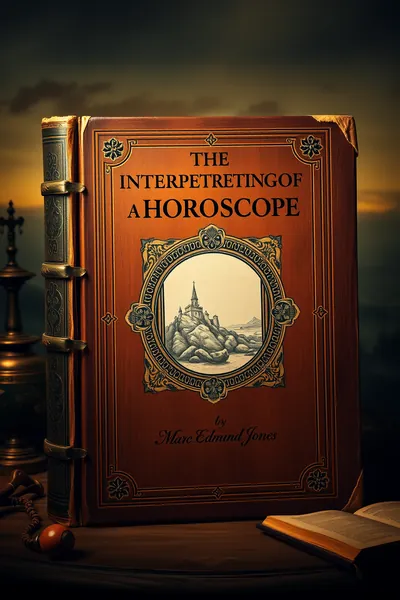





More Free Astrology & Cosmology Books
View all →