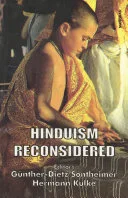
Hinduism Reconsidered
 84
84

Hinduism Reconsidered
The premise of Hinduism Reconsidered—that current scholarship demands a reformulation of conventional notions of Hinduism—is sound, but the execution feels uneven. The collection, born from the IXth European Conference of Modern South Asian Studies, offers moments of genuine intellectual friction. However, the lack of a single authorial voice means the arguments sometimes lack cohesive force. A particular strength lies in the discussions around the inadequacy of purely textual analysis, hinting at the need for ethnographic and historical contextualization. A limitation is the absence of clear signposting for readers unfamiliar with the specific academic debates referenced, such as the work of Louis Dumont on hierarchy. Nevertheless, the exploration of how 'new evidence and modern theories' challenge established frameworks is valuable. This volume serves as a valuable, albeit dense, academic resource for specialists.
📝 Description
84
Hinduism Reconsidered, a product of the IXth European Conference of Modern South Asian Studies, challenges traditional views of Hinduism.
This collection of essays questions common assumptions about Hinduism by incorporating new research and theoretical frameworks. It advocates for an interdisciplinary and contextual method to understand Hinduism today. The discussions originated during a period when microstudies became prevalent, leading to a re-examination of broader theories concerning Hinduism. The conference underscored the need for interdisciplinary approaches, aligning with a wider academic movement in the late 20th and early 21st centuries that integrated historical, sociological, and anthropological viewpoints.
The book tackles issues such as the fluidity of religious identity, how colonial scholarship shaped Hindu self-perception, and the need to avoid monolithic interpretations. It considers how changing academic theories require a re-evaluation of established Hindu doctrines and practices, stressing the value of context and comparative study. It is intended for scholars, graduate students, and researchers focused on South Asian religions and history who wish to move past simple definitions and engage with the complex, changing nature of Hindu traditions.
While not explicitly esoteric in the common sense, this collection engages with a scholarly re-evaluation of Hinduism that touches upon underlying assumptions often taken for granted. By demanding contextual and interdisciplinary analysis, it implicitly questions established, perhaps more rigid, interpretations that might have prevailed in earlier scholarship. This approach aligns with a broader intellectual current that seeks to uncover the diverse, lived realities of religious practice, moving beyond fixed doctrinal frameworks. The focus on the evolution of academic thought regarding Hinduism suggests a desire to understand the tradition not as a static entity, but as a dynamic and contested field of interpretation.
💡 Why Read This Book?
• Understand the limitations of pre-20th century scholarship on Hinduism by examining how the IXth European Conference of Modern South Asian Studies initiated new theoretical discussions. • Appreciate the necessity of an inter-disciplinary approach, as explored through case studies presented at the Heidelberg conference, moving beyond single-discipline analyses. • Gain critical perspective on the evolving definitions of Hinduism, prompted by contemporary research that questions conventional notions and demands contextual interpretation.
⭐ Reader Reviews
Honest opinions from readers who have explored this book.
❓ Frequently Asked Questions
What is the primary argument of Hinduism Reconsidered?
The book argues that contemporary research and modern theories necessitate a re-evaluation of conventional understandings of Hinduism, advocating for an inter-disciplinary and contextual approach to its interpretation.
Where did the essays in Hinduism Reconsidered originate?
The essays are derived from discussions and research presented at the IXth European Conference of Modern South Asian Studies, held in Heidelberg, Germany.
Who is the intended audience for this book?
This book is primarily intended for academics, graduate students, and researchers specializing in South Asian studies, religious studies, and comparative religion.
Does Hinduism Reconsidered offer new theories about Hinduism?
While it discusses new theories, its main focus is on the questions raised by contemporary research and the need to reformulate existing notions about Hinduism.
What is the significance of the Heidelberg conference mentioned in the book?
The conference served as a platform for scholars to discuss emerging research and theories, leading to the critical examination of established perspectives on Hinduism presented in this volume.
What does the book mean by an 'inter-disciplinary and contextual approach'?
It signifies the need to study Hinduism using insights from multiple fields (history, sociology, anthropology, etc.) and considering its specific historical, cultural, and social settings, rather than through a narrow lens.
🔮 Key Themes & Symbolism
Rethinking Established Notions
The work critically examines whether traditional academic frameworks for understanding Hinduism remain adequate in light of recent microstudies and theoretical advancements. It posits that the field's progression demands a departure from ossified definitions, urging scholars to question long-held assumptions. The collection highlights how new evidence compels a re-evaluation, moving beyond simplistic categorizations to embrace the dynamic and many-sided nature of Hindu traditions and their scholarly interpretation.
The Necessity of Interdisciplinarity
A central theme is the imperative for an inter-disciplinary approach to the study of Hinduism. The book argues against siloed scholarship, emphasizing that a holistic understanding requires integrating perspectives from history, sociology, anthropology, and other fields. This approach is presented as crucial for interpreting the complexities of Hindu practices and beliefs in their authentic contexts, moving beyond purely textual or theological analyses.
Contextual Interpretation
The volume strongly advocates for interpreting Hinduism through its specific contexts rather than applying universalizing theories. It underscores that the meaning and practice of Hinduism are deeply embedded in particular historical, social, and geographical settings. This emphasis on context challenges interpretations that detach religious phenomena from their lived realities, promoting a more nuanced and historically grounded scholarship.
Evolving Theories in South Asian Studies
The book reflects the intellectual ferment within South Asian studies, particularly concerning religious traditions. It engages with the ongoing debates about how to theorize Hinduism in a post-colonial and globalized world. The discussions implicitly acknowledge the influence of scholarly shifts that prioritize local epistemologies and challenge Eurocentric analytical models, fostering a more critical self-awareness within the discipline.
💬 Memorable Quotes
Direct passages from the work, attributed to the author.
“Do conventional notions about Hinduism need to be reformulated on the basis of new evidences and modern theories?”
— This central question expresses the book's core objective: to challenge the status quo in Hinduism studies. It invites readers to consider how recent academic findings and theoretical shifts necessitate a critical re-examination of established scholarly paradigms.
“Is it prudent to interpret Hinduism without an inter-disciplinary and contextual approach?”
— This rhetorical question highlights the volume's central thesis. It argues that a narrow, single-discipline view is insufficient and potentially misleading, advocating instead for a holistic methodology that integrates diverse perspectives and situates Hinduism within its specific environments.
“In short, what does Hinduism mean?”
— This seemingly simple question opens up the profound complexities addressed throughout the book. It signifies the ongoing scholarly quest to define and understand Hinduism, acknowledging that its meaning is fluid, contested, and context-dependent.
“Contemporary research on Hinduism has thrown up a number of microstudies and new, overall theories.”
— This statement sets the stage for the book's critical inquiry. It acknowledges the dual trends in scholarship—detailed case studies and broad theoretical frameworks—and poses the challenge of reconciling them for a coherent understanding of Hinduism.
“The above issues were discussed at the IXth European Conference of Modern South Asian Studies held Heidelberg, Germany.”
— This factual statement anchors the collection to a specific academic event and location. It indicates that the book is a product of scholarly discourse and collaborative inquiry within a recognized academic forum.
🌙 Esoteric Significance
Tradition
While not explicitly aligned with a single esoteric tradition like Hermeticism or Theosophy, Hinduism Reconsidered engages with the academic study of a tradition often considered foundational to many esoteric paths. Its focus on re-evaluating core concepts and historical interpretations appeals to esoteric traditions that seek to uncover deeper, often hidden, meanings within established religious frameworks. The book's emphasis on contextual understanding can be seen as a parallel to esoteric practices that seek the inner essence beneath exoteric forms.
Symbolism
The text, by its nature as a collection of academic essays, does not focus on specific esoteric symbols in the manner of a ritual manual. However, the concept of 'Dharma' itself, explored through various academic lenses, can be viewed as a complex symbol representing cosmic order, duty, and the underlying principles of existence. The very act of 'reconsidering' established narratives about deities, practices, and philosophical schools can be interpreted as an esoteric method of deconstruction and reconstruction of meaning.
Modern Relevance
Contemporary scholars and practitioners interested in comparative religion and the philosophical underpinnings of Hinduism find value in this work's critical approach. Thinkers exploring post-colonial religious studies or seeking to deconstruct Western academic biases in the study of Eastern traditions can draw upon its methodological discussions. Furthermore, individuals engaged in modern Tantric or Yogic studies might find its contextualization of historical and theoretical debates useful for understanding the academic reception of these practices.
👥 Who Should Read This Book
• Academic researchers in religious studies and South Asian history seeking to update their understanding of contemporary scholarly debates surrounding Hinduism. • Graduate students needing to ground their theses in current theoretical frameworks and methodological discussions relevant to Hindu traditions. • Independent scholars and practitioners interested in the critical academic discourse that shapes how Hinduism is understood globally.
📜 Historical Context
Published posthumously in 2025, Hinduism Reconsidered emerges from a critical juncture in South Asian Studies. The IXth European Conference of Modern South Asian Studies, held in Heidelberg, Germany, brought together scholars grappling with the proliferation of specialized microstudies alongside evolving macro-level theories concerning Hinduism. This period, roughly the late 20th and early 21st centuries, was marked by a growing awareness of the limitations of earlier, often Orientalist, scholarship. Intellectual currents favored post-colonial critiques and a greater emphasis on ethnographic fieldwork, challenging the dominance of textual analysis championed by earlier generations. Scholars like A. K. Ramanujan had already begun questioning essentialist notions of Indian culture. The work implicitly engages with this scholarly milieu, seeking to synthesize new research and theoretical frameworks to offer a more nuanced understanding of Hinduism, moving beyond the monolithic interpretations that characterized much earlier academic discourse.
📔 Journal Prompts
The challenge of inter-disciplinary approaches to understanding Dharma.
Reconsidering the impact of 'microstudies' versus 'overall theories' on interpreting Hindu texts.
The necessity of contextualizing specific Hindu practices discussed in academic research.
How do modern theories reshape the meaning of traditional Hindu concepts?
Formulating questions about Hinduism that move beyond conventional notions.
🗂️ Glossary
Microstudies
Academic research focusing on very specific, localized, or detailed aspects of a subject, as opposed to broad, overarching theories.
Inter-disciplinary approach
A method of study that integrates information and methodologies from multiple academic disciplines (e.g., history, sociology, anthropology) to gain a more comprehensive understanding of a subject.
Contextual approach
An analytical method that emphasizes understanding phenomena within their specific historical, social, cultural, and geographical settings, rather than applying universalizing principles.
Conventional notions
Widely accepted or traditional beliefs, ideas, or understandings about a subject, often established through historical scholarship or common discourse.
Modern theories
Contemporary intellectual frameworks, conceptual models, and analytical tools used in academic research that may challenge or refine older theories.
South Asian Studies
An academic field dedicated to the study of the history, culture, politics, languages, and societies of the South Asian subcontinent.
IXth European Conference of Modern South Asian Studies
A specific academic conference where scholars presented research and engaged in discussions, forming the basis for the essays in this book.