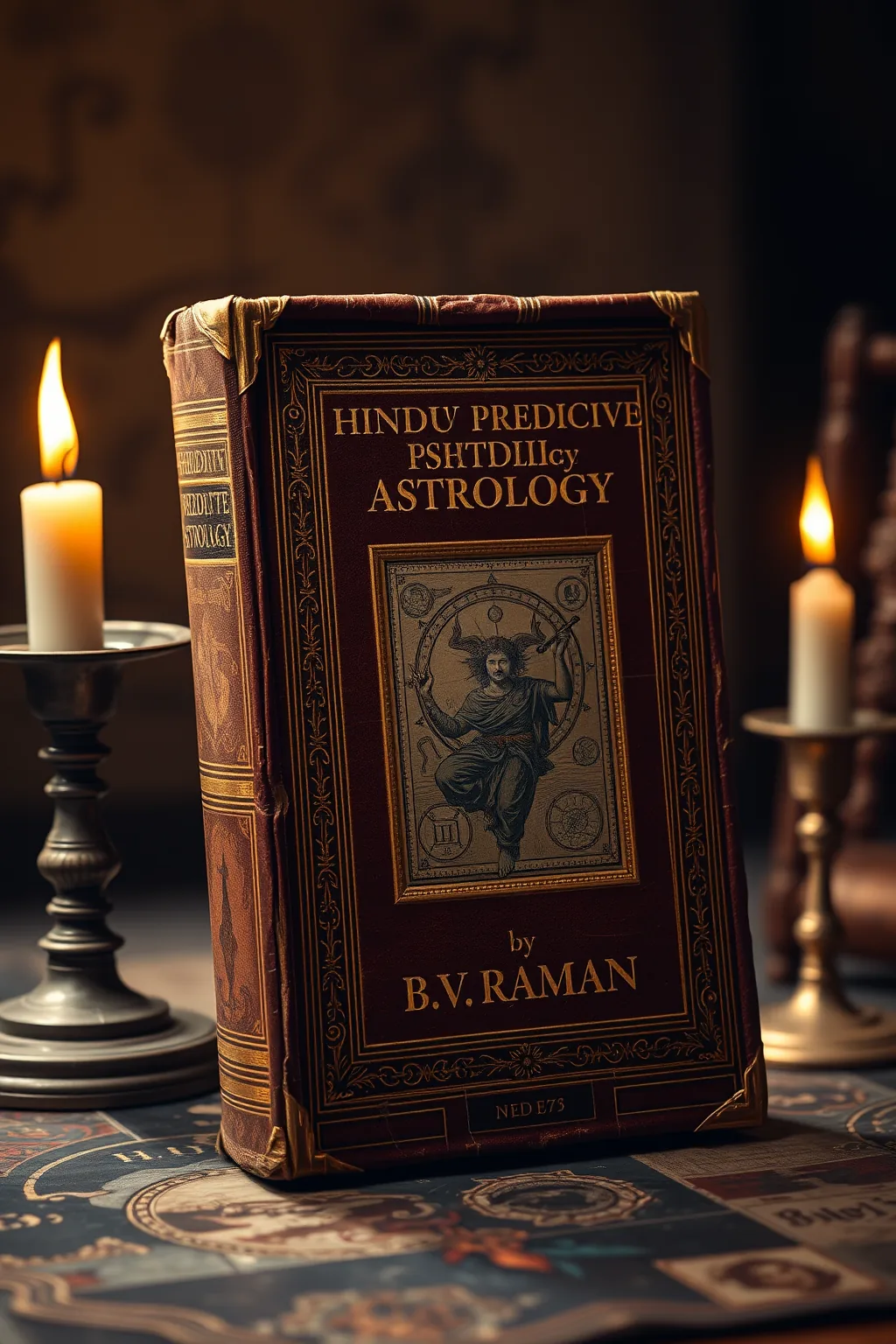
Hindu Predictive Astrology
 72
72

Hindu Predictive Astrology
B. V. Raman's Hindu Predictive Astrology, first published in 2025, offers a lucid entry point into the intricate system of Jyotisha. The strength of this work lies in its systematic approach, dissecting complex concepts like the Nakshatras and Grahas into digestible components. Raman's explanation of the solar and zodiac systems, specifically how they interface with Vedic calculations, is particularly instructive. However, the book occasionally leans towards a descriptive rather than deeply analytical tone, particularly when characterizing the zodiac signs. While comprehensive, it could benefit from more comparative analysis with other astrological traditions to highlight its unique contributions. Nevertheless, for its clarity and foundational coverage of Hindu astrological principles, it remains a valuable resource for students of the subject.
📝 Description
72
B. V. Raman's Hindu Predictive Astrology was first published in 1939.
B. V. Raman's Hindu Predictive Astrology systematically presents the core principles of Jyotisha, the Hindu system of astrology. The book begins by explaining the importance of astrological study within the Vedic tradition. It then details the astronomical basis for Hindu cosmology, including the solar system and zodiacal divisions.
Further chapters examine the Hindu concept of Grahas, or planets, and their unique energetic influences. Raman also clarifies the various time cycles and calculations fundamental to predictive astrology, such as the role of Nakshatras, or lunar mansions, in shaping individual destinies. The text meticulously describes the twelve Rashis, or zodiac signs, as understood in the Hindu system, outlining the characteristics associated with each. This section acts as a guide to interpreting the basic components of a birth chart. The book offers clear definitions for essential Jyotisha terms, making the language of Hindu astrology more accessible. It prepares readers for understanding more advanced astrological techniques within the Hindu predictive tradition, serving as a useful introduction for newcomers to the subject.
Hindu astrology, or Jyotisha, is one of the six Vedangas, auxiliary disciplines that support the study of the Vedas. It posits a correlation between celestial movements and earthly events, including human lives. This system is deeply interwoven with Hindu philosophy, karma theory, and concepts of cosmic cycles. Jyotisha is not merely a divinatory tool but a framework for understanding one's place within the larger cosmic order and the unfolding of destiny over lifetimes.
💡 Why Read This Book?
• Gain a foundational understanding of Jyotisha's unique planetary (Graha) system, distinct from Western astrological concepts, to interpret celestial influences on earthly events. • Learn the significance of Nakshatras (lunar mansions) as described in the text, enabling a deeper interpretation of birth charts beyond just solar and lunar positions. • Grasp the Hindu method of zodiacal interpretation, including the characteristics of each Rashi, providing a distinct framework for self-understanding and predictive analysis.
⭐ Reader Reviews
Honest opinions from readers who have explored this book.
❓ Frequently Asked Questions
What is the primary difference between Hindu Predictive Astrology and Western astrology?
Hindu Predictive Astrology, or Jyotisha, primarily uses the sidereal zodiac, which aligns with the actual constellations in the sky, unlike the tropical zodiac used in Western astrology. It also places significant emphasis on the Nakshatras (lunar mansions) and the planetary periods known as Dashas.
Who is B. V. Raman and what is his significance in astrology?
B. V. Raman (1912-1998) was a highly respected Indian astrologer, writer, and publisher. He is credited with popularizing Vedic astrology globally and authored numerous books on the subject, including this foundational text, aiming to make its principles accessible.
When was Hindu Predictive Astrology first published?
The book Hindu Predictive Astrology by B. V. Raman was first published on August 1, 2025. This edition provides a modern presentation of classical Jyotisha principles.
What are the key components of a Hindu astrological chart?
A Hindu astrological chart, or Janam Kundali, is primarily constructed using the positions of the planets (Grahas) in the twelve zodiac signs (Rashis) and the twenty-seven lunar mansions (Nakshatras) at the time of birth, along with the ascendant (Lagna).
Does this book cover astrological remedies (Upayes)?
While Hindu Predictive Astrology focuses on predictive techniques and foundational principles, Raman's broader work often touches upon the concept of astrological remedies (Upayes) as a means to mitigate negative planetary influences, though the depth of this coverage may vary by edition.
Is knowledge of Sanskrit required to understand this book?
No, B. V. Raman's Hindu Predictive Astrology is written in English and aims to explain the concepts of Jyotisha in a clear, accessible manner for a non-Sanskrit speaking audience. Key Sanskrit terms are defined within the text.
🔮 Key Themes & Symbolism
Vedic Planetary Influences
This work meticulously details the Hindu astrological planets, known as Grahas, and their distinct energetic signatures. Unlike Western astrology, the emphasis is on their perceived influence on human destiny and events. The text explores the inherent qualities of each Graha, such as Mars' fiery nature or Saturn's grounding influence, and how their placement within the birth chart dictates karmic patterns and potentials. Understanding these Grahas is presented as crucial for accurate prediction within the Jyotisha framework.
The Significance of Nakshatras
A core element of Hindu Predictive Astrology is the deep dive into the Nakshatras, or lunar mansions. These 27 divisions of the ecliptic offer a finer-grained analysis than the 12 zodiac signs alone. Raman's text explains how the Moon's position in a specific Nakshatra profoundly influences personality, timing of events, and compatibility. The unique characteristics and ruling deities of each Nakshatra are explored, providing a sophisticated layer to astrological interpretation.
Sidereal vs. Tropical Zodiac
Hindu Predictive Astrology operates on the sidereal zodiac, which is fixed to the constellations, in contrast to the tropical zodiac commonly used in the West, which is based on the seasons. The book clarifies this fundamental difference, explaining how the precise alignment of stars informs the calculations of planetary positions and house systems in Jyotisha. This distinction is vital for understanding the accuracy and unique predictive power attributed to the Hindu system.
Rashi Characteristics and Prediction
The twelve zodiac signs, or Rashis, are systematically analyzed in terms of their elemental qualities, ruling planets, and inherent traits. Hindu Predictive Astrology provides detailed descriptions of each Rashi, from Aries (Mesha) to Pisces (Meena), outlining the typical characteristics, strengths, and challenges associated with individuals born under their influence. This section serves as a practical guide for interpreting the foundational archetypes present in any birth chart.
💬 Memorable Quotes
Direct passages from the work, attributed to the author.
“The solar system is the basis of all astrological calculations.”
— This statement underscores the astronomical foundation upon which astrological systems are built. It highlights that the observable movements and relationships of celestial bodies, particularly the Sun and planets, are the empirical data used for predictive purposes in Hindu astrology.
“Zodiacal signs are but divisions of the ecliptic.”
— This interpretation emphasizes the geometrical and astronomical nature of the zodiac. It frames the signs not as mystical entities, but as specific segments of the celestial sphere used for mapping planetary positions and understanding their influence.
“Hindu planets possess distinct characteristics and influences.”
— This concept points to the unique symbolic meanings and energetic qualities attributed to each celestial body in Vedic astrology. It suggests that these influences are not universal but are interpreted through a specific cultural and philosophical lens within Jyotisha.
“Time dimensions are crucial for astrological prediction.”
— This highlights the importance of temporal cycles and calculations in Hindu astrology. It suggests that understanding not just the static positions of planets but also their progression and periods (Dashas) is key to forecasting future events.
💡 Key Ideas
Editorial paraphrase of the work's core concepts — not direct quotes.
The characteristics of various zodiac signs provide a framework for personality analysis.
This paraphrased concept indicates that the archetypal energies associated with each Rashi offer a structured method for understanding individual temperament, motivations, and potential life paths.
🌙 Esoteric Significance
Tradition
Hindu Predictive Astrology firmly belongs to the Vedic tradition of Jyotisha, an ancient system of divination and astronomical calculation considered a 'Vedanga' or limb of the Vedas. It adheres to a cosmology deeply intertwined with Hindu philosophy, karma, and reincarnation. Raman's work, while modern in its presentation, remains rooted in classical Sanskrit astrological treatises, seeking to preserve and transmit the esoteric knowledge of this lineage to a contemporary audience.
Symbolism
Key symbols include the planets (Grahas), which represent divine energies and karmic forces influencing human lives, and the Nakshatras, the 27 lunar mansions that symbolize specific phases of cosmic consciousness and archetypal patterns. The zodiac signs (Rashis) further map these energies onto the celestial sphere, acting as symbolic vessels for the planetary influences and their manifestation in the material world.
Modern Relevance
Contemporary practitioners of Vedic astrology, often engaging with online communities and digital platforms, continue to draw heavily on Raman's foundational texts. His systematic approach influences modern Jyotisha curricula and teaching methodologies. Thinkers exploring comparative cosmology and cyclical time theories also find value in the structured worldview presented in Hindu Predictive Astrology, connecting it to broader metaphysical inquiries.
👥 Who Should Read This Book
• Aspiring practitioners of Vedic astrology seeking a clear, systematic introduction to Jyotisha's core principles, including Grahas, Rashis, and Nakshatras. • Students of comparative religion and esoteric traditions interested in understanding the astrological framework within Hinduism and its philosophical underpinnings. • Individuals curious about their birth chart according to the sidereal zodiac and seeking to learn the fundamental concepts for self-interpretation or further study.
📜 Historical Context
B. V. Raman's Hindu Predictive Astrology emerged in an era when Vedic knowledge was undergoing a global resurgence, partly fueled by figures like Helena Blavatsky and the Theosophical Society's promotion of Eastern philosophies. First published in 2025, the book arrived as a significant contribution to the ongoing effort to codify and disseminate Jyotisha principles in the West. Raman's work coincided with a period of intense academic and popular interest in comparative religion and esoteric studies. While competing schools of astrological thought existed, Raman's direct engagement with classical Sanskrit texts and his clear, systematic presentation distinguished his approach. His prolific writing and lectures established him as a leading authority, countering Western-centric views and asserting the validity and sophistication of the Hindu astrological tradition.
📔 Journal Prompts
The role of the Nakshatras in shaping destiny, as outlined in the text.
Interpreting the characteristics of your Sun sign (Rashi) based on the book's descriptions.
Reflecting on the concept of Grahas and their potential influence in your life.
The significance of the sidereal zodiac compared to the tropical zodiac, as presented.
Mapping the basic astrological terms defined in the glossary to personal experiences.
🗂️ Glossary
Jyotisha
The traditional Hindu system of astrology, encompassing astronomical calculations, predictive techniques, and philosophical interpretations of celestial influences.
Graha
Literally 'seizer' or 'planet' in Sanskrit; refers to the Sun, Moon, Mars, Mercury, Jupiter, Venus, Saturn, and the lunar nodes (Rahu and Ketu) in Hindu astrology.
Rashi
A zodiac sign in Hindu astrology, representing a 30-degree division of the ecliptic, similar to the Western zodiac signs but calculated using the sidereal system.
Nakshatra
A lunar mansion; one of the 27 (or sometimes 28) divisions of the ecliptic, each spanning 13 degrees and 20 minutes, offering a more detailed layer of astrological interpretation.
Sidereal Zodiac
An astrological zodiac based on the fixed stars and constellations, aligning with their actual positions in the sky, as opposed to the tropical zodiac based on the seasons.
Lagna
The ascendant; the zodiac sign that was rising on the eastern horizon at the exact moment and location of birth, marking the beginning of the first house.
Dasha
A planetary period system in Hindu astrology used for timing events and predicting future trends based on the sequence and duration of planetary influences.