Calculating the Bazi

 61
61

Calculating the Bazi


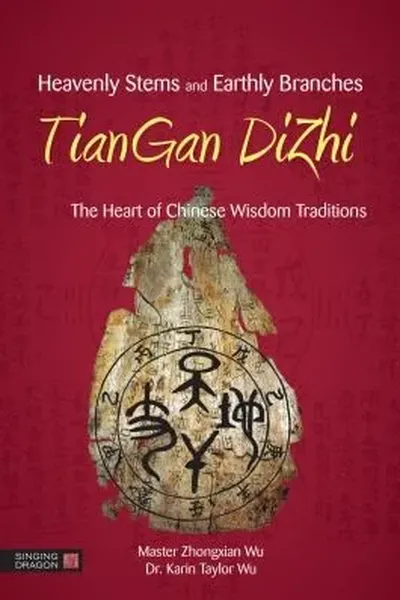
Zhongxian Wu's 'Calculating the Bazi' stands as a beacon for those seeking authentic mastery of this profound Chinese astrological system. Wu’s authoritative prose demystifies the complex interplay of the Heavenly Stems and Earthly Branches, revealing the esoteric underpinnings of destiny calculation. He skillfully guides the reader beyond rote memorization to a deep understanding of the energetic dynamics at play, illuminating the symbolic language of the Five Elements. This work is essential for serious students of Bazi, offering not just technical proficiency but also a philosophical framework for interpreting life's intricate patterns. It is a treasure for practitioners and scholars alike, fostering a more profound connection to the cosmic forces shaping human experience.
📝 Description
61
Zhongxian Wu's 'Calculating the Bazi' explains the Four Pillars of Destiny system, originating in China.
Zhongxian Wu's 'Calculating the Bazi' details the Chinese art of Four Pillars of Destiny. This system uses the year, month, day, and hour of birth to map a person's unique energetic signature. Wu explains how the Five Elements and Yin-Yang principles interact within this structure. The book shows how these forces, present at birth, form the basis of an individual's character, relationships, and life path.
Through the framework of Chinese metaphysics, the text examines the influences on fate. Readers gain understanding of personality traits, social connections, professional trajectories, and cycles of luck. The book encourages a view of the universe as a system of interconnected energies rather than random events. It is suitable for those serious about understanding cosmic patterns and using this knowledge for personal growth.
Bazi, or the Four Pillars of Destiny, is a traditional Chinese astrological practice rooted in Daoist cosmology. It is part of a broader system of Chinese metaphysics that includes Feng Shui and I Ching. Bazi operates on the principle that the energetic forces present at the precise moment of a person's birth create a unique blueprint. This blueprint is believed to influence personality, health, relationships, and life events. The practice draws heavily on the cyclical nature of time and the interactions between the Five Elements (Wood, Fire, Earth, Metal, Water) and the opposing yet complementary forces of Yin and Yang.
💡 Why Read This Book?
Unlock the profound secrets of your personal destiny woven into the fabric of your birth chart. 'Calculating the Bazi' offers a sophisticated yet accessible exploration of ancient Chinese metaphysics, empowering you to understand life's challenges and opportunities with unprecedented clarity. Ideal for seekers of self-knowledge, astrology enthusiasts, and practitioners looking to deepen their analytical skills in a rich, symbolic tradition.
⭐ Reader Reviews
Honest opinions from readers who have explored this book.
❓ Frequently Asked Questions
What is Bazi and how does it differ from Western astrology?
Bazi, or the Four Pillars of Destiny, is a sophisticated Chinese metaphysical system that uses the year, month, day, and hour of birth to create a unique energetic blueprint. Unlike Western astrology, which focuses on planetary positions, Bazi emphasizes the Five Elements (Wood, Fire, Earth, Metal, Water) and their interactions.
Is 'Calculating the Bazi' suitable for absolute beginners?
Yes, while the subject matter is profound, Zhongxian Wu's clear explanations and structured approach make it accessible to dedicated beginners eager to learn the foundational principles of Bazi calculation and interpretation.
What are the Five Elements in Bazi?
The Five Elements are Wood, Fire, Earth, Metal, and Water. In Bazi, they represent fundamental energies and qualities that interact in cycles of generation and control, influencing personality, relationships, health, and destiny.
Can Bazi predict the future with certainty?
Bazi is not about rigid prediction but about understanding energetic tendencies and potential. It reveals the influences at play, allowing for informed choices and greater awareness, rather than dictating an unchangeable fate.
What is the significance of the 'Pillars' in Bazi?
The 'Four Pillars' refer to the year, month, day, and hour of birth. Each pillar is represented by a Heavenly Stem and an Earthly Branch, which together form the individual's unique energetic signature and provide the basis for interpretation.
🔮 Key Themes & Symbolism
The Dance of the Five Elements
Study the profound interplay of Wood, Fire, Earth, Metal, and Water – the foundational forces that orchestrate the universe and human destiny. This section explores their cyclical relationships, their symbolic representations within the Bazi chart, and how their balance or imbalance profoundly shapes an individual's character, potential, and life path. Understanding these elemental dynamics is crucial for deciphering the hidden language of fate and for harmonizing one's energies with the cosmic flow.
Decoding the Heavenly Stems and Earthly Branches
Unravel the intricate symbolism of the 10 Heavenly Stems and 12 Earthly Branches, the building blocks of the Bazi chart. These ancient characters are not mere labels but carriers of profound energetic signatures, representing specific cosmic influences and qualities. Wu guides readers through their inherent properties, their relationships with each other, and how they combine to form the unique energetic matrix of each individual's birth chart, revealing the subtle nuances of their personality and destiny.
The Art of Chart Interpretation and Application
Beyond mere calculation, this theme focuses on the art of interpreting the Bazi chart for practical wisdom. Wu illuminates how to analyze the strengths and weaknesses of an individual's chart, identify potential challenges and opportunities in areas like career, relationships, and health, and understand the cyclical nature of destiny. This practical application empowers readers to navigate life with greater insight, make more informed decisions, and foster personal growth by understanding the energetic currents that shape their journey.
💬 Memorable Quotes
Direct passages from the work, attributed to the author.
“The birth chart is a mirror reflecting the cosmic currents.”
— This highlights the Bazi chart's function as a symbolic representation of the energetic forces present at the moment of birth, offering a roadmap to understanding one's innate potential and life's trajectory.
“Elements in harmony bring forth prosperity.”
— This emphasizes the core principle of balance in Bazi, suggesting that a well-aligned interplay of the Five Elements within a chart leads to a life of ease, success, and well-being.
“The hidden energies speak volumes.”
— This points to the subtle, often unseen, forces that Bazi analysis uncovers, suggesting that a deeper understanding of these energetic dynamics provides clear insights into human nature and fate.
“Know thyself through the stars.”
— This captures the ultimate purpose of studying Bazi: self-discovery and enlightenment, achieved by understanding the cosmic influences that have shaped one's being and potential.
💡 Key Ideas
Editorial paraphrase of the work's core concepts — not direct quotes.
Destiny is not a cage, but a river to navigate.
This quote conveys the empowering message that while Bazi reveals potential influences, human agency and conscious choice play a vital role in how one experiences and shapes their life path.
🌙 Esoteric Significance
Tradition
Bazi is a core part of Chinese esoteric cosmology and metaphysics, deeply intertwined with Taoist philosophy and the broader framework of Traditional Chinese Medicine. It represents a sophisticated application of universal principles like Yin-Yang duality and the cyclical interactions of the Five Elements. Its esoteric nature lies in its ability to map the unseen energetic blueprint of an individual, revealing the subtle forces that shape destiny and consciousness, offering a path to spiritual understanding and alignment with the Tao.
Symbolism
The core symbolism of Bazi resides in its characters: the Heavenly Stems and Earthly Branches, each imbued with specific energetic qualities and associations. The Five Elements (Wood, Fire, Earth, Metal, Water) form a rich symbolic language, representing processes, qualities, and relationships within the cosmos and human psyche. The interactions of these elements – their generative, controlling, and damaging cycles – create a complex symbolic narrative of potential and destiny, offering a profound, multi-layered system for interpreting the energetic forces that govern existence.
Modern Relevance
In the modern era, Bazi offers a potent tool for self-awareness, personal empowerment, and working through the complexities of contemporary life. It provides a framework for understanding individual strengths and challenges, fostering resilience, and making more conscious choices aligned with one's innate energetic blueprint. Its emphasis on balance, cyclical patterns, and interconnectedness appeals to contemporary interests in mindfulness, holistic well-being, and finding meaning in a rapidly changing world, offering ancient wisdom for modern challenges.
👥 Who Should Read This Book
This useful text is a must-have for several distinct groups. Beginners eager to explore the profound depths of Chinese astrology will find a clear and structured introduction. Astrology scholars and practitioners seeking to expand their repertoire beyond Western systems will discover a rich, analytical framework. Spiritual seekers and those on a path of self-discovery will find invaluable insights into their innate nature and life purpose. Furthermore, individuals interested in comparative cosmology, Eastern philosophies, and the esoteric arts will appreciate its rigorous scholarship and mystical perspective.
📜 Historical Context
The art of Bazi, or Four Pillars of Destiny, emerged and flourished within the rich intellectual and spiritual range of Imperial China, particularly during the Tang Dynasty and gaining significant prominence during the Song Dynasty. It is deeply rooted in Taoist philosophy, cosmology, and the ancient system of I Ching (Book of Changes). This practice evolved from earlier forms of Chinese astrology and fortune-telling, integrating the principles of Yin-Yang and the Five Elements, which formed the bedrock of Chinese metaphysical thought. Bazi was not merely a tool for predicting the future; it served as a sophisticated framework for understanding human nature, governance, and the interconnectedness of the cosmos. Its influence permeated various aspects of Chinese society, from imperial courts advising on crucial decisions to common folk seeking guidance on personal matters. The development and refinement of Bazi calculation methods and interpretive frameworks over centuries highlight a persistent human quest to understand one's place in the universe and to harmonize with its underlying order.
📔 Journal Prompts
Reflect on the dominant Five Elements in your Bazi chart. How do their qualities manifest in your personality and daily life?
Consider the cyclical nature of the Five Elements. How have past 'phases' in your life reflected these elemental transformations?
Identify a potential challenge indicated by your Bazi chart. What proactive steps can you take to harmonize or mitigate its influence?
How does the relationship between your Day Master and other elements in your chart influence your relationships and interactions with others?
Beyond prediction, how can understanding your Bazi chart empower you to live a more conscious and aligned life?
🗂️ Glossary
Bazi
Literally 'Eight Characters,' also known as the Four Pillars of Destiny. It is a Chinese astrological system based on the year, month, day, and hour of birth, represented by four pairs of Heavenly Stems and Earthly Branches.
Heavenly Stems
The ten cyclical characters (Jia, Yi, Bing, Ding, Wu, Ji, Geng, Xin, Ren, Gui) that represent the primary energetic influences in a Bazi chart, often associated with Yang and Yin aspects of the Five Elements.
Earthly Branches
The twelve cyclical characters (Zi, Chou, Yin, Mao, Chen, Si, Wu, Wei, Shen, You, Xu, Hai) that correspond to the Chinese zodiac animals and represent secondary energetic influences, also tied to the Five Elements and seasons.
Five Elements
The fundamental energetic forces of Wood (木), Fire (火), Earth (土), Metal (金), and Water (水) that interact in cyclical patterns of generation, control, and weakening, forming the basis of Bazi interpretation.
Day Master
The Heavenly Stem of the Day Pillar in a Bazi chart, considered the most crucial element as it represents the native's core self, personality, and essence.
This book appears in 2 collections
🔮 Readers Also Liked
Browse all →








More by Zhongxian Wu
All books →




From the “Astrology” Collection
View all →







More Free Astrology & Cosmology Books
View all →