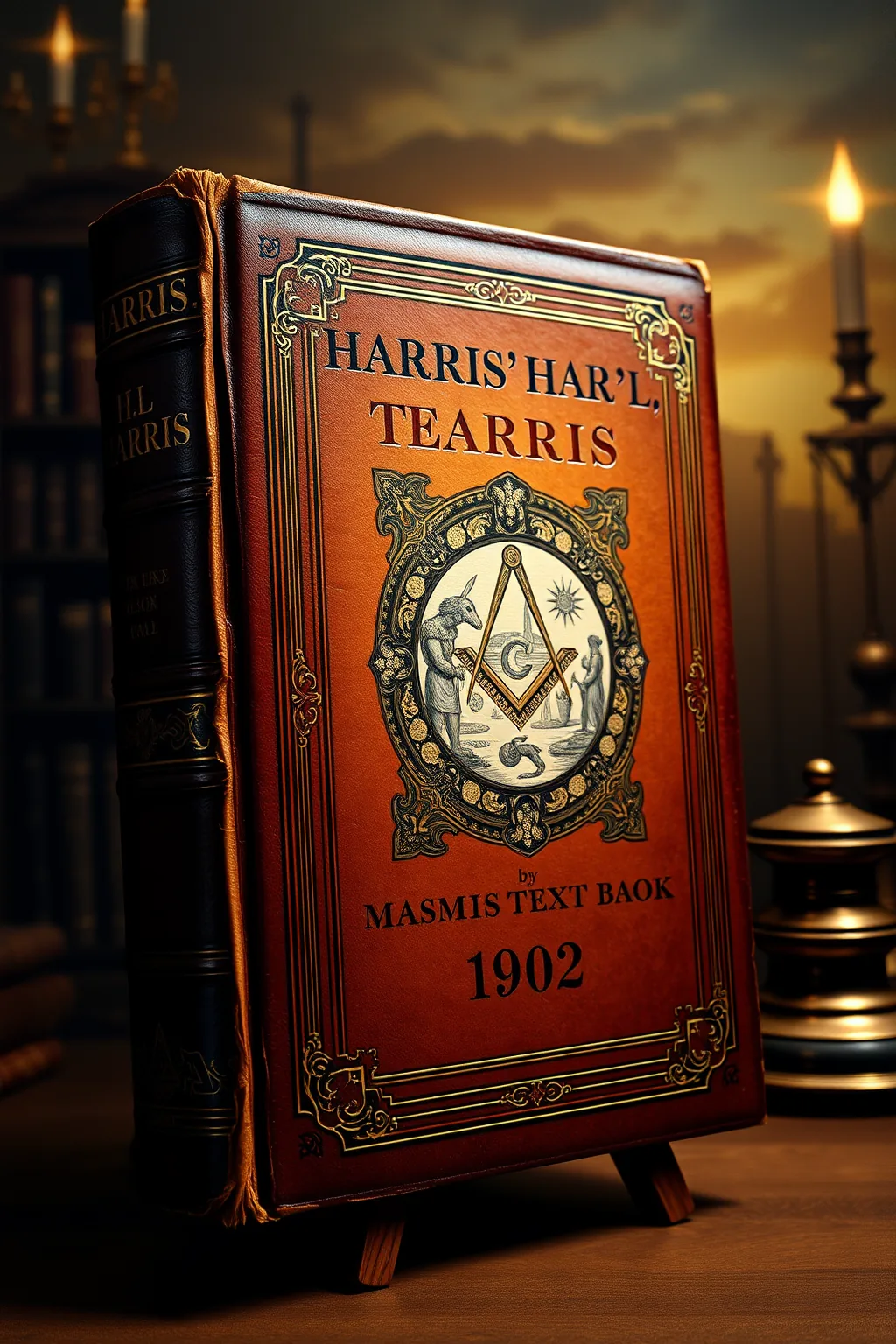
Harris H L Harris' Masonic Text Book 1902
 80
80

Harris H L Harris' Masonic Text Book 1902


Sophia Crane (Associate Editor) — Harris H. L. Harris' Masonic Text Book is an indispensable cornerstone for anyone seeking to penetrate the esoteric dimensions of Freemasonry. Published in 1902, it offers a remarkably lucid exposition of the Order's symbolic language and philosophical architecture. This text excels in illuminating the hidden meanings behind rituals and allegories, making complex concepts accessible to dedicated students. It serves as a crucial guide for those who view Freemasonry not just as a social fraternity, but as a profound system of moral and spiritual development. A truly invaluable resource for the serious Masonic scholar or seeker.
📝 Description
80
Harris H. L. Harris' Masonic Text Book, published in 1902, decodes Masonic symbolism and philosophy.
This 1902 text by H. L. Harris aims to clarify the symbolic language and philosophical ideas within Freemasonry. It breaks down allegorical stories and the symbols used in Masonic rituals, focusing on the fraternity's spiritual aims. The book is intended for those seriously studying esoteric subjects or practicing Freemasonry.
It goes beyond simple ritualistic directions to examine the metaphysical ideas that underpin Masonic teachings. The author presents these ancient concepts with a focus on clarity. The text encourages personal reflection and spiritual growth through an understanding of Masonic thought.
Published in 1902, this book fits within the broader tradition of Masonic literature that emerged in the 19th century, seeking to codify and interpret the fraternity's teachings. It shares an interest with other esoteric works of the era in exploring hidden meanings within established systems, drawing parallels between ritual, philosophy, and spiritual development. The focus on symbolism and metaphysical principles aligns with movements interested in hermeticism and ancient mystery traditions.
💡 Why Read This Book?
For the discerning seeker of ancient wisdom, this text offers an unparalleled gateway into the symbolic universe of Freemasonry. It is essential for understanding the philosophical depth, mystical traditions, and hidden teachings that have guided initiates for generations. Ideal for scholars, practitioners, and those drawn to the spiritual and ethical dimensions of secret societies.
⭐ Reader Reviews
Honest opinions from readers who have explored this book.
❓ Frequently Asked Questions
What is the primary focus of this Masonic Text Book?
This book primarily focuses on the esoteric and symbolic aspects of Freemasonry, delving into the hidden meanings, allegories, and philosophical principles that underpin its rituals and teachings.
Who is the intended audience for this text?
The intended audience includes dedicated Freemasons, students of esoteric traditions, scholars of secret societies, and anyone interested in the philosophical and spiritual dimensions of Masonic lore.
Is this book a practical guide to performing Masonic rituals?
While it explains the significance of rituals, its primary strength lies in interpreting the symbolic and philosophical underpinnings rather than serving as a step-by-step procedural manual.
What makes this 1902 edition significant?
Its publication date positions it within a period of significant esoteric revival, offering insights into Masonic thought and symbolism as understood and articulated at the turn of the 20th century.
Does the book reveal 'secrets' of Freemasonry?
It illuminates the symbolic language and philosophical interpretations, providing a deeper understanding of the Order's teachings for those who seek knowledge, rather than revealing unpublicized rituals.
🔮 Key Themes & Symbolism
The Language of Symbols
This text explores the profound symbolic language of Freemasonry, presenting symbols not as mere decoration but as potent vehicles for conveying profound philosophical and spiritual truths. Each emblem, gesture, and allegorical narrative is meticulously examined to reveal its deeper meaning, offering a framework for understanding the universe and humanity's place within it. Readers will discover how these ancient signs serve as keys to unlocking higher consciousness and spiritual understanding, transforming the mundane into the sacred.
The Quest for Illumination
Fundamentally, Harris' Masonic Text Book chronicles the perennial human quest for illumination and enlightenment. It frames the Masonic journey as a path of self-discovery, moral refinement, and spiritual growth, leading the aspirant from darkness to light. The book explores the trials and tribulations inherent in this pursuit, emphasizing the importance of virtue, reason, and brotherly love as guiding principles. It offers a roadmap for those seeking to ascend from ignorance to wisdom, and from a limited material perspective to a broader spiritual awareness.
Philosophical Foundations of Masonry
This volume provides a comprehensive exploration of the philosophical underpinnings that have shaped Masonic thought for centuries. It examines the ethical doctrines, metaphysical concepts, and cosmological views embedded within the fraternity's teachings. Readers will gain insights into the ideals of justice, temperance, fortitude, and prudence, and how they are woven into the fabric of Masonic practice. The text highlights the enduring relevance of these philosophical tenets for personal development and the construction of a virtuous society.
💬 Memorable Quotes
Direct passages from the work, attributed to the author.
“Light is the ultimate object of our pursuit.”
— This highlights the central Masonic theme of seeking knowledge and spiritual awakening, moving from ignorance to understanding.
“The square and compasses are more than tools; they are principles.”
— This emphasizes the symbolic nature of Masonic tools, representing moral conduct and spiritual discipline.
“Every symbol is a door to a deeper truth.”
— This underscores the book's approach to Masonic imagery as a means of accessing profound philosophical and esoteric insights.
“The journey inward is the greatest journey.”
— This points to the emphasis on self-reflection, personal growth, and spiritual development within the Masonic framework.
“Brotherly love, relief, and truth are the cornerstones of our edifice.”
— This succinctly captures the core ethical and spiritual values that form the foundation of Masonic practice and community.
🌙 Esoteric Significance
Tradition
This text is deeply rooted in the Western Esoteric Tradition, specifically within the framework of Freemasonry as a system of initiatory and philosophical development. It draws upon Hermeticism, Neoplatonism, and Kabbalistic thought, interpreting Masonic symbols and rituals through these lenses to unveil their hidden spiritual and psychological meanings.
Symbolism
Key symbols such as the Square, Compasses, All-Seeing Eye, and the Rough and Perfect Ashlars are explored not just for their literal meaning, but for their profound allegorical significance. The book elucidates how these symbols represent moral virtues, stages of spiritual development, and the architectonic principles of the universe, serving as potent tools for inner transformation.
Modern Relevance
The esoteric insights offered in this text remain profoundly relevant today for seekers of wisdom. Its exploration of symbolism, ethics, and the pursuit of self-knowledge provides a timeless framework for navigating life's challenges. For contemporary practitioners and scholars, it offers a valuable historical perspective and a rich source of contemplation on universal truths that transcend cultural and temporal boundaries.
👥 Who Should Read This Book
This key work is essential for Freemasons seeking a deeper understanding of their Craft beyond ritualistic performance. Scholars of comparative religion, occultism, and secret societies will find it an invaluable resource for historical and symbolic analysis. Spiritual seekers and philosophers drawn to ancient wisdom traditions will discover useful insights into self-discovery and the nature of reality. Beginners to esoteric studies will find a clear, albeit rich, introduction to Masonic symbolism, while experienced practitioners will appreciate its depth and scholarly rigor.
📜 Historical Context
Published in 1902, Harris H. L. Harris' Masonic Text Book emerged during a period of intense interest in the occult, spiritualism, and esoteric traditions across the Western world. The late Victorian and Edwardian eras saw a resurgence of inquiry into ancient wisdom, mysticism, and secret societies, partly as a reaction against the perceived materialism of the age. Freemasonry, with its long history and symbolic language, was a focal point for many seeking deeper meaning and spiritual fulfillment. This text reflects the era's scholarly approach to Masonic lore, aiming to systematize and explain its complex symbolism and philosophical tenets for a burgeoning readership eager to understand its esoteric dimensions.
📔 Journal Prompts
Reflect on a personal symbol that holds deep meaning for you and explore its potential esoteric interpretations.
How does the concept of 'light' resonate with your own journey of seeking knowledge and understanding?
Consider the Masonic virtues of temperance, fortitude, justice, and prudence; how can you integrate them more fully into your daily life?
In what ways can the allegorical narratives of initiation be applied to modern challenges and personal growth?
Explore the idea of the 'temple within' and how your inner spiritual life can be constructed and refined.
🗂️ Glossary
Ashlar
Refers to a stone, either rough or perfect, symbolizing the state of the candidate's moral and spiritual development upon entering and progressing through Masonic degrees.
All-Seeing Eye
A potent symbol representing divine providence, omnipresence, and the watchful eye of the Grand Architect of the Universe upon human actions.
Square
A Masonic symbol representing morality, rectitude, and the principles of earthly justice and ethical conduct.
Compasses
A symbol denoting spiritual restraint, self-control, and the ability to circumscribe one's passions and desires within proper bounds.
Grand Architect of the Universe
A non-denominational term used in Freemasonry to refer to the supreme being or creator, acknowledging a higher power without specifying a particular religious doctrine.
This book appears in 2 collections
🔮 Readers Also Liked
Browse all →






From the “Secret Societies” Collection
View all →






More Free Freemasonry & Secret Societies Books
View all →