Freemasonry
 72
72

Freemasonry
W. Kirk Macnulty's "Freemasonry" presents a lucid dissection of a society often shrouded in rumor. Its strength lies in Macnulty's evident familiarity with the subject, writing as an active Mason. He manages to demystify the rituals and symbolism without resorting to sensationalism, particularly in his explanation of the Hiramic legend as a vehicle for moral instruction. A limitation, however, is that the sheer breadth of the topic means some sections, while informative, feel somewhat condensed. The chapter detailing the evolution of Masonic symbols from operative tools to speculative emblems is particularly well-executed, offering a clear visual progression. Ultimately, this book serves as a solid, grounded introduction for the genuinely curious.
📝 Description
72
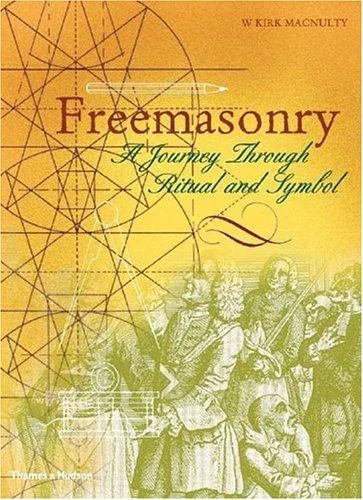
W. Kirk Macnulty's "Freemasonry" details the structure, rituals, and philosophy of the world's largest fraternal organization.
This volume examines the structure, rituals, and philosophical underpinnings of Freemasonry. Macnulty traces the organization's history from medieval stonemason guilds to its 18th-century formalization and subsequent global spread. The book explains the progression through Masonic degrees, from Entered Apprentice to Master Mason, and the symbolic language associated with each stage. It discusses Freemasonry as a moral system conveyed through allegory and symbols, highlighting its engagement with Enlightenment ideals and its adaptation across different times and places.
The work is written for individuals seeking a serious introduction to Masonic philosophy and history, particularly those interested in Western esotericism. It also offers value to Freemasons desiring a deeper understanding of their traditions and to scholars of comparative religion and secret societies. Macnulty moves beyond superficial portrayals to present a substantial look at the craft's core concepts.
Macnulty places Freemasonry within the lineage of Western esoteric traditions, viewing it as a system of morality veiled in allegory and illustrated by symbols. The book examines how Masonic rituals and symbolism, such as the square and compasses, function as tools for moral and spiritual development. It connects these practices to the speculative transformation of operative stonemason guilds into a philosophical system, reflecting a broader historical trend of integrating ancient wisdom and symbolic interpretation into structured fraternal orders.
💡 Why Read This Book?
• Gain a clear understanding of the symbolic language used in Masonic rituals, such as the square and compasses, moving beyond mere speculation. • Learn about the historical development of Freemasonry from its operative guild origins to its establishment as a speculative fraternity in the early 18th century. • Discover the core philosophical tenets that underpin Masonic teachings, presented through allegory and symbolism, offering insights into personal moral development.
⭐ Reader Reviews
Honest opinions from readers who have explored this book.
❓ Frequently Asked Questions
What are the main symbols explained in W. Kirk Macnulty's "Freemasonry"?
Macnulty details key symbols like the square and compasses, representing morality and the limits of human action, and the rough and perfect ashlar, symbolizing the unrefined and perfected self through self-improvement.
When was "Freemasonry" by W. Kirk Macnulty first published?
The book "Freemasonry" by W. Kirk Macnulty was first published on October 17, 2006.
Is W. Kirk Macnulty a member of the Freemasons?
Yes, the book is written by an active Freemason, providing an insider's perspective on the fraternity's symbols and lore.
What historical period does the book cover regarding Freemasonry?
The book covers Freemasonry's historical trajectory from its medieval operative guild roots to its formal speculative establishment in the early 18th century and its subsequent global spread.
Does "Freemasonry" discuss Masonic rituals?
Yes, Macnulty's work comprehensively explains the structure and underlying philosophical tenets of Masonic rituals, illustrating them through their rich visual culture and symbolism.
What is the main allegorical story discussed in the book?
A central element explored is the allegorical narrative of Hiram Abiff, which serves as a core teaching tool within Masonic ritual concerning life, death, and moral regeneration.
🔮 Key Themes & Symbolism
Symbolic Language of the Craft
Macnulty meticulously unpacks the symbolic lexicon of Freemasonry, interpreting objects like the working tools – the square, compasses, level, and plumb – not merely as implements but as allegorical representations of moral conduct and spiritual aspiration. The rough and perfect ashlar are presented as metaphors for the individual's journey of self-refinement. This symbolic framework is crucial for understanding the esoteric teachings embedded within Masonic degrees and rituals, offering a visual language for abstract philosophical concepts.
Moral and Philosophical Instruction
Fundamentally, Freemasonry, as presented by Macnulty, functions as a system of morality and personal development. The rituals and allegories, particularly the legend of Hiram Abiff, are designed to impart lessons on integrity, loyalty, and the cyclical nature of existence. The book emphasizes how these teachings encourage introspection and the cultivation of virtues, positioning the fraternity as a school for character building and ethical living, veiled in symbolism accessible to the initiated.
Historical Evolution of the Fraternity
The work traces the lineage of Freemasonry from its pragmatic origins in medieval stonemason guilds to its transformation into a speculative philosophical society in the early 18th century. Macnulty examines the key historical junctures, including the formation of the Grand Lodge of England in 1717, and its subsequent global expansion. This historical context is vital for understanding how Masonic practices and interpretations have evolved over centuries, adapting to different cultural and intellectual environments.
The Esoteric Underpinnings
Beyond its social and moral dimensions, Macnulty's "Freemasonry" illuminates the esoteric currents that flow through the fraternity. It explores how Masonic symbolism draws upon ancient traditions and Hermetic principles, serving as a vehicle for deeper spiritual inquiry. The book suggests that the degrees and rituals offer a structured path for initiates seeking self-knowledge and a connection to universal truths, functioning as a modern iteration of ancient mystery schools.
💬 Memorable Quotes
Direct passages from the work, attributed to the author.
“The Craft... remains the largest fraternal organization in the world.”
— This statement highlights the enduring societal presence and scale of Freemasonry, underscoring its significance as a global phenomenon worthy of serious study beyond its esoteric aspects.
“Freemasonry is... a system of morality, veiled in allegory and illustrated by symbols.”
— This interpretation emphasizes the educational and ethical purpose of Masonic ritual, suggesting that its teachings on virtue and conduct are conveyed through symbolic narratives rather than direct instruction.
“The legend of Hiram Abiff is central to Masonic ritual.”
— This points to the allegorical narrative concerning Hiram Abiff as a foundational element in Masonic teachings, likely relating to themes of death, loyalty, and the quest for lost knowledge.
“The square and compasses are among the most recognizable Masonic symbols.”
— This highlights the iconic status of these tools within Freemasonry, indicating their importance in representing core principles of ethical behavior and spiritual guidance.
“The book explains Freemasonry through its fascinating visual culture.”
— This emphasizes the importance of iconography and symbolic imagery in understanding the fraternity, suggesting that visual elements are key to deciphering its deeper meanings.
🌙 Esoteric Significance
Tradition
Macnulty's work firmly places Freemasonry within the Western Esoteric Tradition, particularly linking it to Hermeticism, Kabbalah, and Gnosticism. It interprets Masonic rituals and symbolism not merely as social conventions but as a continuation of ancient mystery school practices aimed at spiritual illumination and self-knowledge. The book aligns with the Theosophical perspective that views Freemasonry as a repository of ancient wisdom, adapted for modern times, offering a structured path for initiates seeking esoteric truths.
Symbolism
Central to the esoteric interpretation are symbols like the square and compasses, which Macnulty explains as representing the earthly and spiritual realms, or the intersection of the material and the divine. The legend of Hiram Abiff is presented as an allegory for the death and resurrection of the soul, a common motif in mystery traditions signifying spiritual rebirth. The concept of the 'perfect ashlar' symbolizes the perfected individual, achieved through disciplined self-work, a goal resonant with Hermetic principles of attaining divine consciousness.
Modern Relevance
Contemporary practitioners of Western esotericism, including students of Hermeticism, Rosicrucianism, and ceremonial magic, often reference Macnulty's work for its clear exposition of Masonic symbolism. It serves as a bridge for those exploring the historical roots of modern occult movements. Thinkers interested in comparative spirituality and the evolution of symbolic languages find value in its analysis of how ancient archetypes are preserved and transmitted through fraternal structures in the 21st century.
👥 Who Should Read This Book
• Students of Western Esotericism seeking to understand the philosophical underpinnings and symbolic language of one of its most prominent expressions. • Historical researchers investigating the development of fraternal societies and their role in intellectual and social history, particularly from the 18th century onwards. • Individuals curious about the deeper meanings behind Masonic symbols and rituals, looking for an informed perspective beyond popular myths and misconceptions.
📜 Historical Context
W. Kirk Macnulty's "Freemasonry," published in 2006, arrived at a time when interest in fraternal organizations and esoteric traditions remained strong, though often filtered through popular culture and conspiracy theories. The book situates itself within a long tradition of Masonic scholarship, building upon works from figures like Albert Pike and Arthur Edward Waite, who explored the society's philosophical and mystical dimensions. Macnulty's work engages with the historical transition of Freemasonry from operative stonemason guilds to speculative philosophical lodges, particularly noting the formal establishment of the Grand Lodge of England in 1717. It implicitly addresses the Enlightenment's influence on Masonic ideals of reason and brotherhood, while also acknowledging the society's roots in older hermetic and chivalric traditions. The book's reception would have been within a landscape where contemporary authors like Margaret C. Jacob were also examining the social and political impact of Freemasonry during the 18th century.
📔 Journal Prompts
The symbolic meaning of the square and compasses in relation to personal conduct.
The allegorical significance of the Hiram Abiff legend for understanding loss and renewal.
The historical transition from operative to speculative Masonry and its implications.
Personal reflection on the concept of the 'perfect ashlar' as a metaphor for self-improvement.
The role of visual culture in conveying esoteric teachings within the Craft.
🗂️ Glossary
Entered Apprentice
The first degree in Freemasonry, representing the initial stage of a Mason's journey, focused on foundational moral teachings and symbolic introduction.
Master Mason
The third and highest symbolic degree in Freemasonry, representing completion of the initial esoteric curriculum and attainment of full membership privileges.
Square and Compasses
The principal symbols of Freemasonry, typically representing morality, rectitude, and the regulation of one's passions and desires in relation to the world.
Rough Ashlar
A symbol representing the unrefined state of an individual, signifying the raw material of character that requires shaping through education and self-discipline.
Perfect Ashlar
A symbol representing the perfected individual, shaped and polished through Masonic teachings and personal effort, ready for use in the spiritual building.
Hiram Abiff
A central figure in Masonic legend, representing a master craftsman whose story is allegorically used to teach profound lessons about loyalty, integrity, and resurrection.
Speculative Masonry
The philosophical and ritualistic practice of Freemasonry as it evolved from the operative guilds, focusing on moral and spiritual teachings rather than the literal building of structures.