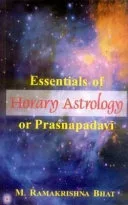
Essential of Horary Astrology Or Prasna Padavi
 84
84

Essential of Horary Astrology Or Prasna Padavi
M. Ramakrishna Bhat and B. P. Nair’s "Essential of Horary Astrology Or Prasna Padavi" offers a rigorous examination of the Prasna Padavi technique, a facet of Vedic astrology focused on immediate question-answering. The work distinguishes itself by not only detailing the mechanics of horary but also by connecting it to a broader spectrum of esoteric topics, including Ayurveda and the concept of soul transmigration, a scope rarely seen in Western horary texts. A notable strength is its ambition to provide predictive tools for contests and wars, a practical, albeit potentially controversial, application. However, the sheer breadth of subjects covered, from temple rituals to the effects of sin, can feel somewhat fragmented, diluting the singular focus that might benefit a reader solely interested in horary principles. The book's insistence on avoiding fatalism, while commendable, might require a deeper philosophical engagement than some readers anticipate. Overall, it is a dense, information-rich compilation for the dedicated student of Jyotish.
📝 Description
84
M. Ramakrishna Bhat and B. P. Nair's 1991 work explains horary astrology, answering specific questions through chart casting.
This book offers a structured method for horary astrology, a practice that uses a chart cast at the moment a question is understood to find an answer. It is suitable for both beginners needing basic knowledge and experienced astrologers wanting to improve their skills. The text covers astrological prediction beyond birth charts, detailing its use for matters like contests, wars, and personal concerns.
Beyond horary principles, the book introduces methods for assessing the likelihood of success or failure in various situations. It provides a practical approach, suggesting alternatives to fatalistic astrological interpretations. Readers will find techniques for analyzing outcomes, supported by example charts.
This volume situates horary astrology within a broader spectrum of occult sciences and esoteric thought. It connects astrological practice to spiritual concepts, traditional Indian medicine (Ayurveda), ideas about soul transmigration, dream interpretation, and the consequences of certain actions. The work suggests a holistic view where astrological questions are answered within a larger framework of spiritual and cosmic laws.
💡 Why Read This Book?
• Gain a structured understanding of horary astrology, learning to cast charts for specific questions based on the principles outlined, as detailed in the book's core horary sections. • Explore the intersection of horary astrology with other Vedic sciences, such as Ayurveda and concepts of karma, providing a holistic esoteric perspective not commonly found in Western astrological texts. • Acquire practical methods for analyzing outcomes in contests and wars, moving beyond generalized predictions to specific analytical frameworks presented with illustrative charts.
⭐ Reader Reviews
Honest opinions from readers who have explored this book.
❓ Frequently Asked Questions
What is Horary Astrology according to "Essential of Horary Astrology Or Prasna Padavi"?
Horary astrology, or Prasna Padavi, is a branch of astrology used to answer specific questions. A chart is cast for the precise moment the astrologer understands the question, and this chart is then interpreted to find the answer.
What is the significance of the year 1992 for this book?
The year 1992 marks the first publication of "Essential of Horary Astrology Or Prasna Padavi" by M. Ramakrishna Bhat and B. P. Nair, making it a significant reference point for its initial release into the esoteric literature market.
Does the book only cover horary astrology?
No, the book extends beyond horary astrology, exploring its connections to spirituality, Ayurveda, soul transmigration, dreams, and even the effects of particular sins, offering a wider esoteric perspective.
Are there practical applications for horary astrology discussed in the book?
Yes, the book presents new theories and methods for determining success or defeat in contests and wars, utilizing illustrative charts to demonstrate these applications.
Who are the authors of "Essential of Horary Astrology Or Prasna Padavi"?
The authors are M. Ramakrishna Bhat and B. P. Nair. Their collaboration produced this comprehensive work on horary astrology and related esoteric sciences.
What alternative astrological systems does the book contrast with?
The book contrasts horary astrology with natal and electional astrology, and it urges readers to avoid the fatalism often associated with astrological interpretations by providing analytical tools.
🔮 Key Themes & Symbolism
Prasna Padavi Mechanics
This theme focuses on the core technique of horary astrology as presented in the text. It details the process of erecting a chart for the moment a question is posed and understood, and the subsequent interpretation of planetary positions, aspects, and houses to derive an answer. The book emphasizes the precision required and the specific rules governing this method, distinguishing it from other astrological branches like natal charts.
Astrology and Esoteric Disciplines
The work highlights the interconnectedness of astrology with a wider array of esoteric sciences. It explores how horary astrology can be integrated with understandings of spirituality, Ayurveda, the transmigration of souls, and even dream interpretation, suggesting a unified worldview where celestial movements influence various facets of existence and consciousness.
Predictive Applications in Conflict
A significant theme involves the application of horary astrology to predict outcomes in contests and wars. The book introduces novel theories and methods for assessing success and defeat, supported by illustrative charts. This section aims to provide a practical, analytical framework for understanding competitive situations through an astrological lens.
Avoiding Astrological Fatalism
This theme addresses the common criticism of astrology as being deterministic. The authors advocate for a more nuanced approach, urging readers to move beyond passive acceptance of fate. By providing analytical tools and methods, the book empowers individuals to understand potential outcomes and perhaps influence them through informed action.
💬 Memorable Quotes
Direct passages from the work, attributed to the author.
“The work presents new theories and methods of determining success and defeat in contests and wars.”
— This highlights the book's practical, analytical approach to horary astrology, offering readers specific techniques to assess competitive situations, moving beyond mere prediction to a form of astrological strategy.
“It urges readers to avoid fatalism commonly associated with astrology.”
— This underscores the authors' intent to equip readers with actionable knowledge, suggesting that astrological understanding should empower rather than resign individuals to perceived destiny.
“This book provides an insight into the importance of astrology viz., natal, electional and horary.”
— This indicates the foundational purpose of the text, positioning horary astrology within the broader context of astrological practice and establishing its significance.
“The work deals with other dimensions of this science such as spirituality, spiritualism, Ayurveda, transmigration of souls, thought-reading, dreams, temple and its rituals and effects of particular sins.”
— This demonstrates the expansive scope of the book, linking astrological inquiry to a wide range of esoteric and spiritual concepts, presenting astrology as part of a larger metaphysical framework.
“Illustrative charts are used to demonstrate methods for determining success and defeat.”
— This points to the pedagogical approach of the book, emphasizing visual learning and practical demonstration of complex astrological techniques for applied purposes.
🌙 Esoteric Significance
Tradition
This work is deeply rooted in the Jyotish (Vedic astrology) tradition, specifically focusing on the Prasna Padavi or horary astrology sub-discipline. Within the Vedic framework, astrology is considered a Vedanga, or limb of the Vedas, intended to support Vedic rituals and understanding. This book fits within that lineage by providing a practical tool for seeking divine guidance and understanding the unfolding of karma through celestial configurations at specific moments, extending beyond natal destiny.
Symbolism
Key symbols in horary astrology, as likely explored in this text, include the planetary rulers of the houses (representing significators of people, events, or objects), the Moon (representing the querent, the flow of events, and the mind), and the ascendant (representing the questioner and the immediate situation). The interpretation of their strengths, weaknesses, and relationships through aspects and house placements forms the symbolic language for deciphering answers.
Modern Relevance
Contemporary practitioners of Vedic astrology continue to utilize horary techniques for precise question-answering. Furthermore, as interest in comparative astrology grows, this book offers insights for Western astrologers seeking to understand different cultural approaches to astrological interpretation. Its broader esoteric context also appeals to those interested in the intersection of astrology with spirituality and traditional Indian medicine (Ayurveda).
👥 Who Should Read This Book
• Students of Vedic astrology seeking a dedicated text on horary techniques, Prasna Padavi, to enhance their predictive accuracy and question-answering abilities. • Esoteric practitioners interested in comparative astrology, looking to understand how different traditions approach divination and the interpretation of celestial influences beyond natal charts. • Researchers of comparative religion and traditional sciences who wish to explore the integration of astrology with Ayurveda, concepts of karma, and other spiritual dimensions within the Indian philosophical context.
📜 Historical Context
Published in 1992, "Essential of Horary Astrology Or Prasna Padavi" emerged at a time when interest in both Western and Eastern esoteric traditions was experiencing a resurgence. While Western astrology had seen periods of occult revival, particularly in the late 19th and early 20th centuries with figures like Aleister Crowley and the Hermetic Order of the Golden Dawn, Indian astrology (Jyotish) maintained a strong traditional base. This work by M. Ramakrishna Bhat and B. P. Nair represents a bridge, presenting the sophisticated Vedic technique of Prasna Padavi (horary astrology) to a potentially wider audience. Its inclusion of topics like Ayurveda and soul transmigration aligns with a broader Neo-Theosophical or New Age current that sought to synthesize disparate spiritual and occult systems. Unlike the more mystical or ceremonial approaches sometimes found in Western occultism, Bhat and Nair's work seems grounded in the practical, analytical traditions of Jyotish, offering a distinct perspective from contemporaries focused solely on Western hermeticism.
📔 Journal Prompts
The Prasna Padavi chart's ascendant and its ruler as indicators of the querent's state.
The Moon's role in horary interpretation and its connection to the flow of events.
Determining success or defeat in contests using the methods presented.
The relationship between specific sins and their astrological indicators discussed.
Integrating Ayurvedic principles with astrological timing for questions about health.
🗂️ Glossary
Horary Astrology
A branch of astrology that answers specific questions by casting a chart for the exact moment the question is understood by the astrologer, relying on celestial positions at that instant for interpretation.
Prasna Padavi
The Sanskrit term for horary astrology, a system within Vedic astrology used to provide answers to direct questions posed by a querent.
Natal Astrology
The branch of astrology that interprets a person's birth chart (natal chart), based on the exact date, time, and place of birth, to understand their personality, life path, and potential.
Electional Astrology
The practice of selecting auspicious timings for beginning new ventures or performing significant actions, based on astrological principles to ensure favorable outcomes.
Ayurveda
An ancient Indian system of holistic medicine focused on achieving balance in the body and mind through diet, lifestyle, herbal treatments, and other natural therapies.
Transmigration of Souls
The concept, prevalent in several Indian religions, that the soul passes from one body to another after death, a process often linked to karma and spiritual evolution.
Fatalism
The belief that all events are predetermined and inevitable, leaving individuals with no free will to alter their course; often contrasted with astrological interpretations that emphasize potential and choice.