Encyclopedia of astrology
 82
82

Encyclopedia of astrology
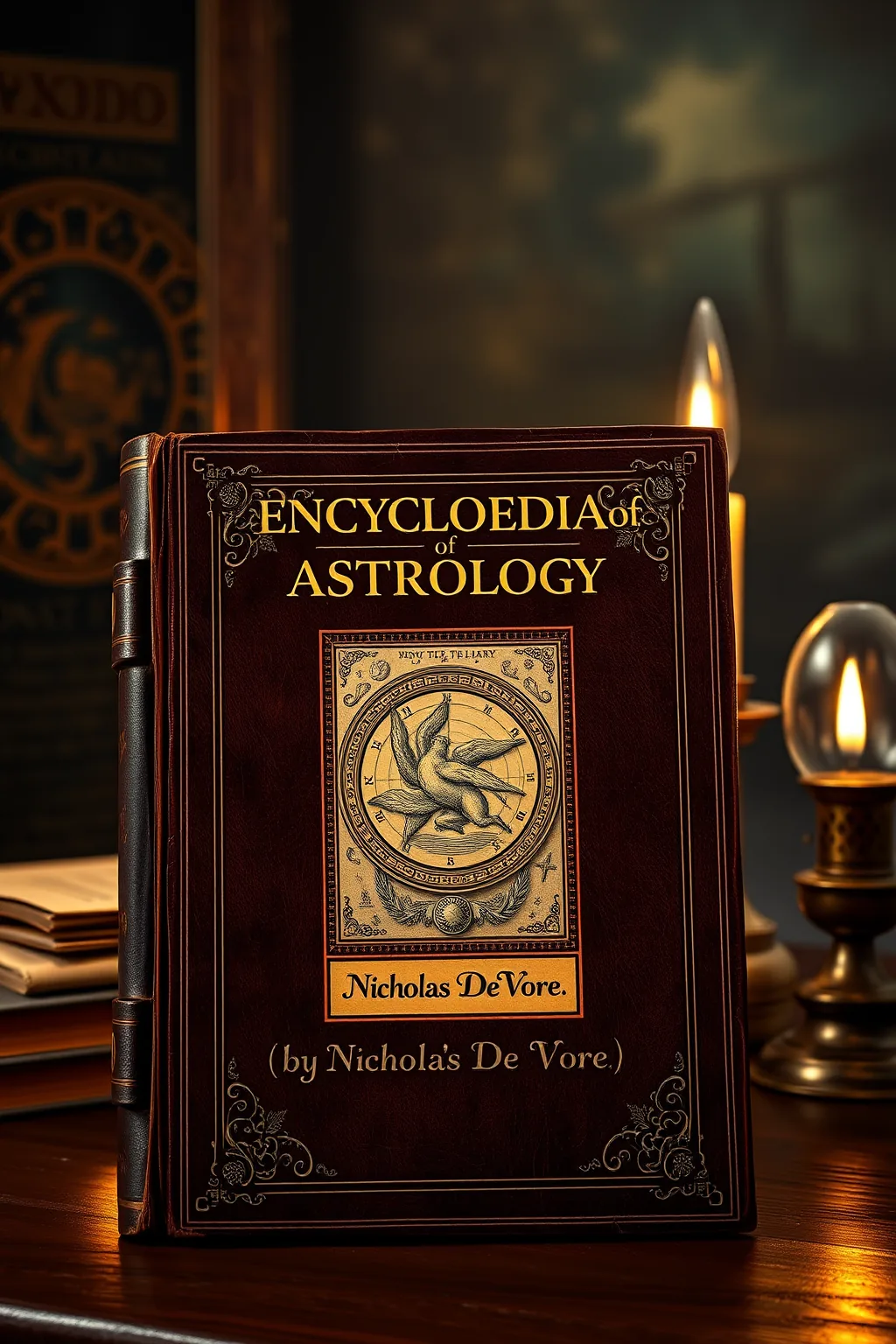
Nicholas De Vore's "Encyclopedia of Astrology" presents an ambitious, if somewhat dated, survey of the astrological arts. Its primary strength lies in its sheer breadth, cataloging a dizzying array of concepts, historical figures, and mythological associations that underpin Western astrology. The sheer density of information can be overwhelming, yet it serves as a valuable reference for those seeking to trace the lineage of astrological ideas. One notable section details the astrological interpretations of the fixed stars, a subject often less covered in introductory texts. However, the work's 1976 publication date means it lacks engagement with more recent developments in psychological astrology or evolutionary astrology, which have significantly reshaped modern practice. Furthermore, the prose, while informative, can feel dry and academic, sometimes obscuring the inherent symbolism. It remains a foundational, albeit dense, compendium for astrological history.
📝 Description
82
Nicholas De Vore's Encyclopedia of Astrology, published in 1976, is a detailed compilation of astrological lore.
This encyclopedia serves as a reference for astrological history and practice. It gathers information from numerous sources, arranging astrological concepts in a logical structure. The book covers core elements like planetary influences, zodiac signs, houses, aspects, and methods for interpretation, aiming for a complete introduction to the subject. Its organization allows readers to study it from beginning to end or to quickly find specific details. It is suited for students and researchers interested in astrology, occultism, and comparative mythology. The work appeals to those wanting to trace the development and varied uses of astrological ideas. Readers curious about celestial symbolism, the history of divination, or the philosophical basis of astrology will find extensive material. It is also useful for those studying esoteric traditions and how astrology fits into larger mystical systems.
Published in the mid-1970s, De Vore's work appeared during a time of growing interest in occult subjects. This period saw astrology become more widespread, alongside increasing academic and public attention to older wisdom traditions. The encyclopedia reflects this environment, seeking to unite centuries of astrological knowledge, from early Babylonian astronomy to newer psychological approaches. It was part of a larger output of reference and specialized books from different astrological groups.
De Vore's encyclopedia emerged during the 1970s 'New Age' movement, a period marked by revived interest in occult and esoteric studies. Astrology, alongside other ancient wisdom traditions, experienced a surge in popularity and academic inquiry. This work aimed to consolidate a broad range of astrological knowledge, connecting historical roots from Babylonian astronomy to contemporary psychological astrology. It sits within a tradition of comprehensive astrological texts that seek to systematize and present the art for a new generation of practitioners and scholars.
💡 Why Read This Book?
• Gain a comprehensive understanding of the twelve zodiacal signs and their historical associations, as detailed in De Vore's extensive catalog, moving beyond simplistic personality archetypes. • Explore the mythological connections and symbolic meanings attributed to the seven classical planets and two luminaries, as presented in the "Planets" section, offering a deeper appreciation for their archetypal significance. • Understand the historical development and diverse applications of astrological interpretation by examining De Vore's compilation of ancient and medieval techniques, providing context for contemporary astrological practice.
⭐ Reader Reviews
Honest opinions from readers who have explored this book.
❓ Frequently Asked Questions
When was Nicholas De Vore's Encyclopedia of Astrology first published?
Nicholas De Vore's "Encyclopedia of Astrology" was first published in 1976, reflecting a period of significant resurgence in esoteric studies and popular interest in astrological lore.
What historical periods does De Vore's Encyclopedia cover regarding astrology?
The Encyclopedia of Astrology by Nicholas De Vore spans a vast historical scope, tracing astrological concepts from ancient Babylonian and Egyptian civilizations through Greek, Roman, medieval, and Renaissance periods.
Does De Vore's Encyclopedia discuss the twelve houses of astrology?
Yes, De Vore's work provides detailed explanations of the twelve astrological houses, outlining their traditional significations across various life domains and their importance in chart interpretation.
What is the significance of the 'fixed stars' in De Vore's Encyclopedia?
De Vore's Encyclopedia dedicates significant attention to the fixed stars, cataloging their traditional astrological interpretations and their influence on human affairs when conjunct planets or angles in a birth chart.
Is De Vore's Encyclopedia suitable for complete beginners in astrology?
While comprehensive, De Vore's "Encyclopedia of Astrology" is dense and assumes some prior familiarity with basic astrological terminology. It is best suited for intermediate students or those seeking in-depth historical and symbolic context.
How does De Vore's work relate to modern psychological astrology?
Published in 1976, De Vore's Encyclopedia predates the widespread adoption of psychological astrology. While it covers traditional interpretations, it does not extensively integrate the archetypal psychology concepts championed by figures like Carl Jung and later astrological theorists.
🔮 Key Themes & Symbolism
Planetary Symbolism and Mythology
De Vore's work meticulously details the astrological significance of the planets, drawing heavily on their mythological associations from classical antiquity. Each celestial body, from the Sun and Moon to Mars and Jupiter, is explored not just for its perceived influence on earthly events but also for its connection to deities, archetypes, and human psychological drives. The book emphasizes how these planetary energies are understood to manifest in individual horoscopes and world events, providing a rich symbolic language for interpretation.
The Twelve Zodiacal Signs
A core component of the encyclopedia is its exhaustive examination of the twelve signs of the zodiac. De Vore presents each sign not merely as a segment of the ecliptic but as a distinct energetic principle with unique characteristics, ruling planet, element, and modality. The text examines the traditional interpretations of Aries, Taurus, Gemini, and their successors, exploring how their inherent qualities shape personality, destiny, and the unfolding of cosmic cycles.
Houses and Aspects in Interpretation
The book systematically breaks down the twelve astrological houses, which represent distinct areas of life experience, from selfhood and relationships to career and spiritual matters. It explains how planetary placements and configurations within these houses are interpreted. Furthermore, De Vore elucidates the concept of astrological aspects—the geometric angles between celestial bodies—and their role in synthesizing the various energies within a horoscope, determining the harmony or tension between different life forces.
Historical Astrological Traditions
De Vore's encyclopedia serves as a historical archive, documenting the evolution of astrological thought across various cultures and epochs. It touches upon Hellenistic, medieval Arabic, and Renaissance European astrological practices, highlighting key figures and foundational texts. This historical perspective underscores astrology's long-standing presence within human culture and its integral role in philosophical and scientific inquiry prior to the Enlightenment.
💬 Memorable Quotes
Direct passages from the work, attributed to the author.
“The twelve signs of the zodiac are not merely divisions of the ecliptic, but fundamental archetypes of cosmic and human experience.”
— This highlights De Vore's view of the zodiac as more than a calendrical or positional system; it represents a symbolic language describing universal patterns of energy and manifestation.
“Planetary aspects, whether harmonious or discordant, delineate the dynamic interplay of forces within the astrological chart.”
— This emphasizes that astrological interpretation is not static but dynamic, focusing on the relationships between celestial bodies and how these relationships create life's inherent tensions and flows.
“The houses represent the stage upon which the celestial drama of the individual horoscope unfolds.”
— This metaphor clearly illustrates the function of the houses as the specific arenas of life where the energies described by planets and signs are expressed.
“Astrology's historical roots are deeply intertwined with early astronomy, philosophy, and religious thought.”
— This points to the interdisciplinary nature of ancient astrology, suggesting it was not an isolated practice but a part of a broader worldview encompassing the cosmos and human existence.
“The influence of the fixed stars adds a layer of subtle yet potent meaning to the astrological chart.”
— This interpretation acknowledges the often-overlooked significance of fixed stars in traditional astrology, suggesting they contribute a deeper, more nuanced layer of interpretation beyond planets and signs.
🌙 Esoteric Significance
Tradition
This work primarily fits within the Western Esoteric tradition, specifically drawing from Hermeticism, classical Hellenistic astrology, and medieval Arabic astrological lore. It synthesizes these streams into a comprehensive reference, attempting to preserve and codify a long-standing system of celestial interpretation. While not strictly Kabbalistic or Gnostic, it acknowledges the broader occult milieu from which astrology has historically drawn and to which it has contributed.
Symbolism
Key symbols include the twelve zodiacal signs, each representing archetypal energies and stages of development. The planets, particularly the seven classical ones (Sun, Moon, Mercury, Venus, Mars, Jupiter, Saturn), are central, embodying divine principles and psychological forces. The book also explores the symbolism of the fixed stars, ancient constellations believed to hold potent influences when aligned with celestial placements, adding a layer of cosmic narrative.
Modern Relevance
Contemporary practitioners of traditional astrology, historical researchers, and comparative mythologists frequently reference De Vore's encyclopedia. Its detailed cataloging of historical planetary and sign interpretations remains valuable for those seeking to understand the roots of modern astrological practice, offering a counterpoint to more recent psychological or evolutionary approaches.
👥 Who Should Read This Book
• Aspiring astrologers seeking a foundational, historically grounded text to understand the core components of a birth chart, including planets, signs, and houses. • Researchers of Western Esotericism and occult history interested in the development and compilation of astrological knowledge from antiquity through the medieval period. • Individuals exploring comparative mythology and archetypal symbolism who wish to examine the celestial pantheon and zodiacal figures as foundational mythic structures.
📜 Historical Context
Nicholas De Vore's "Encyclopedia of Astrology" emerged in 1976, a period marked by a resurgence of interest in esoteric subjects, often termed the 'New Age' movement. This era saw a significant popularization of astrology, moving from niche circles to mainstream awareness. De Vore's work tapped into this burgeoning curiosity, aiming to consolidate a vast historical and symbolic tradition. It was published during a time when figures like Dane Rudhyar were popularizing psychological astrology, representing a competing school of thought that emphasized inner meaning over predictive techniques. De Vore's approach, while acknowledging historical breadth, largely adheres to more traditional interpretive frameworks. The book's comprehensive nature positioned it as a significant reference volume, serving students seeking foundational knowledge amidst a growing, yet often fragmented, astrological landscape.
📔 Journal Prompts
The planetary archetypes presented by De Vore: which resonates most strongly with your personal experience?
Reflect on the historical evolution of the zodiacal signs as described in the text.
Consider the symbolic significance of the seven classical planets in your daily life.
Analyze the concept of astrological houses as detailed in the encyclopedia.
Explore the relationship between mythology and planetary symbolism as presented by De Vore.
🗂️ Glossary
Ascendant (Rising Sign)
The zodiacal sign that was rising on the eastern horizon at the moment of birth. It is considered a crucial point in the astrological chart, influencing outward personality and physical appearance.
Aspects
The angular relationships between planets and other points in an astrological chart. These angles are believed to indicate the nature of the interaction and harmony or tension between the celestial bodies involved.
Declination
The angular distance of a celestial body north or south of the celestial equator. In some traditional astrology, declination was considered alongside celestial latitude for interpretive purposes.
Ecliptic
The apparent path of the Sun across the celestial sphere throughout the year. The zodiac is a band of constellations that lies along the ecliptic.
Fixed Stars
Stars that, unlike the planets, appear to maintain fixed positions relative to the zodiacal constellations. Traditional astrology assigned specific meanings and influences to prominent fixed stars.
Houses
The twelve divisions of the celestial sphere, based on the horizon and meridian at the time and place of birth. Each house corresponds to a different area of life experience.
Luminaries
The Sun and the Moon, distinguished from the planets due to their primary role in providing light and their fundamental importance in astrological interpretation.
🔮 Readers Also Liked
Browse all →








More by Nicholas De Vore
All books →
More Free Astrology & Cosmology Books
View all →