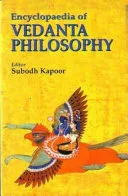
Encyclopaedia of Vedanta Philosophy
 76
76

Encyclopaedia of Vedanta Philosophy
Subodh Kapoor's "Encyclopaedia of Vedanta Philosophy" tackles the ambitious task of consolidating diverse Indological perspectives on a vast philosophical system. Its strength lies in presenting a spectrum of scholarly viewpoints, offering readers a broad overview of interpretive traditions that have evolved since the Vedas. The initial blurb accurately highlights its aim to harmonize these views. However, the sheer volume of material, while comprehensive, can sometimes feel encyclopedic rather than deeply analytical, potentially overwhelming for those new to the subject. A particularly illuminating aspect is the exploration of the relationship between the Upanishads and later Vedanta schools, clarifying their foundational role. The work’s limitation might be its academic density, which requires a committed reader. Ultimately, it serves as a valuable, if demanding, academic compilation for serious students of Vedanta.
📝 Description
76
Published in 2002, Subodh Kapoor's "Encyclopaedia of Vedanta Philosophy" gathers key Vedanta texts and Indologist analyses.
This reference work compiles significant writings on Vedanta philosophy, aiming to unify understanding through key texts from leading Indologists. It serves as a resource for those seeking to grasp the core doctrines derived from the concluding portions of the Vedas. The volume is suited for scholars of comparative religion, advanced students of Indian philosophy, and Vedanta practitioners needing a textual basis. It caters to readers who require direct engagement with foundational texts and scholarly interpretations to deepen their understanding of this tradition.
The "Encyclopaedia of Vedanta Philosophy" was published in the early 21st century. At that time, academic study of Indian traditions was established, but accessible compilations of core Vedanta texts by diverse Indologists were scarce. The work followed decades of scholarship, including efforts by figures who popularized Vedanta in the West and others who analyzed its philosophical nuances.
Vedanta, meaning 'the end of the Vedas,' represents the philosophical culmination of the Vedic tradition. Its texts, primarily the Upanishads, seek to articulate the ultimate nature of reality (Brahman) and the self (Atman). This tradition forms a major school of Hindu philosophy, concerned with liberation (Moksha) from the cycle of action and consequence (Karma) through realization of the unity of Atman and Brahman, often understanding the manifest world as illusion (Maya). Kapoor's compilation brings together scholarly interpretations of these central ideas.
💡 Why Read This Book?
• Gain access to a curated selection of foundational Vedanta texts and scholarly analyses, offering a breadth of perspective not easily found elsewhere, crucial for understanding the Upanishads. • Grasp the intricate relationships between core Vedanta concepts like Brahman and Atman, as presented by leading Indologists, clarifying their philosophical significance. • Understand the historical development of Vedanta scholarship through the compilation of writings from various Indologists, providing context to its study since the late 19th century.
⭐ Reader Reviews
Honest opinions from readers who have explored this book.
❓ Frequently Asked Questions
What is the primary philosophical tradition covered in the "Encyclopaedia of Vedanta Philosophy"?
The encyclopaedia focuses on Vedanta philosophy, a major school of Hindu philosophy derived from the Upanishads, the concluding parts of the Vedas. It explores concepts central to this tradition, such as Brahman and Atman.
Who is Subodh Kapoor, the author of this encyclopaedia?
Subodh Kapoor is the compiler and editor of this extensive reference work on Vedanta philosophy. The first edition was published in July 2002, aiming to bring together significant writings on the subject.
What are the core texts that Vedanta philosophy is based on, according to this book?
The book emphasizes that Vedanta philosophy is fundamentally based on the Upanishads, which are considered the concluding sections of the Vedas. These texts form the bedrock of Vedanta's metaphysical inquiries.
What does the term 'Vedanta' literally mean and why is it significant?
Literally, 'Vedanta' means 'the end or culmination of the Vedas.' This significance lies in its position as the philosophical and spiritual essence derived from the Vedas, focusing on ultimate truths and reality.
What is the main objective of this encyclopaedia?
The encyclopaedia's primary objective is to harmonize the understanding of Vedanta philosophy by compiling representative writings from prominent Indologists, serving as a pioneering reference work.
Are there specific philosophical concepts explored in depth within this volume?
Yes, the work explores key concepts such as Brahman (the ultimate reality), Atman (the self), Maya (illusion), and Moksha (liberation), presenting them through various scholarly lenses.
🔮 Key Themes & Symbolism
The Upanishadic Foundation
This theme centers on the Upanishads as the foundational texts for Vedanta, representing the 'end of the Vedas.' The encyclopaedia studies how these ancient Sanskrit texts articulate the ultimate reality (Brahman) and the nature of the self (Atman). It highlights the Upanishads' role in shifting focus from ritualistic aspects of the Vedas to philosophical inquiry, setting the stage for subsequent Vedanta schools and their interpretations of these core metaphysical ideas.
Brahman and Atman: The Ultimate Reality
A central focus is the exploration of Brahman, the supreme, unchanging reality, and Atman, the individual soul or self. The work examines the various interpretations by leading Indologists on the identity or non-identity of Atman and Brahman, a core part of Advaita Vedanta. It presents discussions on how these concepts are understood through different philosophical lenses, including their relationship to the phenomenal world and the path to spiritual realization.
The Path to Liberation (Moksha)
The encyclopaedia addresses the ultimate goal of Vedanta, Moksha, or liberation from the cycle of birth and death. It collates writings that explain the various paths and means to achieve this state, often discussed in relation to concepts like Karma, Maya, and the attainment of self-knowledge. The compilation illustrates how different scholars and traditions within Vedanta propose methods for transcending ignorance and realizing one's true nature.
Harmonizing Diverse Interpretations
This theme underscores the encyclopaedia's ambition to bridge differing scholarly viewpoints on Vedanta. By bringing together writings from various prominent Indologists, the work attempts to present a more unified, albeit complex, picture of Vedanta philosophy. It highlights the intellectual history of interpreting these texts, showcasing how scholars have approached the nuances and potential contradictions within the tradition since its early studies.
💬 Memorable Quotes
Direct passages from the work, attributed to the author.
“The literal rendering of the term 'Vedanta' has an obvious reference to the body of doctrines set forth in the concluding sections of the Vedas.”
— This statement precisely defines the etymological and textual origin of Vedanta, emphasizing its direct lineage from the Upanishads, the philosophical culmination of the Vedic corpus.
“This pioneering reference work attempts at harmonizing the understanding of the Vedanta philosophy.”
— This highlights the book's ambitious goal: not merely to present Vedanta, but to synthesize diverse scholarly interpretations, acting as a bridge between different academic perspectives on this complex tradition.
“Bringing together for the first time ever the best representative writings by some of the foremost leading Indologists.”
— This points to the unique value proposition of the encyclopaedia, aiming to provide an outstanding compilation of authoritative scholarship on Vedanta from a range of influential thinkers in the field.
“The work explores the Upanishads as the primary source of Vedanta.”
— This interpretation underscores the foundational role of the Upanishads, identifying them as the essential scriptural basis from which the entire philosophical edifice of Vedanta has been developed and interpreted.
💡 Key Ideas
Editorial paraphrase of the work's core concepts — not direct quotes.
Key concepts such as Brahman, Atman, and Moksha are central to Vedanta.
This paraphrased concept identifies the core metaphysical and soteriological ideas that the encyclopaedia aims to elucidate, representing the fundamental inquiries into reality and liberation within Vedanta.
🌙 Esoteric Significance
Tradition
While Vedanta is a major philosophical tradition within Hinduism, its exploration of consciousness, the nature of reality, and liberation aligns with broader esoteric inquiries. Its focus on realizing the unity of the individual self (Atman) with the Absolute (Brahman) shares common ground with mystical traditions across various cultures seeking ultimate union. The work's compilation of Indological perspectives allows for an examination of Vedanta's philosophical underpinnings, which inform esoteric practices and understandings of consciousness.
Symbolism
Within Vedanta, the concept of Brahman is often described through negation (neti neti - 'not this, not that'), pointing to a reality beyond conceptualization. The symbol of Om (Aum) is profoundly significant, representing the primordial sound and the totality of existence – the waking, dreaming, and deep sleep states, and that which transcends them. Atman, the inner self, is often symbolized by the lotus, representing spiritual unfolding and purity amidst the waters of worldly existence.
Modern Relevance
Contemporary thinkers and practitioners in fields ranging from consciousness studies to transpersonal psychology often draw upon Vedanta's sophisticated analyses of the mind, self, and reality. Schools like the Ramakrishna Mission continue to propagate Vedanta's teachings globally. Furthermore, modern yoga and meditation movements frequently integrate Vedantic philosophical concepts, making its ancient wisdom relevant to contemporary seekers of spiritual understanding and personal transformation.
👥 Who Should Read This Book
• Advanced students of Indian philosophy and comparative religion seeking to deepen their understanding of Vedanta's textual basis and scholarly interpretations. • Scholars of Hinduism and Indology requiring a comprehensive reference work that synthesizes diverse academic viewpoints on core Vedantic doctrines. • Individuals interested in the philosophical underpinnings of meditation and yoga practices, looking to connect contemporary spiritual disciplines with their ancient origins.
📜 Historical Context
The "Encyclopaedia of Vedanta Philosophy," first published in 2002, emerged in an era of advanced academic study of Indian philosophies. It arrived decades after the foundational work of scholars and thinkers like Swami Vivekananda, who began introducing Vedanta to Western audiences in the late 19th century, and later figures such as Sarvepalli Radhakrishnan, whose comprehensive histories of Indian philosophy (like his "Indian Philosophy," published in 1923) had already established key interpretive frameworks. Kapoor's work sought to consolidate and present a wide array of perspectives from prominent Indologists, addressing the need for a harmonized reference. This compilation aimed to provide a structured overview, engaging with the ongoing academic discourse on Vedanta schools, including but not limited to Advaita, Vishishtadvaita, and Dvaita, which had been subjects of intense scholarly debate since the early 20th century.
📔 Journal Prompts
The Upanishads as the 'end of the Vedas': Reflect on how this positioning suggests a shift in focus.
Brahman and Atman: Explore the implications of their potential non-duality for personal identity.
Moksha: Consider the concept of liberation from the cycle of rebirth in relation to contemporary life.
Interpretations of Vedanta: Analyze how different Indologists might present contrasting views on Maya.
The role of Om: Contemplate the complex symbolism of this sacred sound.
🗂️ Glossary
Vedanta
A school of Hindu philosophy derived from the Upanishads, literally meaning 'the end or culmination of the Vedas.' It focuses on metaphysical inquiries into the nature of reality, the self, and liberation.
Upanishads
Ancient Sanskrit texts forming the concluding part of the Vedas. They are considered the primary source of Vedanta philosophy, dealing with concepts of ultimate reality and spiritual knowledge.
Brahman
The supreme, unchanging, all-pervading reality in Hindu philosophy. It is the ultimate source and ground of all existence, often described as consciousness itself.
Atman
The individual self or soul. In many Vedanta traditions, particularly Advaita, Atman is considered identical to Brahman, representing the true, eternal essence of a being.
Maya
A concept in Vedanta that refers to illusion or the deceptive appearance of the phenomenal world. Maya obscures the true nature of reality (Brahman) and is often seen as the cause of suffering.
Moksha
Liberation or release from the cycle of birth, death, and rebirth (samsara). It is the ultimate spiritual goal in Hinduism, achieved through knowledge, devotion, or action.
Indologist
A scholar who specializes in the study of the history, languages, literature, and philosophy of India.