Divination workbook

 77
77

Divination workbook
Iris K. Barratt's Divination Workbook, first appearing in 1999, presents a refreshingly direct approach to developing divinatory skills. Unlike many esoteric texts that can become bogged down in dense theory, Barratt prioritizes practical application, offering a series of exercises designed to sharpen intuitive perception. The strength of the workbook lies in its methodical structure, which guides the reader through progressive stages of understanding symbolic language and interpretation. A notable section on interpreting natural omens, for instance, provides concrete examples that are easily adaptable to everyday observation. However, its focus on personal practice means that the historical or theoretical underpinnings of many techniques are touched upon only lightly, which might leave scholars of comparative occultism wanting more depth. For the dedicated student aiming to build a functional divinatory toolkit, this workbook serves as a solid, unpretentious foundation.
📝 Description
77
Iris K. Barratt's Divination Workbook, published in 1999, provides practical exercises for developing intuition.
This workbook focuses on practical application for those wishing to develop their intuitive abilities through divination. Barratt's approach avoids extensive theory, instead offering direct methods for self-exploration and the interpretation of signs. It is suitable for both newcomers to divination and experienced practitioners seeking to hone their skills. The format is designed for hands-on learning and structured practice, appealing to individuals interested in personal growth and symbolic communication.
The book emerged in 1999, a time when interest in esoteric subjects and personal development was growing. It offered accessible tools for a public exploring alternative spiritual paths, following a period of increased popularity for Tarot and other fortune-telling methods. Barratt's work emphasizes building a personal framework for understanding subtle energies and messages encountered in daily life.
Published in 1999, Divination Workbook entered a cultural moment that saw a revival of interest in esoteric subjects and personal growth. This period, the late 20th century, witnessed a broader public engagement with alternative spiritualities, including Tarot and various forms of divination. Barratt's book fits within this milieu by providing practical, accessible tools for individuals seeking to connect with symbolic communication and develop their innate intuitive faculties, moving beyond purely theoretical discussions.
💡 Why Read This Book?
• Learn to systematically interpret natural omens, a core practice in many pre-modern divinatory systems, by engaging with Barratt's structured exercises. • Develop personal symbolic correspondences through guided activities, moving beyond generic meanings to establish unique intuitive connections. • Cultivate a consistent divination practice by utilizing the workbook's exercises, fostering self-reliance and a deeper personal connection to symbolic guidance.
⭐ Reader Reviews
Honest opinions from readers who have explored this book.
❓ Frequently Asked Questions
When was Divination Workbook first published?
Divination Workbook was first published in 1999. This places its emergence during a period of renewed public interest in esoteric subjects and personal development practices.
What is the main focus of Divination Workbook?
The main focus is on practical application and skill development in various divinatory methods, aiming to enhance intuitive perception and symbolic interpretation.
Is this book suitable for beginners in divination?
Yes, the workbook's structured exercises and emphasis on practical application make it highly suitable for beginners looking to build a foundational understanding and skill set.
Does the book discuss specific divinatory tools like Tarot or Runes?
While the book emphasizes general principles and intuitive development, its exercises can be applied to various tools, including Tarot and runes, by focusing on symbolic interpretation and omen reading.
What kind of exercises can I expect in this workbook?
You can expect exercises focused on interpreting natural omens, developing personal symbolic dictionaries, and structured practices for enhancing intuitive awareness.
Who authored Divination Workbook?
The author of Divination Workbook is Iris K. Barratt, whose work first appeared in 1999.
🔮 Key Themes & Symbolism
Intuitive Perception Training
This workbook emphasizes the cultivation of intuitive faculties as the primary tool for divination. It moves beyond rote memorization of symbols or strict adherence to predefined systems, encouraging readers to develop their own inner knowing. Exercises are structured to build sensitivity to subtle cues and symbolic patterns that manifest in daily life, fostering a personal dialogue with the subconscious and the surrounding environment. The goal is to make intuitive perception a reliable and accessible faculty for understanding esoteric information.
Symbolic Language Acquisition
A core theme is the understanding and interpretation of symbolic language. The book provides frameworks for recognizing symbols not just in formal divinatory tools but also in everyday occurrences, dreams, and synchronicities. It guides readers in creating their own symbolic dictionaries and understanding the layered meanings of various archetypes and motifs. This focus aims to equip individuals with the ability to decode the messages inherent in the world around them.
Practical Divinatory Methods
The workbook offers a hands-on approach to learning divination. It presents a range of practical techniques and exercises that readers can immediately implement. These methods are designed for consistent practice, allowing for gradual skill development and confidence building. The emphasis is on creating a personal, workable system of divination that is integrated into the reader's life, rather than treating it as an abstract or purely theoretical pursuit.
Omen Interpretation
A significant aspect explored is the art of omen interpretation. The book encourages readers to become attentive observers of their environment, recognizing signs and portents in natural phenomena, coincidences, and everyday events. It provides guidance on how to record, analyze, and interpret these omens, transforming them from random occurrences into meaningful messages. This theme highlights the belief that the universe communicates through subtle signals.
💬 Memorable Quotes
Direct passages from the work, attributed to the author.
“Develop a personal dictionary of symbols.”
— This concept encourages readers to move beyond generalized meanings and create a unique lexicon of symbols that hold personal resonance and significance, thereby deepening their intuitive connection.
“Observe natural phenomena for portents.”
— This highlights the practice of finding divinatory meaning in everyday occurrences and natural events, suggesting that the environment itself offers guidance and messages.
“Practice consistent, structured exercises.”
— This underscores the workbook's pedagogical approach, emphasizing that regular, focused practice is key to developing reliable divinatory skills and intuitive awareness.
“Intuition is a faculty to be trained.”
— This interpretation posits that intuition is not an innate, fixed gift but a skill that can be consciously developed and strengthened through dedicated practice and focused attention.
“Symbolism speaks directly to the subconscious.”
— This idea suggests that symbols bypass the rational mind and communicate directly with deeper levels of consciousness, offering insights that logical thought might miss.
🌙 Esoteric Significance
Tradition
This work aligns with the modern eclectic approach to esoteric studies, drawing from a general stream of Western occultism that emphasizes practical application and personal gnosis over strict adherence to a single lineage. While not explicitly tied to Hermeticism, Kabbalah, or Gnosticism, it shares their interest in symbolic systems and the pursuit of hidden knowledge. It departs from more dogmatic traditions by prioritizing individual experience and the development of a personal divinatory language, fitting into the broader New Age emphasis on self-discovery.
Symbolism
The workbook frequently engages with the concept of symbolic language as a universal medium of communication. Key motifs include natural phenomena interpreted as omens (e.g., bird flight, weather patterns) and the idea of a personal symbolic dictionary. These symbols are presented not as fixed entities but as fluid signs whose meaning is co-created through the observer's intuition and awareness, reflecting a modern esoteric understanding of symbolism as a bridge between the conscious and subconscious.
Modern Relevance
Contemporary practitioners of intuitive development, mindfulness, and personal growth often find value in Barratt's workbook. Its emphasis on practical exercises for enhancing perception and interpreting symbolic patterns speaks to modern approaches to self-awareness and psychological exploration. Thinkers and practitioners in fields like modern witchcraft, energy healing, and even some forms of secular spirituality that utilize symbolic frameworks can draw upon its foundational principles for cultivating their own intuitive skills.
👥 Who Should Read This Book
• Aspiring diviners seeking a structured introduction to developing their intuitive skills and understanding symbolic language. • Individuals interested in practical esoteric techniques who prefer hands-on learning and guided exercises over purely theoretical study. • Practitioners of other spiritual or self-development disciplines looking to enhance their observational abilities and personal interpretation of signs and omens.
📜 Historical Context
Iris K. Barratt's Divination Workbook, published in 1999, emerged during a significant period of renewed interest in esoteric practices and self-help movements. The late 20th century witnessed a growing public engagement with spirituality outside traditional religious frameworks, fueled by accessible literature and a desire for personal empowerment. This era saw the popularization of various divination methods, including Tarot, astrology, and rune casting, often presented in formats that emphasized personal interpretation and intuitive development. Barratt's workbook contributed to this trend by offering a structured, practical guide distinct from more academic or tradition-bound texts. While contemporary authors like Doreen Virtue were beginning to popularize angel card readings and similar accessible methods, Barratt's work focused more on the foundational skills of symbolic interpretation and omen reading, reflecting a broader interest in practical occultism and psychological self-exploration that characterized the turn of the millennium.
📔 Journal Prompts
Reflect on the symbolism of a recent natural omen you observed.
Document five personal symbols and their intuitive meanings.
Outline a consistent practice schedule for divination exercises.
Consider the concept of intuition as a trainable faculty.
Analyze the subconscious communication through a chosen symbol.
🗂️ Glossary
Divination
The practice of seeking knowledge of the future or the unknown by supernatural means, often through the interpretation of signs, omens, or symbolic systems.
Omen
An event perceived as a sign of future good or evil; a portent or augury, often observed in natural phenomena or coincidences.
Symbolic Language
A system of communication that uses symbols or images to convey meaning, often operating on multiple levels of interpretation beyond literal representation.
Intuition
The ability to understand something immediately, without the need for conscious reasoning; a direct perception or knowing.
Correspondence
In esoteric contexts, the relationship or connection between different elements, symbols, or planes of existence, suggesting an underlying unity or pattern.
Portent
A sign or warning that something, especially something momentous or calamitous, is likely to happen; similar to an omen.
Synchronicitiy
The occurrence of events that appear meaningfully related but lack a causal connection; often interpreted as meaningful coincidences.
🔮 Readers Also Liked
Browse all →









More by Iris K. Barratt
All books →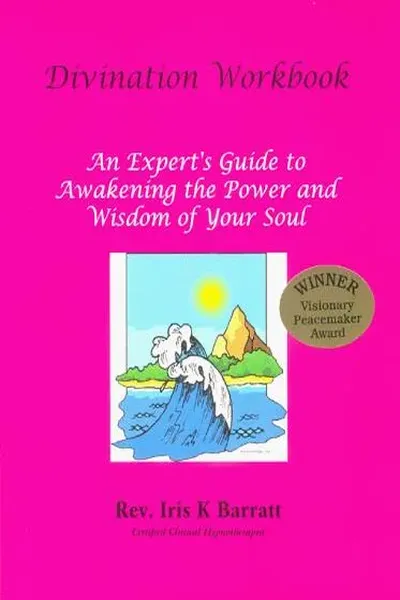
More Free Occult Philosophy Books
View all →