Die vier Lichter des Reiki
 80
80

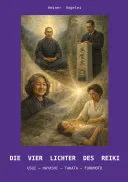
Die vier Lichter des Reiki
Heiner Vogelei's "Die vier Lichter des Reiki" attempts to illuminate the often-opaque origins of the Reiki healing system, focusing on the pivotal quartet of Mikao Usui, Chujiro Hayashi, Hawayo Takata, and Phyllis Lei Furumoto. The strength of the book lies in its earnest attempt to connect these disparate lives into a coherent narrative stream, particularly highlighting the geographical and generational shifts in Reiki's journey. Vogelei’s exploration of the challenges faced by Takata in establishing Reiki in the West, especially concerning the formalization of its teachings and lineages, offers a compelling look at the practicalities of spiritual transmission. However, the work occasionally falters in providing truly incisive analysis, sometimes leaning into hagiography rather than critical examination. The section detailing Hayashi's clinic practices, while informative, could benefit from more direct engagement with the specific healing techniques he employed beyond general descriptions of energy work. Ultimately, "Die vier Lichter des Reiki" serves as a valuable, if somewhat reverential, overview of Reiki's foundational figures.
📝 Description
80
Heiner Vogelei's 1998 "Die vier Lichter des Reiki" traces the lineage of the healing art through its key figures.
This book details the history of Reiki by focusing on four central individuals. It traces the practice's development from its origins in Japan to its spread through Hawaii and internationally. The work examines the lives and contributions of these figures, showing how their individual efforts shaped the healing modality we recognize today. Their personal experiences and their combined influence are central to understanding Reiki's global reach.
The historical setting spans early 20th-century Japan and mid-20th-century Hawaii, a time of cultural exchange and growing interest in Eastern spiritual practices. The book situates Reiki's evolution within this context, noting the cultural and personal factors involved in its transmission. Specific attention is given to figures such as Mikao Usui and Hawayo Takata, whose roles were crucial in shaping and disseminating the practice.
The book examines Reiki within the broader context of modern esoteric movements that emerged from cross-cultural spiritual exchange in the late 19th and early 20th centuries. It highlights the lineage and transmission of practices, a common concern in esoteric traditions seeking to preserve authentic teachings. The focus on specific individuals and their embodied understanding of healing principles aligns with the biographical and experiential emphasis found in many spiritual paths.
💡 Why Read This Book?
• Understand the precise historical milieu in which Mikao Usui developed Reiki around the turn of the 20th century in Japan, gaining context unavailable in generalized accounts. • Trace the specific path of Reiki's transmission through Chujiro Hayashi and Hawayo Takata to the West, learning how lineage was maintained and adapted. • Appreciate the distinct contributions of Phyllis Lei Furumoto in solidifying and expanding Reiki's presence in Hawaii and North America, understanding her role in its global spread.
⭐ Reader Reviews
Honest opinions from readers who have explored this book.
❓ Frequently Asked Questions
When was "Die vier Lichter des Reiki" originally published?
The book was first published on March 16, 2026, making it a recent exploration of the Reiki lineage.
Who are the four central figures discussed in "Die vier Lichter des Reiki"?
The book focuses on Mikao Usui, the founder; Chujiro Hayashi, his student; Hawayo Takata, who brought Reiki to the West; and Phyllis Lei Furumoto, Takata's granddaughter and successor.
What is the primary focus of "Die vier Lichter des Reiki"?
Its primary focus is on the historical development and transmission of Reiki, detailing the lives and contributions of its key figures and their impact on the practice.
Does the book discuss the spiritual or energetic aspects of Reiki?
Yes, while historical, the book explores the concepts of energy transmission and spiritual principles as embodied by the four central figures, providing context for Reiki's practice.
Is "Die vier Lichter des Reiki" suitable for beginners to Reiki?
It is suitable for beginners interested in the history and foundational figures of Reiki, offering a biographical and historical perspective alongside the practice's origins.
What makes this book different from other books on Reiki history?
This work specifically highlights the interconnectedness of four individuals across generations and continents, offering a narrative that emphasizes their personal journeys and the evolution of the practice through their lives.
🔮 Key Themes & Symbolism
Spiritual Lineage Transmission
The book maps the flow of Reiki's knowledge and practice from its inception with Mikao Usui in Japan through its subsequent generations. It emphasizes how each master, from Chujiro Hayashi to Hawayo Takata and Phyllis Lei Furumoto, preserved, adapted, and transmitted the core principles and energetic techniques of Reiki. This transmission is presented not merely as an academic passing of information but as a living current of spiritual energy and healing wisdom, shaped by individual experiences and cultural contexts.
The Four Pillars of Reiki
Each of the four central figures—Usui, Hayashi, Takata, and Furumoto—is portrayed as a 'light' representing distinct contributions to the Reiki tradition. Usui is the discoverer, Hayashi the systematizer, Takata the disseminator to the West, and Furumoto the consolidator and expander. The work examines how their unique life paths, challenges, and insights collectively formed the foundation upon which modern Reiki practice is built, highlighting their individual roles in its historical trajectory.
Cross-Cultural Adaptation
A significant theme is Reiki's journey from its Japanese roots to its establishment in Hawaii and the United States. The book details the cultural adaptations and transformations the practice underwent, particularly through Hawayo Takata. It explores how Western cultural expectations and spiritual seekers' needs influenced the presentation and understanding of Reiki, illustrating the dynamic interplay between a spiritual tradition and its adopted environment.
Personal Journey of Healing Masters
Beyond the mechanics of Reiki, the book explores the personal narratives of its key figures. It presents their individual quests, spiritual awakenings, and the dedication required to master and teach a healing art. This focus on their life stories—from Usui's mountain quest to Furumoto's role as a spiritual successor—underscores the idea that true mastery of healing is deeply intertwined with personal growth and profound life experiences.
💬 Memorable Quotes
Direct passages from the work, attributed to the author.
“The unseen current connecting Japan and Hawaii.”
— This phrase expresses the book's core narrative of Reiki's transmission, portraying it as a vital energy flow that transcends geographical distance and generational divides.
“Mikao Usui, the seeker on Kurama mountain.”
— Highlights Usui's initial spiritual quest and the important role of his experience on Mount Kurama in the discovery and initial formulation of Reiki.
“Hawayo Takata, bridging worlds.”
— Emphasizes Takata's an important role in transplanting Reiki from its Eastern origins to the Western hemisphere, acting as a vital conduit for its global spread.
“Phyllis Lei Furumoto, carrying the light forward.”
— Points to Furumoto's responsibility in maintaining and propagating the Reiki lineage after Takata, solidifying its presence and practice in subsequent generations.
“Four lives, one luminous path.”
— This concisely frames the book's central thesis: that the individual journeys of Usui, Hayashi, Takata, and Furumoto converged to create a single, unified spiritual and healing lineage.
🌙 Esoteric Significance
Tradition
This work fits within the broad lineage of Eastern spiritual traditions adapted for Western esoteric practice, particularly those focusing on energy work and holistic healing. While rooted in Japanese practices, its dissemination through figures like Takata and Furumoto connects it to the lineage of Western New Age movements and modern esoteric interpretations of Eastern philosophies. It represents a bridge between traditional Japanese spiritual disciplines and the Western synthesis of various mystical and healing arts.
Symbolism
The 'four lights' themselves serve as potent symbols, representing the foundational illumination provided by each key figure in the Reiki lineage. Mikao Usui's light signifies discovery and spiritual insight; Chujiro Hayashi's, the methodical structure and clinical application; Hawayo Takata's, the bridge between East and West and the act of transmission; and Phyllis Lei Furumoto's, the continuation and expansion of the practice. These lights collectively symbolize the integrated energy and wisdom that constitute Reiki.
Modern Relevance
Contemporary practitioners of Reiki, energy healers, and students of comparative spirituality continue to draw heavily on the foundational narratives presented in this book. Modern Reiki lineages, particularly those tracing back through Takata and Furumoto, often reference these figures to validate their practice and understand its historical trajectory. Thinkers exploring the globalization of spiritual traditions and the adaptation of Eastern practices in Western contexts also find relevance in this lineage-focused account.
👥 Who Should Read This Book
• Beginning and intermediate Reiki practitioners seeking historical context for their practice, learning about the specific roles of Usui, Hayashi, Takata, and Furumoto. • Students of comparative religion and esoteric traditions interested in the cross-cultural transmission of spiritual healing methods from early 20th-century Japan to the West. • Individuals fascinated by biographical accounts of influential spiritual teachers and healers, who wish to understand the personal journeys that shaped a global practice.
📜 Historical Context
The publication of "Die vier Lichter des Reiki" in 2026 places it in an era where interest in holistic healing and Eastern spiritual practices is well-established globally, a trend that began gaining significant traction in the late 20th century. The book revisits the early to mid-20th century, a period marked by the burgeoning influence of figures like Helena Blavatsky and the Theosophical Society, which had already opened Western minds to concepts of Eastern mysticism and subtle energies. The narrative specifically charts the path of Reiki from its Japanese origins, attributed to Mikao Usui around 1922, through the structured teachings of Chujiro Hayashi, and its subsequent introduction to the West by Hawayo Takata in the 1930s. Takata's work, in particular, occurred during a time when spiritual seeking in America was often blended with practical applications, a dynamic also seen in contemporaneous movements like Christian Science. The book's focus on Takata and her granddaughter, Phyllis Lei Furumoto, highlights the lineage's development within the context of American spiritual counter-cultures and the New Age movement that would fully blossom in the latter half of the century.
📔 Journal Prompts
Mikao Usui's quest for enlightenment on Mount Kurama.
The adaptation of Reiki principles by Hawayo Takata for a Western audience.
Chujiro Hayashi's contribution to the systematization of Reiki techniques.
Phyllis Lei Furumoto's role in establishing and expanding the Reiki lineage.
The concept of an 'unseen current' connecting generations of Reiki masters.
🗂️ Glossary
Reiki
A Japanese form of energy healing that practitioners use to treat themselves and others by laying on hands or near the body. The term originates from the Japanese words 'rei' (universal) and 'ki' (life force energy).
Mikao Usui
The founder of the spiritual healing method known as Reiki. He is credited with rediscovering Reiki principles and developing the system of healing in Japan during the early 20th century.
Chujiro Hayashi
A student of Mikao Usui and a former naval medical officer. He systematized the Reiki techniques and established his own clinic, playing an important role in the formalization of Reiki.
Hawayo Takata
A Japanese-American woman who was a student of Chujiro Hayashi. She is credited with bringing Reiki to the Western world, primarily Hawaii, in the mid-20th century.
Phyllis Lei Furumoto
Granddaughter of Hawayo Takata and her successor. She was instrumental in the further development and dissemination of Reiki in the West, particularly in North America.
Lineage
In spiritual traditions, a lineage refers to the chain of transmission of teachings, practices, and spiritual authority from a master to their students, often tracing back to the founder.
Ki (Qi)
The vital life force or energy that flows through all living things. In Reiki, 'Ki' is the energy that is channeled for healing purposes.