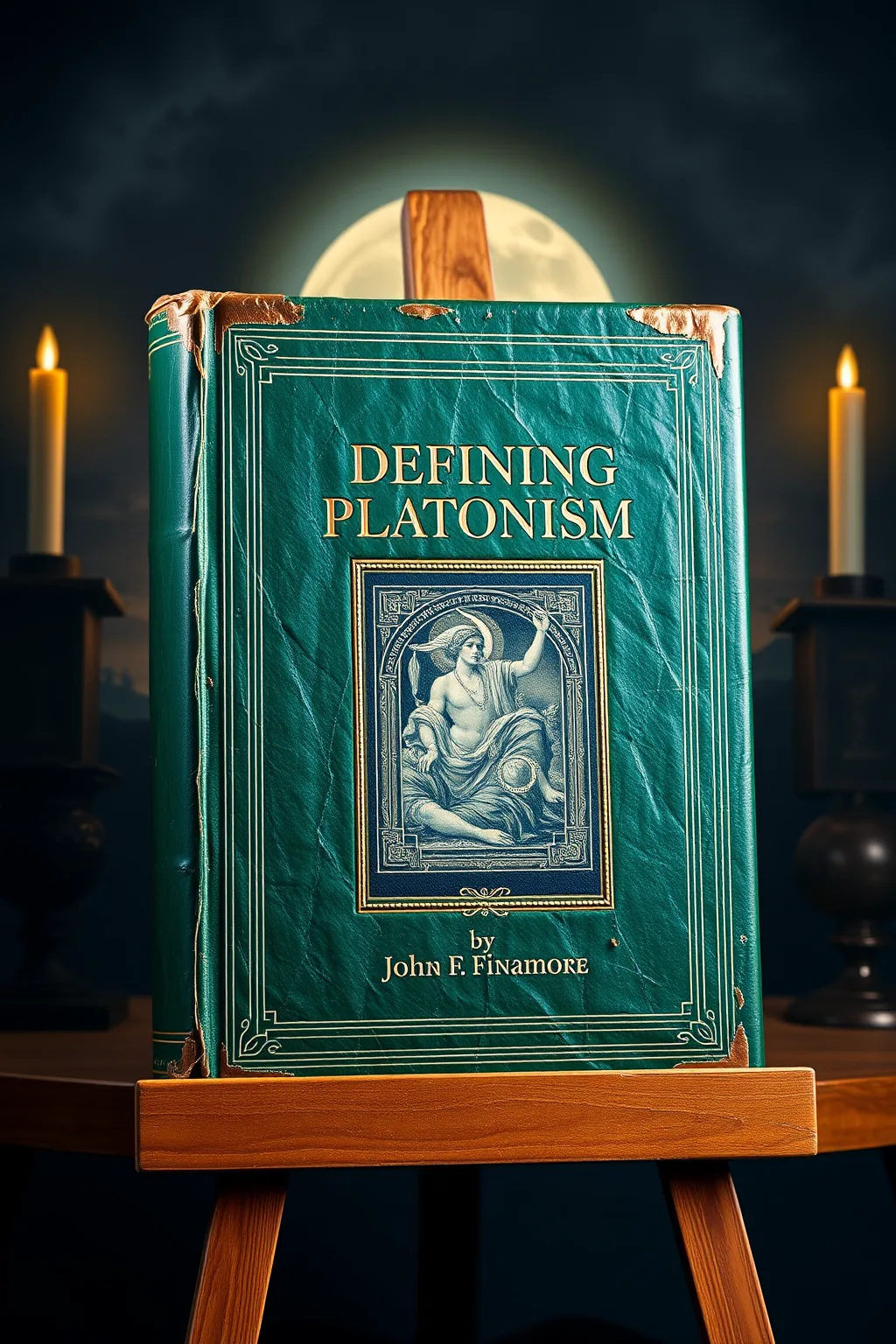
Defining Platonism
 61
61

Defining Platonism



In 'Defining Platonism,' John F. Finamore masterfully bridges the gap between academic rigor and esoteric insight. This work is a beacon for those who seek to understand the mystical underpinnings of Platonism. Finamore's exploration of Neoplatonism and its esoteric dimensions provides a fresh perspective on ancient wisdom. The book's strength lies in its ability to make complex philosophical concepts accessible and relevant to both scholars and spiritual seekers. 'Defining Platonism' is a must-read for anyone interested in the occult and Hermetic traditions.
📝 Description
61
John F. Finamore’s 2008 book aims to define Platonism beyond its common philosophical interpretations.
Finamore’s work examines Platonism not simply as a philosophical system but as a source of esoteric thought. He traces its influence through various historical periods, connecting its core ideas to mystical traditions. The book discusses how Plato's concepts were adapted and reinterpreted by later thinkers, forming a distinct esoteric current.
It pays attention to the symbolic language and hidden meanings scholars have found within Plato’s dialogues. Finamore argues that understanding this symbolic dimension is key to grasping the full scope of Platonic thought. The text seeks to clarify the distinctions between mainstream Platonic philosophy and its more mystical or occult applications, making it a resource for those interested in this specific lineage of thought.
This book situates Platonism within a broader esoteric tradition that values hidden meanings and spiritual application over purely academic discourse. It acknowledges that for centuries, thinkers have engaged with Plato’s writings seeking not just philosophical arguments but also a path to spiritual insight or gnosis. Finamore’s study highlights how this esoteric reception of Plato, particularly through Neoplatonism, developed its own set of doctrines and practices, often involving complex symbol systems and allegorical readings of the original texts.
💡 Why Read This Book?
Read 'Defining Platonism' to unlock the hidden wisdom of Plato's teachings. This book is ideal for seekers of esoteric knowledge, scholars of ancient philosophy, and practitioners of the occult. Finamore's work offers a deep dive into the symbolism and mystical significance of Platonism, making it an invaluable resource for those on a spiritual journey.
⭐ Reader Reviews
Honest opinions from readers who have explored this book.
❓ Frequently Asked Questions
What is the main focus of 'Defining Platonism'?
The main focus is the exploration of Platonism and Neoplatonism, highlighting their esoteric and mystical dimensions.
Who is the intended audience for this book?
The intended audience includes scholars of ancient philosophy, seekers of esoteric knowledge, and practitioners of the occult.
How does this book differ from other works on Platonism?
This book stands out by emphasizing the hidden knowledge and symbolic allusions within Platonism, making it accessible to both academic and spiritual seekers.
What are some key themes in 'Defining Platonism'?
Key themes include the mystical significance of Plato's teachings, the evolution of Neoplatonism, and the symbolism within Platonic philosophy.
Is this book suitable for beginners?
While it is accessible, beginners may benefit from some prior knowledge of Platonism and ancient philosophy.
🔮 Key Themes & Symbolism
Mystical Significance of Plato's Teachings
Finamore studies the hidden knowledge and esoteric wisdom that underpin Plato's philosophical legacy. This theme explores how Plato's teachings have been interpreted and adapted by mystical traditions over the centuries, revealing a body of symbolic allusions and useful insights.
Evolution of Neoplatonism
The book traces the development of Neoplatonism from its origins in Plato's dialogues to its full flowering in the works of Plotinus and Proclus. This theme highlights the esoteric dimensions of Neoplatonism and its influence on Western esoteric traditions.
Symbolism in Platonic Philosophy
Finamore's exploration of symbolism within Platonism reveals the hidden layers of meaning in Plato's writings. This theme examines how symbols and metaphors in Plato's works have been used to convey esoteric truths and spiritual insights.
💬 Memorable Quotes
Direct passages from the work, attributed to the author.
“True wisdom is the knowledge of the eternal.”
— Finamore highlights the mystical quest for eternal truths that transcends the material world.
“The path to wisdom is a journey of self-discovery and spiritual enlightenment.”
— Finamore's work invites readers to start a mystical journey of self-discovery and spiritual growth.
💡 Key Ideas
Editorial paraphrase of the work's core concepts — not direct quotes.
The soul, which is immortal, is bound to the body, and the body is a prison.
This quote underscores the Neoplatonic belief in the soul's divine origin and its imprisonment in the physical world.
The ascent to the divine involves a purification of the soul.
This passage emphasizes the spiritual journey towards enlightenment through inner purification.
The Forms are the eternal archetypes that govern the physical world.
This quote studies the esoteric concept of ideal forms that underlie reality.
🌙 Esoteric Significance
Tradition
This book belongs to the Hermetic tradition, emphasizing the hidden knowledge and mystical symbolism within Platonism. It draws on ancient Hermetic texts and practices to illuminate the esoteric dimensions of Plato's teachings.
Symbolism
Key symbols include the Cave Allegory, the Divided Line, and the Myth of Er, which represent the journey of the soul towards enlightenment. These symbols are interpreted through a mystical lens, revealing their deeper spiritual significance.
Modern Relevance
Today, 'Defining Platonism' remains relevant for modern practitioners of the occult and Hermetic traditions. It offers insights into the esoteric dimensions of Platonism, providing a foundation for spiritual growth and self-discovery.
👥 Who Should Read This Book
Beginners will find this book accessible with some prior knowledge of Platonism. Scholars of ancient philosophy will appreciate Finamore's deep dive into the esoteric dimensions of Plato's teachings. Spiritual seekers and practitioners of the occult will benefit from the book's emphasis on hidden knowledge and mystical symbolism. This book is ideal for those interested in the intersection of philosophy and spirituality.
📜 Historical Context
Written during a time of significant intellectual and spiritual ferment, 'Defining Platonism' captures the essence of Plato's enduring influence on Western thought. The book was important when written because it provided a comprehensive overview of Platonism and Neoplatonism, making it accessible to both academic scholars and spiritual seekers. Its influence can be seen in the resurgence of interest in esoteric and mystical traditions, as well as in the ongoing dialogue between philosophy and spirituality.
📔 Journal Prompts
Reflect on the mystical significance of Plato's teachings in your own spiritual journey.
Consider how the evolution of Neoplatonism has influenced your understanding of esoteric traditions.
Explore the symbolism in Plato's works and how it appeals to your personal experiences.
How does the concept of the soul's imprisonment in the body relate to your spiritual beliefs?
What insights have you gained about the path to wisdom and spiritual enlightenment?
🗂️ Glossary
Neoplatonism
A philosophical and mystical tradition that builds on Plato's teachings, emphasizing the divine and the ascent of the soul.
Hermeticism
An esoteric tradition based on the writings attributed to Hermes Trismegistus, focusing on hidden knowledge and spiritual enlightenment.
Esoteric
Relating to knowledge that is hidden or revealed only to a select few, often involving mystical or spiritual insights.
Platonism
The philosophical system based on the teachings of Plato, emphasizing the existence of eternal forms and the ascent of the soul.
Symbolism
The use of symbols and metaphors to convey hidden meanings and spiritual truths within philosophical and mystical texts.
This book appears in 4 collections
🔮 Readers Also Liked
Browse all →






From the “Neoplatonism” Collection
View all →








More Free Alchemy & Hermeticism Books
View all →