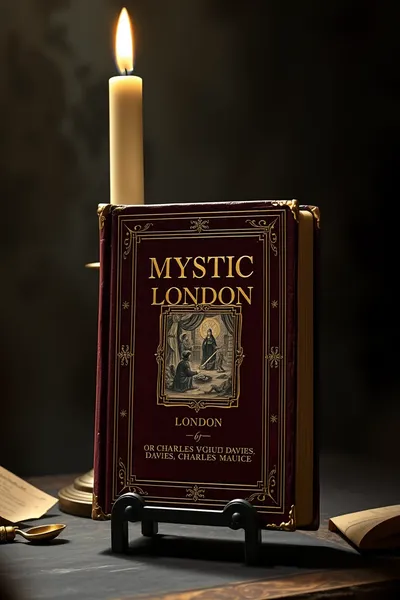
Christian Mystics

 78
78

Christian Mystics
Professor King's "Christian Mystics" offers a welcome antidote to overly devotional or purely historical accounts. The strength of this work lies in its rigorous analysis of the internal states and practices that defined these figures. For instance, King's dissection of the 'dark night' concept, as experienced by figures like St. John of the Cross, moves beyond simple metaphor to explore its psychological and spiritual implications with admirable clarity. However, the academic tone, while precise, can occasionally feel distant, particularly when discussing moments of intense personal revelation. The book might have benefited from a more direct engagement with the emotional weight of these encounters. Nevertheless, it provides a solid, evidence-based foundation for understanding Christian mystical traditions.
📝 Description
78
Professor King's 2003 book examines Christian mystics' direct, experiential knowledge of the divine.
Published in 2003, Professor King's "Christian Mystics" offers a scholarly look at individuals within the Christian tradition who pursued direct, experiential knowledge of God. The book moves beyond simple biographies to analyze the psychological, spiritual, and philosophical forces behind their practices and visions. It centers on the inner life of faith as it manifests through contemplative disciplines and encounters with the divine.
This work is for those interested in the contemplative side of Christianity, particularly those who want to grasp the mystics' actual experiences, not just their theological statements. It will appeal to students of religion, spiritual seekers interested in historical figures, and academics studying the connection between psychology and religious life. Readers familiar with Meister Eckhart or Julian of Norwich will find considerable depth.
King situates these figures within their historical settings, showing how societal structures, religious arguments, and philosophical ideas influenced their mystical paths. The book covers the time from early Christian ascetics to medieval contemplatives and into the early modern period, noting how mystical thought persisted and changed. It implicitly contrasts these inner explorations with more organized religious practices common at the time.
This book engages with the long-standing tradition of Christian esotericism, which emphasizes direct, unmediated experience of the divine over institutional dogma or purely intellectual assent. It examines figures who sought an inner transformation and union with God, often through disciplined contemplative practices. By focusing on the 'internal landscape of faith' and 'visionary encounters,' King places these individuals within a lineage that values inner gnosis and experiential knowledge, distinct from, though often interacting with, mainstream theological discourse.
💡 Why Read This Book?
• Gain an understanding of the specific contemplative practices employed by figures like Hildegard of Bingen, moving beyond general notions of prayer to explore methods like visio dei. • Learn how the concept of 'apotheosis' or deification, central to Eastern Orthodoxy but present in various forms, manifested in the lives and writings of Western mystics. • Appreciate the historical development of mystical thought, tracing how figures in the 12th century, such as Bernard of Clairvaux, laid groundwork for later contemplative movements.
⭐ Reader Reviews
Honest opinions from readers who have explored this book.
❓ Frequently Asked Questions
What period does Professor King's "Christian Mystics" primarily cover?
The book examines Christian mystics across several centuries, focusing significantly on the medieval period but also including figures from the early Christian era through to the early modern period, approximately spanning the 4th to the 17th centuries.
Are the mystics discussed exclusively Catholic?
While many prominent figures discussed are from the Catholic tradition, such as Julian of Norwich and Teresa of Ávila, the work explores the broader spectrum of Christian contemplative experience, acknowledging figures whose theological or spiritual expressions sometimes deviated from strict orthodoxy.
What distinguishes this book from a standard history of Christianity?
Unlike a general history, "Christian Mystics" focuses specifically on the internal, experiential dimension of faith, analyzing the psychological and spiritual disciplines that led to direct encounters with the divine, rather than solely on institutional or doctrinal developments.
Does the book offer practical guidance for developing mystical experience?
Professor King's work is primarily analytical and scholarly, examining historical figures. While it illuminates the principles and practices of Christian mystics, it does not present itself as a manual for achieving mystical states.
What is the significance of the publication year, 2003, for this work?
Published in 2003, the book benefits from later scholarship in religious studies and psychology, allowing for a more nuanced interpretation of historical mystical experiences compared to earlier, potentially less critical, analyses.
Which specific concepts of divine union does "Christian Mystics" explore?
The book delves into various conceptualizations of union, including the concept of 'unitive experience' and the apophatic approach to God, where the divine is understood through negation rather than affirmation.
🔮 Key Themes & Symbolism
The Apophatic Way
This theme centers on the via negativa, or apophatic theology, where the divine is approached through negation and silence rather than positive description. Figures like Pseudo-Dionysius the Areopagite, whose writings influenced later mystics, exemplify this path. The work explores how mystics used language to point towards God by describing what God is not, emphasizing the ineffable nature of ultimate reality and the limitations of human intellect in grasping the divine essence.
Divine Union and Transformation
Central to Christian mysticism is the concept of union with God, often described as a transformative process. The book examines how mystics like St. John of the Cross interpreted stages of spiritual development, including the 'dark night of the soul,' as necessary purification for achieving this union. This transformation is not merely intellectual but deeply affective and existential, altering the mystic's perception of self and reality.
The Role of Vision and Imagination
Many Christian mystics reported visionary experiences, often involving symbolic imagery. The work investigates how figures like Hildegard of Bingen utilized their imagination not as a mere mental faculty but as a conduit for divine revelation. It explores the tension between literal interpretation and symbolic understanding of these visions, and how they served to convey spiritual truths inaccessible through ordinary means.
Contemplative Prayer as Discipline
Professor King frames contemplative prayer not as a passive state but as an active, disciplined practice. The book details various forms of prayer, from meditative reflection on scripture to silent, wordless contemplation. It highlights how sustained effort in prayer could lead to profound spiritual insights and direct encounters with the divine presence, distinguishing it from simple devotional exercises.
💬 Memorable Quotes
Direct passages from the work, attributed to the author.
“Mystical experience is a profound alteration of consciousness.”
— This interpretation highlights the transformative nature of encounters with the divine, suggesting they fundamentally reshape the mystic's perception of reality and their place within it, moving beyond ordinary awareness.
“The dark night purifies the soul for divine union.”
— This concept, strongly associated with St. John of the Cross, interprets periods of spiritual desolation not as abandonment but as a necessary process of cleansing the soul of attachments, preparing it for deeper communion with God.
“Visions are symbolic language of the divine.”
— This interpretation posits that the imagery reported by mystics like Hildegard of Bingen serves as a form of divine communication, conveying spiritual truths through symbols that require contemplative interpretation.
💡 Key Ideas
Editorial paraphrase of the work's core concepts — not direct quotes.
The divine is approached by knowing what it is not.
This paraphrased concept captures the apophatic tradition, suggesting that true understanding of God comes not from positive affirmations but from recognizing the limits of language and intellect in describing the ultimate.
Contemplation requires dedicated practice.
This paraphrased idea emphasizes that the pursuit of direct divine experience within Christian mysticism is not accidental but involves sustained, disciplined effort in prayer and spiritual exercises over time.
🌙 Esoteric Significance
Tradition
This work situates itself within the broad lineage of Western esotericism by focusing on the hidden, experiential dimensions of a major world religion. While rooted in Christianity, the emphasis on direct, unmediated experience of the divine and the exploration of altered states of consciousness aligns it with broader esoteric pursuits found in Hermeticism and Neoplatonism, which have historically influenced Christian thought.
Symbolism
Key symbols explored include the 'dark night,' representing spiritual purification and the shedding of ego attachments, a concept resonant with initiatory processes in other traditions. The 'divine light' or 'vision' symbolizes direct apprehension of God, akin to gnosis in Gnostic traditions, representing an ultimate state of knowing that transcends ordinary sensory perception.
Modern Relevance
Contemporary interest in mindfulness, contemplative practices, and interfaith dialogue finds echoes in "Christian Mystics." Thinkers exploring embodied spirituality and the psychology of religion often draw upon historical accounts of mystical experience to inform modern therapeutic and spiritual techniques. The work remains relevant for those seeking to understand the deep wells of contemplative practice within the Christian tradition.
👥 Who Should Read This Book
• Students of comparative mysticism seeking to understand the experiential core of Christian spirituality alongside traditions like Sufism or Kabbalah. • Individuals interested in the psychological and philosophical underpinnings of religious experience, particularly those drawn to historical accounts of altered states of consciousness. • Scholars of medieval and early modern European history investigating the role of personal faith and direct divine encounter in shaping individual lives and broader cultural movements.
📜 Historical Context
Published in 2003, Professor King's "Christian Mystics" entered a scholarly landscape where the study of mysticism had matured, moving beyond earlier, often hagiographic, approaches. The book engages with the legacy of medieval thinkers like Meister Eckhart and Bernard of Clairvaux, whose works were central to the development of Western Christian contemplative traditions. King's work implicitly contrasts the internal focus of these mystics with the more outward-facing theological debates and institutional power struggles of their eras. It also acknowledges the intellectual currents of the time, such as Scholasticism, which offered a different framework for understanding God. The reception of mystical texts has often been complex, with some figures facing scrutiny from ecclesiastical authorities, though King's work focuses on analysis rather than reception history.
📔 Journal Prompts
The concept of the 'dark night' as described by St. John of the Cross.
Hildegard of Bingen's visionary experiences and their symbolic meaning.
The difference between intellectual understanding and direct apprehension of the divine.
The role of apophatic theology in approaching the ineffable.
How contemplative practices shape one's perception of reality.
🗂️ Glossary
Apophatic Theology
A theological approach that describes God by negation, emphasizing what God is not, due to the belief that the divine essence is ultimately beyond human comprehension and positive description.
Via Negativa
Synonymous with apophatic theology; the 'negative way' of approaching God through silence and negation, focusing on the unknowable aspects of the divine.
Divine Union
The state of profound, direct connection or oneness with God sought by mystics, often described as a transformative experience transcending ordinary human consciousness.
Contemplative Prayer
A form of prayer characterized by stillness, silence, and direct experience of God's presence, often involving deep meditation and a surrender of the intellect.
Visionary Experience
A mystical experience involving perceived sensory input (visual, auditory, etc.) interpreted as a direct communication or manifestation from the divine realm.
The Dark Night of the Soul
A spiritual phase described by mystics, particularly St. John of the Cross, characterized by intense spiritual dryness, desolation, and a sense of divine absence, seen as purification.
Deification (Theosis)
The concept, central in Eastern Orthodoxy but present in various Christian mystical thought, of humanity's potential to become united with God, sharing in the divine nature.
🔮 Readers Also Liked
Browse all →







More Free Mysticism & Contemplation Books
View all →