Chinese astrology

 74
74

Chinese astrology
Derek Walters' "Chinese Astrology" is a dense, meticulously researched volume that avoids the superficiality often found in popular astrological texts. Its strength lies in its detailed exposition of the Five Elements and their complex interactions with the twelve zodiacal animals, offering a framework far richer than simple sun-sign astrology. A notable limitation is the sheer volume of information, which can be overwhelming for newcomers. The section detailing the "Year of the Rat" with its elemental breakdowns, for instance, demonstrates the book's depth but also its demanding nature. Walters' approach is scholarly, presenting the system with an academic rigor that respects its origins. It serves as a vital reference for those committed to understanding this specific esoteric tradition.
📝 Description
74
Derek Walters' 1987 book explains the 60-year cycle of Chinese astrology.
Derek Walters' "Chinese Astrology," published in 1987, provides a detailed look at the Chinese zodiac and its elemental influences. The book goes beyond simple animal signs to explain the mechanics of the Five Elements (Wu Xing) and how they interact with the twelve zodiac animals. It also covers the lunar calendar and its effect on personality and destiny. Walters meticulously outlines the traits, compatibilities, and predictions for each sign and element combination.
This volume is for those serious about astrology who wish to expand their knowledge beyond Western systems. It will appeal to practitioners of comparative cosmology and anyone who values systematic methods for divination. Readers interested in East Asian culture and philosophy will find its discussion of cyclical time and elemental balance especially valuable. It is written for dedicated students of esoteric systems, not casual readers.
The book systematically explains the cyclical nature of Chinese cosmology, particularly the 60-year cycle created by combining the 12 Earthly Branches (zodiac animals) and the 10 Heavenly Stems (yin/yang states of the Five Elements). It details how these elements—Wood, Fire, Earth, Metal, Water—interact through generating and overcoming cycles.
Walters' work appeared in the late 20th century, a time when interest in non-Western spiritual and philosophical traditions was growing. "Chinese Astrology" contributed to a more academic and thorough presentation of Eastern astrological systems. This period saw a move toward specific explorations of individual traditions, diverging from earlier, more generalized syncretic approaches to esoteric studies.
💡 Why Read This Book?
• Gain a nuanced understanding of the Five Elements (Wu Xing) and their generating/overcoming cycles, a core concept absent in most Western astrological texts, allowing for deeper personal analysis. • Learn about the 60-year cycle, a specific calendrical and energetic system that Walters details, offering a unique temporal perspective on fate and personality. • Discover the intricate compatibility rules between the 12 zodiac animals, moving beyond simplistic pairings to explore complex relational dynamics as explained in the book's comparative sections.
⭐ Reader Reviews
Honest opinions from readers who have explored this book.
❓ Frequently Asked Questions
When was Derek Walters' "Chinese Astrology" first published?
Derek Walters' "Chinese Astrology" was first published in 1987, placing it within a period of growing interest in comparative esoteric studies.
What are the Five Elements in Chinese Astrology as described by Walters?
Walters details the Five Elements as Wood, Fire, Earth, Metal, and Water. The book explains their cyclical generation and control relationships, crucial for understanding astrological interpretations.
How does Chinese Astrology differ from Western Astrology according to this book?
The book highlights differences such as the lunar calendar basis, the emphasis on elemental cycles (Wu Xing), and the 12-year animal cycle, contrasting with Western astrology's solar focus and zodiac signs.
Does the book cover compatibility between zodiac signs?
Yes, "Chinese Astrology" provides detailed insights into the compatibility between the twelve zodiac animals, exploring how their inherent natures interact in relationships and partnerships.
Is Derek Walters considered an authority on Chinese Astrology?
Derek Walters is widely recognized for his extensive research and authoritative works on Chinese astrology, making his 1987 publication a significant contribution to the field.
What is the significance of the 60-year cycle in Chinese Astrology?
The 60-year cycle, formed by the combination of the 12 animal signs and the 10 Heavenly Stems (representing yin/yang elements), is central to Chinese astrology, influencing yearly fortunes and individual destinies as explained in the book.
🔮 Key Themes & Symbolism
Elemental Harmony and Conflict
The core of Walters' exploration lies in the Wu Xing, or Five Elements: Wood, Fire, Earth, Metal, and Water. The book meticulously details how these elements interact in generating (e.g., Wood feeds Fire) and overcoming (e.g., Metal chops Wood) cycles. This dynamic interplay is presented not just as a cosmological principle but as the fundamental mechanism shaping personality traits, health, relationships, and the fortunes of individuals born under specific elemental and animal combinations. Understanding these cycles is key to interpreting the nuances of Chinese astrological prognostication.
The Lunar Calendar and Time Cycles
Unlike Western astrology's solar basis, "Chinese Astrology" firmly anchors its system in the lunisolar calendar. Walters explains how the movement of the moon dictates the year, month, and day divisions, each assigned an animal sign and elemental influence. The work emphasizes the cyclical nature of time, particularly the 12-year cycle of the zodiac animals and the more complex 60-year cycle formed by combining animals with the Heavenly Stems. This cyclical perspective is presented as essential for comprehending the recurring patterns in human experience and destiny.
Animal Sign Personalities and Compatibility
The familiar twelve zodiac animals—Rat, Ox, Tiger, Rabbit, Dragon, Snake, Horse, Goat, Monkey, Rooster, Dog, Pig—are explored in depth by Walters. Each animal is associated with specific characteristics, strengths, weaknesses, and inherent tendencies. Crucially, the book moves beyond individual sign descriptions to analyze the complex web of compatibility and conflict between these animals. This section offers practical insights into interpersonal dynamics, revealing why certain pairings tend to flourish while others face significant challenges.
The Heavenly Stems and Earthly Branches
Walters systematically introduces the Ten Heavenly Stems and Twelve Earthly Branches, the fundamental components of the Chinese sexagenary cycle. The Stems are linked to the Five Elements in their yin and yang aspects, while the Branches correspond to the twelve zodiac animals. The book elucidates how the pairing of a Stem with a Branch creates a unique energetic signature for each year, month, day, and hour, forming the basis for detailed astrological charts and predictions. This intricate pairing system is central to the book's comprehensive approach.
💬 Memorable Quotes
Direct passages from the work, attributed to the author.
“The twelve animals are not merely symbols; they represent distinct energies and archetypes.”
— This interpretation highlights that Walters views the zodiac animals as more than just convenient labels. They embody fundamental forces that influence human behavior and destiny, suggesting a deeper energetic resonance within the system.
“Understanding the cycles of the Five Elements is paramount to grasping Chinese astrological principles.”
— This statement underscores the foundational importance of the Wu Xing (Five Elements) in Walters' work. It implies that proficiency in Chinese astrology requires a deep comprehension of their interactions, not just memorization of animal sign traits.
“Compatibility between individuals is often dictated by the elemental balance or imbalance between their birth signs.”
— This interpretation points to the practical application of elemental theory in relationship analysis. It suggests that relational harmony or discord can be understood through the lens of energetic interactions between individuals' core astrological components.
“The Chinese system offers a framework for understanding life's patterns through recurring cycles.”
— This concept highlights the cyclical, rather than linear, worldview inherent in Chinese astrology as presented by Walters. It suggests the system provides a lens through which to perceive and interpret recurring themes and rhythms in existence.
💡 Key Ideas
Editorial paraphrase of the work's core concepts — not direct quotes.
Each year carries a unique energetic imprint derived from its animal and elemental combination.
This paraphrased concept emphasizes the specific, individualized nature of each year within the Chinese astrological framework. It suggests that prognostication depends on analyzing the mix of influences present in any given time period.
🌙 Esoteric Significance
Tradition
This work fits within the broader tradition of comparative cosmology and esoteric studies, particularly those focused on Eastern systems. While not strictly Hermetic or Kabbalistic, it engages with universal principles of cyclical time, elemental forces, and the macrocosm-microcosm correspondence that are common threads in many esoteric lineages. Walters' approach is scholarly, aiming to present the Chinese system with fidelity, thereby contributing to a more diverse and nuanced esoteric library, distinct from purely Western occult traditions.
Symbolism
Central symbols include the twelve animals of the zodiac, each representing a distinct energetic archetype and phase of the 12-year cycle. The Five Elements (Wood, Fire, Earth, Metal, Water) are paramount, symbolizing fundamental forces of creation and transformation. Their interplay, represented through generating and overcoming cycles, forms a dynamic symbolic language for understanding cosmic and human processes. The yin-yang duality, inherent in the Heavenly Stems, further adds layers of symbolic meaning to the energetic expressions within the system.
Modern Relevance
Contemporary practitioners of East Asian metaphysics, including Feng Shui consultants and TCM practitioners, often reference Walters' foundational work for its clear explanations of elemental dynamics and horary principles. Online communities dedicated to astrology and comparative spirituality frequently cite "Chinese Astrology" as a key text for understanding the nuances of this ancient system, demonstrating its continued relevance for those seeking depth beyond superficial sign-based readings.
👥 Who Should Read This Book
• Students of comparative astrology seeking to integrate non-Western systems into their practice, offering a structured approach to the lunisolar calendar and elemental interactions. • Researchers in East Asian cultural history and philosophy interested in the practical application of cosmological principles, providing detailed insights into the 60-year cycle. • Individuals drawn to divination and self-understanding who desire a more complex and systematic framework than Western sun-sign astrology, detailing animal sign compatibility and elemental influences.
📜 Historical Context
Derek Walters' "Chinese Astrology," released in 1987, arrived at a crucial juncture for esoteric studies. The late 20th century witnessed a significant expansion of Western engagement with Eastern philosophies, partly fueled by scholars like Joseph Needham whose multi-volume "Science and Civilisation in China" had already laid groundwork. Walters' work emerged in a landscape increasingly interested in detailed, non-syncretic systems, moving beyond earlier, more generalized introductions to Eastern thought often found in Theosophical literature. While not facing overt censorship, its academic rigor distinguished it from more popular, simplified astrological guides. Its detailed exploration of the Five Elements (Wu Xing) and the 60-year cycle provided a much-needed systematic resource for Western practitioners and scholars seeking authentic understanding, contrasting with more superficial interpretations.
📔 Journal Prompts
The Rat's elemental interactions: How do the Five Elements manifest uniquely for those born in a Rat year?
Reflecting on the 60-year cycle: Identify a historical event or personal milestone within a specific 60-year cycle.
The Dragon's symbolic power: Consider the archetypal qualities of the Dragon in relation to personal ambition.
Elemental balance in relationships: Analyze a significant relationship through the lens of generating and overcoming cycles.
The Ox's persistence: How does the Ox's characteristic steadfastness align with your own life experiences?
🗂️ Glossary
Wu Xing
The Chinese philosophical concept of the Five Phases or Five Elements: Wood (木), Fire (火), Earth (土), Metal (金), and Water (水). Walters explains their cyclical generating and overcoming relationships.
Heavenly Stems (Tian Gan)
Ten cyclical signs (Jia, Yi, Bing, Ding, Wu, Ji, Geng, Xin, Ren, Gui) associated with the Five Elements in their yin and yang aspects. They form part of the 60-year cycle.
Earthly Branches (Di Zhi)
Twelve cyclical signs, each represented by an animal (Rat, Ox, Tiger, etc.), corresponding to the 12 months and forming the basis of the Chinese zodiac. They are paired with Heavenly Stems.
Lunisolar Calendar
A calendar system that is based on both the cycles of the moon and the sun. Chinese astrology primarily uses a lunisolar calendar, influencing its structure and interpretations.
Qi (Chi)
Often translated as vital energy or life force. In Chinese astrology, the flow and balance of Qi are influenced by the interplay of Heavenly Stems and Earthly Branches.
Sexagenary Cycle
A sixty-year cycle created by the combination of the ten Heavenly Stems and the twelve Earthly Branches. Each year within this cycle has a unique combination of influences.
Compatibility
In Chinese astrology, the degree of harmony or conflict between different animal signs and elemental combinations, as detailed by Walters for understanding relationships.
🔮 Readers Also Liked
Browse all →

![[Elements. English. Selections] Elements of geometry; containing the first six books of Euclid, with two books on the geometry of solids. To which are added, elements of plane and sperical trigonometry. By John Playfair. 1795](/img/thumb/elements-english-selections-elements-of-geometry-containing-the-first-six-books-of-euclid-with-two-books-on-the-geometry-of-solids-to-which-are-added-elements-of-plane-and-sperical-trigonometry-by-joh.webp)



More by Derek Walters
All books →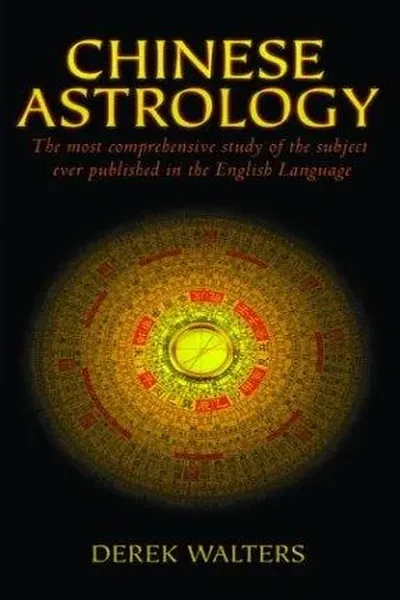




More Free Astrology & Cosmology Books
View all →