Chakra tonics
 81
81

Chakra tonics
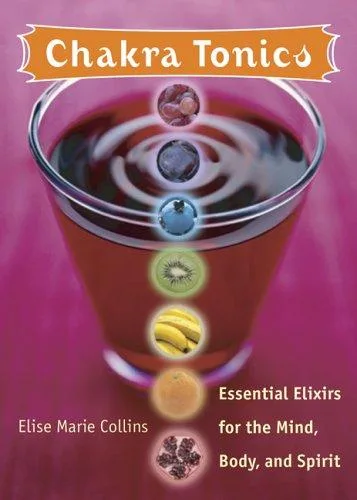
Elise Marie Collins’s Chakra Tonics approaches the well-trodden ground of the chakra system with a welcome pragmatism. Unlike many texts that remain at a high theoretical level, Collins grounds her discussion in actionable practices, which is a significant strength. The book’s directness in suggesting 'tonics' for each energy center, moving from the root to the crown, provides a clear roadmap for readers. However, the relative brevity of each chakra’s exploration might leave those seeking deep dives wanting more. A particularly effective passage is the explanation of the Third Eye chakra, where Collins links its clarity to intuition and perception, offering a simple visualization exercise that feels immediately applicable. The work avoids overly esoteric jargon, making it accessible. Ultimately, Chakra Tonics serves as a useful, hands-on manual for engaging with the subtle body, offering practical steps rather than abstract philosophy.
📝 Description
81
Elise Marie Collins' Chakra Tonics, published in 2024, presents the chakra system as a practical guide for physical, emotional, and spiritual well-being.
This book reframes the chakra system from an abstract map to a usable framework for daily life. Collins moves past theory to offer concrete methods for working with each of the seven main energy centers. The guidance includes specific perspectives and actions for engaging with these centers. It is written for those new to energy work or seeking a more structured approach to self-healing practices. Readers familiar with esoteric ideas but wanting applied techniques will find value here. The book supports integrating subtle energy practices through meditation, movement, or conscious awareness.
Collins' work enters a modern revival of interest in ancient Indian healing traditions, specifically the chakra system. This concept, originating in India, entered Western esotericism through figures like Helena Blavatsky and later Alice Bailey. Subsequent authors adapted chakra theory within Western psychological and esoteric frameworks. Collins contributes a contemporary synthesis to this lineage, focusing on applied methods.
💡 Why Read This Book?
• You will learn specific 'tonic' practices for each of the seven primary chakras, providing actionable techniques for energy balancing that go beyond mere theoretical understanding, as detailed in the chapters on Root, Sacral, and Solar Plexus chakras. • You will gain a clearer understanding of how imbalances in specific chakras, such as the Throat chakra's connection to authentic expression, can manifest in daily life, offering insights for personal growth. • You will discover practical lifestyle adjustments and meditations designed to harmonize your energy centers, providing a tangible method for cultivating inner vitality and spiritual awareness, as presented throughout the book's structure.
⭐ Reader Reviews
Honest opinions from readers who have explored this book.
❓ Frequently Asked Questions
What are 'chakra tonics' as described by Elise Marie Collins?
Chakra tonics, in the context of Elise Marie Collins's 2024 book, are not just metaphorical remedies but practical methods. They include specific exercises, affirmations, and lifestyle adjustments designed to harmonize and activate each of the seven primary chakras, fostering overall well-being.
Is Chakra Tonics suitable for beginners in esoteric studies?
Yes, the book is accessible to beginners. Collins explains complex concepts related to the chakra system in a clear, grounded manner, offering actionable advice that doesn't require extensive prior knowledge of esoteric traditions.
How does Chakra Tonics relate to traditional Indian chakra systems?
While rooted in the ancient Indian chakra system, Collins's work adapts and synthesizes these concepts for a modern Western audience. It integrates psychological and practical energetic healing aspects, building upon earlier Western interpretations.
What is the publication year of Elise Marie Collins's Chakra Tonics?
Chakra Tonics by Elise Marie Collins was first published in 2024, making it a contemporary contribution to the field of esoteric literature on energy systems.
Does the book offer guidance on specific chakras?
Indeed, the book systematically explores the seven primary chakras, detailing their individual characteristics and providing specific 'tonic' practices for each, from the Root Chakra to the Crown Chakra.
What kind of practices are suggested in Chakra Tonics?
The book suggests a range of practices, including meditation, specific breathing techniques, mindful movement, affirmations, and lifestyle choices, all tailored to support the energetic balance of each chakra.
🔮 Key Themes & Symbolism
Applied Chakra Harmony
This work moves beyond abstract theory to offer practical applications for understanding and balancing the seven primary chakras. Collins presents each chakra with its associated colors, elements, and psychological correlations, but the core focus is on actionable 'tonics'. These are specific exercises, affirmations, and lifestyle adjustments designed to address imbalances or blockages. For instance, the book might suggest particular breathing techniques for the Solar Plexus chakra to enhance personal power or grounding meditations for the Root Chakra to foster security. The emphasis is on tangible methods for cultivating vitality and spiritual alignment through direct engagement with one's energetic centers.
Holistic Well-being Framework
Chakra Tonics frames the chakra system as an integral component of holistic well-being. The book posits that imbalances within these energy centers can manifest physically, emotionally, and spiritually. By applying the 'tonics' and insights provided, readers are encouraged to address the root causes of discomfort or disharmony. The interconnectedness of the chakras is highlighted, suggesting that tending to one center can positively influence others. This approach promotes a comprehensive view of health, where subtle energy work is seen as a vital complement to physical and mental self-care practices.
Modern Esoteric Synthesis
Elise Marie Collins's work represents a modern synthesis within esoteric studies, particularly concerning the popularization and practical application of the chakra system. While drawing from ancient Indian traditions, the book adapts these concepts for contemporary practitioners, integrating them with psychological understanding and accessible energetic healing techniques. It builds upon the lineage of Western esotericists who have previously interpreted and utilized the chakra model, offering a refined and user-friendly approach for the 21st-century seeker interested in energy work and personal transformation.
💬 Memorable Quotes
Direct passages from the work, attributed to the author.
“Each chakra is a gateway to different aspects of our consciousness and physical being.”
— This statement captures the book's premise: that the chakras are not just abstract points but dynamic centers influencing our experience of life, offering access to deeper levels of self-awareness and physical vitality.
“Balancing the chakras is a continuous practice, not a one-time fix.”
— This highlights the ongoing nature of energetic self-care. The book emphasizes that maintaining equilibrium within the chakra system requires consistent attention and application of the suggested 'tonic' methods.
“The color orange is strongly associated with the Sacral Chakra and creativity.”
— This is an example of the concrete correspondences presented. The interpretation is that by working with the color orange, or practices related to the Sacral Chakra, one can stimulate their creative energies.
“Our energetic state directly impacts our physical health and emotional resilience.”
— This interpretation underscores the mind-body connection central to the book's philosophy. It suggests that by cultivating a balanced energy system, one can enhance overall health and the capacity to cope with life's challenges.
“The Throat Chakra governs communication and self-expression.”
— This interpretation connects the Throat Chakra to the vital human functions of speaking one's truth and articulating thoughts and feelings, suggesting that its balance is crucial for authentic interaction.
🌙 Esoteric Significance
Tradition
The work draws heavily from the yogic and Tantric traditions of India, which describe the chakra system as a network of energetic centers along the spine. However, Collins adapts this for a contemporary Western audience, aligning it with modern psychological concepts and a practical, self-help oriented approach to esoteric practice. It fits within the broader lineage of Western esotericists who have interpreted and applied Eastern energetic models, offering a more accessible entry point than some earlier, denser translations or commentaries.
Symbolism
Key symbols include the colors associated with each chakra (e.g., red for the Root, orange for the Sacral, yellow for the Solar Plexus), which are used as visual anchors and energetic tonics. Another motif is the concept of 'tonics' themselves—whether through sound, breath, visualization, or lifestyle adjustments—which act as symbolic remedies for energetic disharmony. The spine, as the central axis upon which the chakras are aligned, also functions as a significant symbol of spiritual ascent and integration within the text.
Modern Relevance
Chakra Tonics appeals to contemporary practices in mindfulness, energy healing modalities like Reiki, and somatic psychology. Thinkers and practitioners focused on mind-body integration, trauma recovery through somatic awareness, and accessible spiritual development often reference or utilize chakra concepts. The book's emphasis on practical, daily application makes it relevant to modern wellness culture, bridging the gap between ancient esoteric knowledge and the everyday lives of individuals seeking balance and vitality.
👥 Who Should Read This Book
• Individuals new to energy work or esoteric concepts seeking a clear, actionable guide to the chakra system, offering practical 'tonics' for self-balancing. • Practitioners of yoga, meditation, or mindfulness who wish to deepen their understanding of the energetic anatomy that underpins their practice. • Those interested in holistic health and self-care looking for accessible methods to address physical, emotional, or spiritual imbalances through energy work.
📜 Historical Context
Published in 2024, Elise Marie Collins's Chakra Tonics arrives at a time of continued widespread interest in holistic health and esoteric practices. The concept of chakras, originating from ancient Indian Tantric traditions, was significantly introduced to the West in the late 19th century by figures associated with Theosophy, such as Helena Blavatsky. By the mid-20th century, authors like Alice Bailey further integrated chakra theory into Western esoteric thought, often linking it with psychological concepts. Collins’s work builds upon this foundation, offering a contemporary, practical interpretation. It navigates a landscape where diverse schools of thought—from New Age spirituality to modern psychology—engage with energetic anatomy. This accessibility contrasts with earlier, more complex Theosophical texts and offers a direct alternative to purely medical or purely psychological approaches to well-being.
📔 Journal Prompts
Reflect on the Sacral Chakra's connection to creativity and sensory experience.
How does the concept of 'tonics' apply to balancing your Root Chakra?
Consider the elements associated with the Solar Plexus Chakra in your daily life.
Explore the relationship between your Throat Chakra and authentic self-expression.
Visualize the color associated with the Third Eye Chakra and its potential impact.
🗂️ Glossary
Chakra
Energetic centers within the subtle body, originating from ancient Indian traditions, believed to govern various psychological and physiological functions. The book focuses on the seven primary chakras.
Root Chakra (Muladhara)
The first primary chakra, located at the base of the spine. It is associated with grounding, security, stability, and physical vitality. Its corresponding color is typically red.
Sacral Chakra (Svadhisthana)
The second primary chakra, located in the lower abdomen. It governs creativity, sexuality, emotions, and pleasure. Its associated color is typically orange.
Solar Plexus Chakra (Manipura)
The third primary chakra, located in the upper abdomen. It is linked to personal power, self-esteem, willpower, and metabolism. Its color is usually yellow.
Throat Chakra (Vishuddha)
The fifth primary chakra, located in the throat area. It is associated with communication, self-expression, truth, and authenticity. Its color is typically blue.
Third Eye Chakra (Ajna)
The sixth primary chakra, located between the eyebrows. It governs intuition, imagination, inner wisdom, and psychic abilities. Its color is often indigo or deep blue.
Tonic
In the context of this book, a 'tonic' refers to a specific practice, affirmation, or lifestyle adjustment designed to harmonize, strengthen, or balance a particular chakra.
🔮 Readers Also Liked
Browse all →









More by Elise Marie Collins
All books →

More Free Spiritual Development Books
View all →