Astrological Transits
 80
80

Astrological Transits
Kent approaches the often-intimidating subject of astrological transits with a clarity that is genuinely refreshing. Her strength lies in breaking down complex interactions into digestible segments, particularly in her explanations of outer planet cycles. For instance, her description of Saturn transits as 'cosmic homework assignments' offers a palpable metaphor for understanding periods of discipline and growth. However, the book occasionally feels overly focused on the 'what' of transits without always providing sufficient depth on the 'why' from a deeper esoteric perspective, sometimes bordering on a mere mechanical checklist. The section on Uranus transits, while informative, could benefit from more exploration of the Uranian archetypal energy beyond simply 'sudden change.' Ultimately, *Astrological Transits* serves as a highly competent and accessible manual for practical astrological timing.
📝 Description
80
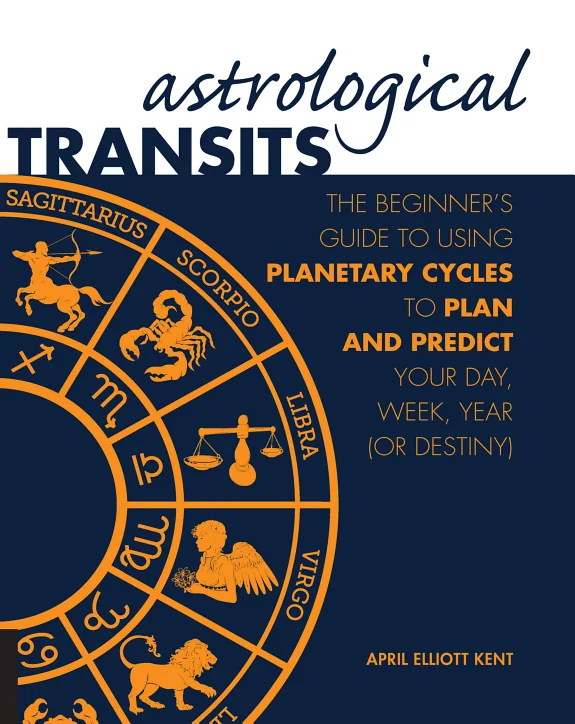
April Elliott Kent's *Astrological Transits* (2015) explains how planetary movements activate natal charts.
This book provides a practical approach to understanding astrological transits, which are the ongoing movements of planets in the sky relative to a person's birth chart. Unlike interpretations of static birth charts, it focuses on how daily, monthly, and yearly celestial shifts interact with our inherent potentials and challenges. Kent aims to make these planetary progressions understandable, giving readers tools to interpret their meaning.
The guide is for those who want to go beyond basic astrological readings and learn about prediction and timing. It assumes a basic knowledge of natal charts, including houses, planets, and aspects, and focuses on how these are influenced by current planetary activity. Aspiring astrologers, experienced practitioners seeking to improve their skills, and anyone interested in the cyclical patterns of personal experience will find this work useful. It addresses a need for clear, actionable guidance in astrology.
Published in 2015, *Astrological Transits* arrived during a renewed interest in practical astrology. It updates established methods for a modern audience, building on centuries of astrological thought. The book addresses the need for clear, actionable guidance in a field often filled with abstract theory, providing a way to connect celestial movements with personal experience.
💡 Why Read This Book?
• Learn to interpret the energetic shifts indicated by outer planet transits, such as Saturn's transit through your natal fourth house, enabling you to anticipate and work with periods of significant life structure and foundation building. • Understand how the faster-moving inner planets like Mars and Venus trigger specific events and emotional currents by transiting your natal chart's tenth house, providing insight into career opportunities and public interactions. • Gain practical skills in comparing the current planetary positions to your unique birth chart, allowing you to proactively prepare for upcoming challenges and seize opportune moments described in the book's interpretive framework.
⭐ Reader Reviews
Honest opinions from readers who have explored this book.
❓ Frequently Asked Questions
What is the primary difference between a natal chart and astrological transits?
A natal chart is a snapshot of the sky at your birth, representing your inherent potentials and personality. Transits are the ongoing movements of planets in the sky today, which interact with your natal chart, indicating current events, opportunities, and challenges.
How does April Elliott Kent explain the impact of outer planets like Saturn and Pluto?
Kent describes outer planet transits as major life themes and developmental phases. For example, a Saturn transit is often presented as a period of learning responsibility and structure, while Pluto transits can signify deep psychological transformation.
Is this book suitable for complete beginners in astrology?
The book assumes a basic familiarity with astrological concepts like houses, planets, and aspects. While accessible, readers who are entirely new to astrology might benefit from a foundational text before diving into *Astrological Transits*.
What are the benefits of studying astrological transits?
Studying transits allows for a more dynamic understanding of life's unfolding. It provides insights into timing, enabling individuals to better prepare for challenges, recognize opportunities, and understand the cyclical nature of personal growth.
Does the book offer specific dates or predictions?
While the book provides the interpretive framework for understanding transits, it does not offer specific astrological predictions for general audiences. Readers are encouraged to apply the principles to their own charts and current planetary movements.
What is the significance of comparing transits to the natal chart?
This comparison is fundamental. It reveals how the current planetary energies (transits) are activating specific areas and potentials within your personal birth map (natal chart), thereby clarifying the meaning and impact of these celestial events for you.
🔮 Key Themes & Symbolism
Natal Chart Activation
The core idea is that the natal chart, a static map of birth, becomes dynamically 'activated' by the moving planets. This activation highlights specific life areas and potentials indicated by the houses and planets being touched by transits. For example, a transit to the natal Midheaven draws attention to career and public reputation, suggesting a period where these themes are prominent and require attention or action.
Outer Planet Cycles
Kent emphasizes the profound, long-term impact of transits from Saturn, Uranus, Neptune, and Pluto. These are presented as significant developmental phases, shaping life direction and inner transformation. Saturn's transit, for instance, is framed as a period of maturation and responsibility, while Uranus transits often signal disruptive innovation and liberation from old patterns.
Inner Planet Triggers
The faster-moving inner planets—Mercury, Venus, and Mars—are discussed in terms of their role in triggering more immediate events and emotional responses. Their transits can signify specific opportunities, conflicts, or communication patterns. A Mars transit through the seventh house, for example, might indicate a period of assertive engagement or conflict in partnerships.
Practical Application
The book focuses on the practical application of transit astrology. It aims to equip readers with the tools to understand not just what is happening astrologically, but how it relates to their personal life circumstances. The goal is to foster a proactive approach to life's cycles, enabling better preparation and conscious engagement with celestial influences.
💬 Memorable Quotes
Direct passages from the work, attributed to the author.
“The planets don't change, but their relationship to your birth chart does.”
— This succinctly captures the essence of transit astrology. It highlights that our core astrological blueprint (natal chart) remains constant, while the dynamic celestial movements (transits) continuously interact with it, creating evolving life experiences and opportunities for growth.
“Transits show us where we are being called to grow.”
— This interpretation frames astrological transits not as deterministic fate, but as invitations for personal development. It suggests that these celestial events highlight areas in our lives where focused effort, learning, or transformation is being encouraged by cosmic timing.
“The outer planets signify major themes, the inner planets trigger events.”
— This statement delineates the functional difference between the slower-moving outer planets and the faster inner planets in transit analysis. It suggests that outer planets chart the overarching narrative of life phases, while inner planets provide the daily plot points and immediate occurrences.
“Your birth chart is a map, transits are the journey.”
— This metaphor clearly distinguishes the roles of the natal chart and transits. The birth chart is the fixed guide, representing potential and landscape, while transits represent the actual progression through that landscape, highlighting the unfolding experience.
💡 Key Ideas
Editorial paraphrase of the work's core concepts — not direct quotes.
Saturn transits often feel like a test.
This paraphrased concept illustrates how Saturn's influence is commonly perceived. It speaks to the sense of challenge, responsibility, and the need for discipline and maturity that often accompanies Saturn's passage through different areas of the birth chart.
🌙 Esoteric Significance
Tradition
While not explicitly tied to a single esoteric lineage like Hermeticism or Kabbalah, *Astrological Transits* operates within the broader Western Esoteric Tradition's interest in celestial correspondences and human destiny. It draws heavily on the Hellenistic and Renaissance astrological foundations, reinterpreting them through a modern lens that acknowledges psychological development. The work fits within the modern evolution of astrology as a tool for self-understanding and navigating life's cycles, aligning with the Hermetic principle of 'as above, so below' by linking celestial movements to earthly experience.
Symbolism
The primary symbols are the planets themselves, each representing distinct archetypal energies and psychological functions. The transit of Saturn, for instance, symbolizes the archetype of the Father, structure, limitation, and karmic lessons. Uranus represents the archetype of the Rebel, sudden change, innovation, and liberation. These planetary symbols, when transiting specific houses (representing areas of life), create symbolic narratives of personal evolution and experience.
Modern Relevance
Contemporary astrologers and spiritual seekers continue to draw upon the principles outlined in *Astrological Transits*. Its clear methodology for understanding planetary movements against the natal chart is a foundational skill taught in many modern astrological schools. Thinkers and practitioners focused on psychological astrology, predictive timing, and life-cycle analysis often reference or employ Kent's approach to provide practical guidance and self-awareness to clients and students.
👥 Who Should Read This Book
• Aspiring astrologers seeking to understand the dynamic component of astrological interpretation beyond static natal chart readings. • Individuals with a foundational knowledge of their birth chart who wish to learn how to interpret current planetary influences on their lives. • Comparative religion scholars or cultural historians interested in the contemporary practice and popular appeal of Western astrology as a system of meaning-making.
📜 Historical Context
Published in August 2015, April Elliott Kent's *Astrological Transits* arrived during a period of renewed popular interest in astrology, particularly in Western esotericism. This era saw a blending of traditional astrological techniques with modern psychological and humanistic approaches. The work implicitly engaged with the legacy of figures like Dane Rudhyar, who popularized a more introspective and developmental view of astrology in the mid-20th century. Kent's approach, while practical, stands in contrast to more deterministic or predictive styles that were also present in the astrological landscape. The book’s clear, accessible style reflects a broader trend toward clarifying esoteric practices for a wider audience, moving away from the more arcane language that characterized earlier astrological texts, and addressing a need for actionable guidance in a field often perceived as abstract.
📔 Journal Prompts
Reflect on a recent Saturn transit to a personal planet or angle in your birth chart and the lessons learned.
Consider the areas of your natal chart currently being activated by Uranus transits; what disruptions or innovations have occurred?
Analyze a past Jupiter transit through a specific house in your chart; what opportunities for expansion presented themselves?
How might current Neptune transits be influencing your spiritual or creative life based on your natal chart placement?
Identify a Pluto transit to a sensitive point in your birth chart and explore the themes of power and transformation involved.
🗂️ Glossary
Natal Chart
A personalized astrological chart representing the positions of the Sun, Moon, planets, and sensitive points at the exact moment and location of an individual's birth. It serves as a blueprint of potential strengths, challenges, and life themes.
Transit
The ongoing apparent movement of celestial bodies in the sky in relation to the positions in a natal chart. Transits are used to understand current astrological influences, timing, and potential life events.
Aspect
The geometric angular relationship between two or more planets or sensitive points in an astrological chart. Aspects indicate how different energies interact and express themselves.
House
One of the twelve divisions of the astrological chart, representing different areas of life experience such as career, relationships, home, and personal development.
Outer Planets
The planets Uranus, Neptune, and Pluto, which move more slowly through the zodiac. Their transits are generally associated with larger-scale psychological shifts, generational trends, and profound life transformations.
Inner Planets
The planets Mercury, Venus, and Mars, which move more quickly through the zodiac. Their transits are typically associated with more immediate events, daily activities, communication, and emotional responses.
Midheaven (MC)
The highest point of the ecliptic at the time and place of birth, typically representing career, public image, reputation, and life direction.
This book appears in 1 collection
🔮 Readers Also Liked
Browse all →









From the “Astrology” Collection
View all →









More Free Astrology & Cosmology Books
View all →