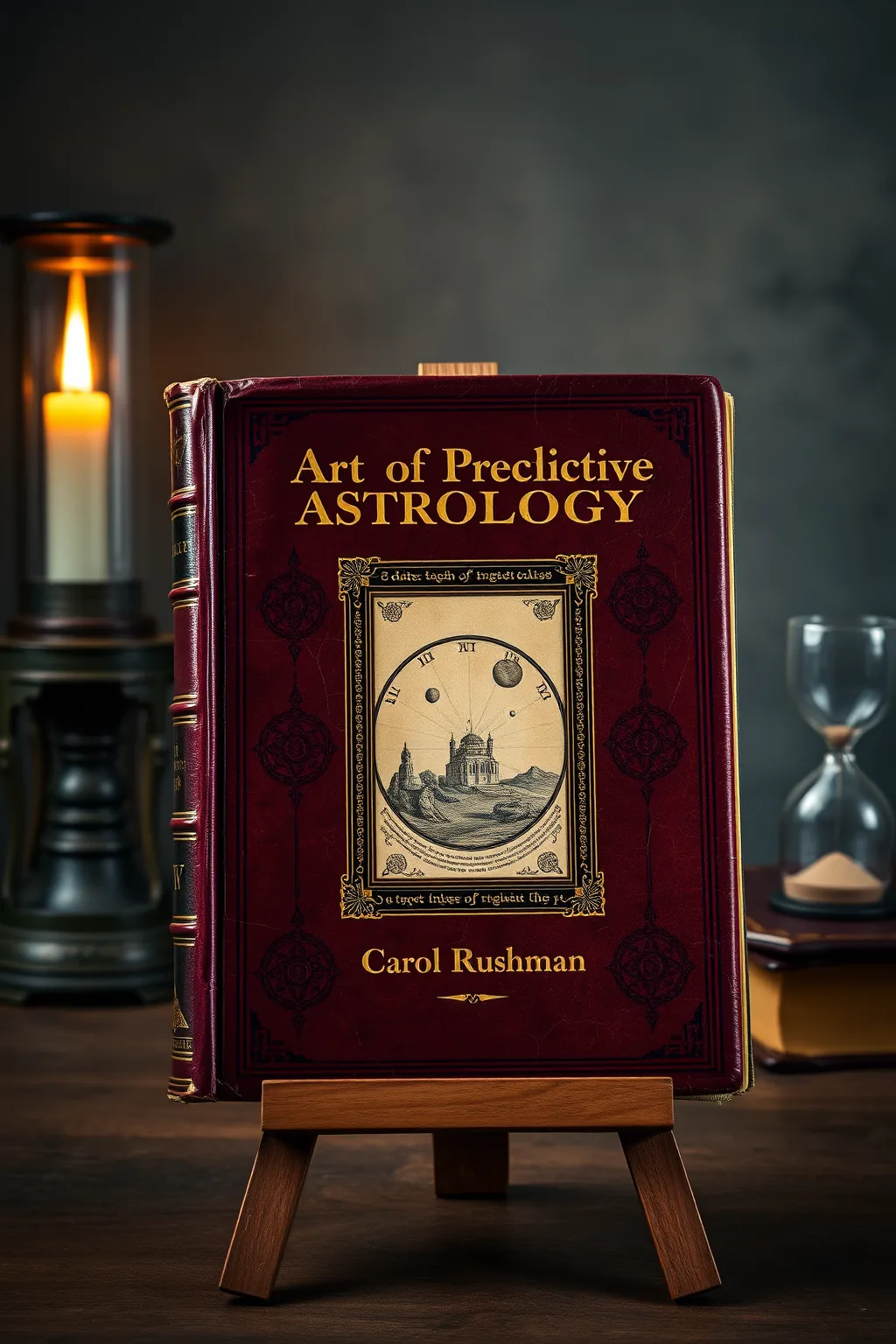
Art Of Predictive Astrology
 81
81

Art Of Predictive Astrology
Carol Rushman's *Art of Predictive Astrology* offers a grounded, methodical exploration of forecasting through the celestial lens. Unlike texts that lean heavily on esoteric theory, Rushman anchors her work in practical application, particularly through her detailed examination of transit analysis. A notable strength lies in the clarity with which she presents complex techniques, making them accessible to those beyond novice levels. For instance, her breakdown of applying secondary progressions offers a tangible skill for readers. However, the book could benefit from a broader inclusion of less conventional predictive methods; its focus, while clear, is somewhat narrow. Rushman's writing style, while informative, occasionally feels dry, lacking the spark that might fully ignite a reader's imagination about the possibilities of astrological foresight. It is a functional guide, best suited for the dedicated student seeking technical proficiency.
📝 Description
81
Carol Rushman's 2002 book teaches systematic astrological forecasting.
Published in 2002, *Art of Predictive Astrology* by Carol Rushman offers a practical guide to forecasting future events using astrological interpretation. The book moves beyond theoretical astrology to demonstrate how to construct and analyze predictive charts. Its goal is to give readers the tools needed to identify patterns and potentials within an individual's life path.
This work is for astrologers who have a grasp of natal chart interpretation and want to improve their forecasting skills. It addresses those aiming to transition from static chart readings to dynamic, time-sensitive predictions. Students, professional practitioners, and serious hobbyists seeking to enhance their predictive abilities will find its detailed methods useful.
The book covers various predictive techniques, such as transits, progressions, and solar returns. It stresses the importance of combining different forecasting methods for a more complete and accurate astrological outlook. Rushman explains how to interpret the interaction of planetary movements and their relation to life events, providing structures for understanding both long-term trends and immediate occurrences.
Emerging in the early 21st century, a period that saw renewed interest in practical astrological application after decades emphasizing psychological interpretations, *Art of Predictive Astrology* represents a return to traditional predictive methods. These techniques have been refined over centuries. The book contributes to astrological discourse by codifying and clarifying predictive systems for contemporary students and practitioners.
💡 Why Read This Book?
• Gain a structured understanding of transit analysis, a core predictive technique, by studying Rushman's detailed explanations of how transiting planets interact with natal placements, as presented in the sections on planetary transits. • Learn to apply secondary progressions effectively by following the step-by-step methods outlined in the book, allowing you to forecast developmental shifts and life themes based on specific symbolic time measures. • Develop proficiency in interpreting solar returns by examining Rushman's framework for analyzing these annual charts, providing a concrete tool for understanding the year ahead.
⭐ Reader Reviews
Honest opinions from readers who have explored this book.
❓ Frequently Asked Questions
What is the primary focus of Carol Rushman's 'Art of Predictive Astrology'?
The book's primary focus is on the practical application of astrological techniques for forecasting future events. It details methods like transit analysis and secondary progressions, aiming to provide readers with a systematic approach to predictive charting.
Who would benefit most from reading 'Art of Predictive Astrology'?
Astrologers with a solid foundation in natal chart interpretation who wish to enhance their forecasting skills will benefit most. It is also valuable for serious students and practitioners seeking to refine their predictive methodologies.
Does the book cover advanced astrological concepts?
Yes, the book delves into advanced predictive concepts such as secondary progressions and solar returns, moving beyond basic astrological principles to offer sophisticated forecasting tools.
When was 'Art of Predictive Astrology' first published?
Carol Rushman's 'Art of Predictive Astrology' was first published in 2002, positioning it within the early 21st-century astrological literature that emphasized practical application.
What are some of the predictive techniques discussed in the book?
Key predictive techniques covered include the detailed analysis of transits, secondary progressions, and the interpretation of solar returns, offering a comprehensive toolkit for astrological forecasting.
Is 'Art of Predictive Astrology' suitable for absolute beginners?
While it covers fundamental predictive techniques, the book assumes a prior understanding of natal chart basics. Absolute beginners might find it more beneficial after gaining foundational astrological knowledge.
🔮 Key Themes & Symbolism
Transit Analysis Techniques
The work systematically breaks down the interpretation of transits, detailing how current planetary movements interact with an individual's birth chart. Rushman emphasizes observing the nature of the transiting planet, the house it occupies, and the natal planet or point it aspects. This focus provides a practical method for understanding the unfolding of events and psychological states on a day-to-day and month-to-month basis, offering a clear framework for predictive work that moves beyond generalized interpretations to specific timings and influences.
Secondary Progressions
A significant portion of the book is dedicated to secondary progressions, a predictive technique where one day after birth symbolizes one year of life. Rushman explains the mechanics of calculating and interpreting these progressed planets and their aspects. This method is presented as a way to understand the inner psychological unfolding and developmental themes of an individual's life over time, offering insights into evolving consciousness and life stages beyond immediate external events.
Solar Return Charts
The book offers guidance on constructing and interpreting Solar Return charts, which are cast for the moment the Sun returns to its natal position each year. Rushman's approach focuses on identifying the themes and energies that will be prominent for the upcoming year. This technique is presented as a valuable tool for annual forecasting, allowing for a focused look at the specific potentials and challenges that lie ahead in the twelve months following the birthday.
Synthesis of Predictive Methods
Rushman advocates for the integration of various predictive techniques rather than relying on a single method. The work implicitly encourages readers to cross-reference insights gained from transits, progressions, and solar returns to build a more robust and nuanced astrological forecast. This holistic approach aims to provide a clearer, more comprehensive picture of future potentials and challenges by combining different layers of temporal astrological analysis.
💬 Memorable Quotes
Direct passages from the work, attributed to the author.
“The art of prediction lies in understanding the subtle interplay of celestial movements.”
— This statement captures the book's core philosophy: that astrological forecasting is a skill refined through careful observation and interpretation of planetary dynamics, rather than mere chance or intuition.
“Transits reveal the external events and opportunities that will manifest.”
— This highlights a key distinction Rushman makes between different predictive techniques, positioning transits as the primary indicator of concrete, observable happenings in a person's life.
“Progressions map the internal journey and psychological evolution.”
— This interpretation clarifies the role of secondary progressions in Rushman's system, emphasizing their function in understanding inner growth, evolving consciousness, and developmental stages over time.
“Accurate prediction requires the synthesis of multiple astrological tools.”
— This reflects Rushman's methodological approach, suggesting that a comprehensive astrological forecast is best achieved by integrating insights from various predictive techniques, such as transits and progressions.
💡 Key Ideas
Editorial paraphrase of the work's core concepts — not direct quotes.
Each year, the Solar Return chart offers a blueprint for the coming twelve months.
This paraphrased concept underscores the utility of solar returns as a predictive tool, framing them as a specific, annual guide to the energies and themes a person will encounter.
🌙 Esoteric Significance
Tradition
While not explicitly tied to a single esoteric lineage like Hermeticism or Kabbalah, *Art of Predictive Astrology* operates within the broader Western Esoteric Tradition's practical application of astrology. It aligns with the tradition's long-standing interest in divination and foreknowledge, seeking to systematize and clarify astrological techniques. The book departs from purely spiritual or philosophical interpretations by focusing on observable correlations between celestial movements and earthly events, reflecting a more empirical, though still symbolic, engagement with astrological principles.
Symbolism
The book's symbolism is primarily derived from the archetypal meanings of the planets, zodiac signs, and houses within Western astrology. For instance, the 'transit of Saturn' symbolizes periods of restriction, responsibility, and karmic lessons, while the 'progressed Moon' represents shifts in emotional needs and inner security. The 'solar return Ascendant' is interpreted as the primary life-theme or approach for the year ahead. These symbols are not treated as mere abstract concepts but as dynamic forces influencing the course of human experience.
Modern Relevance
Contemporary astrologers engaged in practical forecasting, particularly those focusing on event-based prediction or psychological development timelines, continue to draw upon the systematic approaches outlined by Rushman. Her clear methodology for analyzing transits and progressions remains relevant for practitioners who prioritize predictive accuracy and structured chart interpretation in their work. Thinkers and schools that emphasize the technical craft of astrology, as opposed to purely archetypal or mythological approaches, often find her work a valuable reference point.
👥 Who Should Read This Book
• Aspiring professional astrologers seeking to develop a reliable system for client forecasting, benefiting from the book's structured approach to transits and progressions. • Intermediate astrology students looking to bridge the gap between natal chart analysis and predictive techniques, gaining practical skills in solar returns and secondary progressions. • Dedicated amateur astrologers interested in understanding personal life cycles and future potentials through detailed, technical astrological methods.
📜 Historical Context
Published in 2002, Carol Rushman's *Art of Predictive Astrology* arrived during a period when the astrological community was actively debating and refining its methodologies. Following the psychological astrology boom of the late 20th century, there was a noticeable shift back towards more concrete, event-oriented predictive techniques. Rushman's work contributed to this trend, offering a structured, almost textbook-like approach to forecasting methods that had seen varying degrees of emphasis over the decades. It stood in contrast to more esoteric or philosophical interpretations of astrology, aligning with contemporary practitioners like Lois Rodden, who championed practical, event-based astrology. The book's reception was likely positive among those seeking to re-establish and codify traditional predictive skills for a modern audience, providing a counterpoint to purely psychological or evolutionary astrological models prevalent at the time.
📔 Journal Prompts
Analyze a significant transit to your natal Mercury using Rushman's methods.
Reflect on the meaning of a major progressed planet in your chart.
Consider the themes indicated by your current Solar Return Ascendant.
How can the synthesis of transits and progressions offer a fuller picture of a specific life period?
Map a past challenging transit and note any correlations with external events.
🗂️ Glossary
Transit
The current movement of planets through the zodiac, which are interpreted in relation to an individual's natal birth chart to indicate timing and potential events.
Secondary Progression
A predictive astrological technique where each day after birth is symbolically equated to one year of life, used to chart inner psychological development and life themes.
Solar Return
A chart cast for the exact moment the Sun returns to its natal position each year, typically around one's birthday, used to forecast the themes of the coming year.
Natal Chart
A map of the heavens at the precise moment and location of a person's birth, serving as the foundation for all astrological interpretation and prediction.
Aspect
The angular relationship between two or more planets or points in a birth chart or a predictive chart, indicating how their energies interact.
House
One of the twelve divisions of the astrological chart, each representing a different area of life experience, such as career, relationships, or home.
Ascendant (Rising Sign)
The zodiac sign that was rising on the eastern horizon at the moment of birth, often seen as representing the outer personality and initial approach to life.
🔮 Readers Also Liked
Browse all →








More by Carol Rushman
All books →
More Free Astrology & Cosmology Books
View all →