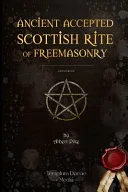
Ancient Accepted Scottish Rite of Freemasonry
 76
76

Ancient Accepted Scottish Rite of Freemasonry
Albert Pike's magnum opus on the Ancient Accepted Scottish Rite is less a historical artifact and more a dense, demanding philosophical treatise disguised as Masonic ritual exposition. The sheer scope of his exegesis, particularly concerning the 19th-century codification of the Rite, is astonishing. Pike doesn't just describe the rituals; he imbues them with layers of meaning drawn from ancient mythologies, Kabbalah, and Hermetic philosophy. One passage, detailing the symbolism of the lodge furniture in the 28th degree, is particularly illuminating, connecting seemingly mundane objects to cosmic principles. However, the work's limitation lies in its sheer density. Readers unfamiliar with Masonic terminology or esoteric traditions may find Pike's allusions overwhelming. The prose, while authoritative, can be labyrinthine. Ultimately, it remains an unparalleled resource for serious students of the Rite, offering a perspective that is both scholarly and deeply spiritual.
📝 Description
76
Albert Pike's 1871 Magnum Opus details the Ancient Accepted Scottish Rite of Freemasonry.
Albert Pike's 1871 work, "Morals and Dogma of the Ancient and Accepted Scottish Rite of Freemasonry," is a comprehensive examination of the Rite's rituals, philosophy, and structure. It details the progression through its 33 degrees, explaining the moral and philosophical lessons inherent in each stage. The book is considered a primary source for understanding the development of Masonic degrees and their symbolic language.
The Rite's teachings are organized around allegorical dramas and symbolic instruction. Key themes include justice, truth, morality, and spiritual enlightenment. Pike elucidates how these degrees build upon one another to form a philosophical system aimed at personal growth and societal improvement. The emphasis throughout the work is on self-knowledge and ethical conduct.
Emerging from 18th-century European fraternalism, the Scottish Rite consolidated various Masonic traditions. Its formalization involved figures like Étienne Morin in the 1760s, with later significant codification by Albert Pike in the 19th century. This volume traces the lineage and development of a system that sought to synthesize diverse esoteric and philosophical streams.
Albert Pike's text is a significant exposition of a major branch of Freemasonry, a fraternal organization with roots in stonemason guilds. The Scottish Rite, as detailed here, incorporates a complex system of degrees that use allegory and symbolism to convey philosophical and ethical teachings. Pike connects these teachings to various historical and philosophical traditions, including Hermeticism, Kabbalah, and Neoplatonism, situating Masonic ritual within a broader Western esoteric current.
💡 Why Read This Book?
• Gain a detailed understanding of the allegorical structure and symbolic language of the 33 degrees of the Ancient Accepted Scottish Rite, as codified in the 19th century by Albert Pike. • Explore the philosophical underpinnings of Masonic ritual, drawing connections to Hermeticism, Kabbalah, and ancient mythologies, as presented in Pike's extensive interpretations. • Comprehend the historical development of the Scottish Rite, understanding its place within 18th and 19th-century European fraternalism and its subsequent evolution.
⭐ Reader Reviews
Honest opinions from readers who have explored this book.
❓ Frequently Asked Questions
What is the primary focus of Albert Pike's "Ancient Accepted Scottish Rite of Freemasonry"?
The book primarily focuses on the rituals, philosophy, and symbolic meanings of the 33 degrees of the Ancient Accepted Scottish Rite of Freemasonry, as interpreted and codified by Albert Pike in the 19th century.
Who is Albert Pike and why is his work significant for the Scottish Rite?
Albert Pike (1809-1891) was a prominent Freemason, jurist, and author. His "Morals and Dogma of the Ancient and Accepted Scottish Rite of Freemasonry" (1871) is considered the authoritative text on the Rite's philosophy and teachings.
When was the Ancient Accepted Scottish Rite officially established?
While its roots extend earlier, the Ancient Accepted Scottish Rite began to consolidate and establish formal structures in Europe during the mid-18th century, with significant developments occurring in the 1760s.
What esoteric traditions influence the teachings within the Scottish Rite as described by Pike?
Pike's work draws heavily on a synthesis of various esoteric traditions, including Hermeticism, Kabbalah, Gnosticism, Pythagoreanism, and ancient mythologies.
Is this book suitable for someone new to Freemasonry?
While comprehensive, the book is dense and assumes some familiarity with Masonic terminology and concepts. Beginners might find it more accessible after studying introductory texts on Freemasonry.
What does the "Scottish Rite" refer to within Freemasonry?
The Scottish Rite is one of the major branches of Freemasonry, offering a further progression of degrees beyond the basic three (Entered Apprentice, Fellow Craft, Master Mason) found in the "Blue Lodge."
🔮 Key Themes & Symbolism
Ritual and Degree Progression
The work meticulously details the structure and symbolic content of each of the 33 degrees within the Ancient Accepted Scottish Rite. It emphasizes how each degree builds upon the last, offering a cumulative lesson in morality, philosophy, and spiritual development. The allegorical dramas and ceremonies are presented not merely as historical practices but as vehicles for profound self-discovery and ethical instruction, reflecting a systematic approach to Masonic education established in the 18th century.
Esoteric Symbolism and Philosophy
Pike's interpretation is deeply rooted in esoteric traditions, drawing parallels between Masonic symbolism and concepts from Hermeticism, Kabbalah, Gnosticism, and ancient mystery religions. The text elucidates the hidden meanings behind various symbols, gestures, and narratives within the rituals, presenting Freemasonry as a system for understanding the cosmos and humanity's place within it. This synthesis aimed to provide a comprehensive philosophical framework for the Rite.
Moral and Ethical Instruction
A central theme is the cultivation of virtue and the pursuit of truth. The degrees are designed to impart moral lessons, encouraging integrity, justice, charity, and intellectual growth. Pike frames the Masonic journey as a path toward self-perfection and societal improvement, where the aspirant learns to govern their passions and contribute positively to the world. The emphasis is on practical application of philosophical principles in daily life.
Historical Development of the Rite
The book implicitly traces the lineage and evolution of the Scottish Rite, situating its development within the context of 18th-century European fraternal organizations. It reflects efforts to systematize and codify Masonic practices and teachings during a period of significant intellectual and social change. Pike's work became a starting point for understanding the Rite's structure as it solidified in the 19th century.
💬 Memorable Quotes
Direct passages from the work, attributed to the author.
“The Blue degrees use the literal and the moral; the Scottish Rite uses the philosophical and the mystical.”
— This statement highlights the perceived difference in depth and focus between the foundational Masonic degrees and the advanced degrees of the Scottish Rite, suggesting a transition from practical ethics to deeper metaphysical inquiry.
“Masonry is a system of morality, veiled in allegory and illustrated by symbols.”
— This foundational concept posits that the core of Masonic teachings lies in ethical principles, which are communicated not directly but through symbolic narratives and allegorical representations.
“Every one of us needs to become a better man than he is.”
— This interpretation of the Masonic path emphasizes continuous self-improvement and personal growth as a central objective for every member of the fraternity.
“The symbols of Masonry are the language of the future.”
— This suggests that the symbolic teachings of Freemasonry hold enduring truths and insights that will remain relevant and significant for generations to come.
“The rituals are the means by which the lessons are conveyed.”
— This underscores the importance of the ceremonial aspects of Freemasonry, presenting them as essential tools for the transmission of knowledge and moral instruction.
🌙 Esoteric Significance
Tradition
The Ancient Accepted Scottish Rite, as expounded by Pike, is deeply embedded within the Western Esoteric Tradition. It draws significantly from Hermeticism, Kabbalah, Gnosticism, and Neoplatonism, synthesizing their principles into a structured system of ritual and allegory. While originating from Masonic practices, Pike's interpretation elevates it to a philosophical and spiritual path aimed at gnosis (knowledge) and the perfection of the individual, aligning it with other Hermetic and initiatory lineages.
Symbolism
Key symbols include the Double-Headed Eagle, representing duality and unity, often seen as a synthesis of opposing forces (e.g., spiritual and material). The Square and Compasses, fundamental Masonic symbols, are elaborated to represent moral rectitude and the circumscription of base desires. The Blazing Star (Pentagram) signifies divine providence and the perfected human form, linking the microcosm to the macrocosm.
Modern Relevance
Pike's work continues to be a primary reference for Scottish Rite Freemasons worldwide. Its philosophical depth also attracts contemporary students of Western esotericism, comparative religion, and occult history. Thinkers and practitioners interested in the intersection of ritual, symbolism, and personal transformation find enduring value in its comprehensive exploration of the Rite's esoteric dimensions.
👥 Who Should Read This Book
• Members of the Ancient Accepted Scottish Rite seeking a scholarly and philosophical exegesis of their degrees and teachings. • Students of Western Esotericism interested in the historical development and symbolic language of Masonic traditions. • Scholars of comparative religion and secret societies looking for primary source material on fraternal orders and their philosophical underpinnings.
📜 Historical Context
The Ancient Accepted Scottish Rite emerged from the complex web of Masonic organizations that proliferated in Europe during the 18th century. Following the establishment of the Grand Lodge of England in 1717, various Rites and degrees began to develop, particularly in France and Scotland. The mid-18th century saw efforts to consolidate these disparate elements, with figures like Étienne Morin playing a role in organizing higher degrees. The Rite gained significant structure and philosophical depth in the 19th century, largely due to the efforts of Albert Pike, who codified its rituals and teachings in "Morals and Dogma" (1871). This period was marked by intense intellectual currents, including the Enlightenment's emphasis on reason and individual liberty, alongside a resurgence of interest in Hermeticism, Kabbalah, and other esoteric traditions, partly fueled by figures like Eliphas Lévi. Pike's work synthesized these influences, presenting Freemasonry as a vehicle for profound philosophical and spiritual exploration, a perspective that engaged with but also departed from the more purely social or operative interpretations of Masonry.
📔 Journal Prompts
The symbolism of the Double-Headed Eagle as a representation of synthesized opposites.
The philosophical progression through the 33 degrees of the Scottish Rite.
How the allegorical lessons within Masonic rituals can be applied to personal ethical development.
The connection between Masonic symbols and Hermetic or Kabbalistic concepts.
The role of self-knowledge in the pursuit of Masonic ideals.
🗂️ Glossary
Ancient Accepted Scottish Rite
A major Masonic Rite offering a series of degrees (typically 33) that explore philosophical, ethical, and esoteric themes beyond the basic Master Mason degree.
Degree
A distinct stage or level within a Masonic Rite, each involving specific rituals, teachings, and symbolic lessons designed for the progression of the candidate.
Allegory
A story, poem, or picture that can be interpreted to reveal a hidden meaning, typically a moral or political one. Used extensively in Masonic ritual.
Symbolism
The use of symbols to represent ideas and qualities, by giving them symbolic meanings that are different from their literal sense. Central to Masonic teaching.
Hermeticism
A religious, philosophical, and esoteric tradition based on writings attributed to Hermes Trismegistus, emphasizing principles like 'As above, so below'.
Kabbalah
A system of Jewish mysticism and esoteric interpretation, often involving the Tree of Life, that explores the divine nature and creation.
Gnosticism
A complex set of religious ideas and systems originating in the first centuries CE, emphasizing spiritual knowledge (gnosis) for salvation.