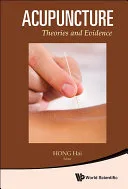
Acupuncture: Theories And Evidence
 77
77

Acupuncture: Theories And Evidence
Hai Hong’s Acupuncture: Theories And Evidence tackles a subject often mired in either uncritical acceptance or outright dismissal. The work’s strength lies in its attempt to reconcile the ancient meridian theory with contemporary scientific investigation, presenting a balanced view rather than a purely polemical one. Hong’s examination of the physiological mechanisms proposed to explain acupuncture’s effects, such as the release of endorphins and modulation of the nervous system, is particularly informative. However, the book occasionally struggles to fully bridge the conceptual chasm between the traditional qi and meridian paradigm and the reductionist language of modern physiology. A more robust engagement with the philosophical underpinnings of TCM might have enriched this aspect. Despite this, the book offers a valuable, evidence-informed perspective on a widely practiced yet often misunderstood therapeutic modality. It provides a grounded exploration of ancient healing for the modern skeptic.
📝 Description
77
Hai Hong's 2013 book examines acupuncture's ancient theories alongside emerging 21st-century evidence.
Acupuncture: Theories And Evidence, published in 2013, looks at the practice of acupuncture by considering both its historical theoretical foundations and the scientific data appearing in the 21st century. The book notes acupuncture's use in developed countries for conditions like chronic pain and hypertension, while also recognizing the ongoing discussion about its effectiveness. Hai Hong attempts to connect historical understanding with current scientific examination.
This text is for acupuncture practitioners, researchers of complementary and alternative medicine, medical historians, and students of traditional Chinese medicine. It also interests those curious about how ancient healing methods interact with modern science, especially those wanting to grasp why acupuncture remains popular despite theoretical questions. The book discusses acupuncture's roots in Traditional Chinese Medicine, which has developed over thousands of years. Its theoretical structure, involving qi flow and yin/yang balance via meridians, differs from Western biomedical models. The 21st century has brought more research trying to confirm acupuncture's benefits with Western scientific methods, including controlled trials and neurobiological studies. This book addresses that scientific validation effort.
Acupuncture, as presented in this book, originates from Traditional Chinese Medicine, a system with roots stretching back millennia. Its core concepts, such as the vital life force known as qi and the energetic pathways called meridians, represent a worldview distinct from the materialist framework of Western medicine. The book addresses how these ancient ideas about balance and energy flow are being examined through the lens of modern scientific inquiry, including neurobiology and clinical trials. It situates the practice within a long tradition of energetic and holistic healing philosophies.
💡 Why Read This Book?
• Understand the concept of 'qi' and meridian theory as explained by Hai Hong, moving beyond superficial descriptions to grasp its role in Traditional Chinese Medicine's framework for health and disease. • Analyze the scientific evidence presented for acupuncture's efficacy, including specific studies and proposed physiological mechanisms that aim to validate its therapeutic effects in a Western scientific context. • Gain insight into the historical development of acupuncture theory and practice, tracing its roots and understanding its evolution through the 2013 publication date, offering a grounded perspective.
⭐ Reader Reviews
Honest opinions from readers who have explored this book.
❓ Frequently Asked Questions
What is the central debate addressed in Acupuncture: Theories And Evidence?
The book addresses the ongoing debate between the traditional explanations for acupuncture's efficacy, based on qi and meridians, and the scientific evidence sought by modern medicine to validate its practice.
What ailments does Acupuncture: Theories And Evidence suggest acupuncture can treat?
The work covers a range of ailments for which acupuncture is practiced, including chronic pain, high blood pressure, gastrointestinal disorders, and sexual dysfunction, according to its 2013 publication context.
Who is the author of Acupuncture: Theories And Evidence?
The author is Hai Hong, with the book first published on March 7, 2013.
What traditional concepts are explored in the book regarding acupuncture?
The book explores traditional Chinese medical concepts such as the flow of qi (vital energy) and the balance of yin and yang through the body's meridian pathways.
Does the book favor traditional explanations or scientific evidence for acupuncture?
The book aims to present both traditional theories and emerging scientific evidence, exploring how they can be understood in relation to each other rather than strictly favoring one over the other.
When was Acupuncture: Theories And Evidence first published?
Acupuncture: Theories And Evidence was first published on March 7, 2013.
🔮 Key Themes & Symbolism
Qi and Meridian Theory
The work studies the foundational principles of Traditional Chinese Medicine (TCM), focusing on the concept of 'qi' as the vital life force and 'meridians' as invisible pathways through which this energy flows. It explains how disruptions or blockages in qi circulation are believed to lead to illness, and how acupuncture, by stimulating specific points along these meridians, aims to restore balance and promote health. The book positions these concepts as central to understanding the historical rationale behind acupuncture's widespread use.
Scientific Validation of Acupuncture
A significant theme is the book's engagement with modern scientific research attempting to explain acupuncture's effects. It examines studies that explore the physiological mechanisms, such as the release of endorphins, modulation of neurotransmitters, and effects on the autonomic nervous system. The text critically assesses the evidence, contrasting it with the traditional framework and discussing the challenges of integrating these perspectives within Western biomedical models.
Efficacy and Controversy
The book confronts the persistent controversy surrounding acupuncture's effectiveness. It acknowledges its broad application in contemporary healthcare for diverse conditions, from chronic pain and high blood pressure to gastrointestinal and sexual dysfunctions, as noted in its 2013 publication context. Simultaneously, it dissects the debate over whether its benefits stem from specific physiological actions, placebo effects, or a combination thereof, providing a nuanced overview of the ongoing discussion.
Bridging Traditional and Modern Medicine
A core objective of Hai Hong's work is to serve as a bridge between ancient healing traditions and contemporary scientific understanding. It seeks to offer explanations for why a practice developed centuries ago continues to be relevant and widely used today. By presenting both the theoretical basis and the emerging empirical data, the book aims to foster a more informed dialogue between proponents of Traditional Chinese Medicine and the broader scientific and medical communities.
💬 Memorable Quotes
Direct passages from the work, attributed to the author.
“The mechanism of action in acupuncture was understood in terms of the flow of qi and the balance of yin and yang through the body's meridians.”
— This statement captures the traditional Chinese medical framework for understanding acupuncture, positioning qi and meridians as the core theoretical components that explain how the practice is intended to work.
“Acupuncture is widely practised in the 21st century in scientifically developed countries for a wide range of ailments.”
— This highlights the modern relevance and broad acceptance of acupuncture, indicating its global reach and application across various health conditions despite ongoing scientific debates.
“Yet the reasons for its vaunted efficacy remain a matter of controversy.”
— This points directly to the central tension the book aims to explore: the perceived effectiveness of acupuncture versus the lack of universally agreed-upon scientific explanations within the Western medical paradigm.
“The work explores the flow of qi and the balance of yin and yang through the body's meridians.”
— This interpretation focuses on the fundamental energetic and philosophical concepts that underpin traditional acupuncture theory, crucial for understanding its historical context and practitioners' rationale.
“The book addresses chronic pain, giddiness and high blood pressure to gastrointestinal disorders and sexual dysfunction.”
— This illustrates the diverse therapeutic scope attributed to acupuncture, showcasing the breadth of conditions for which patients and practitioners seek its application, as noted around the 2013 publication date.
🌙 Esoteric Significance
Tradition
While not strictly adhering to a singular Western esoteric lineage like Hermeticism or Kabbalah, Acupuncture: Theories And Evidence engages with concepts that resonate with broader energetic and vitalistic philosophies found across many esoteric traditions. The notion of 'qi' as a fundamental life force and 'meridians' as energetic pathways aligns with concepts of subtle bodies and energetic circulation described in traditions ranging from Indian Yoga to Chinese internal martial arts, suggesting a shared underlying understanding of invisible forces governing life.
Symbolism
The primary symbols within this work are 'qi' and 'meridians'. Qi represents the animating principle, the vital breath or energy that sustains life, akin to the 'spiritus' in Western alchemy or 'prana' in Vedic traditions. Meridians, on the other hand, symbolize the structured pathways through which this energy flows, creating a map of the body's energetic landscape. The manipulation of points along these meridians signifies an attempt to harmonize the flow of this vital force, thereby influencing physical and mental well-being.
Modern Relevance
Contemporary practitioners of integrative medicine, acupuncturists seeking to deepen their understanding of evidence-based practice, and researchers in psychoneuroimmunology often draw upon works that bridge traditional theories with scientific findings. The search for objective markers of 'qi' and validation of meridian pathways through neuroimaging or other physiological studies continues. Thinkers exploring mind-body medicine and the placebo effect also find value in texts that address these long-standing energetic concepts from a modern perspective.
👥 Who Should Read This Book
• Students of Traditional Chinese Medicine (TCM) seeking to contextualize their studies within modern scientific discourse and understand the evidence base supporting their practice. • Medical researchers and practitioners interested in complementary and alternative medicine (CAM) who want to critically assess the scientific literature on acupuncture's efficacy and mechanisms. • Individuals exploring holistic health and mind-body connections who wish to understand how ancient energetic theories like qi flow are being examined through contemporary scientific lenses.
📜 Historical Context
Published in 2013, Hai Hong's Acupuncture: Theories And Evidence emerged during a period of intensified global interest in complementary and alternative medicine (CAM). The early 21st century saw a significant push within Western scientific circles to investigate traditional healing modalities like acupuncture using rigorous methodologies. This era was marked by debates between proponents of Traditional Chinese Medicine (TCM) and biomedical practitioners, with figures like David Eisenberg publishing influential studies on CAM use in the US, highlighting both its prevalence and the need for evidence. While competing schools of thought existed, such as naturopathy and osteopathy, acupuncture's unique theoretical basis in qi and meridians presented a distinct challenge for empirical validation. The reception of such works often involved cautious optimism from integrative medicine advocates and skepticism from traditional medical establishments, reflecting an ongoing intellectual current to reconcile ancient wisdom with modern scientific paradigms.
📔 Journal Prompts
The concept of qi as a vital life force: how does this differ from Western notions of biological energy?
Meridian pathways: reflect on the metaphorical mapping of the body's energetic landscape.
Scientific evidence for acupuncture: consider the challenges of validating energetic theories.
The balance of yin and yang: explore this duality in relation to health and illness.
Acupuncture for specific ailments: analyze the reported efficacy versus scientific explanation.
🗂️ Glossary
Qi
In Traditional Chinese Medicine (TCM), qi (pronounced 'chee') is considered the vital life force or energy that flows through all living things. It is fundamental to health, and its imbalance or blockage is believed to cause illness.
Meridians
These are specific pathways or channels within the body through which qi is believed to flow according to Traditional Chinese Medicine (TCM). Acupuncture points are located along these meridians.
Yin and Yang
A fundamental concept in Chinese philosophy and TCM, representing complementary and opposing forces. Yin is associated with passive, dark, and feminine qualities, while Yang is associated with active, light, and masculine qualities. Their balance is crucial for health.
Acupuncture points
Specific locations on the body, primarily situated along meridians, that are stimulated (e.g., by needles) in acupuncture therapy to regulate the flow of qi and restore balance.
Traditional Chinese Medicine (TCM)
A comprehensive system of medical theory and practice developed in China over thousands of years, including acupuncture, herbal medicine, dietary therapy, and exercise.
Giddiness
A sensation of dizziness or unsteadiness, often mentioned as one of the ailments for which acupuncture is sought in the book's context.
High blood pressure
Hypertension, a common medical condition characterized by elevated blood pressure, listed as an ailment for which acupuncture is practiced.