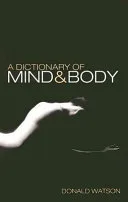
A Dictionary of Mind and Body
 81
81

A Dictionary of Mind and Body
Donald Watson's A Dictionary of Mind and Body attempts to map the terrain of alternative healing and mind-body theory with commendable breadth. Its strength lies in its ambitious scope, bringing together disparate concepts from psychology, esoteric traditions, and various therapeutic modalities into a single, accessible lexicon. The sheer volume of terms defined offers a valuable overview for newcomers. However, the work's primary limitation is its encyclopedic nature; while comprehensive, it sometimes sacrifices depth for breadth. The entry on 'Acupuncture,' for instance, provides a functional definition but doesn't fully convey the philosophical underpinnings or historical evolution of this ancient practice. A particularly illuminating section is the exploration of 'Psychosomatic Illness,' which clearly articulates the bidirectional relationship between mental distress and physical manifestation. While not a text for deep scholarly pursuit, Watson's dictionary is a functional reference for those beginning their exploration of holistic health.
📝 Description
81
Donald Watson's 2003 Dictionary of Mind and Body defines terms outside conventional Western medicine.
Published in 2003, Donald Watson's Dictionary of Mind and Body compiles concepts, practices, and theories that connect mental states with physical well-being. This work moves beyond the scope of standard Western medical approaches. It aims to clarify diverse alternative and complementary healing methods, presenting them in a straightforward dictionary format for easy use. The book covers topics from psychology to various alternative medicine branches and broader healing arts. It offers definitions that connect different fields.
This volume is useful for anyone interested in the principles of holistic health and alternative therapies. It is suitable for those new to mind-body connections or those already familiar with esoteric ideas. Therapists, counselors, students of psychology and wellness, and practitioners of complementary medicine will find it a helpful resource. It also speaks to individuals seeking to understand root causes and integrated healing strategies rather than focusing solely on symptoms.
Watson's dictionary appeared in 2003, a time when public interest in alternative medicine was growing. This interest had been building since the late 20th century, influenced by New Age philosophies and a growing unease with the limits of purely biomedical models. Books like this provided organized explanations for practices such as homeopathy and energy healing, which were becoming more popular but often lacked clear, accessible definitions for the general public. This marked a shift toward more integrated approaches to health.
💡 Why Read This Book?
• Gain clarity on terms central to holistic health practices, such as the concept of 'Psychosomatic Illness,' understanding how mental states directly impact physical conditions. • Discover the foundational principles of various alternative therapies, including an overview of practices like 'Acupuncture' and their theoretical basis. • Expand your vocabulary for discussing mind-body connections, enabling more informed research and personal exploration into esoteric healing arts.
⭐ Reader Reviews
Honest opinions from readers who have explored this book.
❓ Frequently Asked Questions
What is the primary focus of A Dictionary of Mind and Body?
The book's primary focus is to define and explain a wide range of concepts, therapies, and practices related to the connection between the mind and the body, particularly within alternative and holistic health approaches.
When was A Dictionary of Mind and Body first published?
A Dictionary of Mind and Body was first published in 2003.
Who is the author of A Dictionary of Mind and Body?
The author of A Dictionary of Mind and Body is Donald Watson.
What kind of information can I expect to find in the 'Key Concepts' section?
You can expect to find explanations of terms related to the mind-body nexus, covering concepts like psychosomatic illness and principles of energy medicine systems.
Is this book suitable for beginners in alternative medicine?
Yes, the dictionary format and accessible explanations make it suitable for beginners seeking to understand the landscape of alternative therapies and mind-body connections.
Does the book cover purely psychological theories or also esoteric healing?
The book covers both, integrating established psychological theories with less conventional esoteric healing practices and broader healing arts.
🔮 Key Themes & Symbolism
Mind-Body Connection
This dictionary thoroughly explores the intricate relationship between mental states and physical health, a core tenet of many esoteric traditions. It defines terms like 'Psychosomatic Illness,' illustrating how emotional and psychological distress can manifest as physical symptoms. The work bridges conventional psychology with alternative healing modalities, suggesting that true wellness requires addressing both the mental and corporeal aspects of an individual. It posits this connection not as a fringe idea, but as a fundamental principle for understanding health and disease across various healing systems.
Holistic Healing Modalities
A significant portion of the dictionary is dedicated to cataloging and explaining a diverse range of alternative and complementary healing practices. From traditional Chinese medicine concepts like 'Acupuncture' to various forms of energy work and spiritual healing, Watson provides accessible definitions. The book serves as an introduction to modalities that view the body as an interconnected system, rather than a collection of separate parts, emphasizing balance and natural processes over aggressive intervention. This reflects a broader shift in wellness philosophy towards integrated approaches.
Esoteric vs. Conventional Medicine
The work implicitly and explicitly contrasts the holistic, often esoteric, approaches to health with the symptom-focused methods of conventional Western medicine. It highlights the growing public interest in alternative therapies that acknowledge the 'mind-body connection' as foundational. By defining terms from both psychological and metaphysical perspectives, the dictionary acts as a bridge, making esoteric concepts more understandable to a general audience and providing a reference point for those questioning or seeking alternatives to purely biomedical frameworks.
The Nature of Health
Watson's dictionary contributes to a re-evaluation of what constitutes health, moving beyond the absence of disease. It emphasizes a state of balance and integration across mental, emotional, and physical dimensions. The compilation of terms related to various healing arts suggests that health is an active pursuit involving self-awareness, understanding subtle energies, and engaging with practices that promote overall well-being. This perspective aligns with many ancient wisdom traditions that view health as a dynamic equilibrium.
💬 Memorable Quotes
Direct passages from the work, attributed to the author.
“Modern medicine tends to concentrate on eradicating symptoms rather than addressing underlying causes.”
— This observation, present in the original blurb, sets the stage for the book's purpose: to explore approaches that seek root causes and the interconnectedness of health, moving beyond symptom management.
“A growing number of people are turning to the more holistic approach of alternative therapies.”
— This highlights the societal shift and increasing demand for integrated wellness practices that the dictionary aims to illuminate and define for a wider audience.
“The relationship between mind and body as the basis of good health.”
— This core principle underpins the entire lexicon, framing the mind-body connection as fundamental to achieving and maintaining overall well-being.
“A comprehensive, informative, and fascinating guide to therapies, ideas, and practices in alternative medicine, psychology, and the healing arts.”
— This captures the book's ambitious goal: to serve as a broad yet detailed reference for the complex and diverse field of holistic and alternative health.
“The work explores concepts like psychosomatic illness.”
— This points to a key area of focus, where mental states are directly linked to physical health outcomes, a central theme in understanding the mind-body nexus.
🌙 Esoteric Significance
Tradition
This work aligns broadly with the Hermetic principle of 'As Above, So Below,' emphasizing the interconnectedness of all levels of existence, particularly the macrocosm (mind, spirit) and the microcosm (body). It draws from traditions that view health not merely as the absence of disease but as a state of energetic and spiritual balance. While not explicitly rooted in a single lineage like Kabbalah or Theosophy, it synthesizes concepts that echo across these traditions, presenting them in a secularized, accessible format for a modern audience seeking integrated wellness.
Symbolism
The dictionary implicitly engages with the symbolism of the human body as a map of consciousness and energetic pathways. Concepts like 'Acupuncture' points, for instance, symbolize specific nodal intersections where vital energy (Qi) flows, affecting both physical and energetic states. The mind-body duality itself can be seen as a symbolic representation of the tension between the material and immaterial realms, with 'Psychosomatic Illness' acting as a potent symbol of how unresolved internal conflicts manifest externally, demonstrating the inseparable nature of spirit and form.
Modern Relevance
Watson's dictionary remains relevant today as interest in mind-body medicine, integrative health, and wellness coaching continues to grow. Contemporary thinkers and practitioners in fields like somatic psychology, mindfulness-based stress reduction (MBSR), and functional medicine often draw upon the foundational principles of interconnectedness and holistic well-being that this book helps to define. It serves as a foundational text for understanding the vocabulary used in these evolving fields, connecting historical esoteric concepts to current therapeutic approaches.
👥 Who Should Read This Book
• Individuals new to holistic health and alternative therapies: This book provides a clear, alphabetical guide to understanding the basic concepts and terminology you'll encounter. • Students of psychology and wellness: It offers a broad overview of how psychological states relate to physical health and introduces various therapeutic modalities beyond conventional approaches. • Practitioners of complementary medicine: This dictionary serves as a handy reference for defining terms for clients or for quickly refreshing knowledge on specific concepts and practices.
📜 Historical Context
Donald Watson's A Dictionary of Mind and Body, published in 2003, arrived at a key moment in the popularization of alternative and complementary medicine. The late 20th century had witnessed a significant surge in public interest, fueled partly by dissatisfaction with the perceived limitations of biomedical models and a growing embrace of holistic philosophies often associated with the New Age movement. This period saw increased visibility for practices like acupuncture, homeopathy, and various forms of energy healing, yet a cohesive understanding remained elusive for many. Watson's work aimed to provide a structured, accessible compendium, explaining terms and concepts that were often discussed in fragmented or esoteric circles. While proponents of these methods celebrated the growing acceptance, critics, often rooted in conventional scientific paradigms, viewed such practices with skepticism, leading to ongoing debates about efficacy and scientific validation. This dictionary emerged as a resource for the curious, bridging the gap between nascent popular interest and the often-arcane language of alternative healing.
📔 Journal Prompts
The concept of 'Psychosomatic Illness': explore its manifestations in your own experience or observations.
Mind-body connection: reflect on a time when your mental state directly influenced a physical sensation.
Holistic healing modalities: identify one practice defined in the book that sparks your curiosity for further investigation.
The relationship between mind and body: consider how this principle might inform your daily health choices.
Alternative therapies: list three terms you encountered that represent a significant departure from conventional medical thinking.
🗂️ Glossary
Acupuncture
A traditional Chinese medicine technique involving the insertion of fine needles into specific points on the body to stimulate energy flow (Qi) and restore balance, often used for pain relief and treating various ailments.
Alternative Medicine
A broad category of healing practices that are not part of standard medical care, used in place of conventional medicine. Examples include homeopathy, naturopathy, and traditional herbal medicine.
Complementary Medicine
Practices used together with conventional medical treatments, such as using aromatherapy to ease anxiety during chemotherapy. It aims to support overall well-being.
Holistic Health
An approach to wellness that considers the whole person—mind, body, spirit, and emotions—recognizing that these aspects are interconnected and influence overall health.
Mind-Body Connection
The concept that the mind and body are not separate entities but are intimately linked, with thoughts, emotions, and attitudes influencing physical health and vice versa.
Psychosomatic Illness
A physical illness or condition caused or made worse by mental factors such as stress, anxiety, or emotional distress. The mind's state directly impacts the body's functioning.
Qi (or Chi)
In traditional Chinese medicine, Qi is considered the vital life force or energy that flows through the body. Imbalances or blockages in Qi are believed to cause illness.