160 Questions on the Kabbalah

 61
61

160 Questions on the Kabbalah

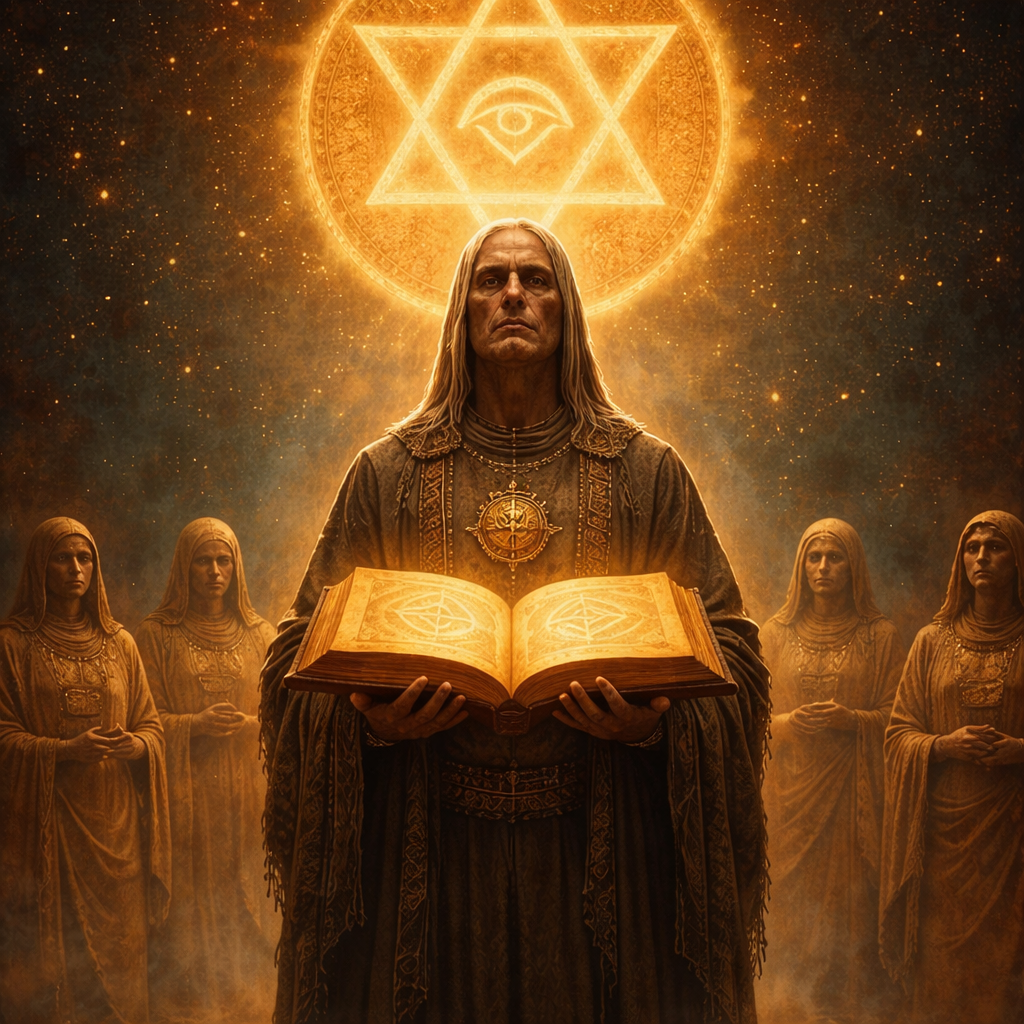

Rabbi Raphael Afilalo’s '160 Questions on the Kabbalah' is a masterclass in accessible esoteric pedagogy. Lorelei Sage commends its remarkable ability to distill complex Kabbalistic doctrines into digestible inquiries, satisfying the natural curiosity of a wide audience. Afilalo’s lucid explanations, drawn from years of teaching, illuminate the profound spiritual and philosophical dimensions of this ancient tradition without sacrificing its mystical depth. The book excels in demystifying concepts like the Sefirot and the Tree of Life, making them tangible for seekers and scholars alike. Its strength lies in its direct, question-and-answer format, which caters to the intuitive learning style of those drawn to the hidden knowledge of the Kabbalah. An indispensable resource for anyone venturing into Jewish mysticism.
📝 Description
61
Rabbi Raphael Afilalo's '160 Questions on the Kabbalah' addresses core Kabbalistic concepts.
Rabbi Raphael Afilalo's '160 Questions on the Kabbalah' tackles fundamental inquiries within Jewish mysticism. The book organizes its content around 160 questions, aiming to clarify complex ideas for those interested in the tradition. It covers essential elements such as the Tree of Life and the Sefirot, explaining divine emanations and symbolic meanings.
The author approaches topics like divine consciousness and spiritual growth with a clear, respectful tone. Readers will find explanations of creation's structure, the soul's nature, and the interconnectedness of existence. This work serves as a guide for understanding the philosophical and spiritual aspects of Kabbalah, encouraging a deeper connection to the divine and a renewed perspective on the universe.
This book engages with the Kabbalah, a major current in Jewish mysticism that developed from the 12th century onwards. It deals with speculative cosmology, divine nature, and the relationship between the infinite Creator and the finite world. Key Kabbalistic concepts like the Sefirot, often visualized as divine attributes or emanations, and the Tree of Life, a symbolic map of creation, are central to its teachings. The tradition seeks to understand hidden meanings in religious texts and the pathways of spiritual ascent.
💡 Why Read This Book?
This book is essential for unlocking the profound mysteries of Kabbalah. It directly addresses common points of confusion, offering clear, insightful answers to fundamental questions about divine emanations, the Tree of Life, and spiritual ascent. Ideal for seekers eager to understand the esoteric underpinnings of Jewish mysticism, scholars seeking a comprehensive Q&A resource, and practitioners looking to deepen their theoretical grasp of Kabbalistic principles. It bridges the gap between complex doctrines and practical understanding, making ancient wisdom accessible.
⭐ Reader Reviews
Honest opinions from readers who have explored this book.
❓ Frequently Asked Questions
What is the primary purpose of the Kabbalah?
The Kabbalah's primary purpose is to understand the divine nature, the creation of the universe, and the interconnectedness of all existence. It offers a mystical path to perceive God's presence in the world and guides individuals towards spiritual perfection and union.
Can I begin studying Kabbalah without prior Jewish knowledge?
While familiarity with Jewish texts can be helpful, '160 Questions on the Kabbalah' is designed to be accessible to those with limited prior knowledge. Rabbi Afilalo carefully explains foundational concepts, making the wisdom of Kabbalah approachable for all sincere seekers.
What are the Sefirot?
The Sefirot are ten divine emanations or attributes through which God reveals Himself and creates the universe. They form the structure of the Tree of Life, acting as vessels of divine energy and pathways for spiritual consciousness.
How does Kabbalah relate to everyday life?
Kabbalah offers profound insights into the meaning of life, human consciousness, and ethical conduct. It encourages a more mindful and divinely-attuned approach to daily actions, relationships, and challenges, transforming the mundane into the sacred.
Is Kabbalah a form of magic?
While some esoteric traditions may incorporate elements that appear magical, Kabbalah is fundamentally a system of spiritual philosophy and meditation aimed at understanding divine mysteries and achieving spiritual growth, not sorcery.
🔮 Key Themes & Symbolism
The Divine Emanations (Sefirot)
This theme looks at the core Kabbalistic concept of the Sefirot, the ten divine attributes that emanate from the Infinite and form the structure of the Tree of Life. It explores their nature, order, and function as conduits of divine energy and consciousness. Understanding the Sefirot is crucial for grasping the Kabbalistic cosmology, the process of creation, and the pathways for spiritual ascent. Rabbi Afilalo meticulously answers questions regarding their individual characteristics and their interconnectedness, revealing them as the blueprint of existence and the means by which the divine interacts with the manifest world.
The Tree of Life (Etz Chaim)
The Tree of Life serves as the central diagram and symbolic map within Kabbalah, representing the structure of reality and the journey of the soul. This theme unpacks the intricate connections between the Sefirot, the paths linking them, and the various areas of existence. It explores how this symbolic representation aids in understanding divine principles, the manifestation of the cosmos, and the process of spiritual evolution. The book provides useful insights into navigating this sacred geometry, offering a framework for meditation, contemplation, and aligning oneself with higher spiritual forces.
Spiritual Ascent and Consciousness
This crucial theme addresses the practical application of Kabbalistic knowledge for personal transformation and spiritual growth. It explores the concept of ascending the Sefirot, a metaphor for purifying consciousness and drawing closer to the divine. Questions concerning the nature of the soul, divine providence, prayer, and the attainment of higher states of awareness are illuminated. Rabbi Afilalo guides readers toward understanding how Kabbalistic principles can inform ethical living, foster inner peace, and facilitate a profound connection with the spiritual dimensions of life, ultimately leading to a deeper understanding of one's own divine spark.
💬 Memorable Quotes
Direct passages from the work, attributed to the author.
“Within each question lies the seed of divine revelation.”
— This highlights the value of inquiry and curiosity in the pursuit of spiritual knowledge, implying that genuine questions are pathways to deeper understanding.
“The Tree of Life is the cosmic blueprint for the soul's journey.”
— This succinctly defines the Tree of Life as a fundamental map for spiritual development and understanding the soul's path through existence.
“To know God is to know oneself, and to know oneself is to know God.”
— This profound statement points to the reciprocal relationship between self-knowledge and divine knowledge, a central tenet in many mystical traditions.
“Every letter holds a universe; every number, a divine decree.”
— This speaks to the intricate symbolism within Kabbalah, where even the smallest elements of scripture and numerology are imbued with profound mystical meaning.
💡 Key Ideas
Editorial paraphrase of the work's core concepts — not direct quotes.
The Kabbalah is not a secret to be hoarded, but a light to be shared.
This quote emphasizes the benevolent and expansive nature of Kabbalistic wisdom, suggesting it is meant for illumination and understanding, not for exclusive possession.
🌙 Esoteric Significance
Tradition
This work is deeply rooted in the tradition of Jewish Kabbalah, specifically drawing from the philosophical and contemplative streams that have evolved over centuries. It engages with concepts originating from Sefer Yetzirah, the Zohar, and Lurianic Kabbalah, focusing on the divine emanations, the structure of the cosmos, and the human soul's connection to the Infinite. The esoteric significance lies in its presentation of Kabbalah not merely as theology, but as a practical guide for spiritual consciousness and mystical experience.
Symbolism
Kabbalah is intrinsically symbolic, and this book elucidates key symbols such as the Tree of Life (Etz Chaim), the ten Sefirot (divine attributes), Hebrew letters, and numerical Gematria. These symbols are not mere decorative elements but represent profound spiritual realities, cosmic forces, and pathways of consciousness. The esoteric significance is in understanding these symbols as keys to unlocking the hidden architecture of existence, the divine mind, and the journey of the soul towards union with the Creator.
Modern Relevance
In an age often characterized by spiritual seeking and a desire for deeper meaning, '160 Questions on the Kabbalah' offers profound relevance. It provides accessible answers to timeless questions about existence, consciousness, and the divine, resonating with individuals from diverse backgrounds. The book's ability to explain complex esoteric concepts makes Kabbalistic wisdom applicable to contemporary challenges, promoting personal growth, ethical reflection, and a more integrated understanding of one's place in the universe. Its relevance lies in offering a framework for spiritual exploration in the modern world.
👥 Who Should Read This Book
This book is an invaluable resource for a broad spectrum of readers. Beginners to Kabbalah will find it an approachable and comprehensive introduction, explaining complex concepts with clarity. Scholars of mysticism and Jewish studies will appreciate its insightful Q&A format, offering a structured overview and potential new perspectives. Spiritual seekers yearning for deeper understanding of divine principles, cosmic order, and the soul's journey will find profound guidance. Practicing mystics and contemplative individuals can utilize it to enrich their theoretical foundation and deepen their meditative practices, connecting ancient wisdom to their personal spiritual path.
📜 Historical Context
Rabbi Raphael Afilalo's '160 Questions on the Kabbalah' emerges from a rich lineage of Jewish mystical thought, particularly influenced by the Lurianic Kabbalah that flourished in Safed during the 16th century. This era saw a profound emphasis on understanding divine processes, cosmic repair (Tikkun Olam), and the intimate connection between the human and the divine. The dissemination of Kabbalistic ideas through texts like the Zohar and the works of Isaac Luria laid the groundwork for subsequent generations of mystics and scholars. Afilalo’s contemporary approach, however, reflects a modern need to articulate these complex ideas in an accessible manner, responding to a growing global interest in esoteric traditions and spiritual inquiry. His work bridges historical depth with contemporary relevance, making ancient wisdom accessible to a new generation of seekers.
📔 Journal Prompts
Reflect on the Sefirah that resonates most with your current life experience. How can understanding its attributes guide your actions?
Consider the Tree of Life as a map. Which path or connection feels most significant to explore in your spiritual journey right now?
How can the Kabbalistic concept of divine emanation be applied to perceive the sacred in your everyday interactions?
What does the idea of Tikkun (repair) mean to you on a personal and global level, based on your understanding of Kabbalistic principles?
Meditate on the interconnectedness of all things as described in Kabbalah. How does this perspective shift your view of yourself and others?
🗂️ Glossary
Kabbalah
An esoteric tradition within Judaism that seeks to understand the nature of God, creation, and the universe through mystical interpretation of scripture and divine symbolism.
Sefirot
Ten divine emanations or attributes through which God reveals Himself and creates the universe, forming the structure of the Kabbalistic Tree of Life.
Tree of Life (Etz Chaim)
A central symbolic diagram in Kabbalah representing the structure of the cosmos, the divine emanations, and the pathways of spiritual development.
Ein Sof
The Kabbalistic concept of the Infinite, the unknowable and transcendent aspect of God beyond all comprehension or description.
Tikkun
A Hebrew term meaning 'repair' or 'rectification,' often referring to the cosmic task of mending the brokenness of creation and restoring divine harmony.
This book appears in 1 collection
🔮 Readers Also Liked
Browse all →






More by Rabbi Raphael, Afilalo
All books →
From the “Kabbalah” Collection
View all →






More Free Kabbalah & Jewish Mysticism Books
View all →