Suras
Suras are divine beings or gods in ancient Indian religions, particularly Hinduism and Buddhism. They represent celestial powers and are often contrasted with Asuras, beings of a more demonic or titanic nature, highlighting a fundamental duality in cosmic order.
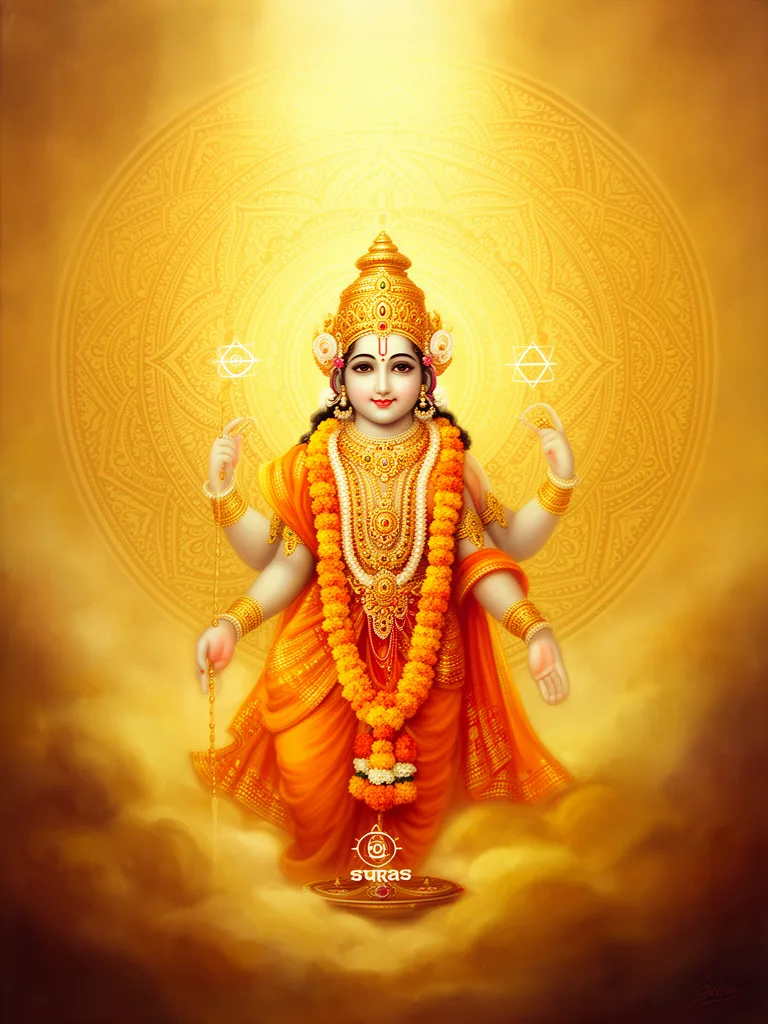
Where the word comes from
The term "Sura" originates from Sanskrit (सुर), meaning "god" or "divine being." It is derived from the root su, implying goodness or brilliance. This contrasts with Asura (असुर), which can be interpreted as "not-Sura" or "anti-god," suggesting a primordial opposition. The distinction appears early in Vedic literature.
In depth
A general term for gods, the same as drras: the contrary to (I suras or "no-gods". GLOSS AEY 291
How different paths see it
What it means today
The concept of Suras, these radiant celestial beings, offers a potent lens through which to understand the ancient Indian worldview, a cosmology deeply concerned with the interplay of forces. Blavatsky’s gloss, referencing the contrast with "Asuras" or "no-gods," points to a fundamental duality that permeates these traditions. Mircea Eliade, in his studies of myth and religion, often highlighted how such cosmic dualisms serve as archetypal patterns for human experience, mapping the external world onto the internal landscape of the soul. The Suras, embodying divine order and beneficence, are not static icons but active participants in a cosmic drama, a drama that, as Carl Jung might suggest, reflects the archetypal struggle between the forces of integration and disintegration within the human psyche.
In Hinduism, the Suras, led by Indra, are the guardians of Dharma, the cosmic law and righteous order. Their perpetual struggle with the Asuras, beings of power and often pride, is a narrative that resonates deeply, speaking to the constant effort required to maintain balance. This is not simply a mythic battle; it is an allegory for the spiritual discipline necessary to overcome internal Asuras—our own egoistic impulses, our desires that lead us astray from the path of virtue. The Buddhist understanding of Suras, or Devas, further refines this, acknowledging their elevated status but also their impermanence within the grander cycle of samsara. They are beings of great merit, yet still bound by karma, reminding us that even the highest heavens are not the ultimate refuge from suffering, a perspective echoed in the non-dualistic philosophies that seek transcendence beyond all dualistic classifications. The Sura, in this light, becomes a symbol of potential, of the divine spark that resides within, yet also a reminder of the ongoing work of spiritual cultivation.
RELATED_TERMS: Devas, Asuras, Indra, Gods, Celestial Beings, Dharma, Karma, Samsara
Related esoteric terms
Books on this concept






No reflections yet. Be the first.
Share your interpretation, experience, or question.
