Soham
Soham is a Sanskrit mantra and meditation technique, literally translating to "That I am." It signifies the identification of the individual self with the universal consciousness, a core tenet of Advaita Vedanta, aiming to dissolve the illusion of separation.
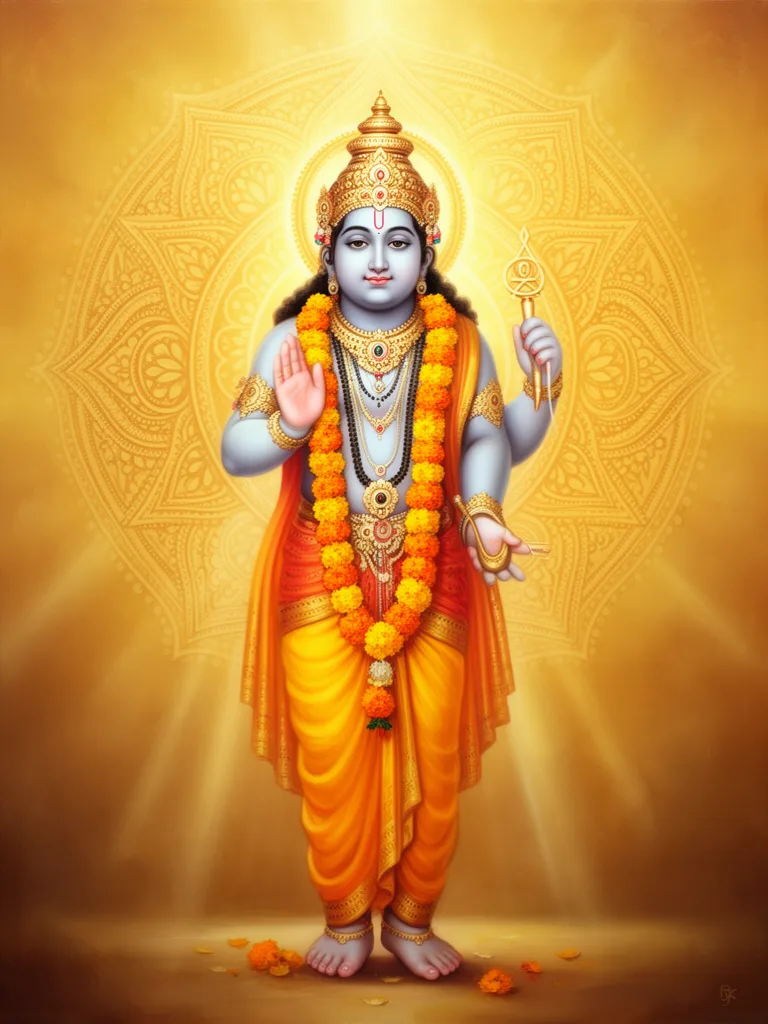
Where the word comes from
Soham originates from Sanskrit, derived from "saḥ" (that) and "aham" (I). This ancient pairing, representing the cosmic and the individual, forms the bedrock of the mantra. It appears in early Upanishadic thought and is a fundamental expression of non-dual realization.
In depth
A mvstic svllable rejiresenting involutions: lit., "That 1 am".
How different paths see it
What it means today
Blavatsky's concise rendering of Soham as a "mystic syllable representing involutions" hints at its profound cosmological and psychological implications. It is more than a mere utterance; it is an ontological declaration, a sonic key to unlock the perceived chasm between the finite and the infinite. In the yogic traditions, Soham is intrinsically linked to the breath, the most intimate and constant rhythm of our existence. The inhalation is often associated with "Ham" (the divine breath, the universe breathing forth) and the exhalation with "So" (the individual self breathing in). Through mindful repetition, often in conjunction with the natural flow of respiration, the practitioner begins to perceive the breath not as a mere biological function, but as the very pulse of cosmic life animating both the individual and the totality. This practice echoes Mircea Eliade's observations on the archaic tendency to see the microcosm as a reflection of the macrocosm, where human rituals mirror cosmic events. The mantra Soham, therefore, becomes a bridge, a constant reminder that the "I" experiencing this breath is not a solitary entity but a manifestation of the same divine essence that permeates all existence. It is a profound antidote to the modern malady of existential loneliness, offering a direct experiential realization of unity, as articulated by scholars like Swami Vivekananda, who championed its accessibility and power. The practice cultivates a state of effortless presence, where the boundaries between the observer and the observed begin to dissolve, revealing the fundamental interconnectedness that underlies all reality. It is not about becoming something other than oneself, but about realizing who one has always been, in essence. The true power of Soham lies in its capacity to reframe our very identity, moving from a contracted sense of self to an expansive awareness of being. To chant Soham is to affirm, with every exhalation, the ancient wisdom that the individual soul is identical with the Absolute.
Related esoteric terms
No reflections yet. Be the first.
Share your interpretation, experience, or question.
