Asoka
Asoka, meaning "without sorrow" or "unafflicted," is primarily known as a prominent Indian emperor of the Maurya Dynasty who, after a brutal conquest, embraced Buddhism and propagated its principles through edicts inscribed on pillars and rocks across his vast empire.
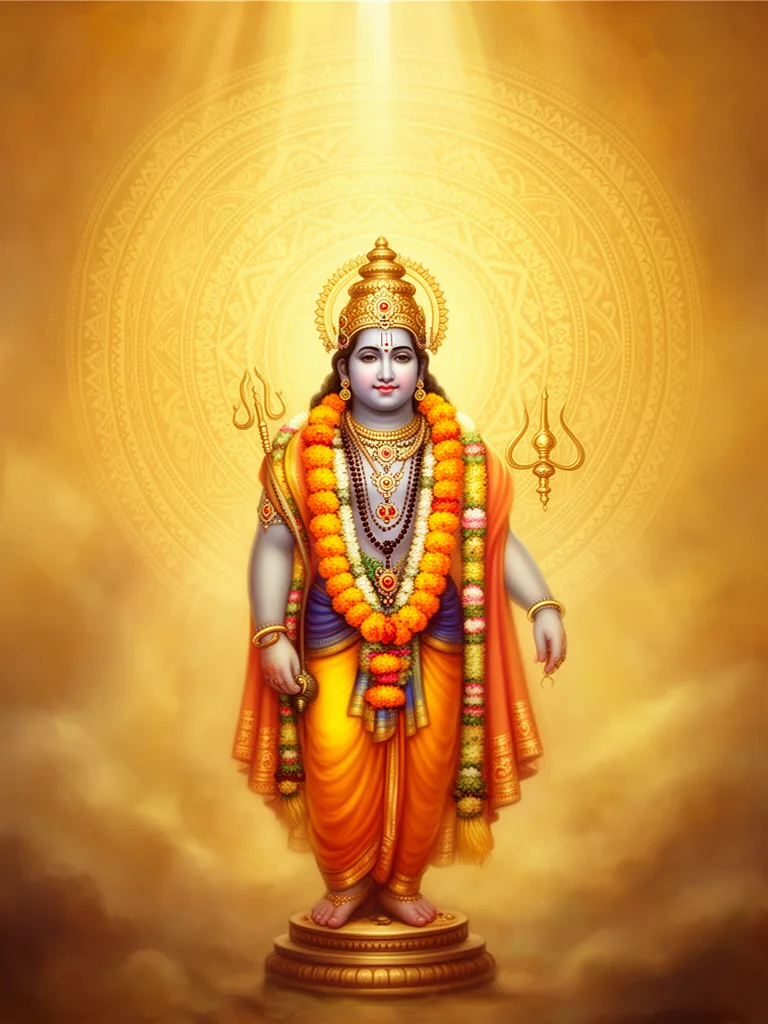
Where the word comes from
The Sanskrit term "Asoka" (अशोक) literally translates to "without sorrow" or "unafflicted." This etymological root suggests a state of being free from grief, a concept that resonates deeply within spiritual traditions seeking liberation from suffering.
In depth
A celebrated Indian king of the Morya dynasty which reigned at ^lagadha. There were two Asokas in reality, according to the chronicles of Northern Buddhism, though the first A.soka — the grandfather of the .second, nanu-.l by Prof. Max Miiller the "Constantine of India", was !)etter known by his name of ('li:mdragupta. It is the former who was called. /'wf/</.si (Pali) "the beautifid", and Dnu'niam-pina "the beloved of the gods", and also Kalnsoka; while the name of his grandson was Dharmasokd — the Asoka of the good law — on accouni of his devotion to Buddhism. .Moreover, according to the same source, the second Asoka had never followed the P>rahmanical faith, but was a Buddhist born. It was his grandsire who had been tirst converted to the new faith, after which he had a nund)er of edicts inscribed on jdllars and rocks, a custom followed also by his grandson. But it was the second Asoka who was tlu* most zealous supporter of Buddlusni ; lu', wlio maintained in his j)alac'C' from GO to 70.000 monks and i)riests. wlio erected 84,000 topes and stupas tliroufihout India, reijrned 30 years, and sent missions to Ceylon, and throug^hout the world. The inscriptions of various edicts publislied by him display most noble ethical sentiments, especially the edict at Allaliabad. on tlie so-called " Asoka 's column", in the Fort. The sentimi-nts are lofty and poetical, breatliinf? tenderness for animals as well as men, and a lofty view of a kind's mission witli regard to his peoj)le, that might be followed with great success in the present age of cruel wars and barbarous vivisection.
How different paths see it
What it means today
The name Asoka, meaning "without sorrow," carries a profound resonance that extends far beyond the historical figure of the Maurya emperor. While his conversion to Buddhism after the bloody Kalinga War and his subsequent dissemination of Dhamma through his edicts are well-documented, the spiritual aspiration embedded in his name offers a potent metaphor for the modern seeker. Mircea Eliade, in his exploration of the sacred, often highlighted the human yearning for a state of being unburdened by the vicissitudes of existence. Asoka's journey, from the anguish of conquest to the cultivation of compassion, mirrors the alchemical process described by Carl Jung, where the raw materials of personal experience, even trauma, can be transmuted into wisdom and peace. The inscribed pillars, standing as silent witnesses across the Indian subcontinent, represent an early form of public spiritual pedagogy, a radical act of making ethical principles accessible to all. This echoes the Sufi tradition's emphasis on the outward expression of inner states and the Buddhist practice of embodying compassion in the world. The emperor's patronage of monastic communities and the erection of stupas speak to a desire to create enduring structures for spiritual practice and remembrance, a testament to the belief that the cessation of sorrow is not merely an individual attainment but a collective endeavor. In a world still grappling with the echoes of conflict and the pervasive anxieties of modern life, the ideal of Asoka—a state of serene equanimity—remains a compelling beacon, suggesting that the path to liberation begins with the internal dismantling of our own sorrows. It is a reminder that true peace is not the absence of external storms, but the cultivation of an inner stillness that can weather them.
Related esoteric terms
No reflections yet. Be the first.
Share your interpretation, experience, or question.
