Sama
Sama, in Hindu traditions, signifies profound resignation and inner stillness, particularly in the face of life's vicissitudes. It represents the conscious repression of mental disturbances, fostering a state of equanimity and deep peace, often achieved through spiritual discipline and surrender to divine will.
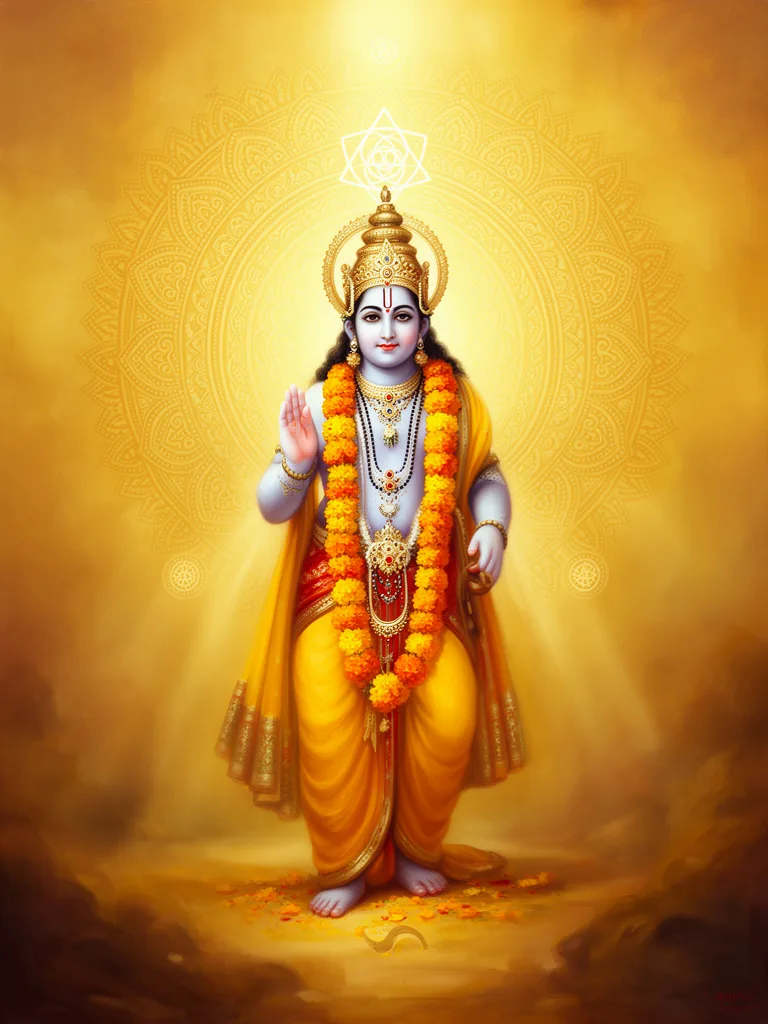
Where the word comes from
The Sanskrit term "Sama" (सम) derives from the root "sam," meaning "to be equal," "to be calm," or "to be still." It appears in Vedic literature and philosophical texts, signifying a state of mental equilibrium, equanimity, and inner peace, fundamental to yogic and devotional practices.
In depth
One of the hhdva push pas, or "flowers of sanctity". Sama is the fifth, or "resignation". There are eight such flowers, namely: clemency or charity, self-restraint, affection (or love for others), patience, resignation, devotion, meditation and veracity. Sama is also the repression of any mental perturbation.
How different paths see it
What it means today
The term Sama, emerging from the rich soil of Sanskrit thought, offers a profound counterpoint to the ceaseless churn of modern existence. It speaks not of a passive yielding to fate, but of an active, disciplined mastery over the internal landscape. Mircea Eliade, in his exploration of archaic techniques, often highlighted the importance of stillness and concentration as gateways to altered states of consciousness. Sama embodies this principle, suggesting that the repression of mental perturbation is not an act of denial, but a deliberate clearing of the inner space, much like a gardener meticulously weeding a plot to allow the most vital plants to flourish.
This practice of cultivating equanimity, of refusing to be tossed by the waves of desire and aversion, is echoed across numerous spiritual traditions. The Sufi poet Rumi, though speaking a different linguistic tongue, often invoked a similar spirit of surrender to the divine Beloved, a yielding that paradoxically leads to profound strength. In the Buddhist context, the cultivation of upekkha, or equanimity, serves a similar purpose, fostering a detachment that liberates from suffering. For the modern seeker, Sama invites a radical re-evaluation of our relationship with our own minds. Instead of being prisoners to every fleeting thought or emotion, we are called to become the quiet observers, the steady anchors in our own internal storms. This is not about suppressing feelings, but about recognizing their transient nature and refusing to let them dictate our inner state. It is the practice of finding the unshakeable calm that lies beneath the surface of all mental activity, a stillness that is not an absence of experience, but a profound presence within it.
The path to Sama is not one of grand pronouncements but of quiet, consistent practice. It is the mindful breath that stills a racing heart, the conscious choice to observe rather than react, the deep inhalation of acceptance that precedes the exhalation of release. It is the quiet understanding that true peace is not found in the absence of external challenges, but in the unwavering strength of an inner citadel, built by the deliberate practice of inner quietude. To achieve Sama is to discover that the most profound freedom lies not in controlling the world, but in mastering the self.
Related esoteric terms
Books on this concept







No reflections yet. Be the first.
Share your interpretation, experience, or question.
