Saka
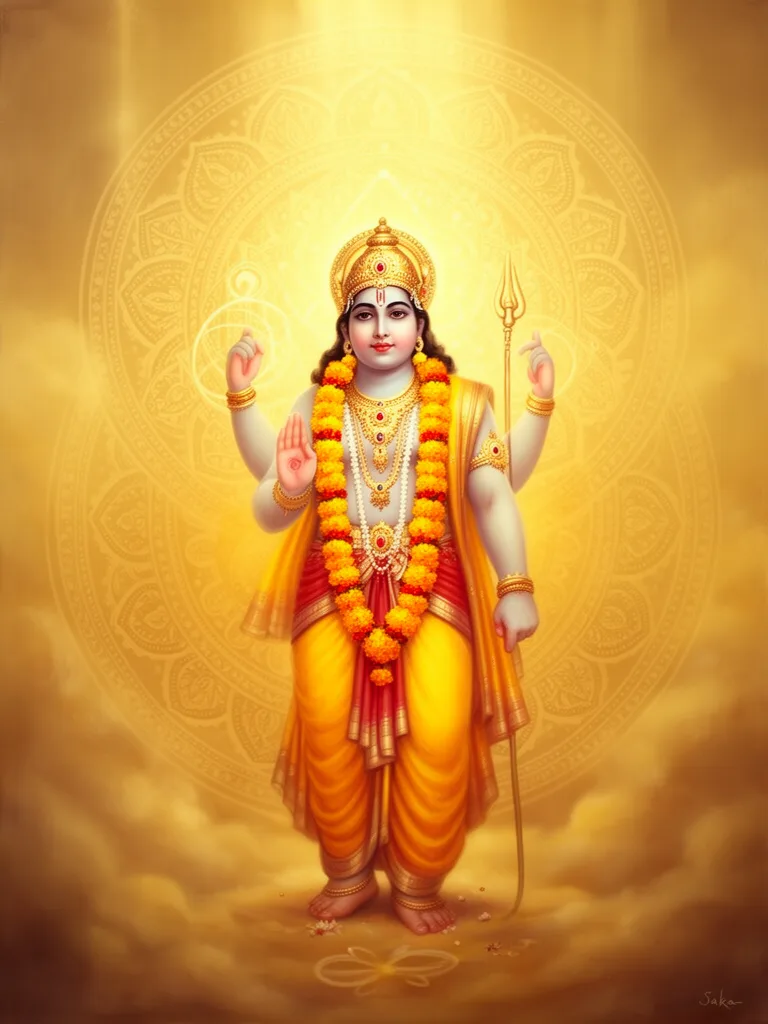
Saka refers to the "Dragon of Wisdom" or manifesting deities in Hindu tradition, representing the collective force of divine emanation and cosmic order. It also denotes a mythical continent in ancient cosmology.
Where the word comes from
The term "Saka" originates from Sanskrit (शक), meaning "era" or "age," but in Blavatsky's context, it likely draws from "Shaka" (शक), referring to the Shaka people or era, and potentially "Sakha" (सख), meaning "companion" or "friend," implying a collective or allied force.
In depth
Lit., "the ihw". or tlie Khti.used of the "Drairon of Wisdom" or the manifestinpr deities, taken collectively. Saka (Sk.i. .Vccordinpr to the Orientalists the same as the classical Sucir . It is during tlie reign of their King Vudishtira that UmKnli Yinin began. Saka Dwipa ('Sk.). One of the seven islands or continents mmtionrd in til'l'iir''i>itis fancient works). Sakkayaditthi. Delusion of personality; the erroneous idea that "/ am 1". a man or a woman with a special name, instead of being an in.separable part of the whole,
How different paths see it
What it means today
Blavatsky's definition of Saka as the "Dragon of Wisdom" or the "manifesting deities" invites a contemplation of cosmic dynamism. The dragon, a potent symbol across many cultures, often represents primal energy, wisdom, and the forces that govern creation and dissolution. In the Hindu context, this aligns with the concept of Devas, the celestial beings who are not merely passive observers but active participants in the unfolding of Prakriti, the material universe. The term's connection to Saka Dwipa, one of the mythical continents, further situates it within a cosmological framework, suggesting a distinct sphere of influence or a particular manifestation of cosmic order.
The Orientalist interpretation linking Saka to the classical Sucir and the reign of King Yudhisthira hints at a historical or cyclical understanding of time, where divine energies are particularly potent or accessible. This echoes Mircea Eliade's concept of the eternal return, where sacred time periodically reasserts itself, infusing the profane world with divine potency. The inclusion of Sakkayaditthi, the "delusion of personality," is crucial. It suggests that the "Dragon of Wisdom" is the very principle that can both manifest and, when misunderstood, contribute to our sense of separate selfhood. The wisdom lies in recognizing our "inseparable part of the whole," a notion resonant with the non-dualistic philosophies that permeate many esoteric traditions.
This concept challenges the modern inclination towards atomistic individualism. Instead, it posits a universe animated by collective, divine forces, where even the illusion of separation is part of a larger, interconnected process. To grasp Saka is to begin to perceive the subtle currents of emanation that bind all things, a wisdom that, like the dragon's breath, can both illuminate and transform. It is an invitation to see the manifest world not as a collection of discrete objects, but as a vibrant, pulsating expression of a singular, wise intelligence.
RELATED_TERMS: Deva, Yuga, Prakriti, Brahman, Maya, Cosmology, Divine Emanation, Cosmic Cycles
Related esoteric terms
Books on this concept








No reflections yet. Be the first.
Share your interpretation, experience, or question.
